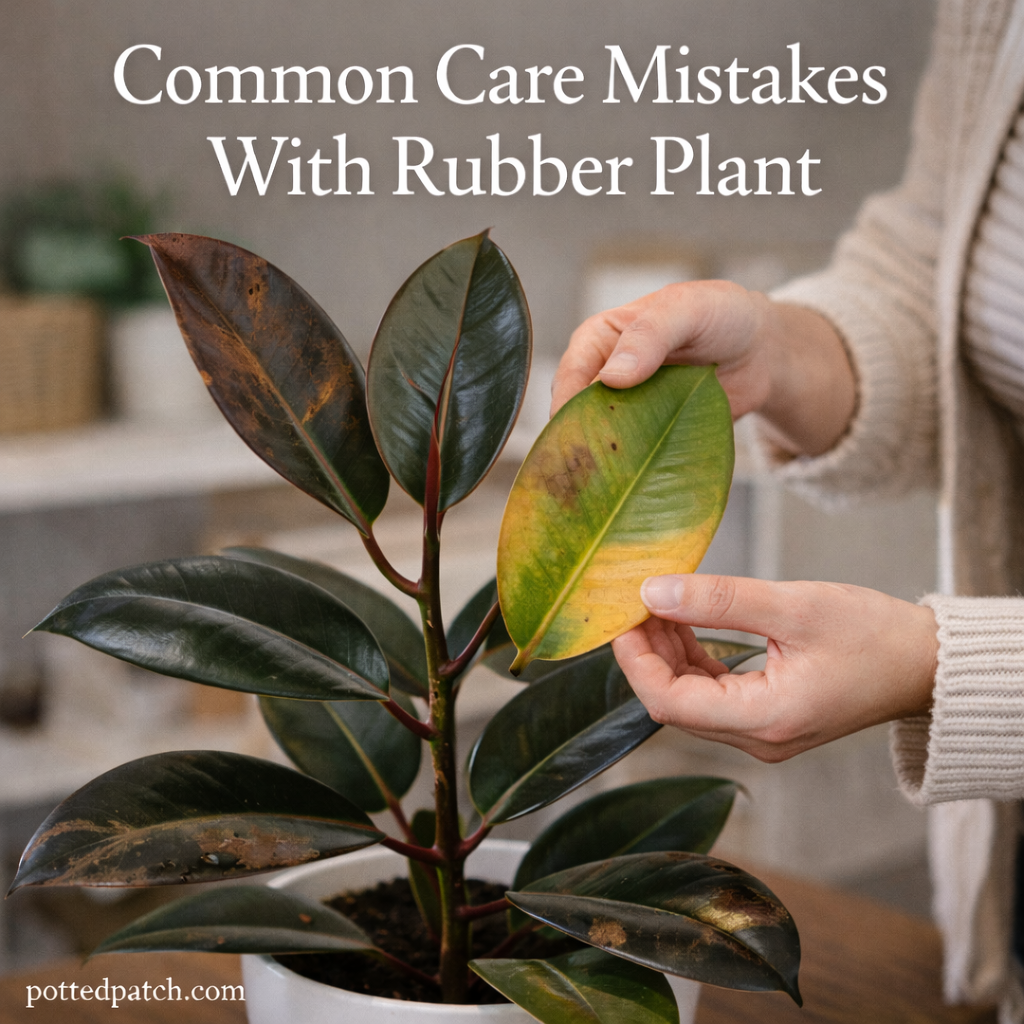
Rubber plants are bold, glossy, and surprisingly resilient. But despite their reputation as low-maintenance houseplants, they can struggle when basic care needs are overlooked.
If your rubber plant (Ficus elastica) has drooping leaves, brown spots, or slow growth, chances are one of these common care mistakes is the cause.
Let’s break down what to avoid — and how to fix problems before they get worse.
1. Overwatering
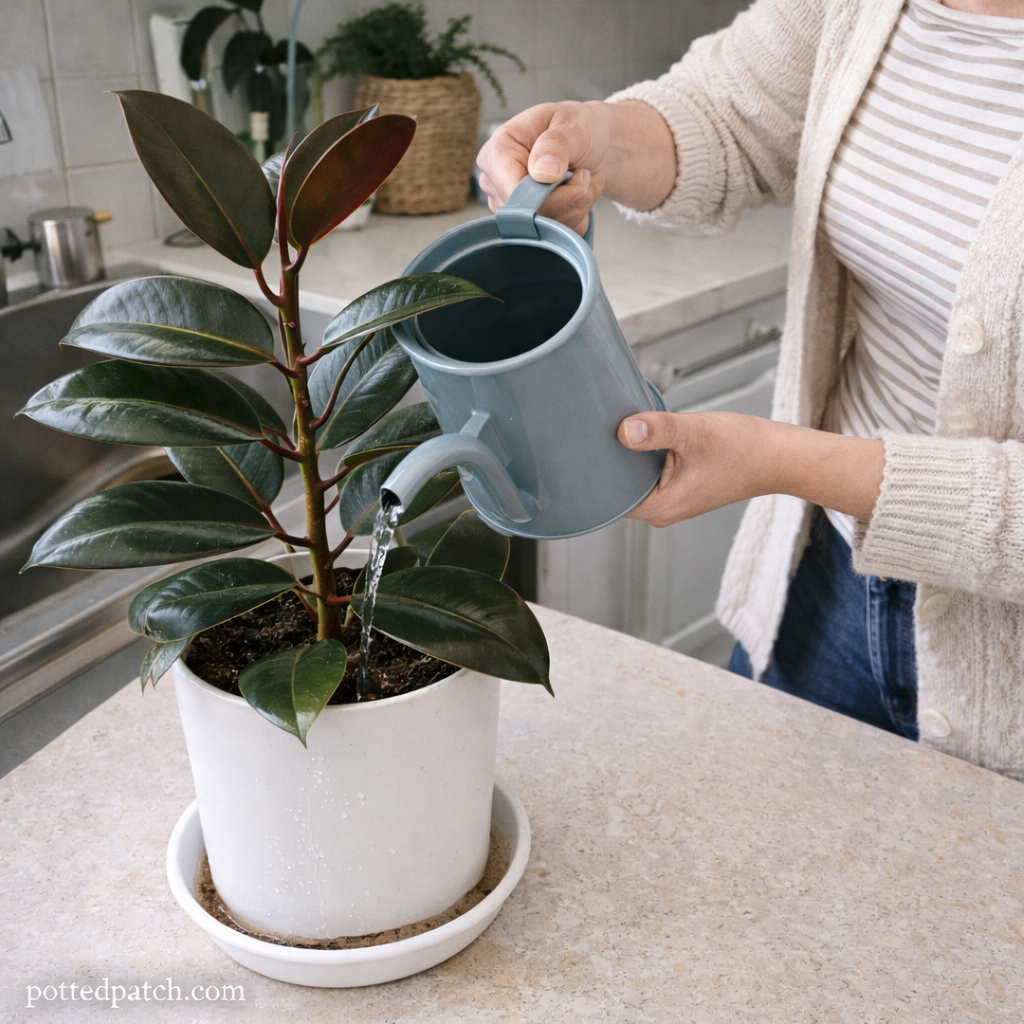
This is the most common mistake with rubber plants.
Rubber plants prefer soil that dries slightly between waterings. Constantly wet soil can suffocate roots and lead to root rot.
Signs of Overwatering
- Yellowing lower leaves
- Soft or mushy stems
- Soil that stays wet for days
- Leaf drop
How to Fix It
- Let the top 1–2 inches of soil dry before watering again
- Ensure your pot has drainage holes
- Use well-draining soil
When in doubt, underwater slightly rather than overwater.
2. Not Enough Light
Rubber plants love bright, indirect light. While they tolerate moderate light, low-light conditions slow growth and cause leggy stems.
Signs of Low Light
- Leaves spaced far apart
- Leaning toward a window
- Smaller new leaves
- Dull or faded leaf color
How to Fix It
- Move the plant closer to a bright window
- Use sheer curtains to filter direct sun
- Rotate the plant weekly for even growth
Strong, consistent light keeps leaves glossy and full.
3. Too Much Direct Sun
On the opposite end, harsh direct sunlight can scorch rubber plant leaves.
Signs of Sun Damage
- Brown or crispy patches
- Bleached or pale areas
- Curling edges
If your plant sits in a south- or west-facing window without protection, consider moving it slightly back or adding a curtain.
Bright, indirect light is the sweet spot.
4. Ignoring Drainage
Even perfect watering habits can fail if the pot lacks drainage.
Water sitting at the bottom of a pot leads to root stress.
Fix This Quickly
- Always choose pots with drainage holes
- Empty saucers after watering
- Avoid decorative cachepots that trap water
Healthy roots mean healthy leaves.
5. Inconsistent Watering Schedule
Rubber plants prefer consistency.
Long periods of dryness followed by heavy watering can shock the plant.
Signs of Inconsistent Watering
- Leaf drop
- Curling leaves
- Brown edges
Aim for a routine where soil dries moderately but not completely bone-dry for weeks.
6. Skipping Pruning
Many owners are afraid to prune, but rubber plants grow tall and sparse without shaping.
Without pruning, you may notice:
- Bare lower stems
- Uneven growth
- Top-heavy structure
Pruning above a node during spring encourages branching and fuller growth.
7. Not Cleaning the Leaves
Rubber plant leaves are large and glossy — and they collect dust easily.
Dust blocks light absorption and reduces photosynthesis.
Simple Solution
- Wipe leaves gently with a damp cloth
- Avoid leaf shine products
- Clean every few weeks
Shiny leaves are healthy leaves.
8. Placing Near Drafts or Vents
Rubber plants prefer stable indoor temperatures between 65–80°F.
Cold drafts, air conditioners, or heaters blowing directly on the plant can cause:
- Leaf drop
- Brown edges
- Sudden stress
Keep your plant away from temperature swings.
9. Over-Fertilizing
More fertilizer does not mean faster growth.
Excess fertilizer can burn roots and cause leaf discoloration.
Best Practice
- Fertilize lightly during spring and summer
- Skip feeding in fall and winter
- Always follow label instructions
A balanced liquid houseplant fertilizer once a month during growing season is usually enough.
10. Ignoring Early Warning Signs
Many plant problems start small.
A single yellow leaf or slight droop is often your plant asking for adjustment.
Pay attention to:
- Changes in leaf color
- Sudden leaf drop
- Slowed growth
Early correction prevents major decline.
Final Thoughts
Rubber plants are hardy, but they aren’t indestructible.
Most care mistakes fall into three categories:
- Too much water
- Poor light conditions
- Inconsistent care
If you provide bright, indirect light, well-draining soil, and moderate watering, your rubber plant will reward you with bold, glossy growth for years.
A little attention goes a long way.