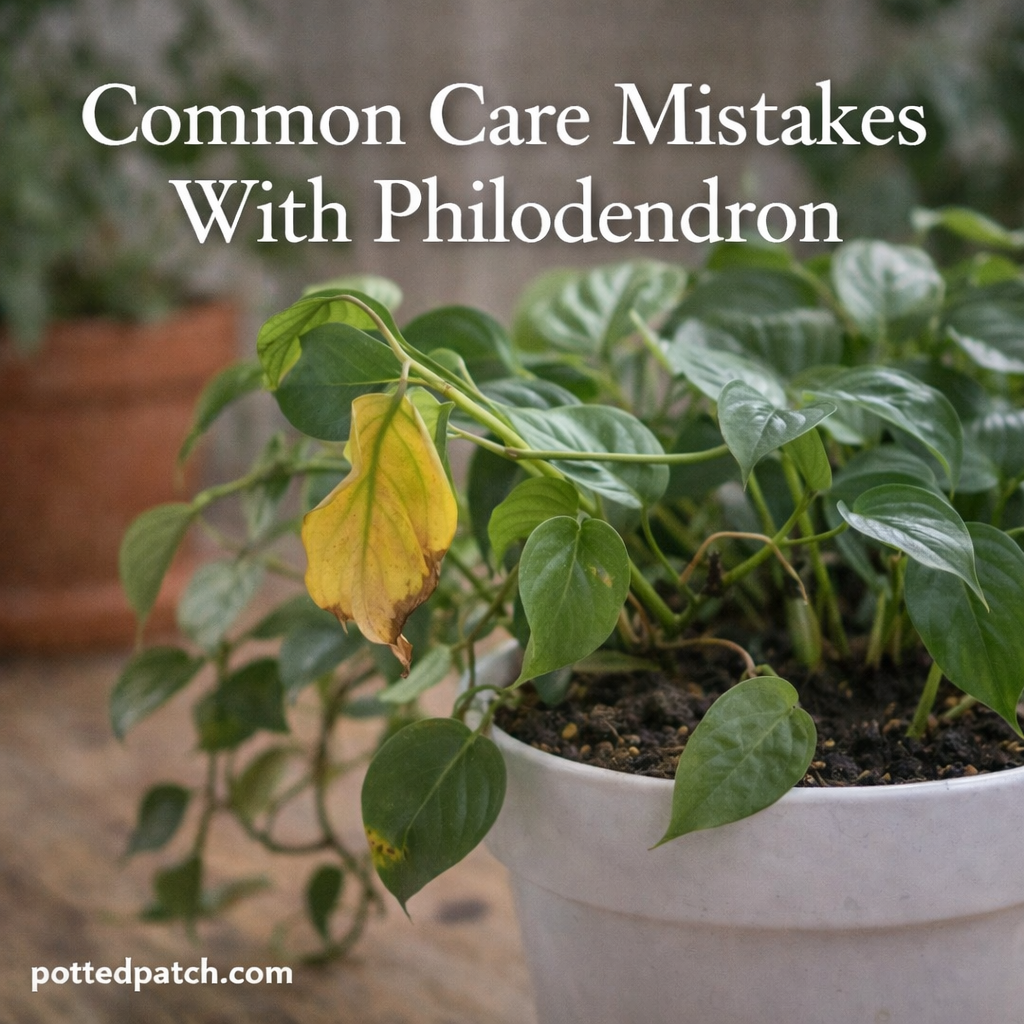
Philodendrons are often labeled “easy houseplants,” and for good reason. They’re adaptable, forgiving, and thrive in typical indoor environments.
But even hardy plants can struggle when basic care mistakes stack up.
If your philodendron has yellowing leaves, slow growth, drooping stems, or brown tips, one of these common mistakes could be the cause.
Let’s break down the most frequent issues — and how to fix them.
1. Overwatering
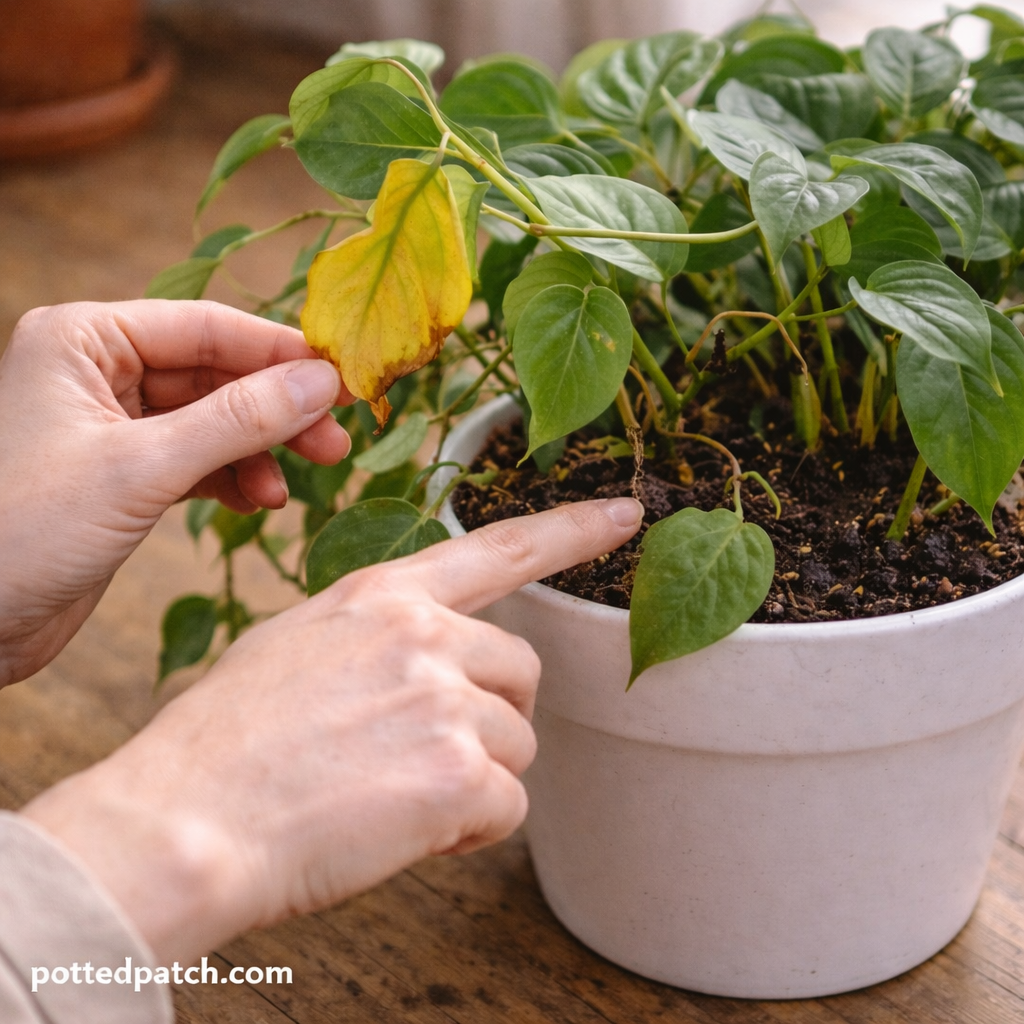
This is the most common mistake with philodendrons.
While they like slightly moist soil, they do not tolerate soggy conditions. Overwatering leads to root rot, which can quickly damage the plant.
Signs of Overwatering
- Yellowing leaves (especially lower leaves)
- Mushy stems near the soil line
- Soil staying wet for many days
- Foul or musty smell
How to Fix It
- Allow the top 1–2 inches of soil to dry before watering.
- Use pots with drainage holes.
- Switch to a well-draining potting mix.
- Empty saucers after watering.
When in doubt, it’s safer to underwater slightly than overwater.
2. Letting the Soil Stay Too Dry
While overwatering is common, underwatering can also cause stress.
Philodendrons don’t like being bone dry for long periods.
Symptoms of Underwatering
- Drooping or curling leaves
- Crispy brown edges
- Soil pulling away from the sides of the pot
- Slow growth
Correction
Water thoroughly when the top layer is dry, ensuring water drains out the bottom.
Consistent moisture (not wet, not dry) is the goal.
3. Too Much Direct Sunlight
Philodendrons prefer bright, indirect light.
Direct sun can scorch leaves, especially in south- or west-facing windows.
Signs of Light Burn
- Faded or bleached leaves
- Brown, crispy patches
- Curling leaf edges
Better Lighting Conditions
- Place near an east-facing window.
- Use sheer curtains to filter strong light.
- Keep 3–6 feet away from intense afternoon sun.
Too little light can also cause leggy growth, so balance is key.
4. Poor Drainage
Even if your watering schedule is correct, poor drainage can create problems.
Heavy soil or pots without holes trap moisture around roots.
Fix Drainage Problems
- Repot into an airy mix (add perlite or orchid bark).
- Choose containers with proper drainage holes.
- Avoid decorative outer pots that trap water.
Healthy roots need oxygen just as much as water.
5. Ignoring Pruning
Philodendrons can become leggy or sparse over time.
If you never trim them, vines stretch toward light and lose fullness.
Why Pruning Matters
- Encourages bushier growth
- Removes yellow or damaged leaves
- Improves airflow
- Maintains shape
Light pruning every few months keeps the plant compact and attractive.
6. Overfertilizing
More fertilizer does not mean faster growth.
Too much fertilizer can burn roots and cause brown tips.
Signs of Fertilizer Burn
- Brown leaf edges
- White crust on soil surface
- Sudden decline after feeding
Safer Feeding Routine
- Fertilize every 4–6 weeks in spring and summer.
- Skip fertilizing in fall and winter.
- Use diluted, balanced liquid fertilizer.
Philodendrons are moderate feeders — not heavy ones.
7. Temperature and Draft Stress
Philodendrons prefer stable indoor temperatures between 65–85°F.
Sudden temperature drops can shock the plant.
Avoid Placing Near:
- Air conditioners
- Heating vents
- Drafty doors
- Cold windows in winter
Stable conditions promote steady growth.
8. Skipping Repotting for Years
Philodendrons grow steadily and can become root-bound.
When roots crowd the pot, growth slows and watering becomes inconsistent.
Signs It’s Time to Repot
- Roots growing from drainage holes
- Water running straight through quickly
- Stunted growth
- Tight root ball when removed
Repot every 1–2 years during spring for best results.
9. Not Rotating the Plant
Philodendrons grow toward light.
If you never rotate the pot, growth becomes uneven.
Easy Fix
Turn the pot a quarter turn every 1–2 weeks to promote balanced growth.
10. Ignoring Early Pest Signs
Though relatively pest-resistant, philodendrons can attract:
- Spider mites
- Aphids
- Mealybugs
Catching infestations early prevents major damage.
What to Watch For
- Sticky residue
- Tiny webs
- Speckled leaves
- Small moving insects
Wipe leaves regularly and inspect during watering.
Quick Self-Check Guide
If your philodendron looks unhealthy, ask:
- Is the soil too wet or too dry?
- Has lighting changed recently?
- Is it near a vent or draft?
- Has it been fertilized too often?
- Is it root-bound?
Small adjustments often solve most issues quickly.
Final Thoughts
Philodendrons are forgiving plants, but consistent care matters.
Most problems come down to watering, lighting, or drainage. By correcting these common mistakes early, you can keep your philodendron lush, vibrant, and thriving for years.
Pay attention to what your plant is telling you — it usually gives subtle warning signs before serious damage occurs.