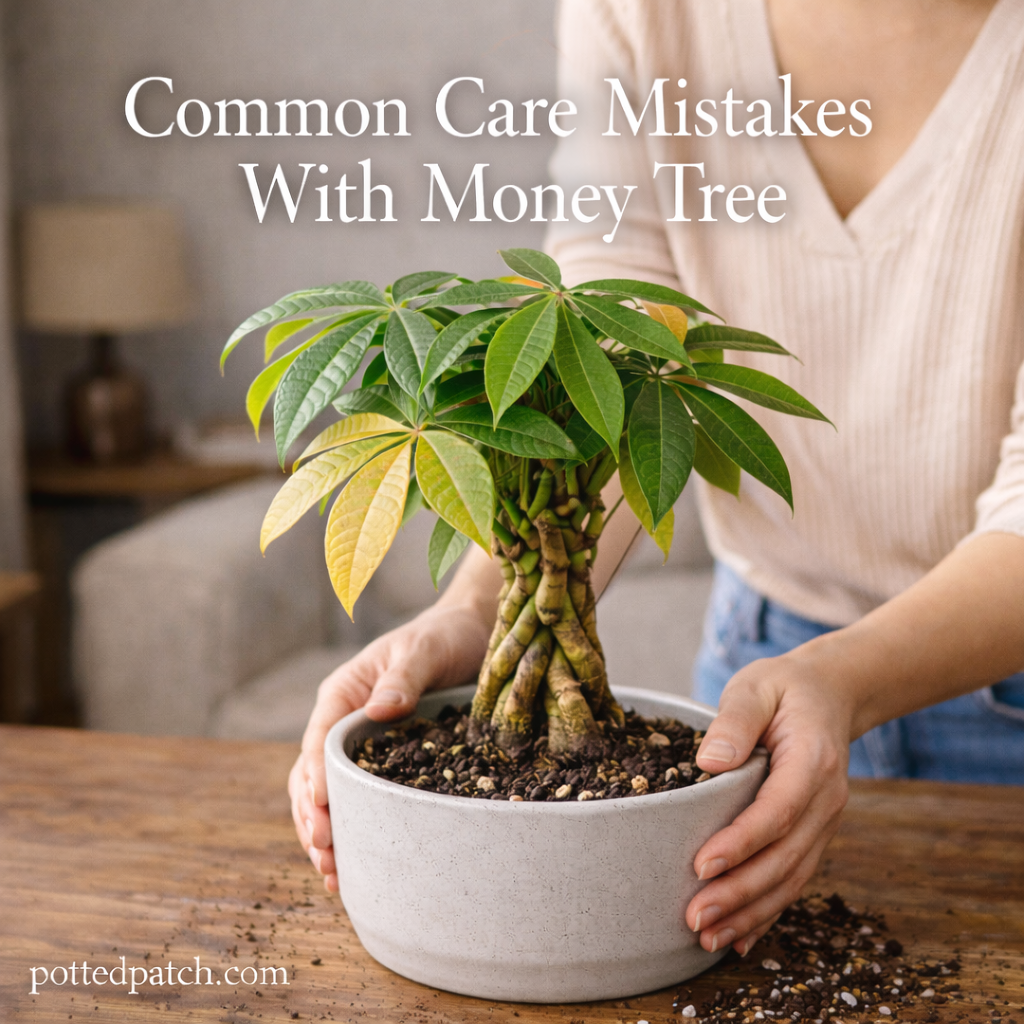
Money Trees are often labeled as “easy indoor plants,” but many common care mistakes can lead to yellowing leaves, root rot, and stalled growth.
The good news? Most issues are preventable — and reversible — once you understand what to avoid.
This guide covers the most common Money Tree care mistakes and how to fix them before long-term damage occurs.
1. Overwatering
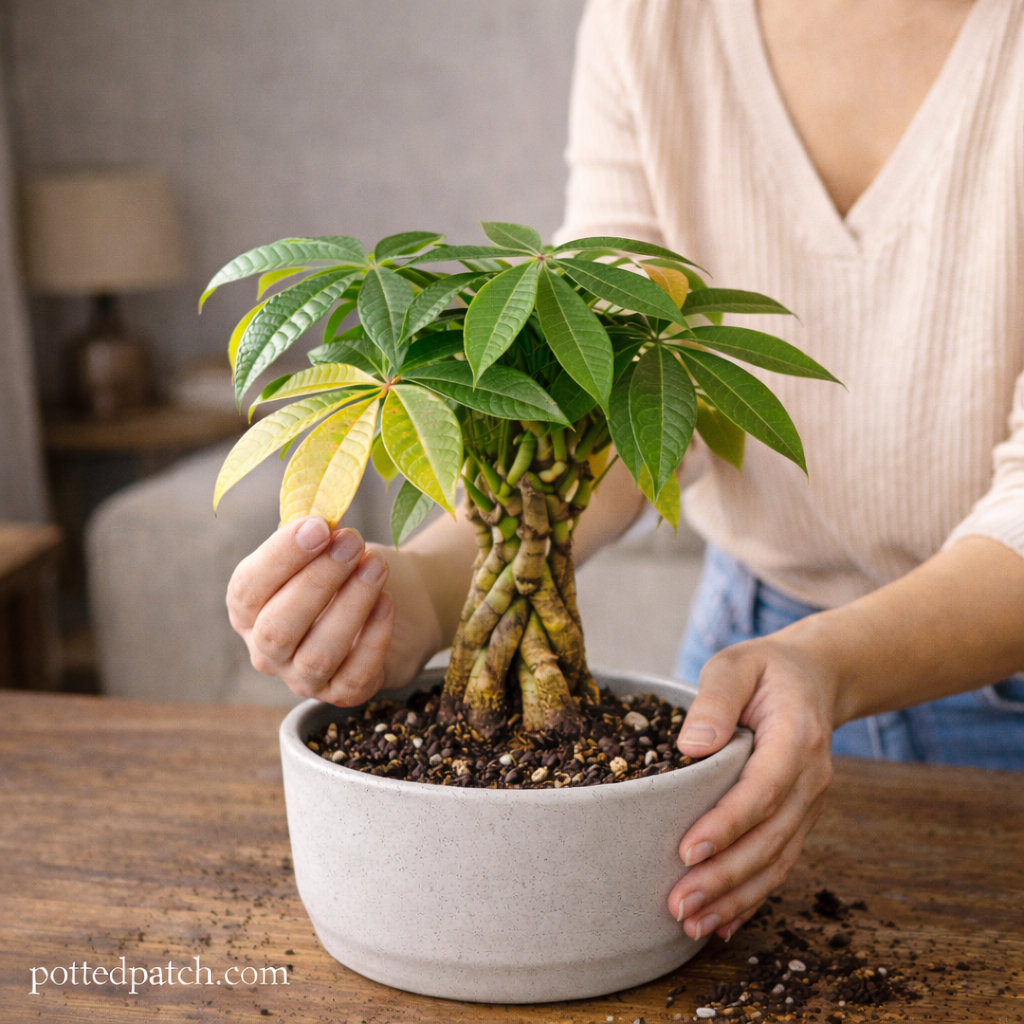
This is the number one mistake.
Money Trees prefer evenly moist soil — not constantly wet soil.
What happens when you overwater:
- Yellowing leaves
- Soft or mushy trunk
- Leaf drop
- Foul smell from soil
- Root rot
How to avoid it:
- Water only when the top 2–3 inches of soil are dry.
- Always use a pot with drainage holes.
- Empty the saucer after watering.
If you suspect root rot, repot into fresh, well-draining soil.
2. Using the Wrong Soil
Heavy, compacted soil traps moisture around the roots.
Signs your soil is too dense:
- Water pools on the surface
- Soil stays wet for more than 10–14 days
- Leaves yellow despite careful watering
The fix:
Use a light, well-draining potting mix and add perlite for better airflow.
3. Placing It in Direct Sunlight
Money Trees love bright light — but not harsh direct sun.
Too much direct afternoon sun can cause:
- Brown, crispy leaf edges
- Faded leaf color
- Scorch marks
Instead, place your plant in bright, indirect light near an east-facing window or a few feet from a south- or west-facing window.
4. Keeping It in Low Light Too Long
While Money Trees tolerate lower light, long-term dim conditions can lead to:
- Leggy, stretched growth
- Smaller leaves
- Slower development
- Increased leaf drop
If your space lacks natural light, consider supplementing with a grow light.
5. Choosing a Pot That’s Too Large
Upsizing too much during repotting can cause problems.
A pot that’s significantly larger than the root ball:
- Holds excess moisture
- Increases overwatering risk
- Slows soil drying time
Always choose a pot only 1–2 inches larger in diameter.
6. Inconsistent Temperature or Drafts
Money Trees prefer stable indoor temperatures.
Avoid placing your plant near:
- Air conditioning vents
- Heating vents
- Drafty doors or windows
Sudden temperature shifts can trigger leaf drop.
7. Ignoring Humidity Levels
Dry indoor air, especially in winter, can cause:
- Brown leaf tips
- Curling leaves
- Slower growth
Aim for moderate humidity (40–60%).
You can increase humidity by:
- Using a humidifier
- Placing the plant on a pebble tray
- Grouping it with other plants
8. Overfertilizing
More fertilizer does not mean faster growth.
Overfertilizing can cause:
- Leaf burn
- Salt buildup in soil
- Root damage
Feed once per month during spring and summer with a balanced liquid fertilizer diluted to half strength. Avoid fertilizing in fall and winter.
9. Moving the Plant Too Often
Money Trees prefer consistency.
Constantly moving your plant to different lighting or temperature conditions can cause stress and leaf drop.
Find a bright, stable location and let it adjust.
10. Ignoring Early Warning Signs
Your Money Tree will show stress early through its leaves.
Pay attention to:
- Color changes
- Drooping
- Unusual leaf shedding
- Soft trunk texture
Addressing problems early prevents bigger issues later.
Final Thoughts
Most Money Tree problems come down to three things: overwatering, poor drainage, and inconsistent lighting.
Keep the soil well-draining, water thoughtfully, provide bright indirect light, and maintain a stable indoor environment. Avoid these common mistakes, and your Money Tree will stay healthy and vibrant for years.
Indoor plant care is about observation and consistency — not perfection.