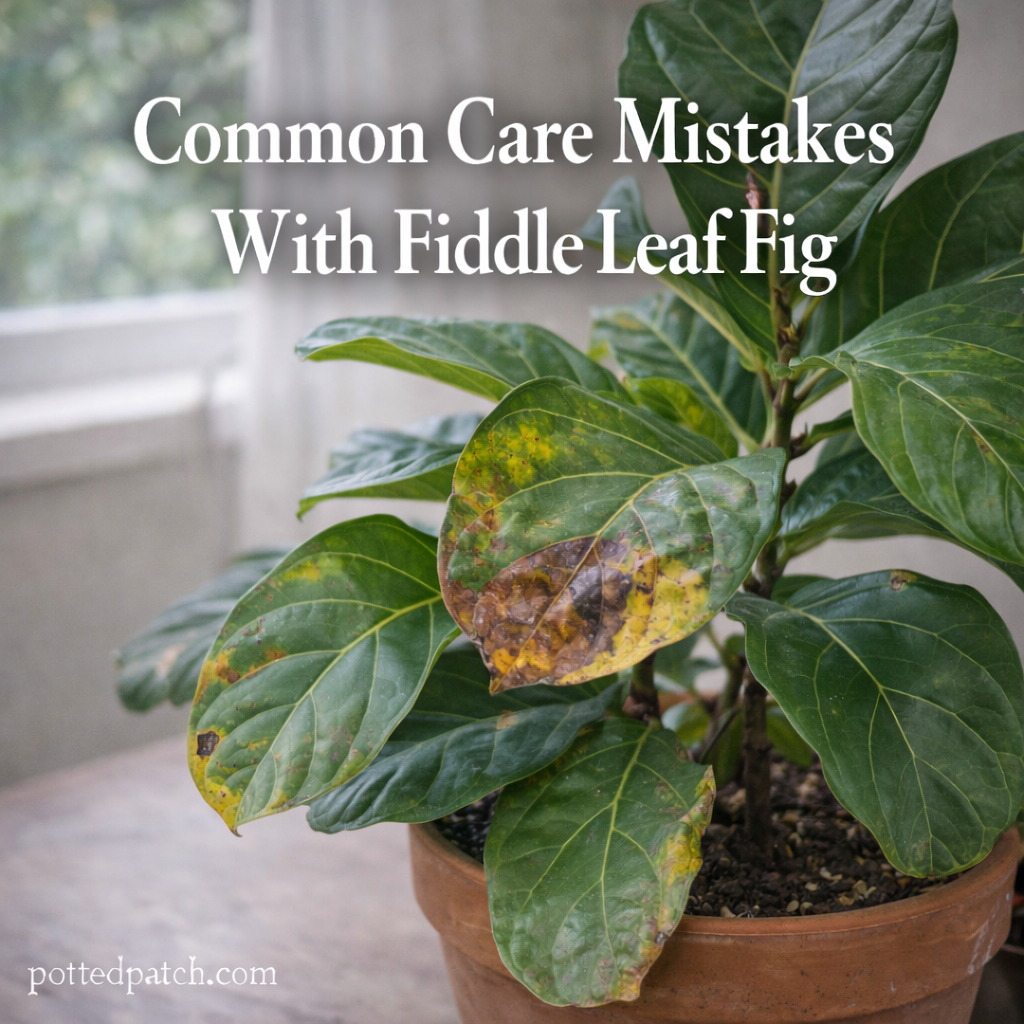
Fiddle leaf figs are stunning houseplants—but they’re also known for being particular. Many plant owners struggle not because the plant is “difficult,” but because small care mistakes add up over time.
If your fiddle leaf fig is dropping leaves, developing brown spots, or looking stressed, one of these common mistakes may be the cause.
Let’s break them down and fix them.
1. Overwatering
This is the most common mistake.
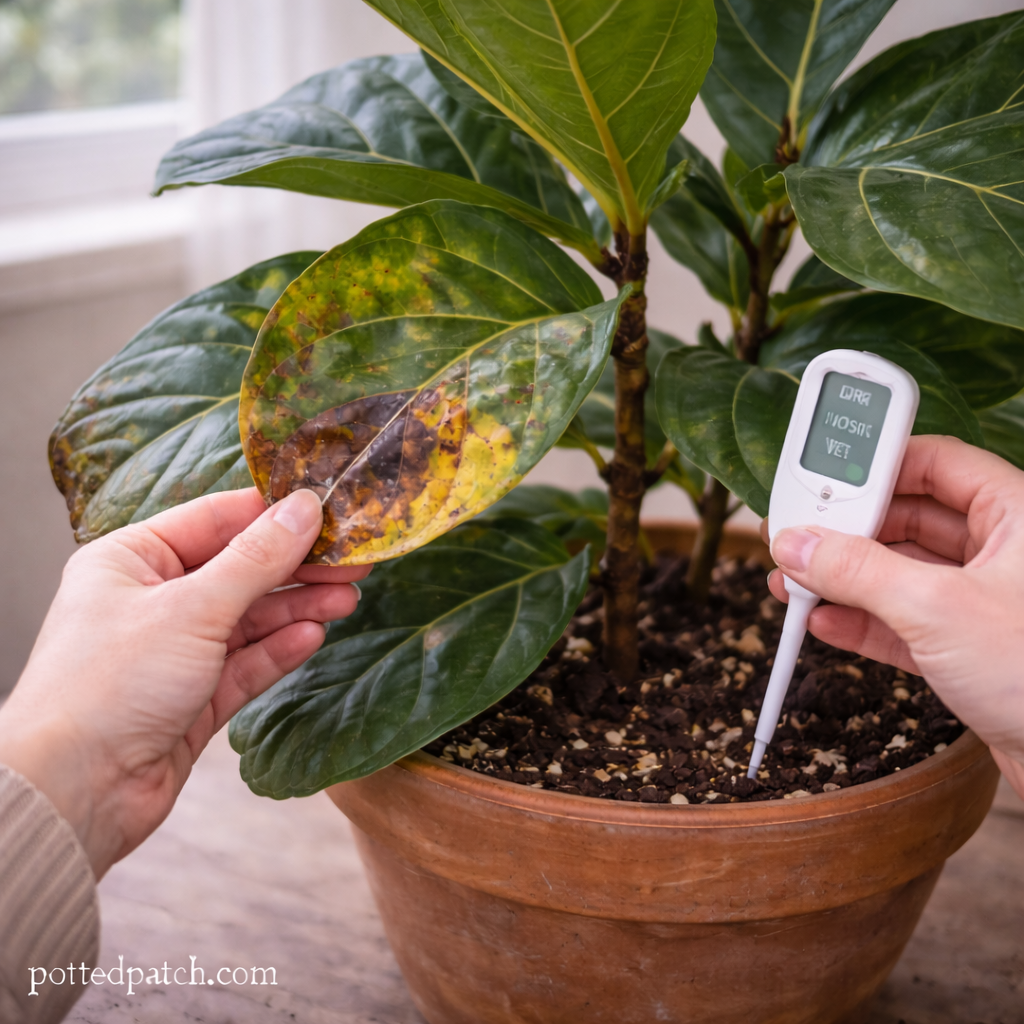
Fiddle leaf figs do not like constantly wet soil. When roots sit in moisture too long, they can develop root rot.
Signs of Overwatering
- Yellowing leaves
- Brown spots with yellow halos
- Mushy stems
- Foul-smelling soil
Fix
- Water only when the top 2 inches of soil are dry.
- Use a pot with drainage holes.
- Empty the saucer after watering.
Consistency matters more than frequency.
2. Not Enough Light
These plants need bright, indirect light to thrive.
Placing them in dim corners slows growth and increases leaf drop.
Signs of Low Light
- Slow growth
- Smaller new leaves
- Leaning toward the window
- Lower leaves dropping
Fix
Move your plant near a south- or east-facing window with filtered light.
Brighter conditions dramatically improve health.
3. Moving the Plant Too Often
Fiddle leaf figs dislike frequent changes.
Constantly shifting locations can cause:
- Sudden leaf drop
- Stress-related browning
- Growth pauses
Choose a bright, stable location and let the plant adjust.
4. Using the Wrong Soil
Dense, moisture-retentive soil traps water and restricts airflow.
Ideal Soil
- Well-draining potting mix
- Added perlite
- Orchid bark for aeration
Heavy soil increases root problems.
5. Ignoring Drainage
Even with good soil, poor drainage can cause trouble.
Common mistakes include:
- Pots without drainage holes
- Letting water sit in decorative containers
- Oversized pots holding too much moisture
Healthy roots require both water and oxygen.
6. Overfertilizing
More fertilizer does not mean faster growth.
Too much can cause:
- Brown leaf edges
- Salt buildup on soil
- Root burn
Fix
Fertilize once per month during spring and summer.
Stop during fall and winter.
7. Repotting Into a Pot That’s Too Large
It’s tempting to “future-proof” your plant with a bigger pot, but excess soil retains excess moisture.
Always increase pot size by only 1–2 inches in diameter.
8. Inconsistent Watering
Allowing soil to go from bone-dry to soaking wet stresses the plant.
Avoid:
- Watering on autopilot
- Letting the soil completely dry for weeks
- Giving tiny “sips” instead of deep watering
Instead, water thoroughly and allow partial drying between cycles.
9. Ignoring Seasonal Changes
Fiddle leaf figs grow actively in spring and summer.
In fall and winter:
- Growth slows
- Light levels drop
- Water needs decrease
Adjust care based on the season.
10. Pruning Too Aggressively
Removing too many leaves at once shocks the plant.
Never remove more than 20–30% of foliage at one time.
Prune during active growth for best results.
How to Avoid Most Problems
Follow this simple routine:
- Provide bright, indirect light.
- Use well-draining soil.
- Water when the top layer dries.
- Fertilize during active growth only.
- Keep placement consistent.
Most fiddle leaf fig issues stem from small, repeated care mistakes—not major neglect.
Final Thoughts
Fiddle leaf figs aren’t impossible—they just require consistency.
By avoiding:
- Overwatering
- Low light
- Poor drainage
- Overfertilizing
- Frequent relocation
You’ll dramatically reduce stress and keep your plant healthy.
When light, soil, and watering are balanced, fiddle leaf figs reward you with large, glossy leaves and steady growth.