

Ferns are beautiful, timeless houseplants that instantly soften a space. But despite their delicate appearance, most fern problems don’t come from difficulty — they come from small care mistakes.
If your fern has brown tips, drooping fronds, or thinning growth, chances are one of these common issues is the cause.
Here’s what to avoid — and how to fix it.
1. Letting the Soil Dry Out Completely
One of the biggest mistakes with ferns is treating them like drought-tolerant houseplants.
Ferns prefer consistently moist soil. When the soil dries out fully, fronds quickly turn crispy and brown.
Why It Happens
Many plant owners wait too long between waterings, especially if they’re used to caring for succulents or snake plants.
How to Fix It
- Check soil weekly.
- Water when the top inch feels slightly dry.
- Don’t let the pot become extremely lightweight.
Consistency matters more than heavy watering.
2. Overwatering and Poor Drainage
While ferns like moisture, they don’t tolerate soggy roots.
Waterlogged soil suffocates roots and leads to drooping, yellowing, and even root rot.
Signs of Overwatering
- Soft, limp fronds
- Yellowing leaves
- Soil that stays wet for days
- Musty smell
Prevention Tips
- Use pots with drainage holes.
- Add perlite or bark to improve airflow.
- Empty decorative cache pots after watering.
3. Using the Wrong Soil
Ferns need light, airy, organic-rich soil.
Heavy garden soil or dense mixes trap moisture and restrict oxygen flow to the roots.
Ideal Soil Characteristics
- Moisture-retentive
- Well-draining
- Rich in organic matter
- Slightly acidic
A simple mix of indoor potting soil, perlite, and compost works well.
4. Not Providing Enough Humidity
Ferns naturally grow in humid forest environments. Dry indoor air — especially in winter — is a major stressor.
Low humidity causes:
- Brown tips
- Leaf curling
- Frond thinning
How to Increase Humidity
- Use a humidifier
- Group plants together
- Place a pebble tray under the pot
- Keep away from heating vents
Even a modest humidity increase makes a noticeable difference.
5. Placing Ferns in Direct Sunlight
Bright light is good. Direct sunlight is not.
Ferns prefer filtered or indirect light. Harsh sun can scorch fronds, causing pale patches and crispy edges.
Best Placement
- Near east-facing windows
- A few feet from south or west windows
- In bright rooms with sheer curtains
If leaves look bleached, move the plant slightly farther from the window.
6. Ignoring Root Crowding
Ferns grow steadily. If left too long in a small pot, roots become crowded and compacted.
This leads to:
- Faster drying soil
- Reduced nutrient uptake
- Stunted growth
Repot every 1–2 years or when roots circle tightly around the pot.
7. Fertilizing Too Frequently
More fertilizer does not mean faster growth.
Ferns are light feeders. Over-fertilizing can burn roots and cause leaf tip browning.
Fertilizer Guidelines
- Use diluted liquid fertilizer
- Feed during active growth (spring and summer)
- Skip feeding in fall and winter
Less is usually better.
8. Sudden Environmental Changes
Ferns dislike abrupt shifts in:
- Temperature
- Lighting
- Watering habits
Moving a fern from a dim room to bright sun, or from humid air to dry air, can trigger stress symptoms.
Make changes gradually whenever possible.
How to Tell If Your Fern Is Recovering
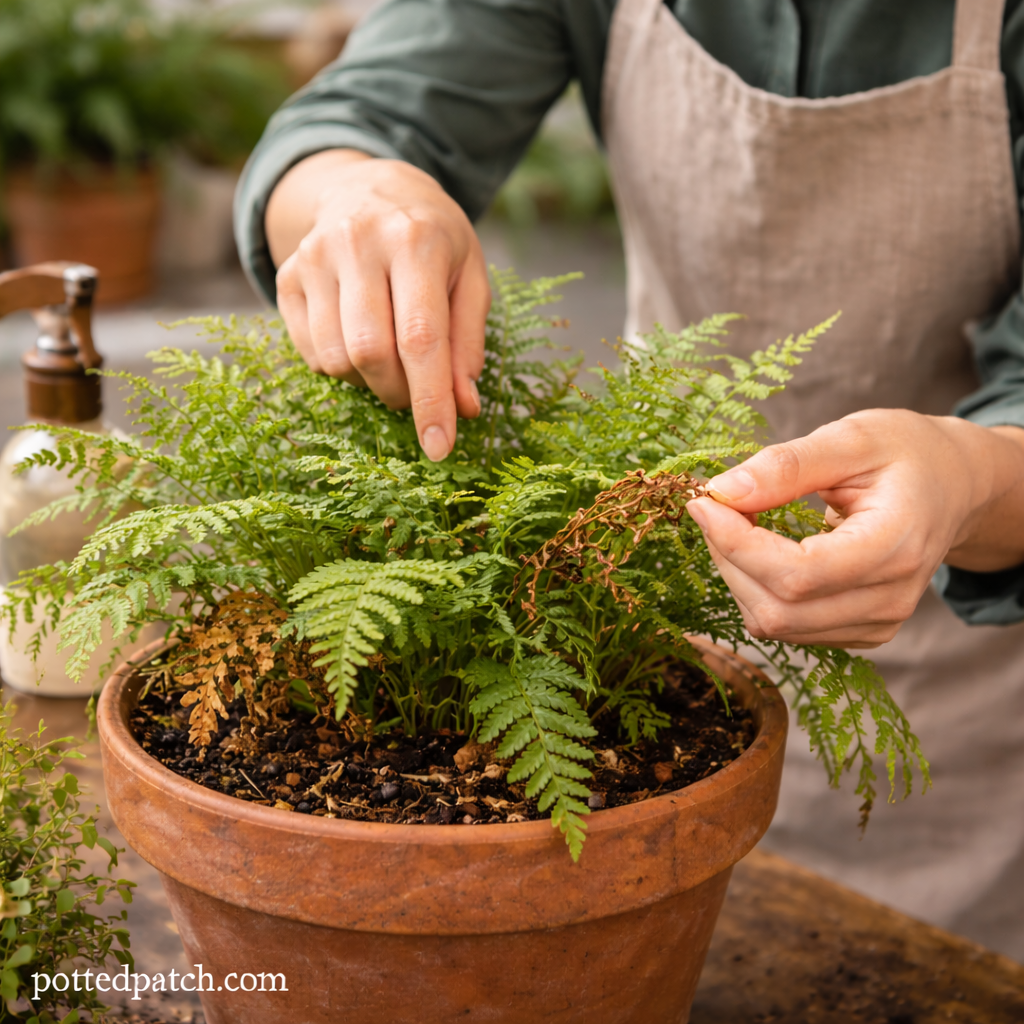
After correcting care mistakes, watch for:
- New healthy fronds
- Improved leaf firmness
- Slower browning progression
- Balanced soil moisture
Recovery may take a few weeks, but ferns are resilient when conditions stabilize.
Final Thoughts
Most fern problems aren’t serious — they’re simply small environmental mismatches. By keeping soil consistently moist, increasing humidity, providing indirect light, and avoiding overwatering, you can prevent nearly all common issues.
A stable routine is the secret to lush, thriving fern growth indoors.