Dracaenas are often labeled “easy” houseplants — and they are. But even low-maintenance plants can struggle when basic care mistakes add up.
If your dracaena has yellow leaves, brown tips, drooping stems, or stalled growth, chances are one of these common mistakes is the cause.
Here’s what to watch for — and how to fix it.
1. Overwatering
This is the most common mistake with dracaena.
Dracaenas prefer their soil to dry slightly between waterings. When the soil stays consistently wet, roots suffocate and rot.
Signs of overwatering:
- Yellowing lower leaves
- Mushy stems
- Soft trunk near the soil
- Sour smell from the pot
How to fix it:
- Let the top 1–2 inches of soil dry before watering again.
- Use a pot with drainage holes.
- Empty the saucer after watering.
- Repot in well-draining soil if root rot is present.
Watering less often is better than watering too frequently.
2. Using Heavy or Poorly Draining Soil
Dracaenas need breathable soil.
Dense, compacted potting mix traps moisture around roots and increases the risk of rot.
Better soil structure:
- 2 parts indoor potting mix
- 1 part perlite
- 1 part orchid bark or coarse sand
Light, airy soil helps roots get oxygen.
3. Too Much Direct Sunlight
Dracaenas prefer bright, indirect light.
Placing them in harsh afternoon sun can cause:
- Brown leaf edges
- Faded or bleached leaves
- Crispy patches
Move the plant a few feet away from south- or west-facing windows, or filter light with sheer curtains.
4. Not Enough Light
On the opposite end, very low light can also cause issues.
Signs of insufficient light:
- Slow growth
- Leggy stems
- Smaller new leaves
- Dull color
While dracaenas tolerate moderate light, they still need brightness to thrive.
Aim for consistent, indirect light.
5. Over-Fertilizing
More fertilizer does not mean faster growth.
Excess fertilizer leads to salt buildup in the soil, which damages roots.
Warning signs:
- Brown leaf tips
- White crust on soil surface
- Leaf drop after feeding
Feed lightly once a month during spring and summer only. Skip feeding in fall and winter.
6. Ignoring Brown Leaf Tips
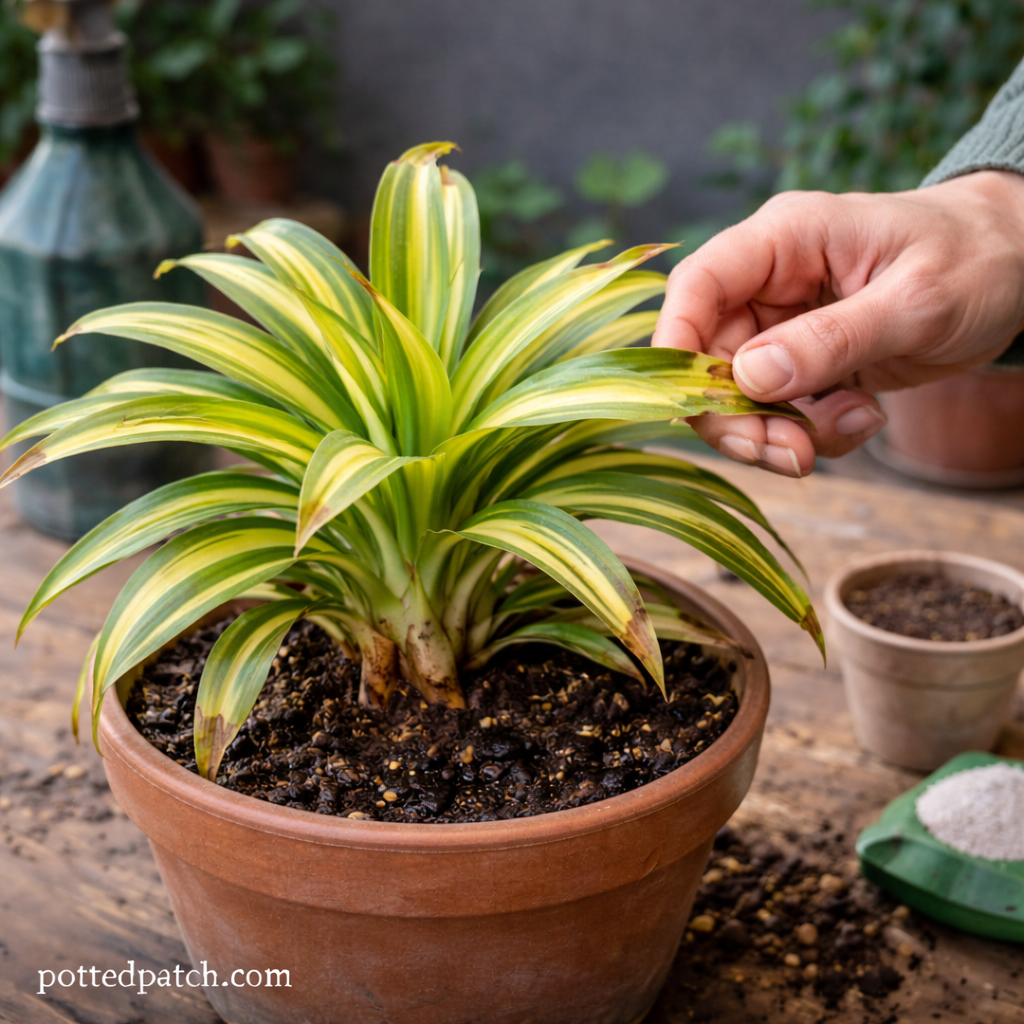
Brown tips are common with dracaena — but they’re often a signal.
Common causes include:
- Tap water with high fluoride or salts
- Low humidity
- Overfertilizing
- Inconsistent watering
Switching to filtered or distilled water can dramatically reduce tip burn in sensitive varieties.
7. Repotting Too Frequently
Dracaenas prefer being slightly root bound.
Repotting too often can:
- Stress the plant
- Slow growth
- Increase watering mistakes
Only repot every 1–2 years, or when roots outgrow the container.
8. Placing Near Drafts or Vents
Dracaenas dislike sudden temperature changes.
Avoid placing near:
- Air conditioning vents
- Heating vents
- Frequently opened exterior doors
Ideal temperature range: 65–80°F.
Stable conditions keep the plant stress-free.
9. Letting Water Sit in the Crown
When watering from above, avoid pouring water directly into the center of the plant.
Standing water at the base of leaves can lead to crown rot.
Water the soil evenly and allow proper drainage.
10. Forgetting to Clean the Leaves
Dust buildup blocks light absorption.
Every few weeks:
- Wipe leaves gently with a damp cloth.
- Remove dust to improve photosynthesis.
Clean leaves grow stronger and healthier.
Quick Dracaena Care Checklist
Use this simple reminder list:
- Bright, indirect light
- Well-draining soil
- Water when top soil is dry
- Minimal fertilizer
- Stable indoor temperatures
- Pot with drainage holes
Keeping care simple prevents most problems.
Final Thoughts
Dracaenas are resilient plants, but they respond quickly to improper watering, poor lighting, and heavy soil.
Most care mistakes are easy to correct once identified. With balanced watering, proper light, and breathable soil, your dracaena can thrive for years indoors.
Consistency — not perfection — is what keeps dracaenas healthy.