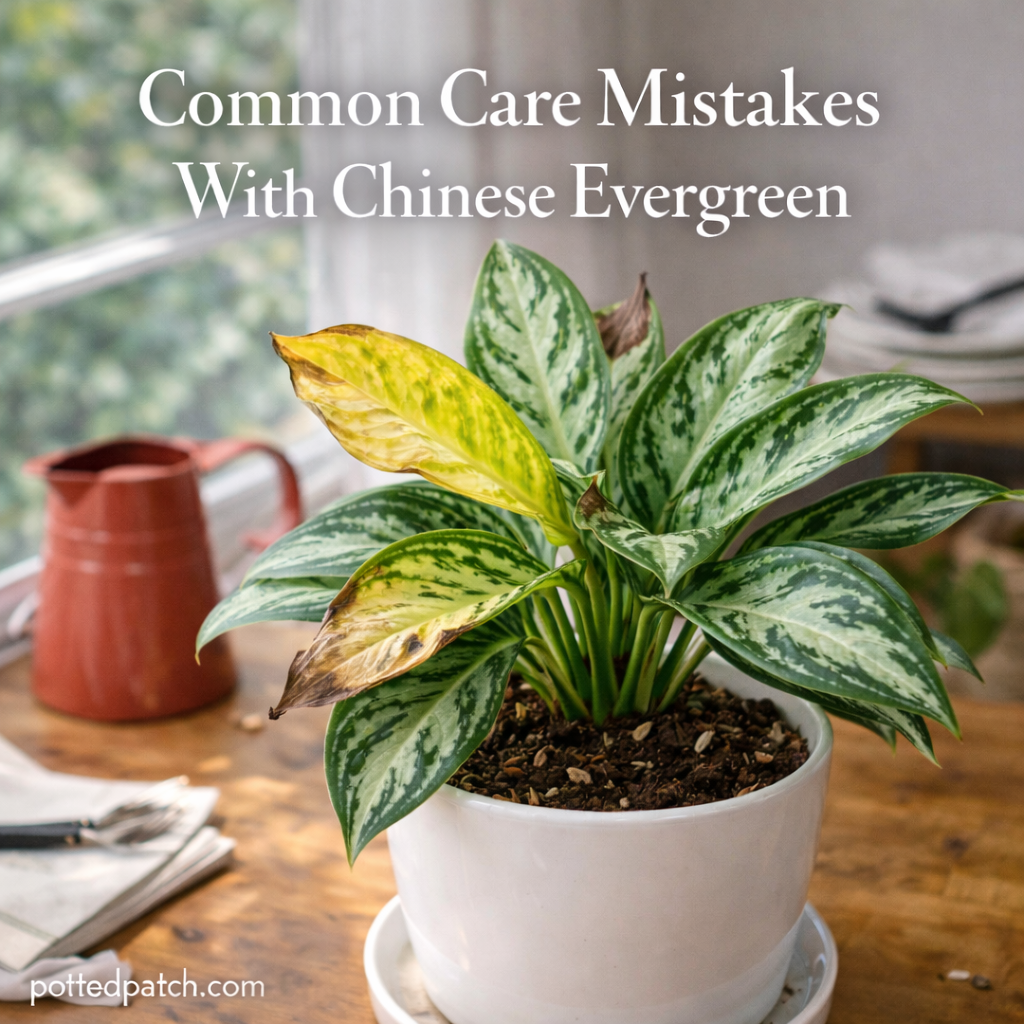
Chinese Evergreen, scientifically known as Aglaonema, is famous for being low-maintenance. But even resilient plants can struggle when basic care mistakes pile up.
If your Chinese Evergreen has yellow leaves, brown tips, or slow growth, chances are one of these common errors is the cause.
Here’s what to watch for — and how to fix it.
1. Overwatering
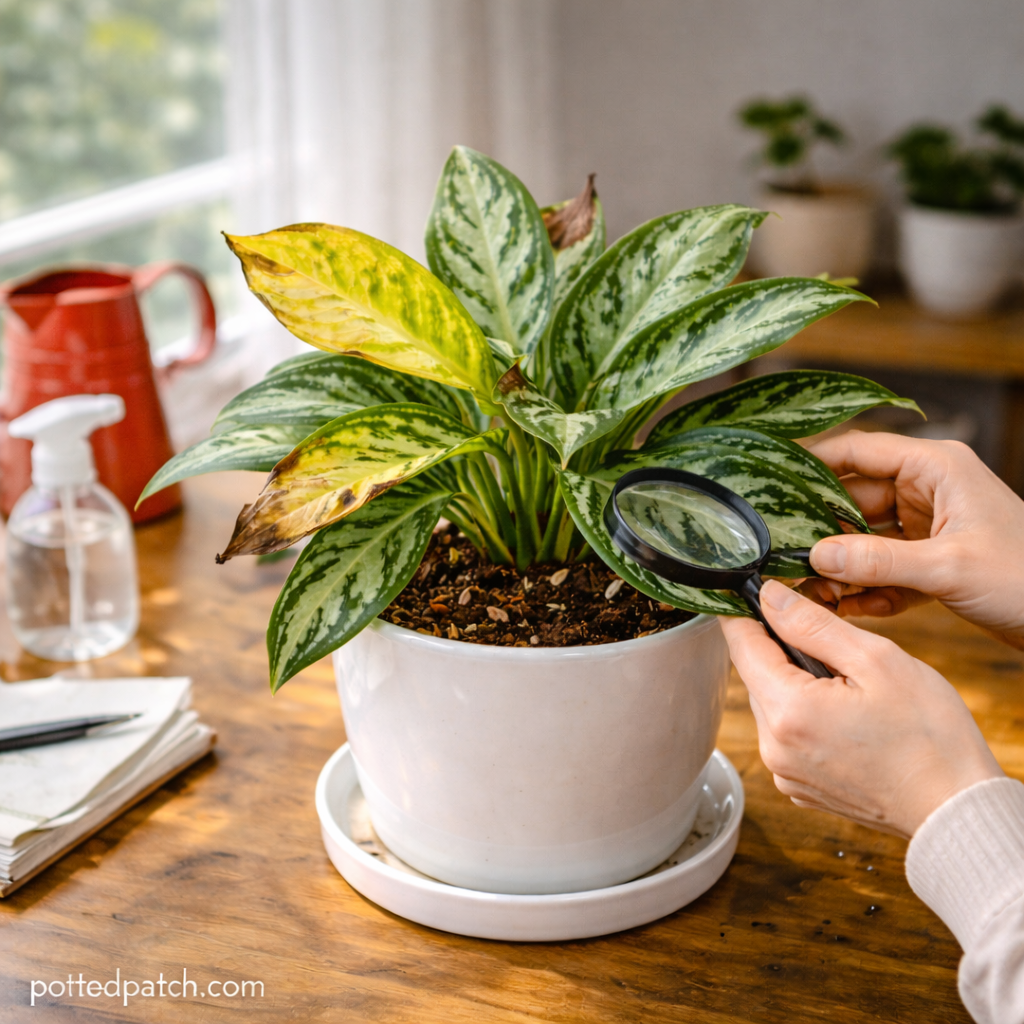
Overwatering is the number one mistake.
Chinese Evergreen prefers slightly moist soil, not soggy conditions.
Signs of Overwatering
- Yellowing leaves
- Mushy stems
- Foul-smelling soil
- Fungus gnats
- Drooping despite wet soil
How to Fix It
- Let the top 1–2 inches of soil dry before watering
- Always use a pot with drainage holes
- Empty the saucer after watering
- Switch to a well-draining soil mix
When in doubt, wait an extra day before watering.
2. Too Much Direct Sunlight
Chinese Evergreen thrives in bright, indirect light — not harsh direct sun.
Signs of Too Much Light
- Brown, crispy patches
- Faded leaf color
- Curling edges
Solution
Move the plant:
- A few feet away from bright windows
- Behind sheer curtains
- Into filtered light
3. Not Enough Light
While tolerant of low light, extremely dark conditions can weaken the plant.
Signs of Low Light
- Slow growth
- Leggy stems
- Sparse foliage
- Dull leaf variegation
Solution
Place the plant:
- Near an east-facing window
- Within a few feet of bright indirect light
- Under a grow light if necessary
4. Using the Wrong Soil
Heavy, compact soil traps water and suffocates roots.
Problems Caused by Dense Soil
- Persistent wetness
- Root rot
- Yellow leaves
Fix
Use a well-draining mix:
- Indoor potting soil
- Perlite for drainage
- Orchid bark for airflow
Always ensure the pot has drainage holes.
5. Ignoring Drainage
Even good soil won’t help if the pot has no drainage.
Water sitting at the bottom leads to root rot quickly.
Avoid
- Decorative pots without holes
- Letting water pool in saucers
If using a decorative planter, keep the plant in a nursery pot inside it.
6. Over-Fertilizing
More fertilizer does not mean faster growth.
Too much fertilizer can:
- Burn roots
- Cause leaf tip browning
- Create salt buildup
Best Practice
- Fertilize once a month in spring and summer
- Dilute to half strength
- Skip feeding in fall and winter
7. Sudden Temperature Changes
Chinese Evergreen prefers stable indoor conditions.
Avoid
- Cold drafts
- Placement near air vents
- Temperatures below 60°F
Cold stress can cause drooping and leaf discoloration.
8. Low Humidity Neglect
While adaptable, very dry air can lead to:
- Brown leaf tips
- Crispy edges
If your home is very dry:
- Use a pebble tray
- Group plants together
- Run a humidifier
9. Skipping Repotting for Years
Old, compacted soil loses structure and nutrients.
If roots circle the pot tightly or growth slows, it may be time to repot.
Repot every 2–3 years with fresh soil.
Quick Mistake Prevention Checklist
To keep your Chinese Evergreen healthy:
- Water only when the top soil is dry
- Avoid direct sunlight
- Use well-draining soil
- Ensure proper drainage
- Fertilize lightly
- Keep temperatures stable
Most problems are easy to fix once identified early.
With balanced light, watering, and soil, your Chinese Evergreen can thrive indoors for years with minimal effort.