

Boston ferns are beautiful, classic houseplants—but they’re also known for being a little dramatic when their needs aren’t met.
If your fern has brown tips, yellowing fronds, or constant leaf drop, chances are it’s reacting to a care mistake. The good news? Most issues are easy to fix once you identify the cause.
Here are the most common Boston fern care mistakes—and how to avoid them.
1. Giving Too Much Direct Sunlight
Boston ferns love bright light, but they do not tolerate harsh, direct sun.
Placing your fern in a south- or west-facing window without sheer curtains can cause:
- Crispy brown edges
- Bleached fronds
- Dry, brittle foliage
What to Do Instead
- Place 1–3 feet from an east-facing window
- Use sheer curtains to filter strong sunlight
- Keep in bright, indirect light
Filtered light mimics their natural forest habitat.
2. Letting the Soil Dry Out Completely
One of the biggest Boston fern mistakes is inconsistent watering.
Unlike succulents, these ferns prefer consistently moist soil. Letting the root ball dry out fully can lead to:
- Drooping fronds
- Excessive leaf drop
- Brown tips
The Fix
- Check soil moisture regularly
- Water when the top inch feels slightly dry
- Never allow soil to become bone dry
Consistency is more important than heavy watering.
3. Overwatering and Poor Drainage
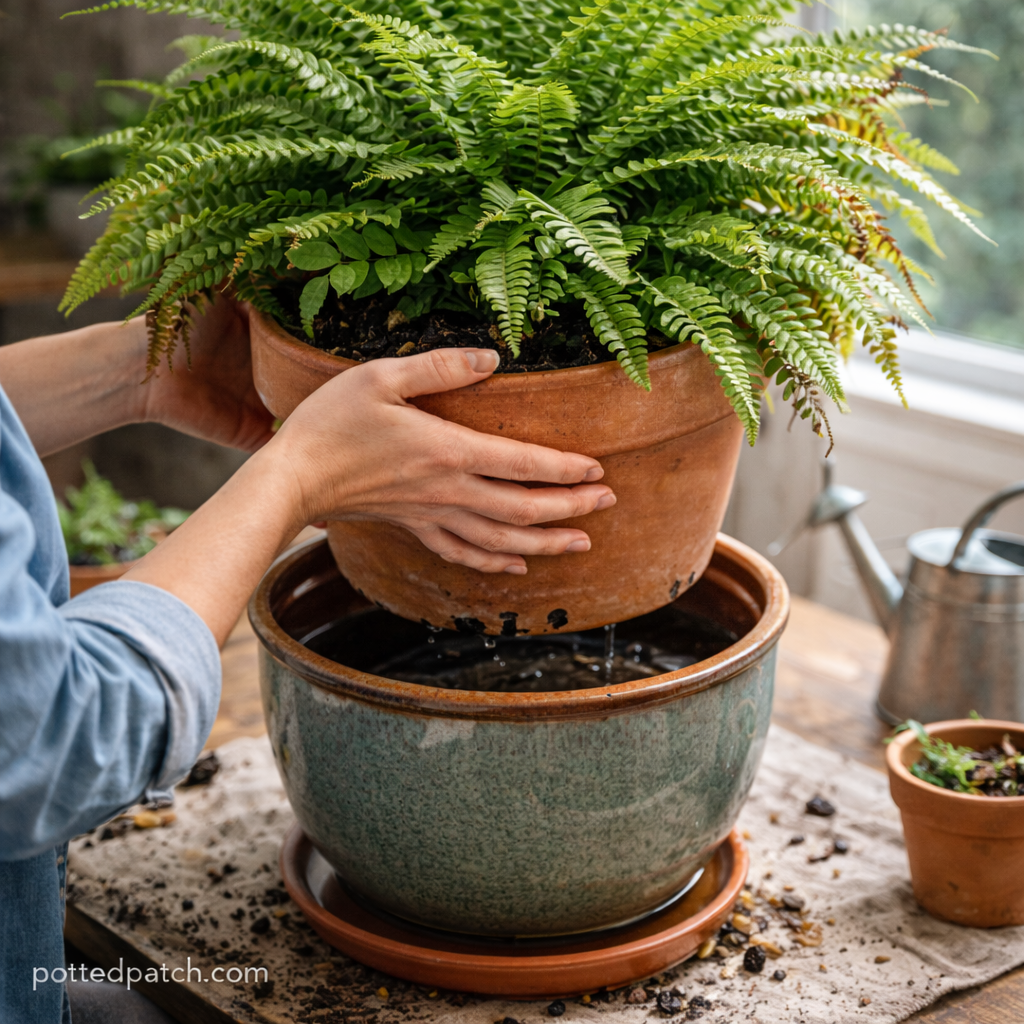
On the flip side, constantly soggy soil is just as harmful.
If water sits in the pot with no drainage, roots can suffocate.
Signs of overwatering include:
- Yellowing fronds
- Mushy stems
- Foul soil odor
Prevention Tips
- Always use a pot with drainage holes
- Empty saucers after watering
- Use a well-draining soil mix
Balanced moisture is key.
4. Ignoring Humidity Needs
Boston ferns thrive in high humidity environments.
Dry indoor air—especially in winter—can cause:
- Brown leaf edges
- Leaf shedding
- Dull-looking foliage
How to Increase Humidity
- Use a humidifier
- Place a pebble tray beneath the pot
- Group plants together
- Mist lightly (as supplemental help only)
Humidity often makes the biggest visible difference.
5. Placing Near Heating or AC Vents
Air vents create temperature swings and dry airflow.
This can quickly stress your fern and lead to:
- Rapid leaf drop
- Drying soil
- Uneven growth
Keep your plant away from:
- Heating vents
- Air conditioners
- Drafty windows
Stable conditions help Boston ferns thrive.
6. Using Heavy or Compacted Soil
Dense soil blocks airflow to the roots.
If soil feels muddy or drains very slowly, roots may struggle.
Better Option
Use a light, airy mix that includes:
- Peat-based potting soil
- Perlite
- Pine bark fines
Roots need oxygen just as much as moisture.
7. Skipping Regular Pruning
Dead or yellowing fronds don’t recover. Leaving them attached drains energy from the plant.
Prune:
- Brown fronds
- Yellow stems
- Thin or weak growth
Use clean scissors and trim near the base.
Pruning encourages fuller, healthier growth.
8. Repotting Too Often (or Not Enough)
Boston ferns grow quickly, but constant repotting stresses them.
Repot:
- Every 1–2 years
- When roots outgrow the container
Avoid oversized pots, which retain too much moisture.
9. Fertilizing Too Frequently
More fertilizer does not mean faster growth.
Over-fertilizing can cause:
- Burned roots
- Leaf tip browning
- Salt buildup in soil
Feed lightly during spring and summer, and reduce feeding in fall and winter.
Final Thoughts
Most Boston fern problems come from imbalance—too much sun, too little humidity, inconsistent watering, or poor soil drainage.
When you recreate their natural environment—bright indirect light, steady moisture, high humidity, and breathable soil—Boston ferns reward you with lush, cascading green fronds.
If your plant looks stressed, don’t panic. Adjust one variable at a time, and you’ll often see improvement within weeks.