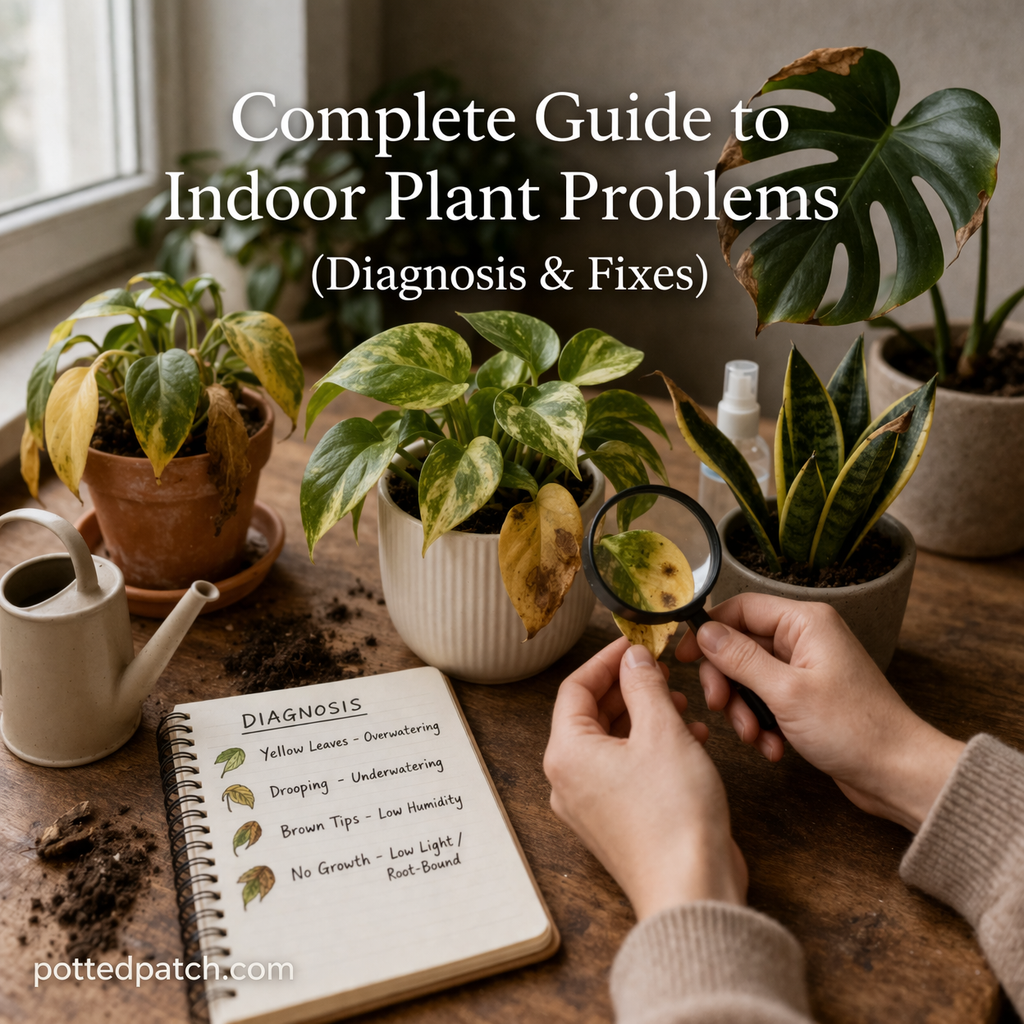
Complete Guide to Indoor Plant Problems (Diagnosis & Fixes)

Person diagnosing indoor plant problems by examining yellow leaves on a houseplant with tools and multiple plants nearby.
A hands-on indoor plant diagnosis setup showing common issues like yellowing leaves and how to identify plant problems. pottedpatch.com.

Indoor plant problems can feel confusing at first, but most issues come down to a few common causes. Once you understand how to read your plant’s signals, diagnosing problems becomes much easier.

This guide breaks down the most common indoor plant issues, what they mean, and how to fix them step-by-step.

Continue reading “Complete Guide to Indoor Plant Problems (Diagnosis & Fixes)”
How to Fix Mold on Soil on Spider Plant

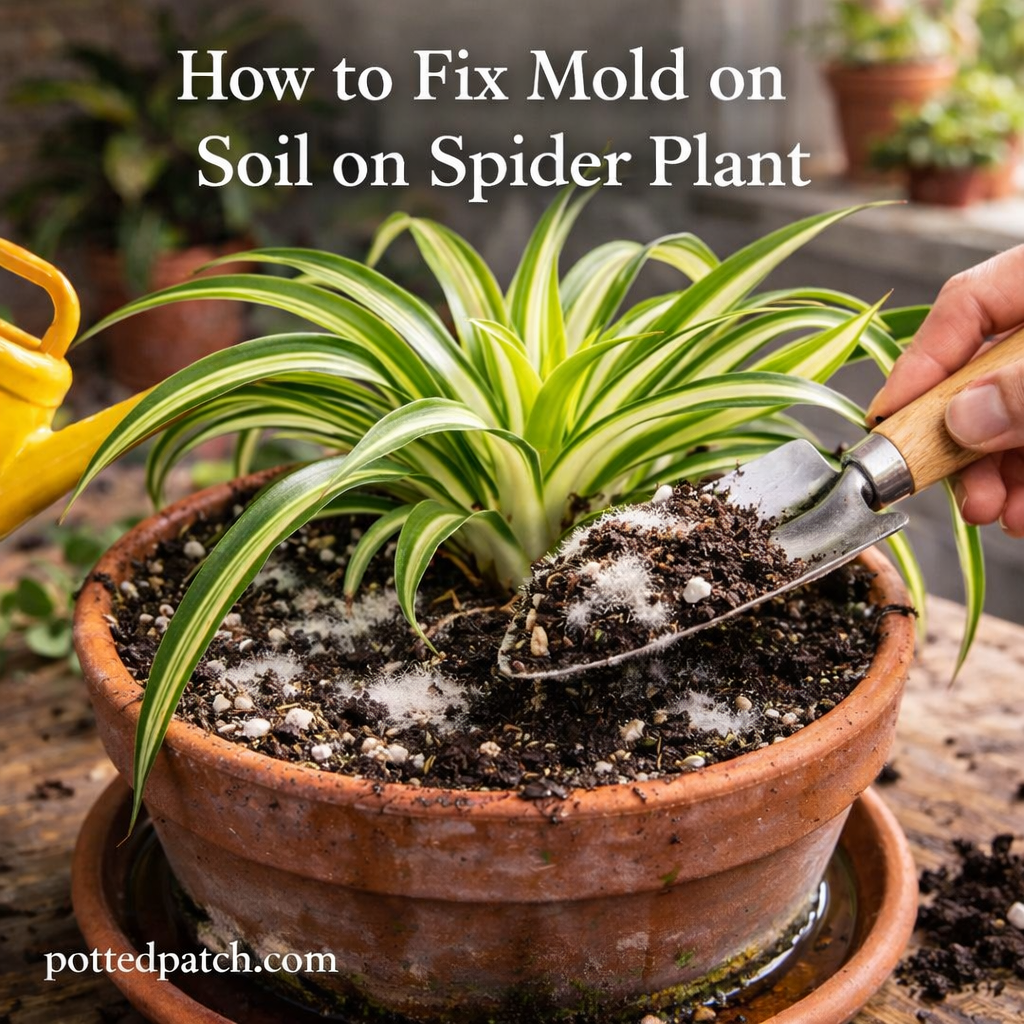
Hand using a trowel to remove moldy soil from a spider plant in a terracotta pot.
Removing moldy soil from a spider plant to fix excess moisture and fungal growth. pottedpatch.com

White, fuzzy mold on your spider plant’s soil can look alarming — but it’s usually easy to fix.

In most cases, mold is caused by excess moisture, poor drainage, or low airflow. Once you correct the underlying conditions, the mold disappears and your plant stays healthy.

Here’s exactly how to fix mold on spider plant soil step by step.

Continue reading “How to Fix Mold on Soil on Spider Plant”

Why Mold on Soil Happens on Spider Plant

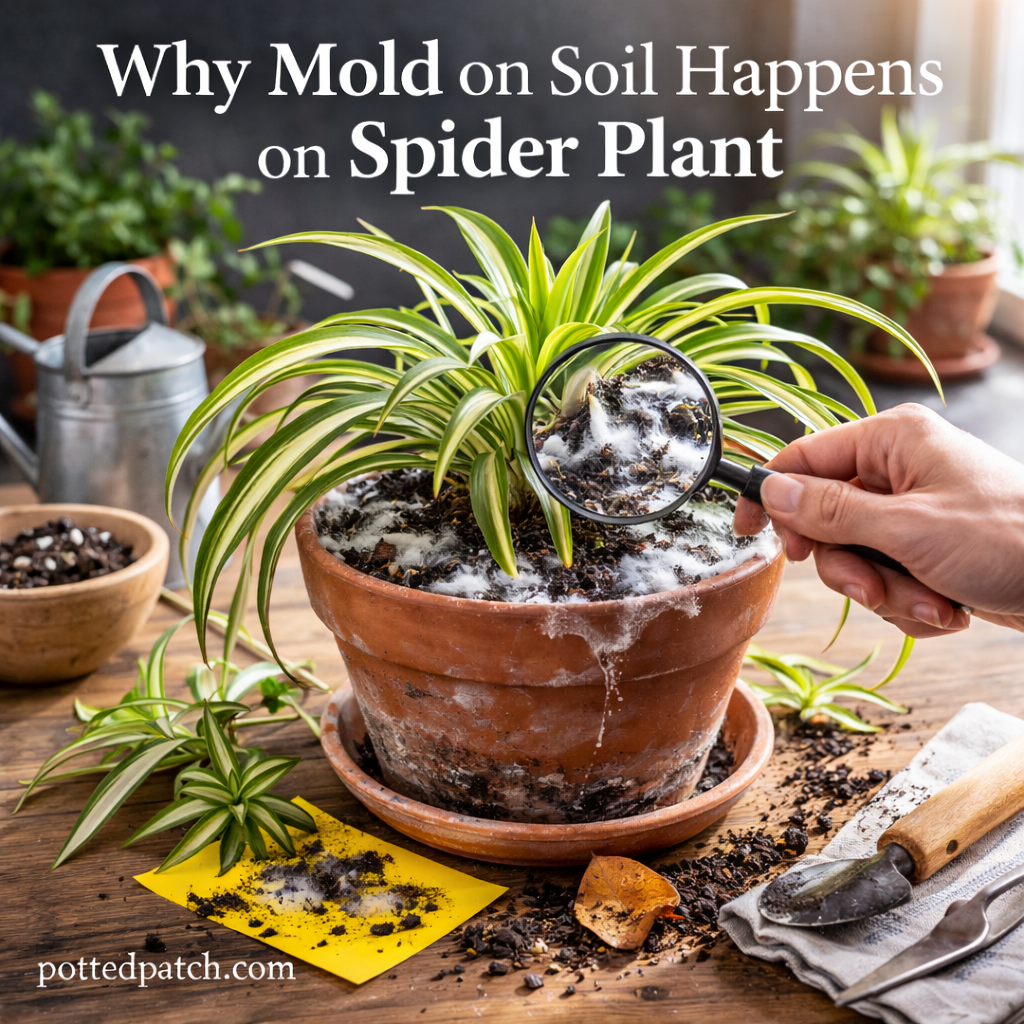
Spider plant in a terracotta pot with white mold growing on the soil surface indoors.
White mold forming on spider plant soil due to excess moisture and poor drainage. pottedpatch.com

Seeing white, fuzzy mold on the soil of your spider plant can be unsettling. The good news? In most cases, it’s a surface-level issue — not a death sentence for your plant.

Mold on soil usually signals excess moisture and poor airflow. Fix the environment, and the problem typically disappears.

Here’s why mold happens and how to stop it.

Continue reading “Why Mold on Soil Happens on Spider Plant”

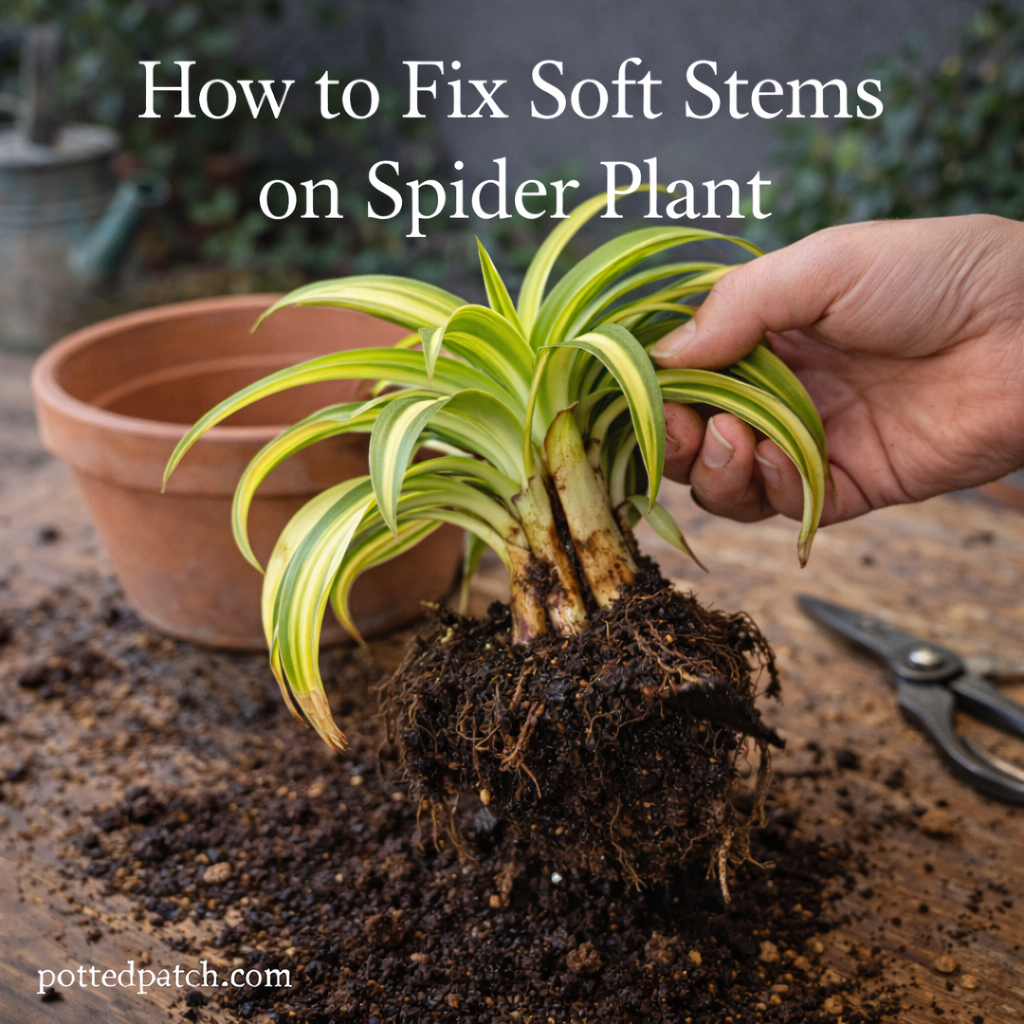
How to Fix Soft Stems on Spider Plant

Spider plant removed from pot showing soft stems and root rot before repotting.
Spider plant with soft stems being treated for root rot and drainage issues. pottedpatch.com

Soft stems on a spider plant can be alarming. The base should feel firm and stable — not mushy or weak.

In most cases, soft stems are caused by excess moisture and can be reversed if caught early.

This guide walks you through exactly how to fix soft stems and prevent the problem from coming back.

Continue reading “How to Fix Soft Stems on Spider Plant”

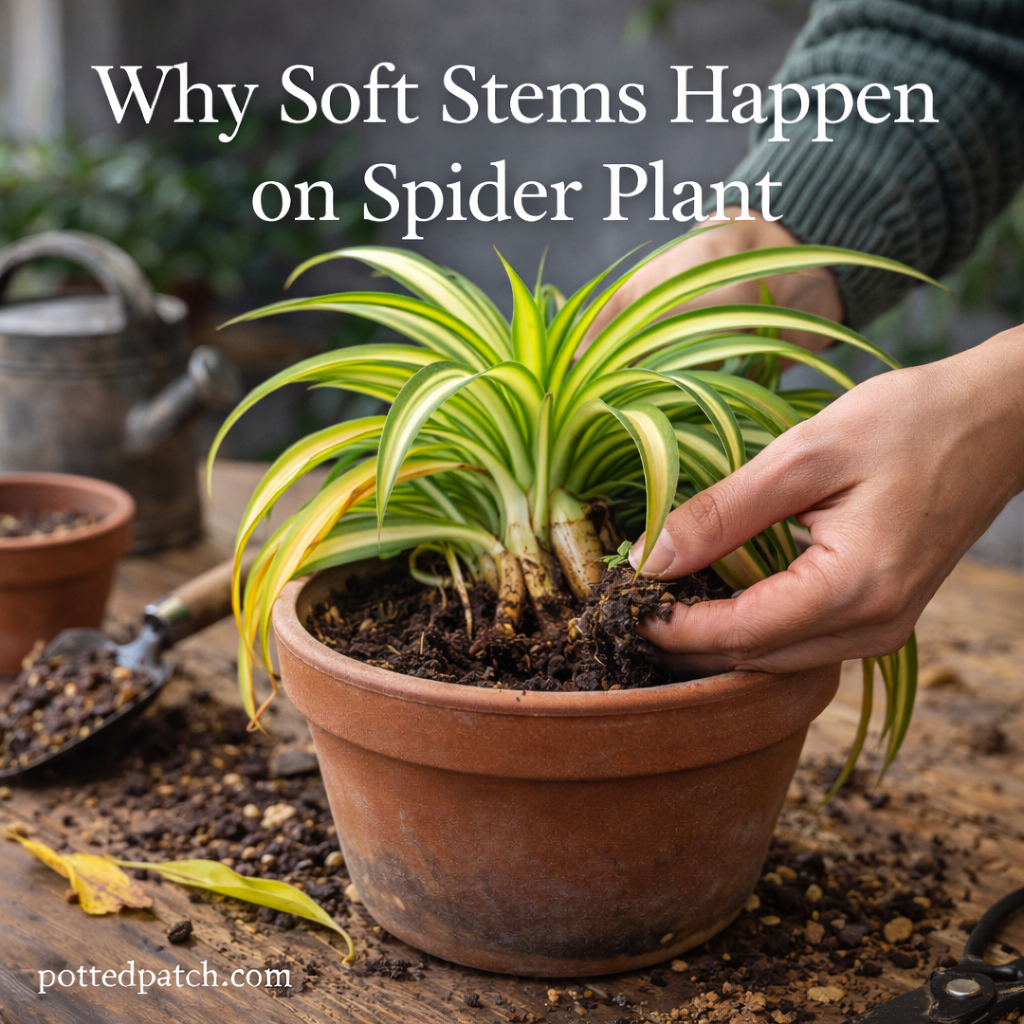
Why Soft Stems Happen on Spider Plant

Spider plant with soft, discolored stems near the soil line indicating overwatering or rot.
Spider plant showing soft stems near the base caused by excess moisture stress. pottedpatch.com

Spider plants are known for their tough, adaptable nature. So when you notice soft, weak, or mushy stems, it’s usually a sign something is wrong below the surface.

Soft stems are not normal for a healthy spider plant. The plant’s base and crown should feel firm and stable.

In this guide, you’ll learn why soft stems happen, how serious it is, and what you can do to fix it.

Continue reading “Why Soft Stems Happen on Spider Plant”

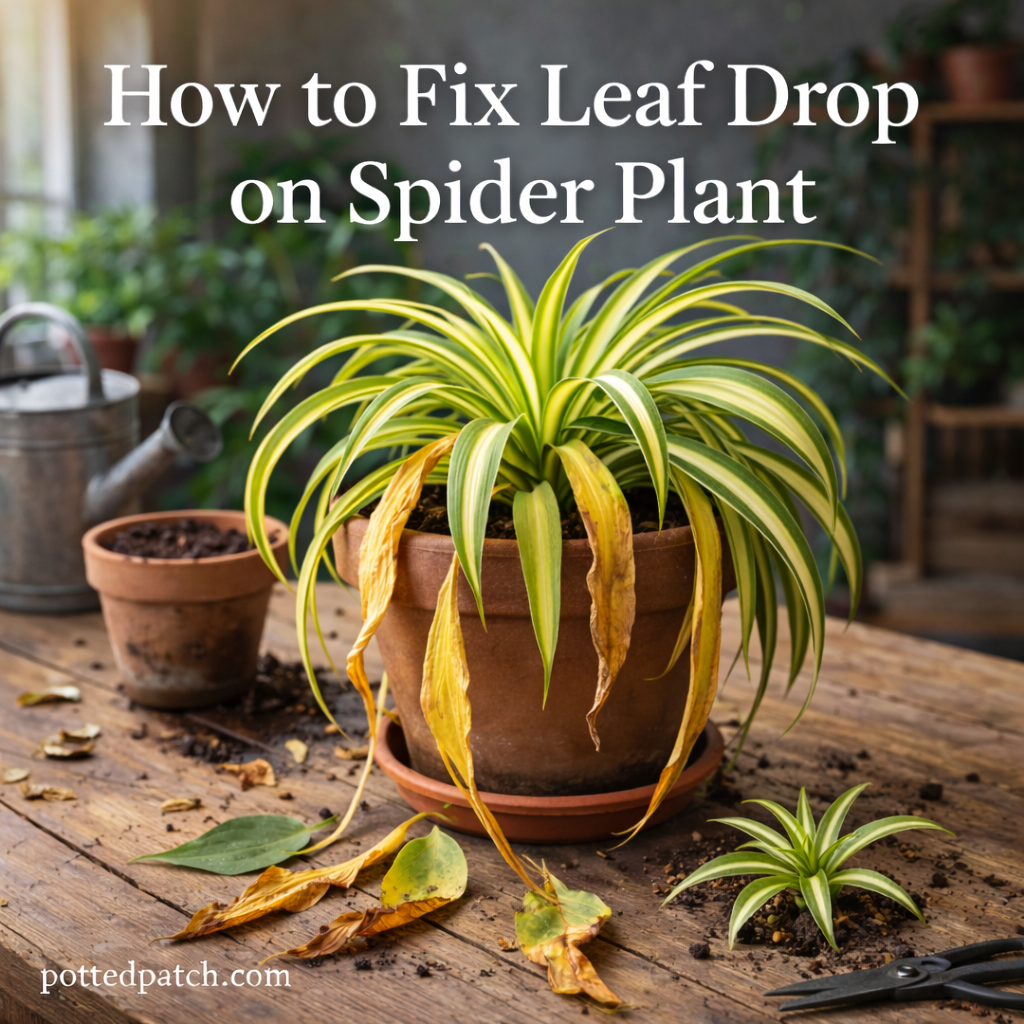
How to Fix Leaf Drop on Spider Plant

Spider plant with yellowing and fallen leaves on a wooden table showing signs of leaf drop stress.
Spider plant with leaf drop symptoms being restored through proper care. pottedpatch.com

Spider plants are resilient, fast-growing houseplants. But when leaves start dropping, it’s a clear sign something isn’t right.

The good news? In most cases, leaf drop is completely reversible.

This guide walks you through exactly how to fix leaf drop on a spider plant and restore healthy growth.

Continue reading “How to Fix Leaf Drop on Spider Plant”

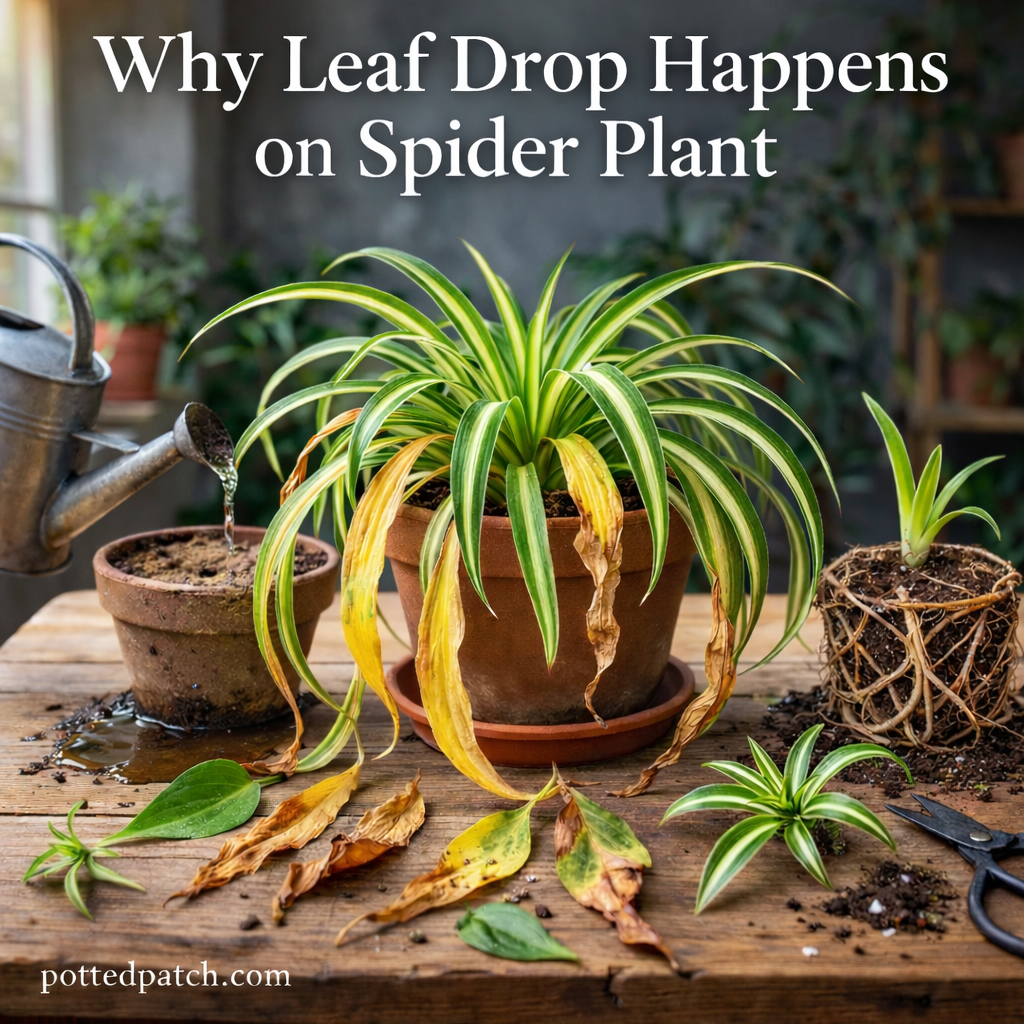
Why Leaf Drop Happens on Spider Plant

Spider plant with yellowing and fallen leaves on a wooden table showing signs of leaf drop stress.
Spider plant showing yellowing and fallen leaves as common signs of leaf drop. pottedpatch.com

Spider plants are known for being resilient, beginner-friendly houseplants. So when leaves start dropping, it can feel confusing and frustrating.

The good news? Leaf drop on a spider plant is almost always fixable.

In this guide, we’ll break down exactly why leaf drop happens, what it means, and how to correct it quickly so your plant can bounce back.

Continue reading “Why Leaf Drop Happens on Spider Plant”

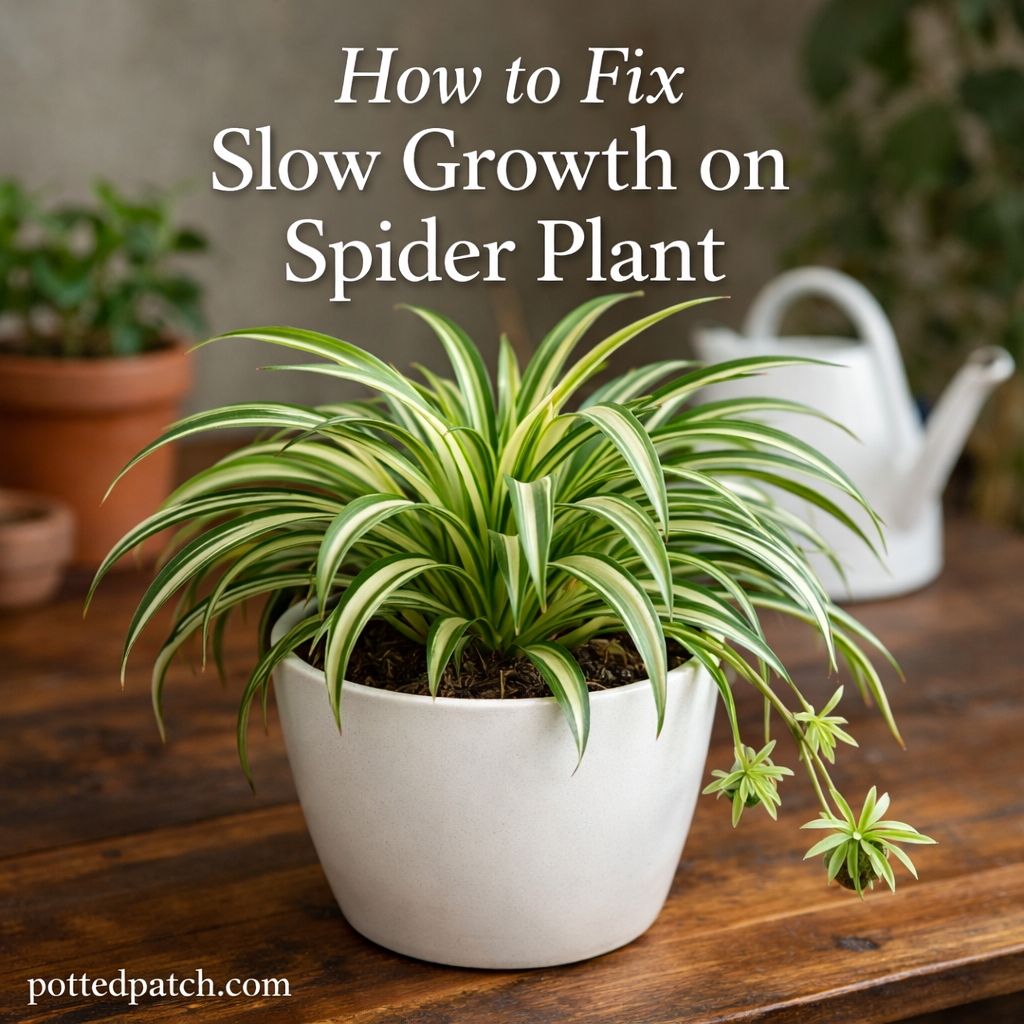
How to Fix Slow Growth on Spider Plant

Healthy spider plant in white pot showing new growth with the title How to Fix Slow Growth on Spider Plant and pottedpatch.com watermark.
Healthy indoor spider plant demonstrating improved growth conditions. pottedpatch.com

Spider plants (Chlorophytum comosum) are known for being easy, fast growers. When healthy, they produce long arching leaves and baby “spiderettes” that dangle beautifully from the mother plant.

So if your spider plant seems stuck, not producing new leaves, or hasn’t made babies in months, something is off.

The good news? Slow growth is almost always fixable.

In this guide, we’ll break down the most common causes of slow growth and exactly how to correct them.

Continue reading “How to Fix Slow Growth on Spider Plant”

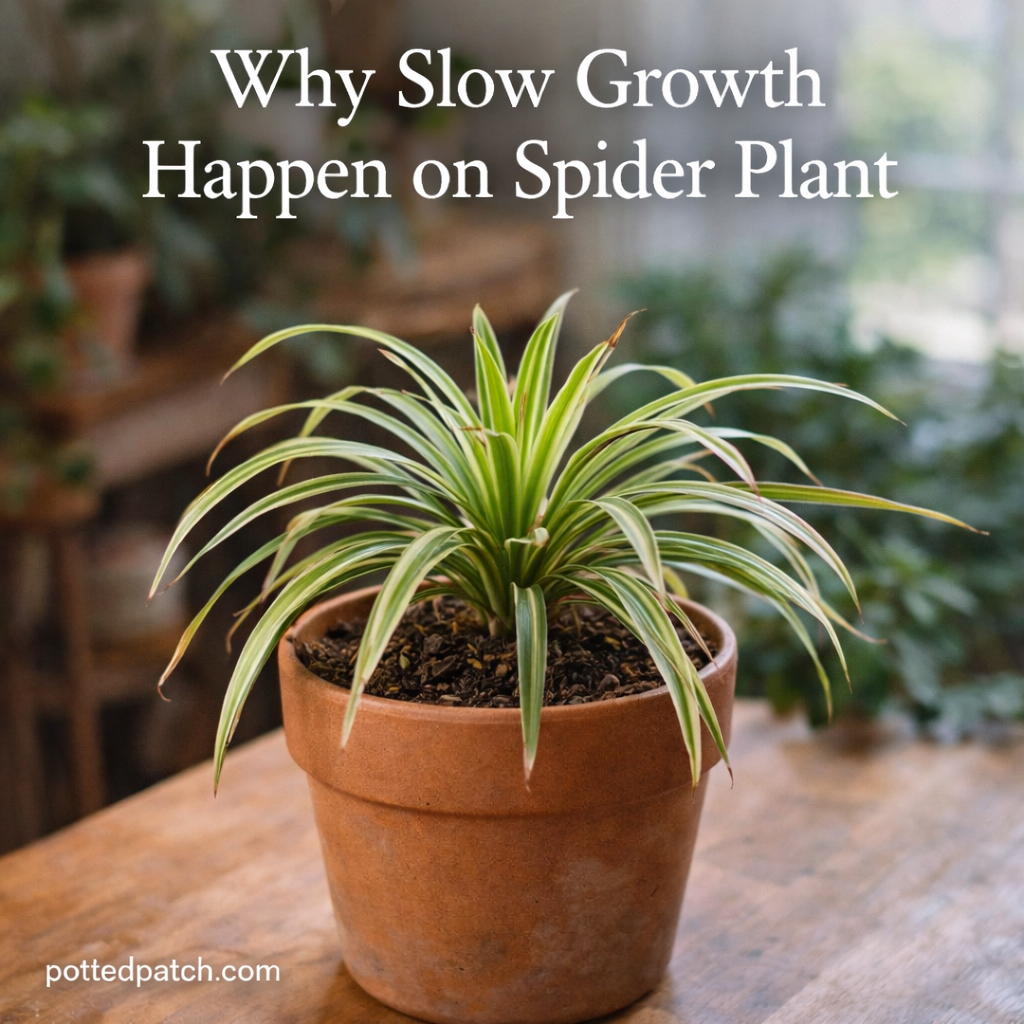
Why Slow Growth Happens on Spider Plant

Spider plant in terracotta pot showing slow growth with the title Why Slow Growth Happen on Spider Plant.
Spider plant experiencing slow growth indoors due to environmental factors. pottedpatch.com

Spider plants are known for being fast, forgiving growers. When healthy, they produce vibrant arching leaves and plenty of baby plantlets.

So if your spider plant seems stuck — not growing, not producing new leaves, and not sending out runners — something is off.

The good news? Slow growth is usually easy to diagnose and fix.

This guide explains why slow growth happens on spider plants and what you can do to restore healthy development.

Continue reading “Why Slow Growth Happens on Spider Plant”

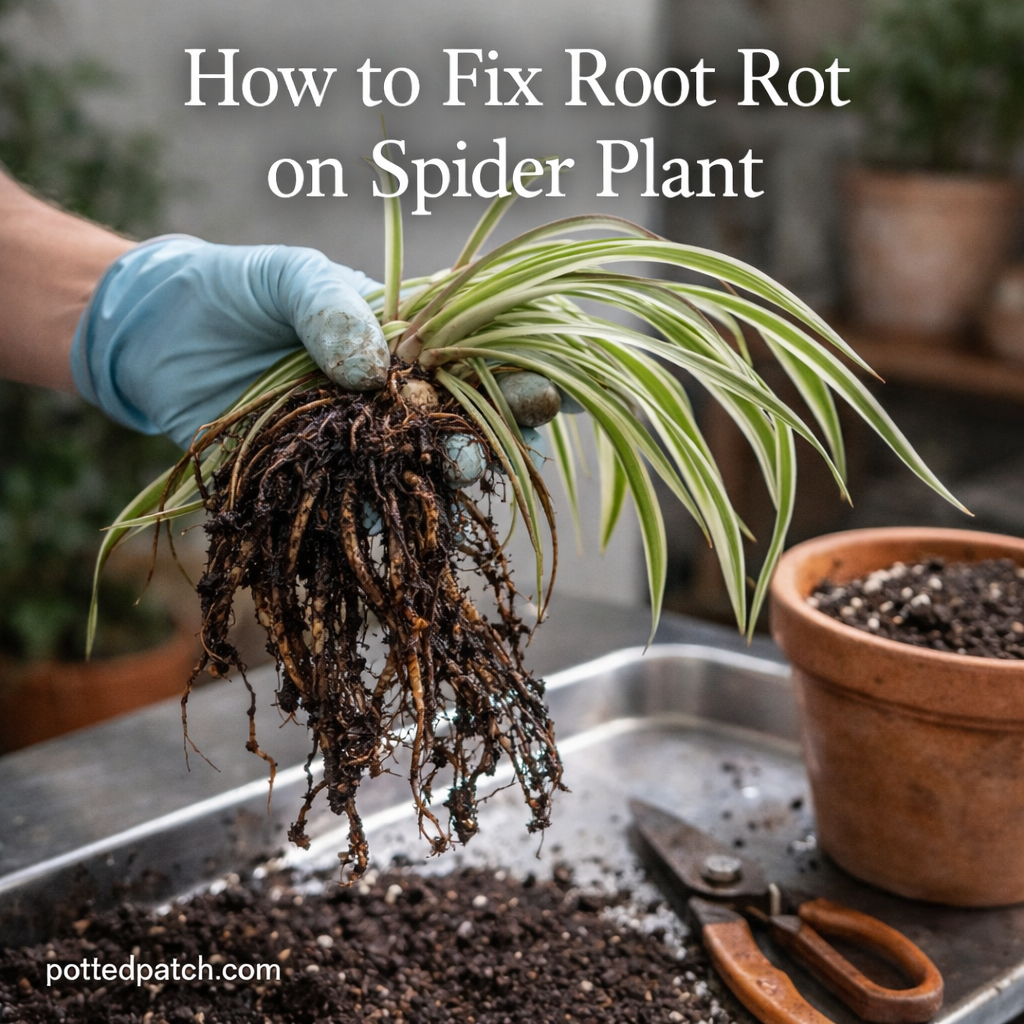
How to Fix Root Rot on Spider Plant

Spider plant with rotting roots being trimmed and repotted with the title How to Fix Root Rot on Spider Plant.
Treating root rot on a spider plant by trimming damaged roots and repotting in fresh soil. pottedpatch.com

Spider plants are known for being tough and beginner-friendly. But even resilient plants can struggle if their roots sit in soggy soil for too long.

If your spider plant is wilting, yellowing, or smelling musty at the base, root rot could be the problem. The good news? If you catch it early, you can absolutely save it.

This guide walks you step-by-step through how to fix root rot on a spider plant and prevent it from happening again.

Continue reading “How to Fix Root Rot on Spider Plant”