How Often to Water a Pothos

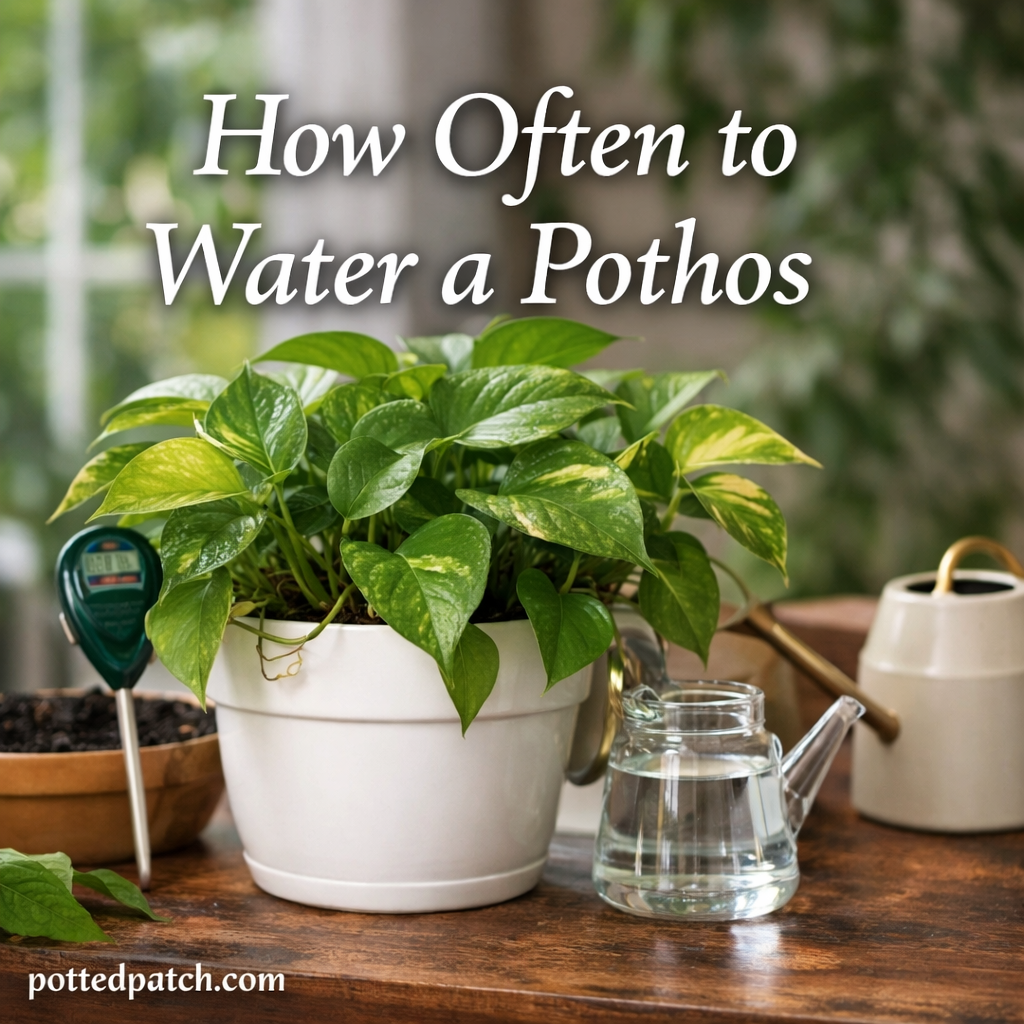
Healthy pothos plant in a white pot showing proper watering conditions indoors.
A healthy pothos plant thriving with proper watering habits. pottedpatch.com.

Pothos plants are famously forgiving, but watering is still the one area where most people accidentally stress them out. Too much water leads to yellow leaves and root rot. Too little water causes drooping, curling, and dry brown tips.

The good news? Once you understand how pothos actually use water, getting it right becomes easy and predictable.

This guide walks through how often to water pothos, what factors change the schedule, and how to tell exactly when your plant is thirsty.

Continue reading “How Often to Water a Pothos”


How to Care for a Pothos Indoors

Healthy pothos plant in a white ceramic pot indoors with trailing green leaves.
A healthy pothos plant thriving indoors on a wooden surface. pottedpatch.com.

Pothos is one of the easiest and most forgiving houseplants you can grow. Known for its trailing vines and heart-shaped leaves, it adapts well to a wide range of indoor conditions and continues to thrive even with minimal attention. Whether you’re new to houseplants or looking for a low-maintenance addition to your home, pothos is a reliable choice.

This guide walks through everything you need to know to keep a pothos healthy indoors, from light and watering to pruning and troubleshooting common problems.

Continue reading “How to Care for a Pothos Indoors”

How to Keep a Snake Plant Healthy Year Round

Healthy snake plant in a pot indoors showing upright green leaves with yellow edges, illustrating year-round snake plant care.
A healthy snake plant thriving indoors with proper light, watering, and seasonal care. pottedpatch.com.

Snake plants (Sansevieria, also known as Dracaena trifasciata) are famous for being tough, adaptable, and forgiving—but “hard to kill” doesn’t mean “thrives on neglect.” With the right year-round care, your snake plant can stay upright, vibrant, and steadily growing in every season.

This guide walks through everything you need to know to keep a snake plant healthy all year, including light, watering, temperature, seasonal adjustments, and common mistakes to avoid.

Continue reading “How to Keep a Snake Plant Healthy Year Round”

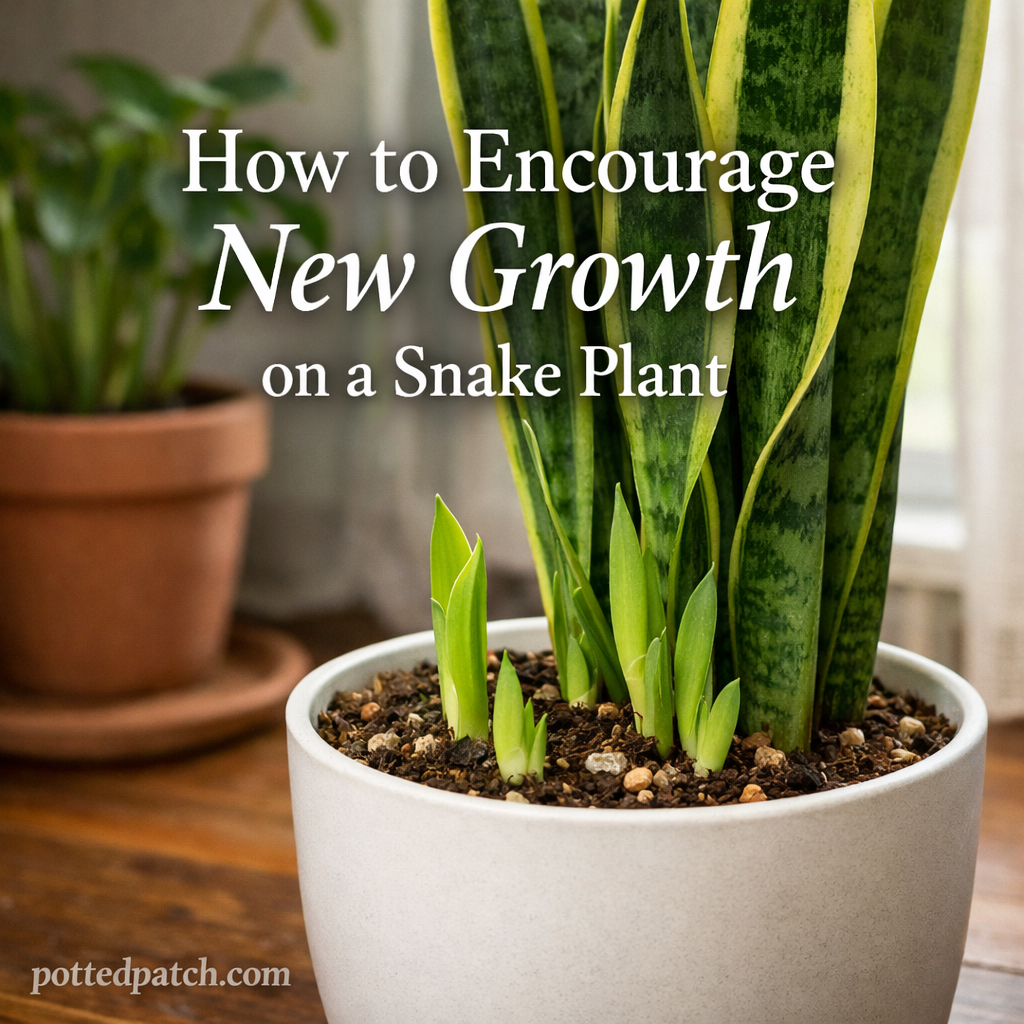
How to Encourage New Growth on a Snake Plant

A thriving snake plant producing new leaves and pups in bright indoor light. pottedpatch.com.
Healthy snake plant with fresh new shoots growing from the soil in a white pot indoors.

Snake plants (Sansevieria, now classified as Dracaena) are famous for being nearly indestructible—but that toughness can also make them slow to show new growth. If your plant looks healthy yet stubbornly unchanged, the good news is that a few targeted adjustments can wake it up and encourage fresh leaves and pups.

Below is a practical guide to help your snake plant shift from survival mode into growth mode.

Continue reading “How to Encourage New Growth on a Snake Plant”

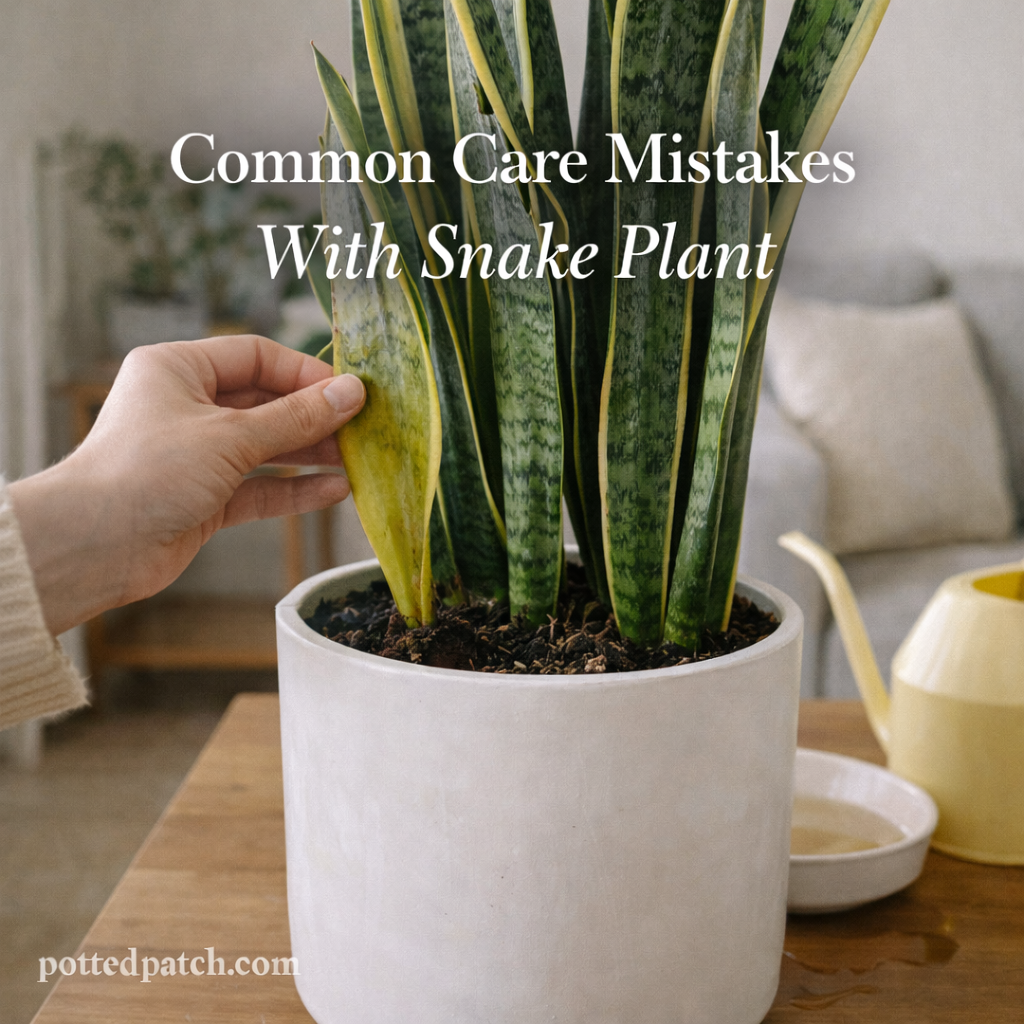
Common Care Mistakes With Snake Plants

Snake plant showing signs of common care mistakes such as overwatering and poor drainage.
A snake plant displaying visible signs of common care mistakes like overwatering and improper watering habits. pottedpatch.com.

Snake plants are often labeled as “unkillable,” but many of them struggle due to well-intentioned care mistakes. Because they’re so tolerant, problems can develop quietly and only show up once damage is already underway. Understanding the most common snake plant care mistakes helps you avoid stress, slow growth, and long-term issues like root rot.

This guide breaks down the most frequent mistakes snake plant owners make—and how to fix them.

Continue reading “Common Care Mistakes With Snake Plants”

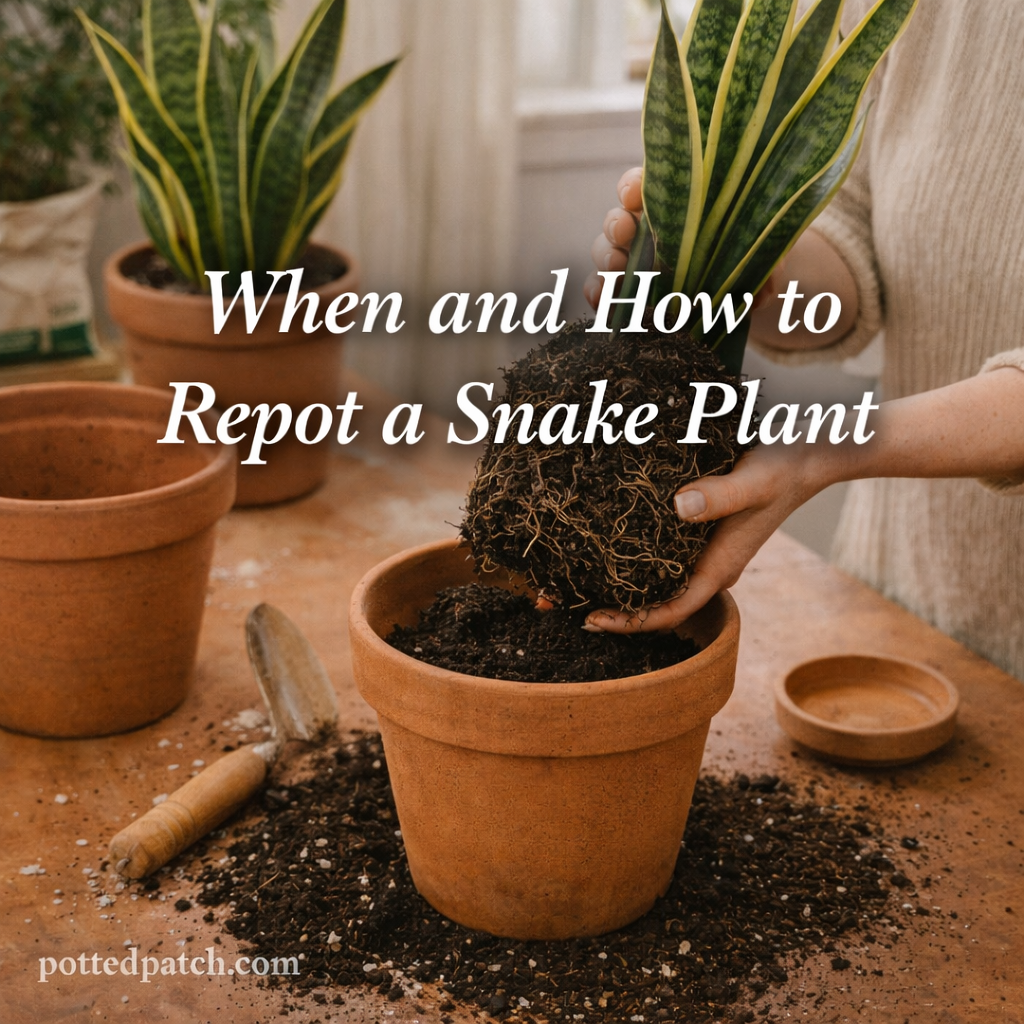
When and How to Repot a Snake Plant

Hands repotting a snake plant into a larger pot showing when and how to repot a snake plant properly.
Repotting a snake plant using fresh soil and the correct pot size. pottedpatch.com.

Snake plants are slow growers that prefer being slightly root-bound, which means they don’t need frequent repotting. In fact, repotting too often can do more harm than good. Knowing when to repot—and how to do it correctly—helps keep your snake plant healthy, stable, and growing at a comfortable pace.

This guide explains the signs that repotting is necessary, the best timing, and a step-by-step method that minimizes stress on the plant.

Continue reading “When and How to Repot a Snake Plant”

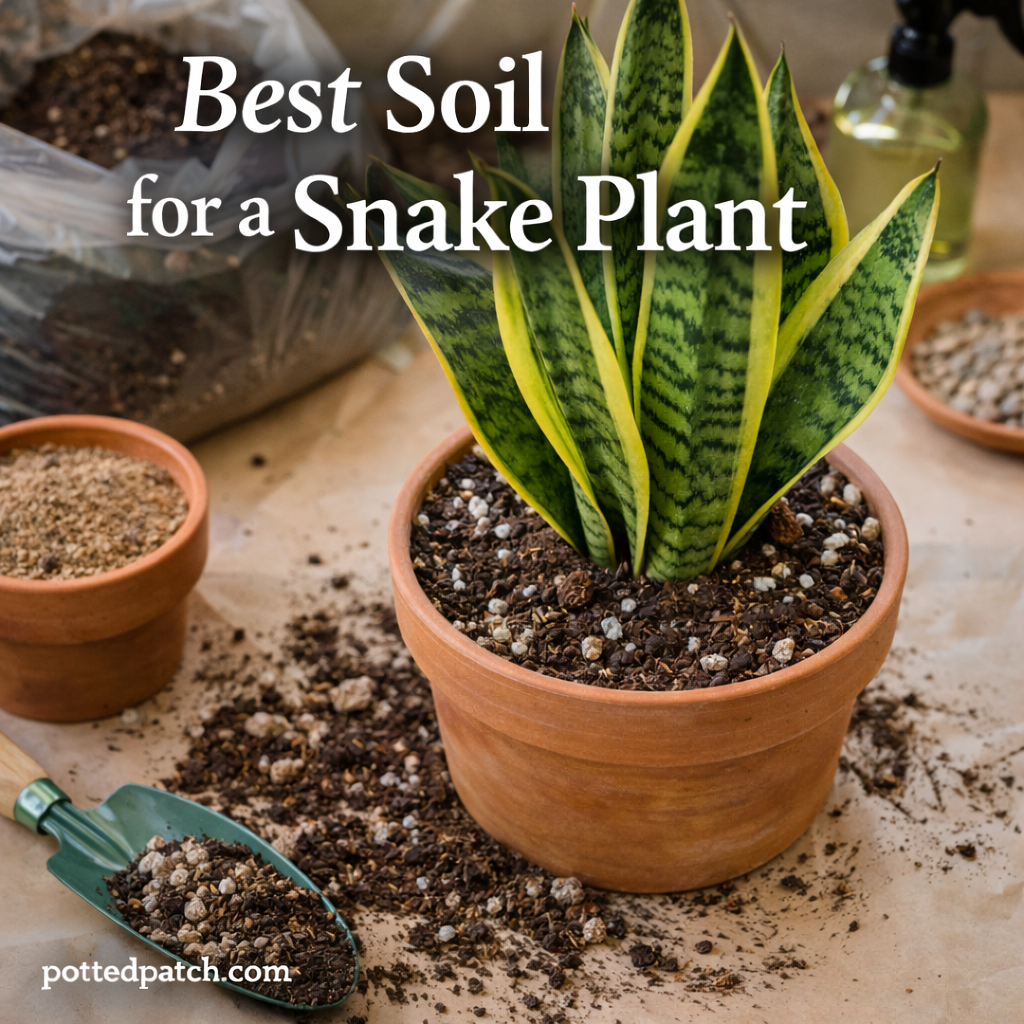
Best Soil for a Snake Plant

Snake plant potted in fast-draining soil with perlite, showing the ideal soil mix for healthy root growth.
Snake plant planted in a well-draining soil mix designed to prevent root rot. pottedpatch.com.

Snake plants are known for being tough, adaptable, and beginner-friendly—but the soil you use still plays a major role in how well they grow long term. The wrong soil can lead to slow growth, root rot, and stressed plants, even if everything else seems right.

This guide breaks down the best soil for a snake plant, why it matters, and how to choose or mix the right option for healthy roots and steady growth.

Continue reading “Best Soil for a Snake Plant”

Best Light Conditions for a Snake Plant

Snake plant placed near a bright window with indirect sunlight showing ideal light conditions for healthy growth.
A snake plant thriving in bright, indirect light near a window. pottedpatch.com.

Snake plants are often labeled as “low light plants,” but that description can be misleading. While they tolerate low light better than many houseplants, the right lighting conditions make a noticeable difference in growth, color, and overall health.

This guide explains the best light conditions for a snake plant, how different light levels affect it, and how to adjust placement in your home for the best results.

Continue reading “Best Light Conditions for a Snake Plant”

How Often to Water a Snake Plant

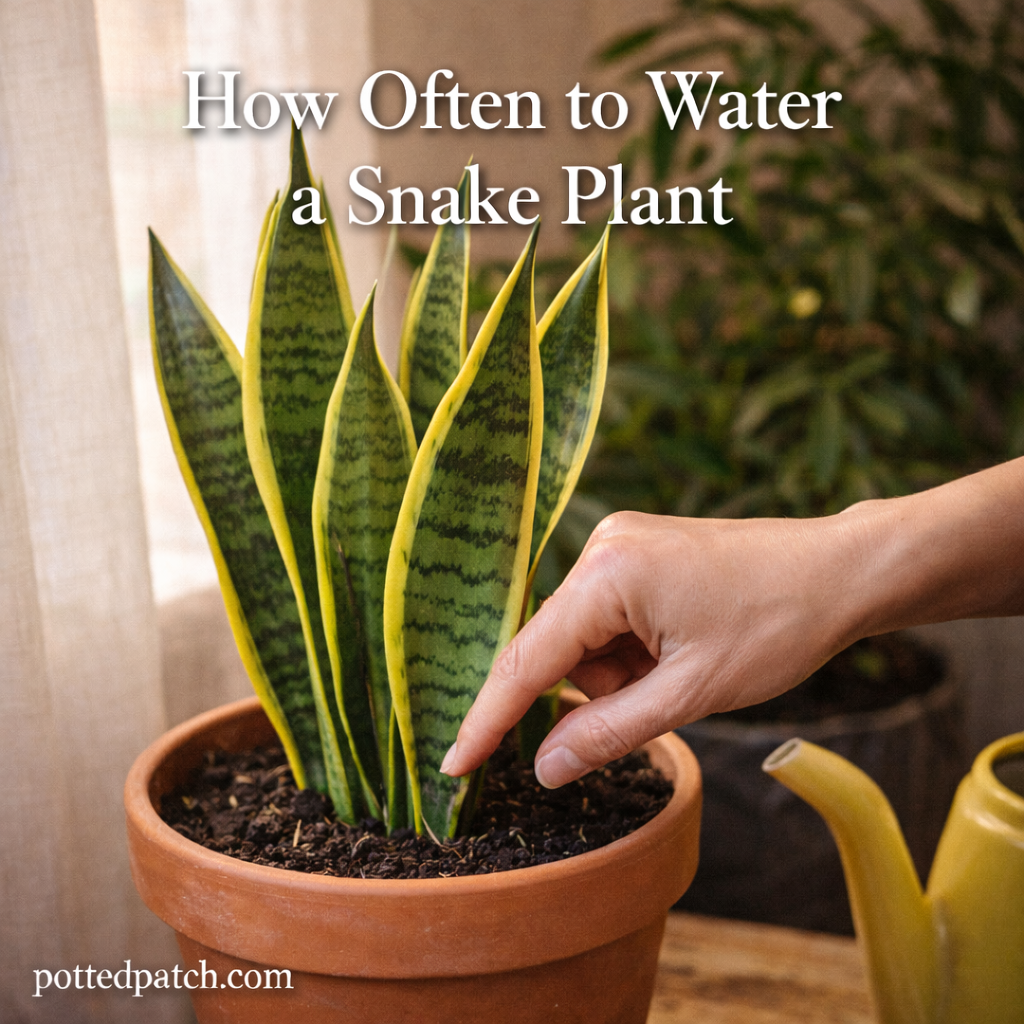
Person checking soil moisture in a potted snake plant to determine how often to water it.
Checking soil moisture before watering a snake plant. pottedpatch.com.

Snake plants are known for surviving neglect, but watering them correctly is still essential for long-term health. Overwatering is the most common reason snake plants decline, while underwatering is rarely fatal. Understanding how often to water a snake plant depends on light, pot size, soil, and season—not a fixed schedule.

This guide explains exactly when to water, how to check moisture properly, and how to adjust watering throughout the year.

Continue reading “How Often to Water a Snake Plant”

How to Care for a Snake Plant Indoors

Healthy snake plant growing indoors in a decorative pot with bright indirect light.
A healthy snake plant thriving indoors with proper care and placement. pottedpatch.com.

Snake plants are one of the most forgiving houseplants you can own. Known for their upright leaves and tolerance for neglect, they’re a favorite for beginners, busy households, and low-light homes. Despite their reputation as “unkillable,” snake plants still benefit from proper care to stay healthy and attractive long term.

This guide covers everything you need to know to care for a snake plant indoors, with practical tips that work in real homes.

Continue reading “How to Care for a Snake Plant Indoors”