Common Care Mistakes With Peace Lily

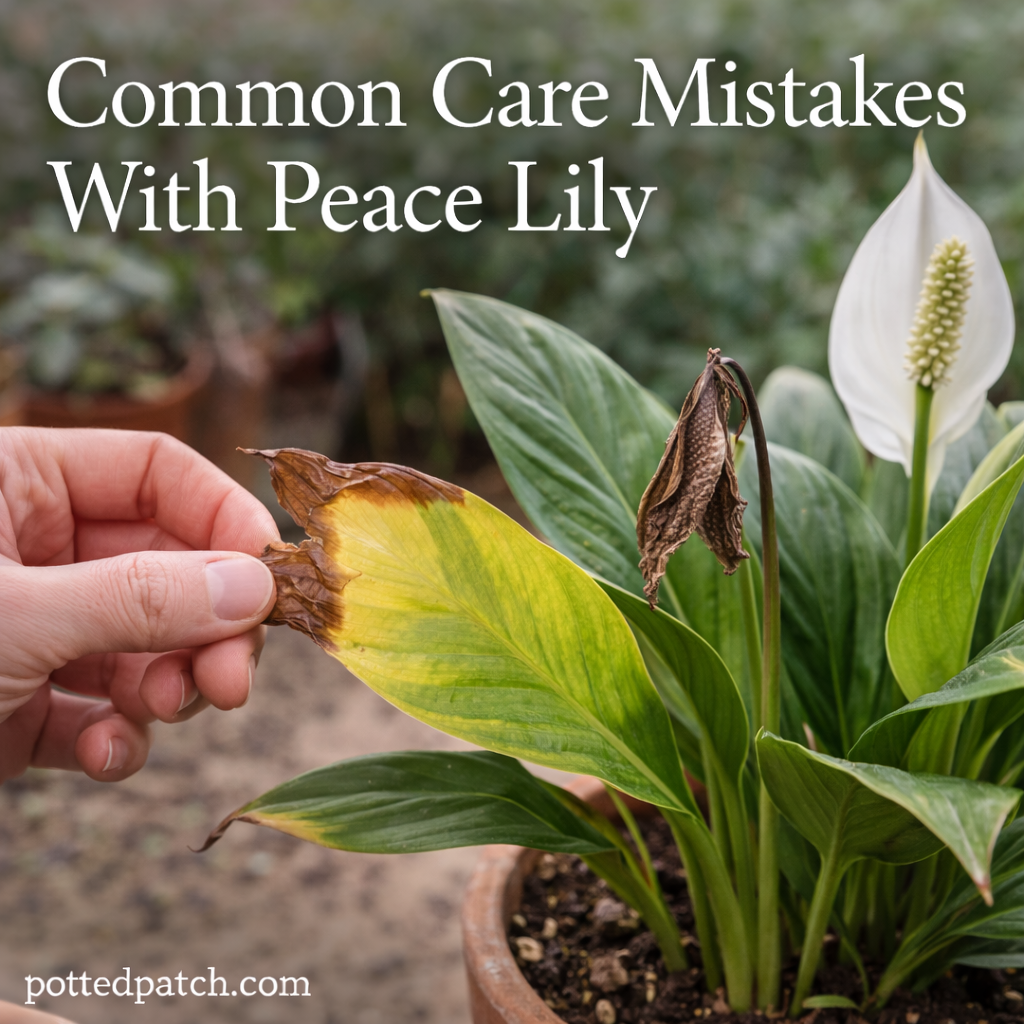
Hand holding a yellowing peace lily leaf with brown edges beside a healthy white bloom.
Yellowing and browning leaf on a peace lily caused by common indoor care mistakes. pottedpatch.com

Peace lilies are often labeled as “easy” houseplants — and they are — but they’re also very clear when something isn’t right.

Yellow leaves, brown tips, drooping foliage, or lack of blooms usually trace back to simple care mistakes. The good news? Most problems are easy to correct once you know what to look for.

Here are the most common peace lily care mistakes and how to avoid them.

Continue reading “Common Care Mistakes With Peace Lily”
When and How to Repot a Peace Lily

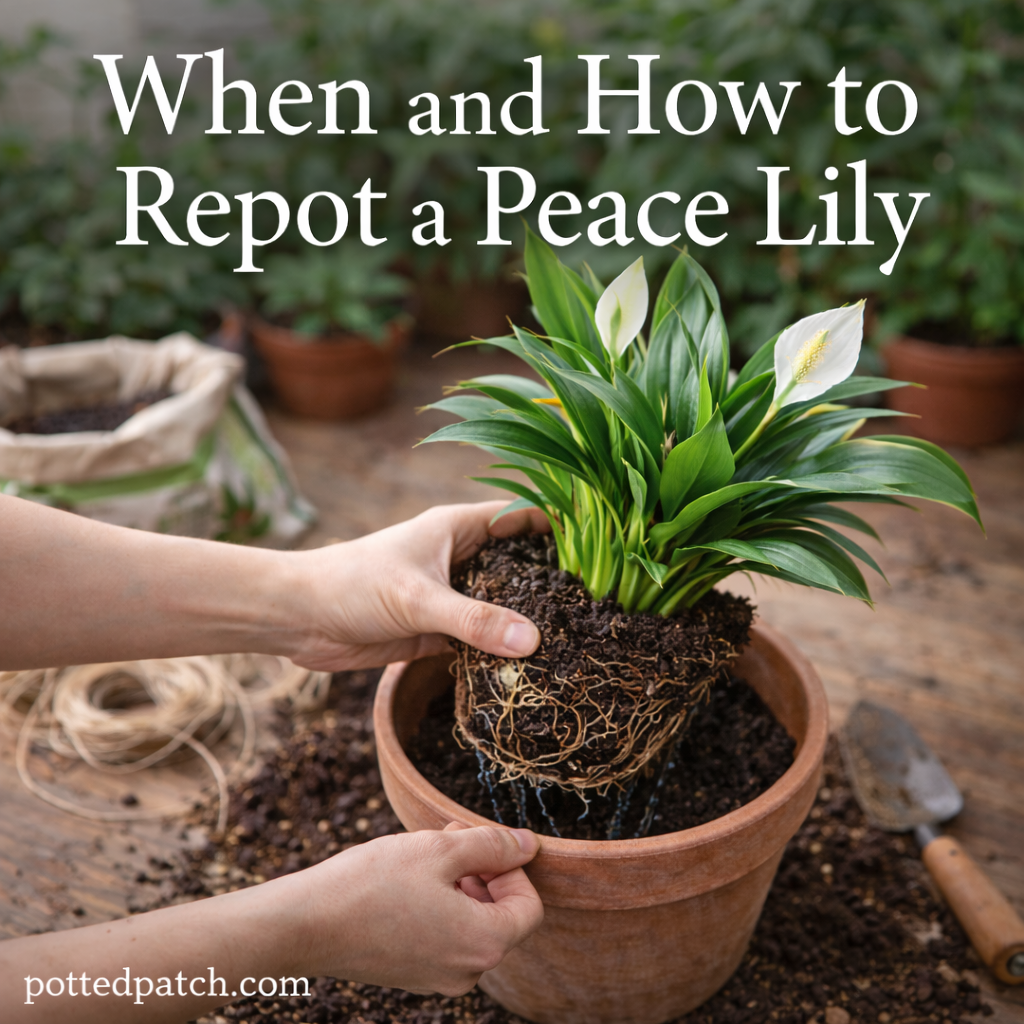
Hands repotting a peace lily with visible roots into a larger terracotta pot indoors.
Repotting a peace lily into a slightly larger pot to prevent root bound stress. pottedpatch.com

Peace lilies are resilient indoor plants, but even they outgrow their containers over time. Repotting at the right moment keeps roots healthy, prevents stress, and encourages strong foliage and blooming.

If your peace lily looks crowded, dries out too quickly, or has roots pushing through the drainage holes, it may be time for a new pot.

Here’s how to know when to repot — and exactly how to do it properly.

Continue reading “When and How to Repot a Peace Lily”

Best Soil for a Peace Lily

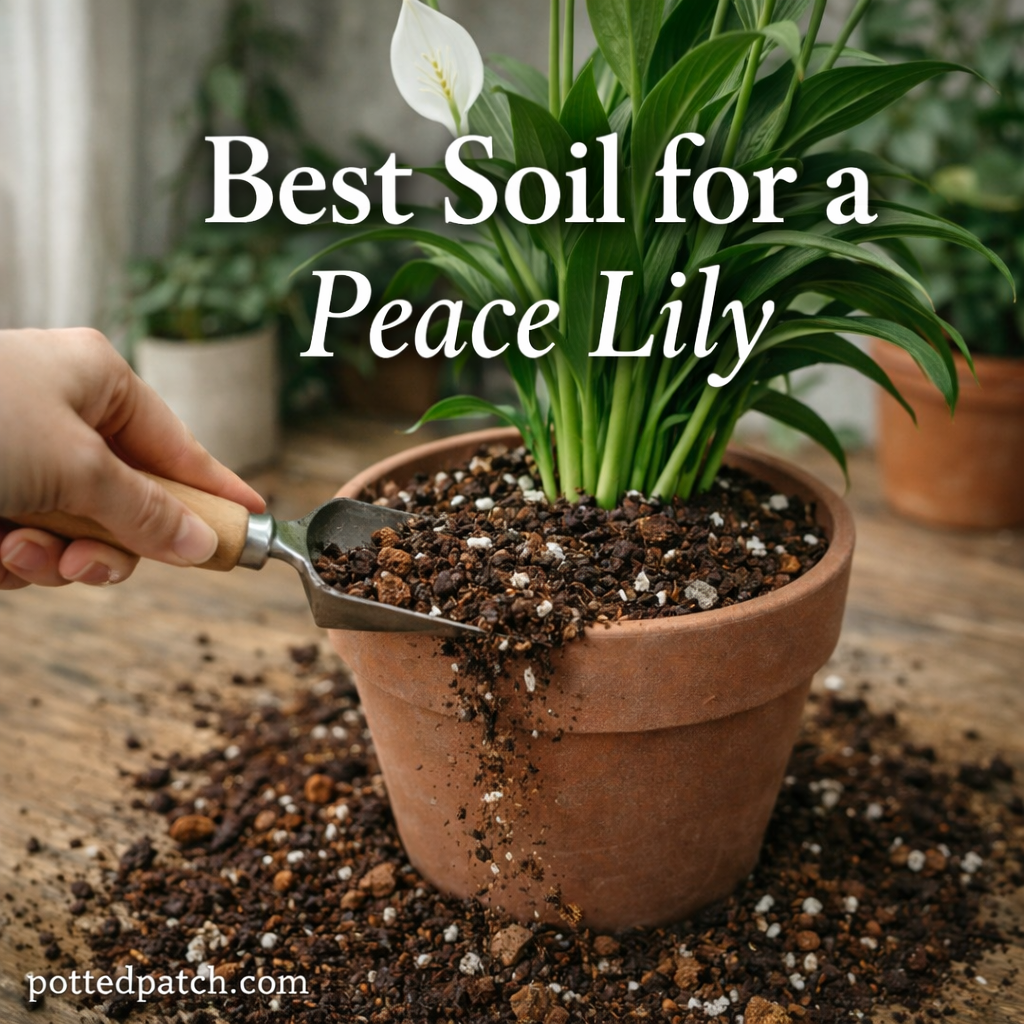
Peace lily being planted in well-draining soil mix with perlite and bark in a terracotta pot.
Using a well-draining potting mix with perlite to support healthy peace lily roots. pottedpatch.com

Peace lilies are known for their elegant white blooms and lush green leaves. But behind that beauty is one critical factor many plant owners overlook — soil quality.

Using the right soil helps prevent root rot, yellowing leaves, fungus issues, and stunted growth. If your peace lily struggles despite proper watering and lighting, the potting mix may be the problem.

Let’s break down exactly what soil works best and how to create the ideal mix.

Continue reading “Best Soil for a Peace Lily”

Best Light Conditions for a Peace Lily

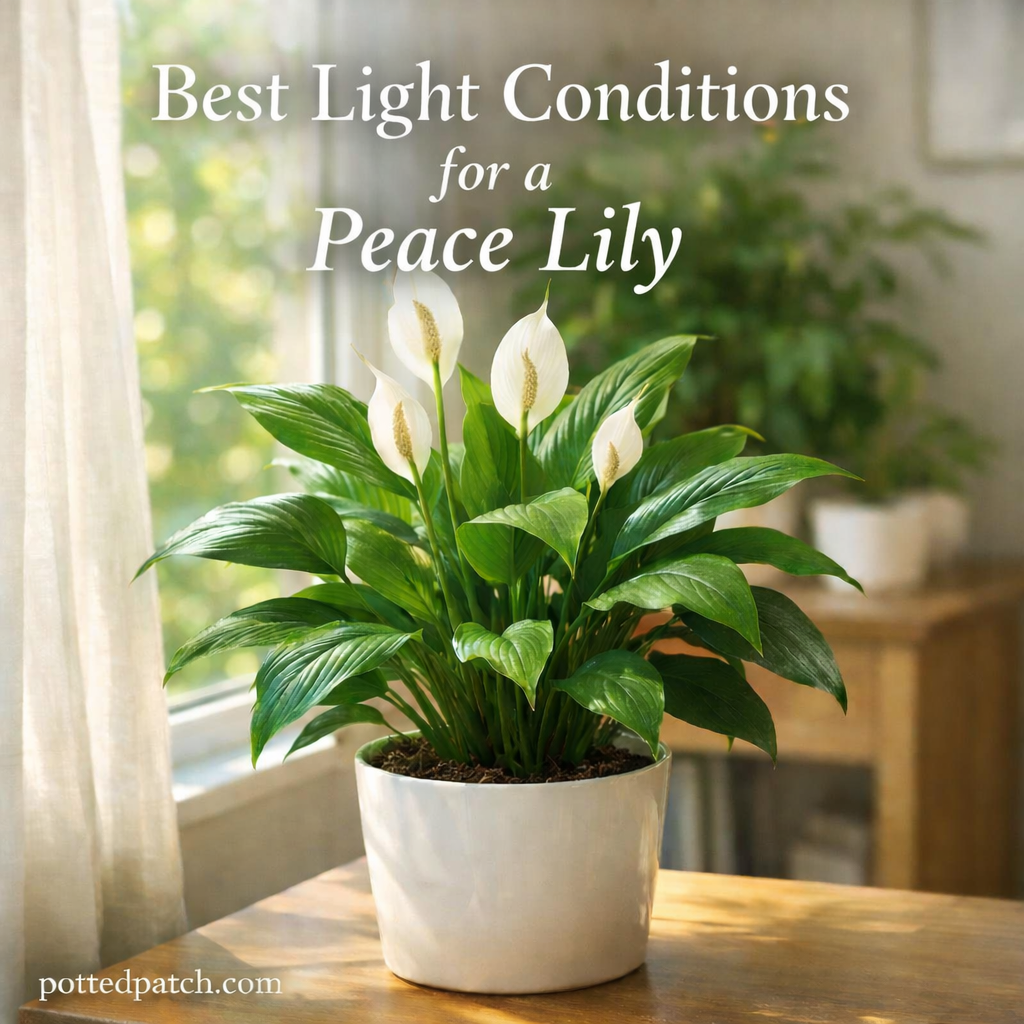
Healthy peace lily in a white pot near a bright window showing ideal indirect light conditions for indoor growth.
Peace lily placed near a bright window demonstrating ideal indirect light conditions. pottedpatch.com

Peace lilies are one of the most popular indoor plants—and for good reason. They’re elegant, adaptable, and forgiving. But if you want lush green leaves and regular blooms, understanding the best light conditions for a peace lily is essential.

Too little light? No flowers.
Too much light? Burned leaves.

Let’s break down exactly what your peace lily needs to thrive indoors.

Continue reading “Best Light Conditions for a Peace Lily”

How Often to Water a Peace Lily

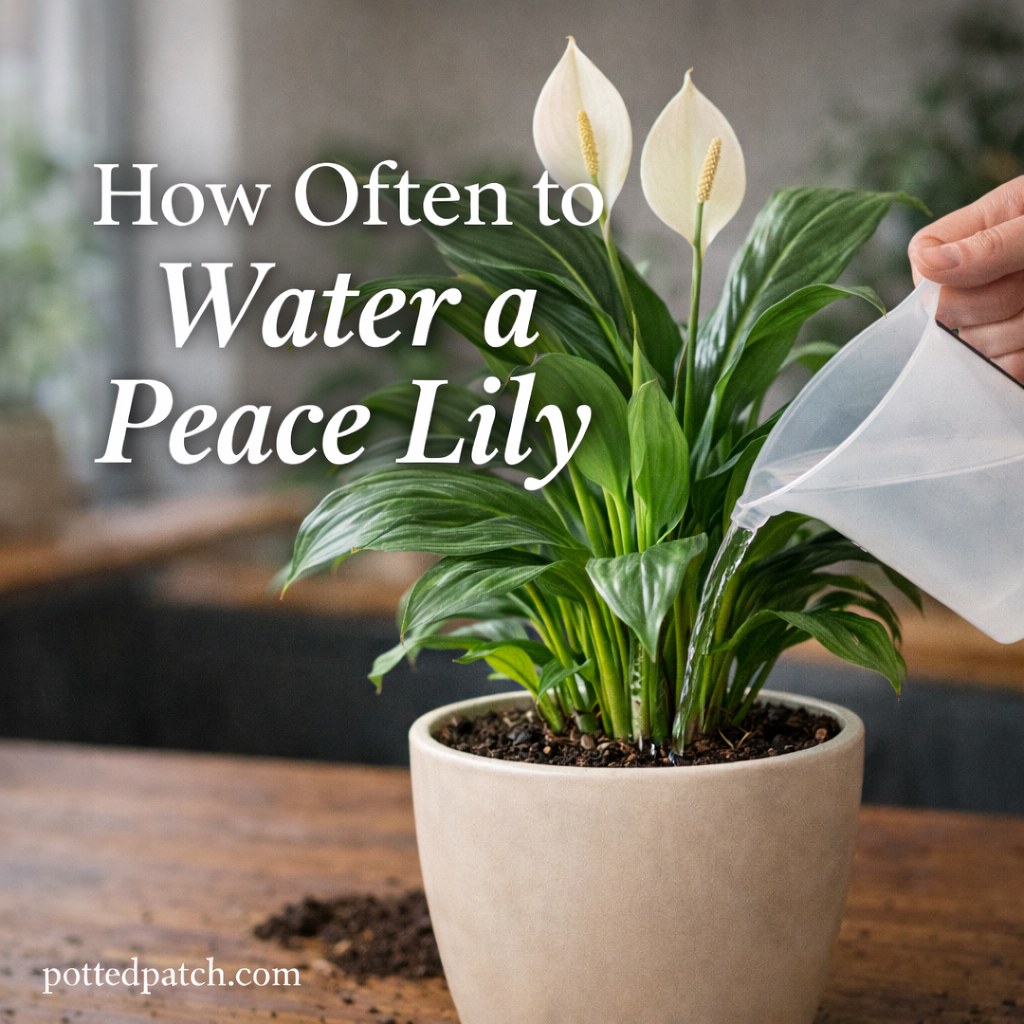
Peace lily being watered indoors with white overlay title How Often to Water a Peace Lily and pottedpatch.com watermark on bottom left.
Watering a peace lily properly to maintain evenly moist soil and healthy growth. pottedpatch.com

Peace lilies (Spathiphyllum) are known for their graceful leaves and white blooms — but they’re also famous for dramatic drooping when thirsty.

If you’re unsure how often to water a peace lily, you’re not alone. The answer depends on light, temperature, pot size, and season.

Here’s a simple, practical guide to watering your peace lily correctly.

Continue reading “How Often to Water a Peace Lily”

How to Care for a Peace Lily Indoors

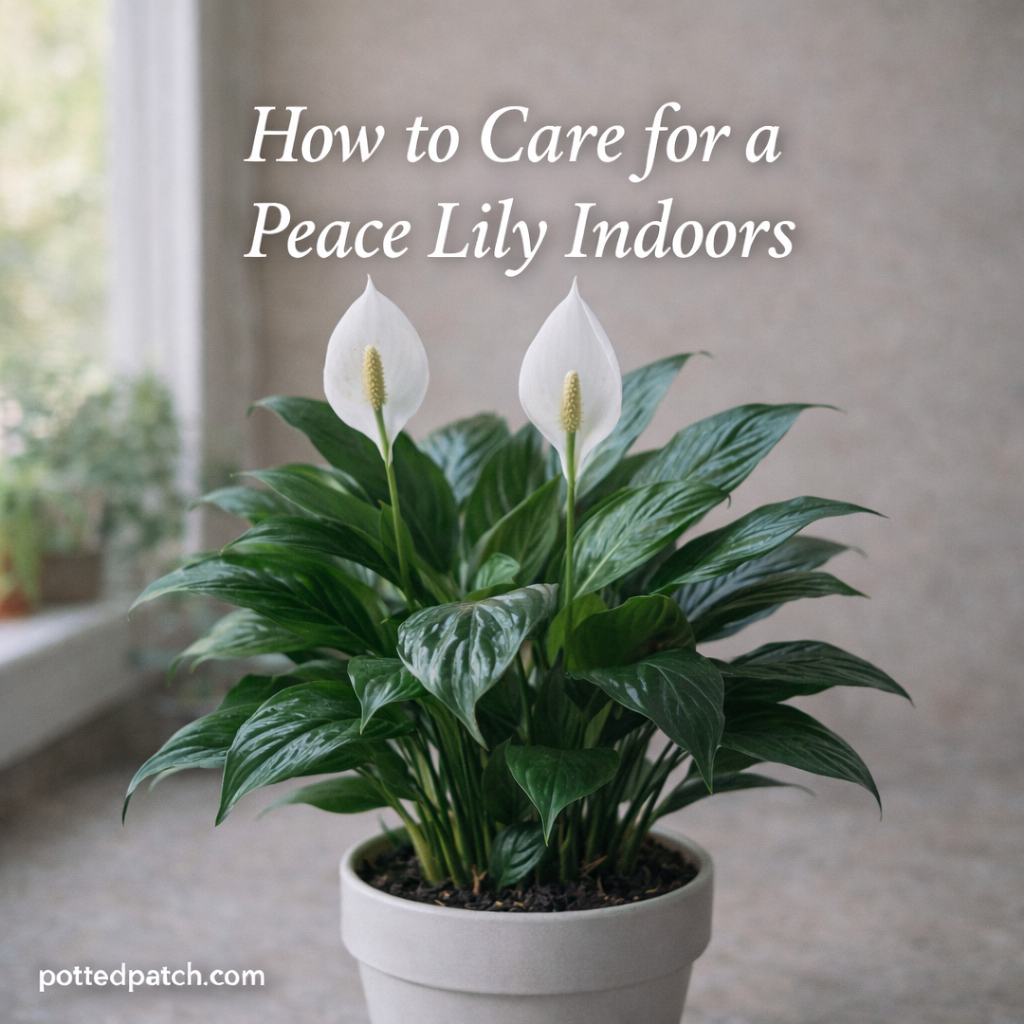
Healthy peace lily with white blooms in a pot indoors.
Healthy indoor peace lily with glossy leaves and white blooms. pottedpatch.com

Peace lilies are one of the most popular indoor plants — and for good reason. Their glossy green leaves and elegant white blooms bring a calm, clean look to any space.

While they’re relatively easy to grow, peace lilies do have specific needs. Understanding their light, water, soil, and humidity preferences will keep them healthy and blooming indoors.

Here’s everything you need to know.

Continue reading “How to Care for a Peace Lily Indoors”

How to Keep a ZZ Plant Healthy Year Round

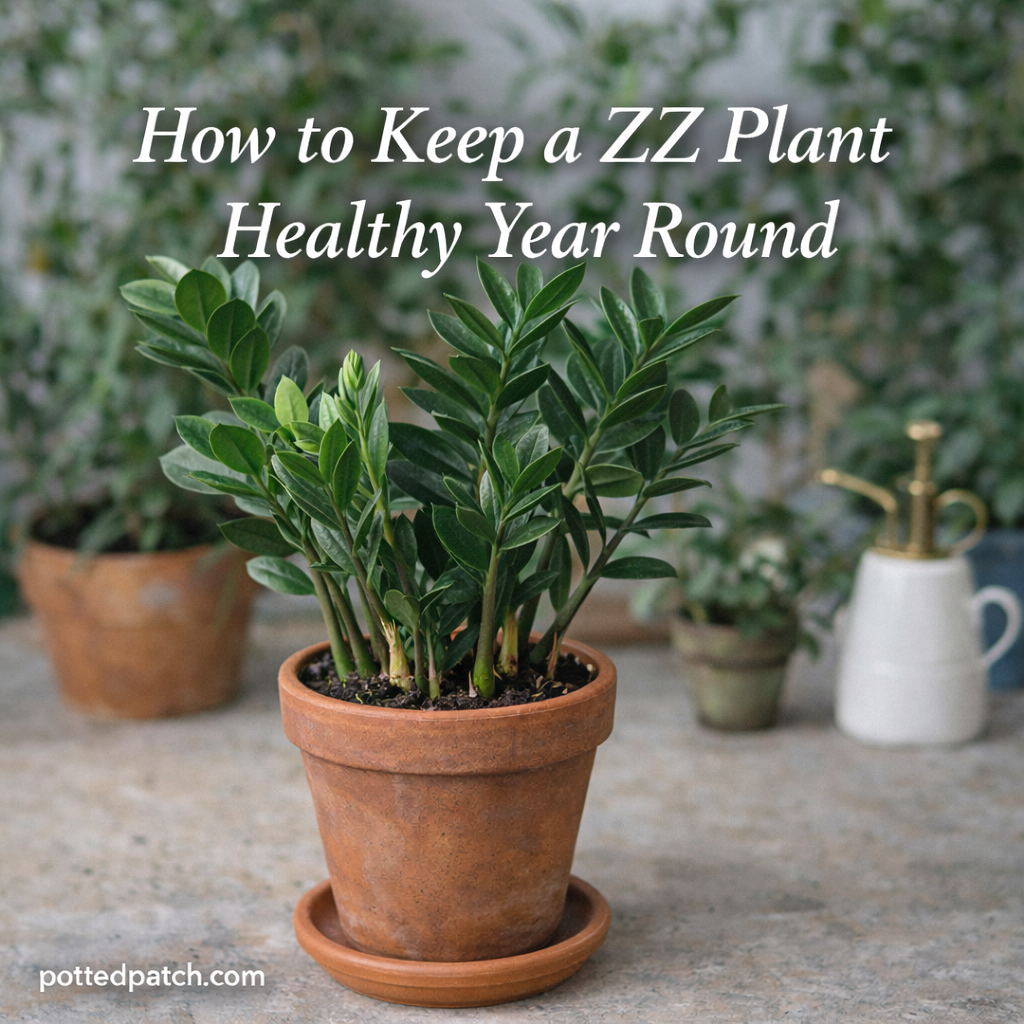
Healthy ZZ plant in terracotta pot with glossy green leaves indoors.
Healthy ZZ plant thriving indoors with proper year-round care. pottedpatch.com

ZZ plants are known for being tough, adaptable, and beginner-friendly. But even resilient plants need consistent care to stay glossy, upright, and thriving throughout the year.

The key to keeping a ZZ plant healthy year round isn’t complicated — it’s about adjusting care slightly with the seasons and avoiding common overcare mistakes.

Here’s your complete guide to maintaining a strong, healthy ZZ plant in every season.

Continue reading “How to Keep a ZZ Plant Healthy Year Round”

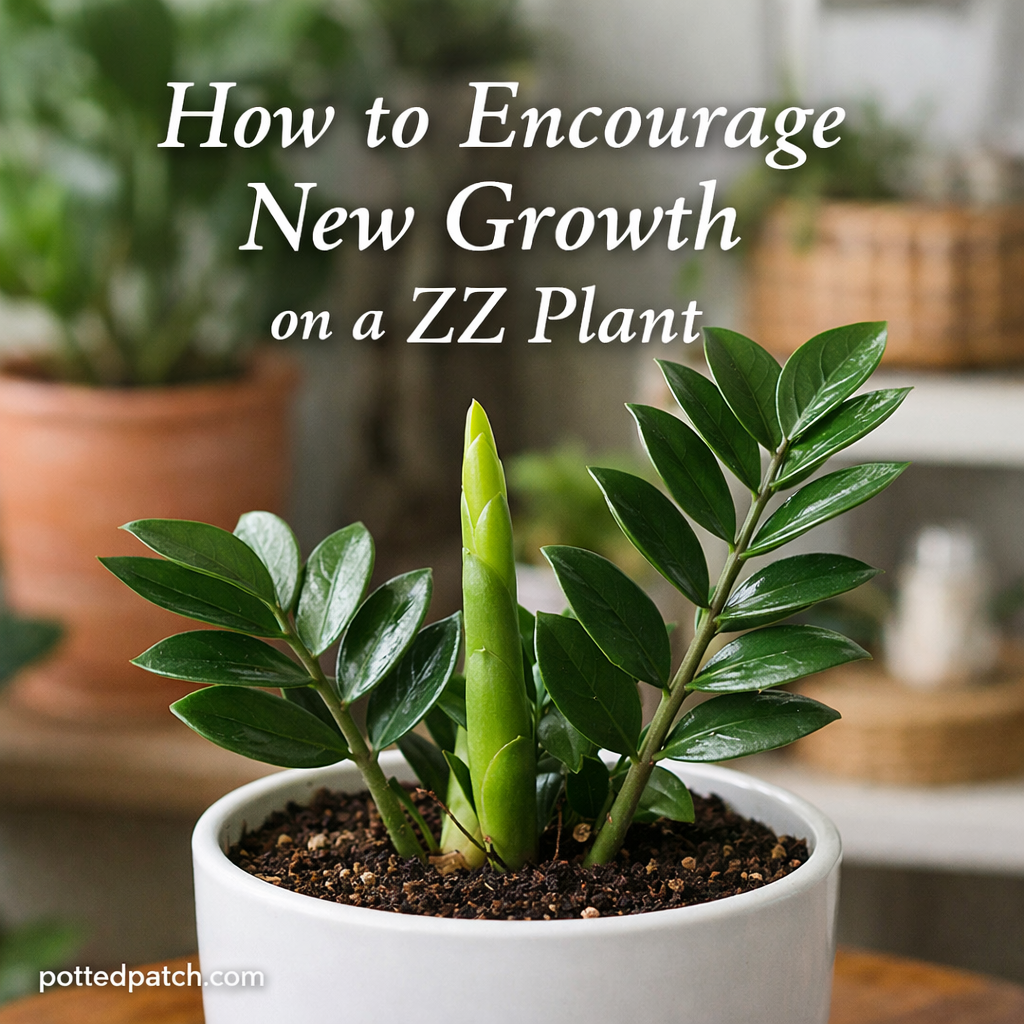
How to Encourage New Growth on a ZZ Plant

ZZ plant with fresh lime green new shoot emerging from soil in white pot indoors.
Fresh new growth emerging from a healthy ZZ plant indoors. pottedpatch.com

ZZ plants (Zamioculcas zamiifolia) are famous for their glossy leaves, sculptural stems, and near-indestructible reputation. But if yours hasn’t pushed out a new shoot in months, you might be wondering: is it stuck?

The good news? ZZ plants grow slowly by nature—but with the right adjustments, you can absolutely encourage healthy new growth.

This guide walks you through exactly how to stimulate fresh stems and fuller foliage without stressing your plant.

Continue reading “How to Encourage New Growth on a ZZ Plant”

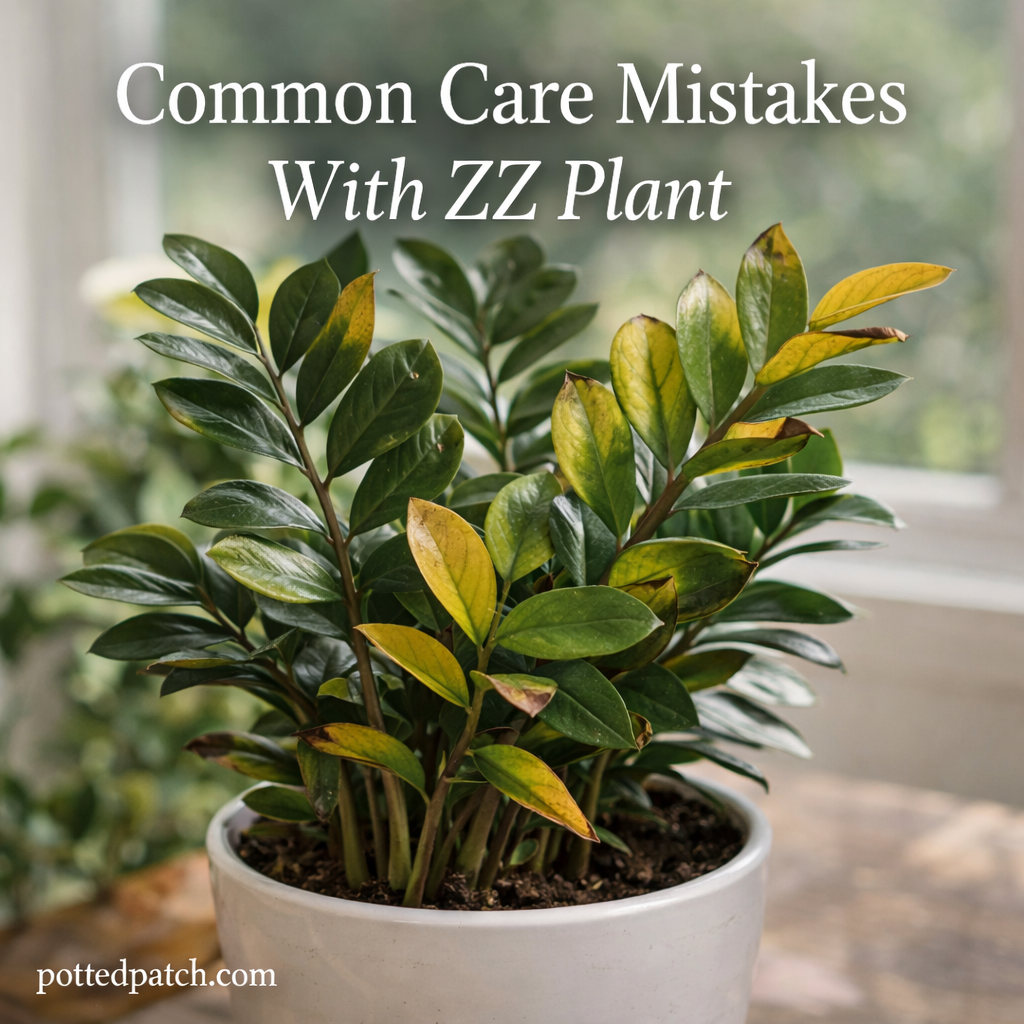
Common Care Mistakes With ZZ Plant

ZZ plant with yellowing leaves in a white pot near a window with overlay title Common Care Mistakes With ZZ Plant and pottedpatch.com watermark.
ZZ plant showing yellowing leaves from common care mistakes. pottedpatch.com

The ZZ plant (Zamioculcas zamiifolia) has earned its reputation as one of the toughest houseplants around. It tolerates low light, survives missed waterings, and adapts to indoor environments with ease.

But “low-maintenance” doesn’t mean “no-maintenance.”

Even hardy plants like the ZZ can struggle if a few common mistakes creep into your care routine. If your plant looks yellow, droopy, or stagnant, one of these issues may be the reason.

Continue reading “Common Care Mistakes With ZZ Plant”

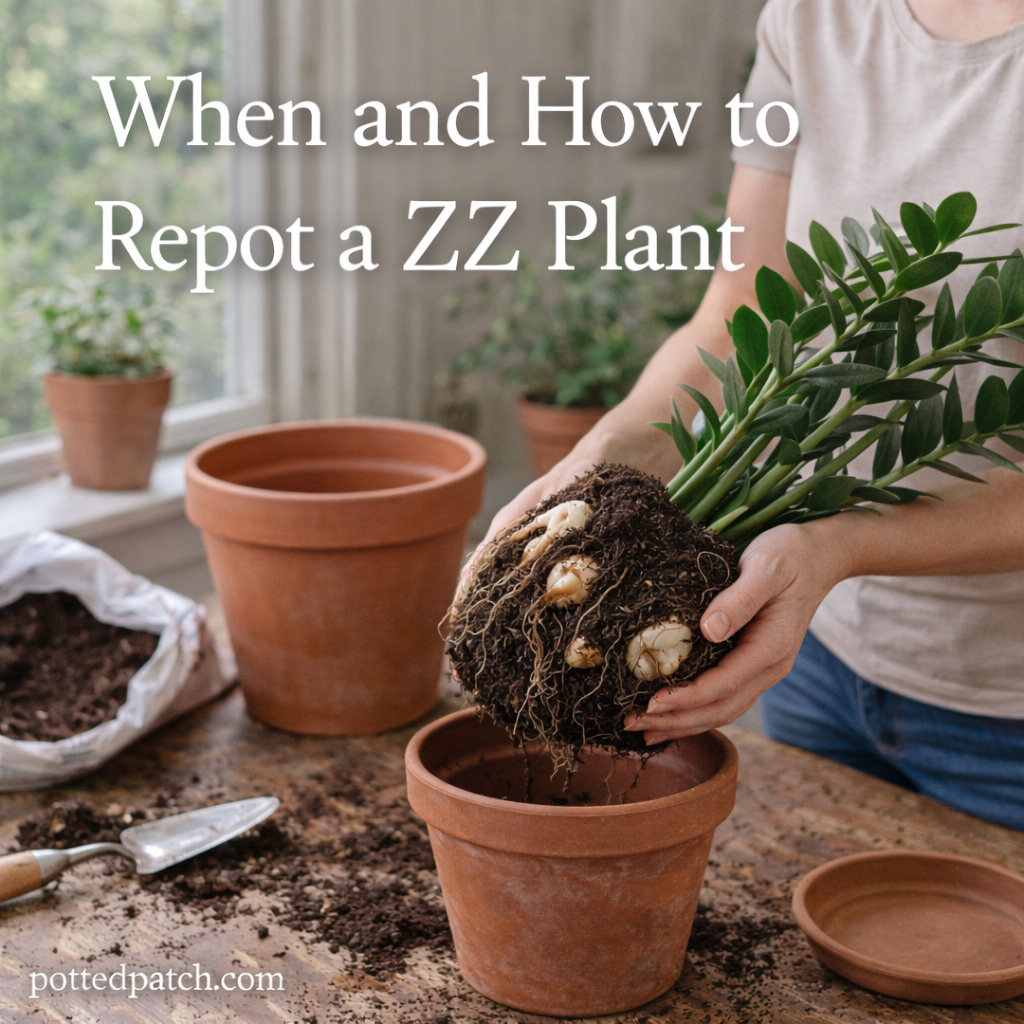
When and How to Repot a ZZ Plant

Person repotting a ZZ plant and holding the root ball with visible rhizomes and soil.
A ZZ plant being repotted into a new container to support healthy root and rhizome growth. pottedpatch.com.

ZZ plants (Zamioculcas zamiifolia) are slow-growing, low-maintenance houseplants, which means they don’t need frequent repotting. In fact, repotting too often can do more harm than good. Knowing when to repot—and how to do it gently—is key to keeping your ZZ plant healthy and stress-free.

This guide covers the clear signs it’s time to repot, the best timing, and a step-by-step method that protects roots and encourages steady growth.

Continue reading “When and How to Repot a ZZ Plant”