Best Soil for a Philodendron

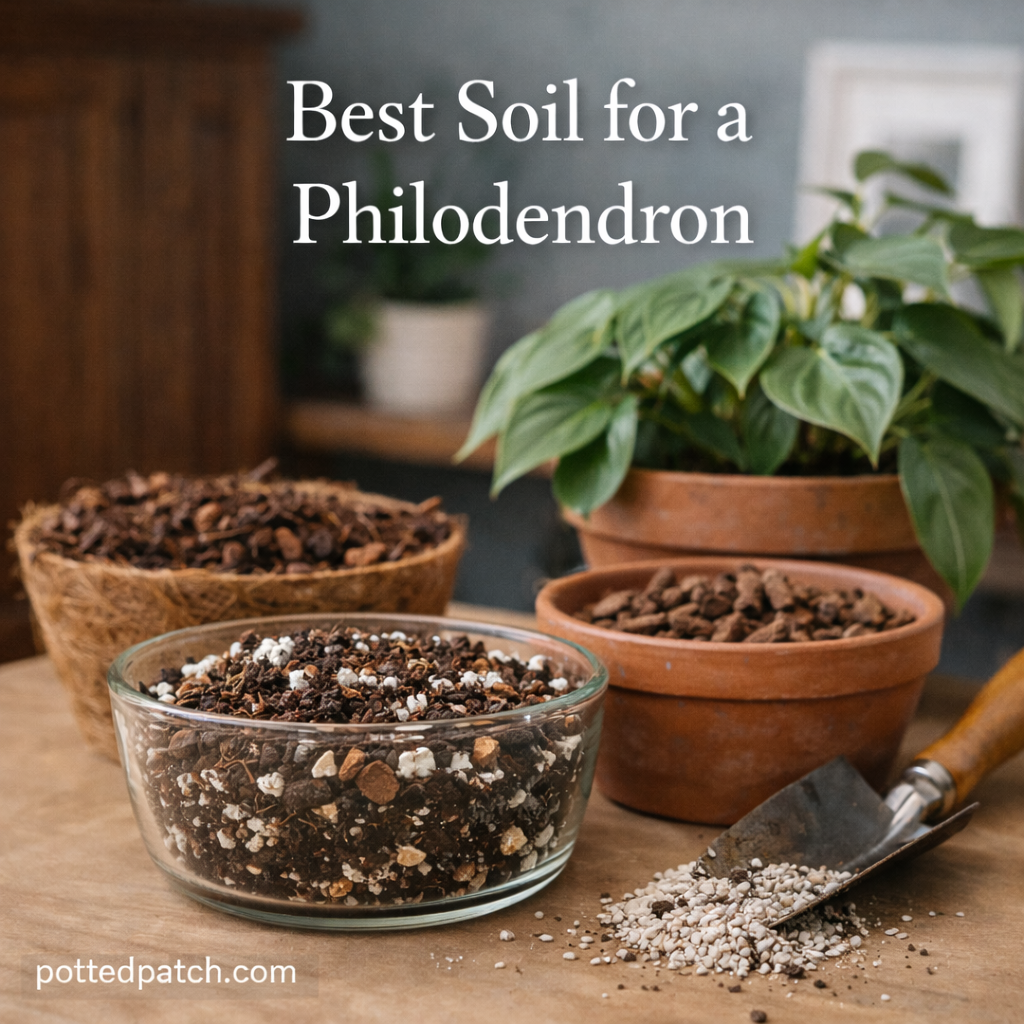
Philodendron plant with well-draining chunky soil mix including bark and perlite.
Philodendron with chunky, well-draining soil mix for healthy root growth. pottedpatch.com

Philodendrons are easygoing plants — but the wrong soil can quickly lead to yellow leaves, root rot, or slow growth.

If you want lush foliage and strong roots, choosing the right soil mix is one of the most important decisions you can make.

Here’s exactly what philodendrons need and how to build the ideal soil blend.

Continue reading “Best Soil for a Philodendron”

Best Light Conditions for a Philodendron

Healthy philodendron in a terracotta pot placed near a bright window with indirect sunlight.
Philodendron thriving in bright, indirect light near a window. pottedpatch.com.

Philodendrons are popular houseplants because they adapt well to indoor environments. But while they tolerate lower light better than many plants, they still have clear lighting preferences.

Providing the right light conditions helps your philodendron grow fuller, stronger, and healthier. Too little light leads to leggy growth. Too much direct sun can scorch the leaves.

Here’s exactly what your philodendron needs.

Continue reading “Best Light Conditions for a Philodendron”

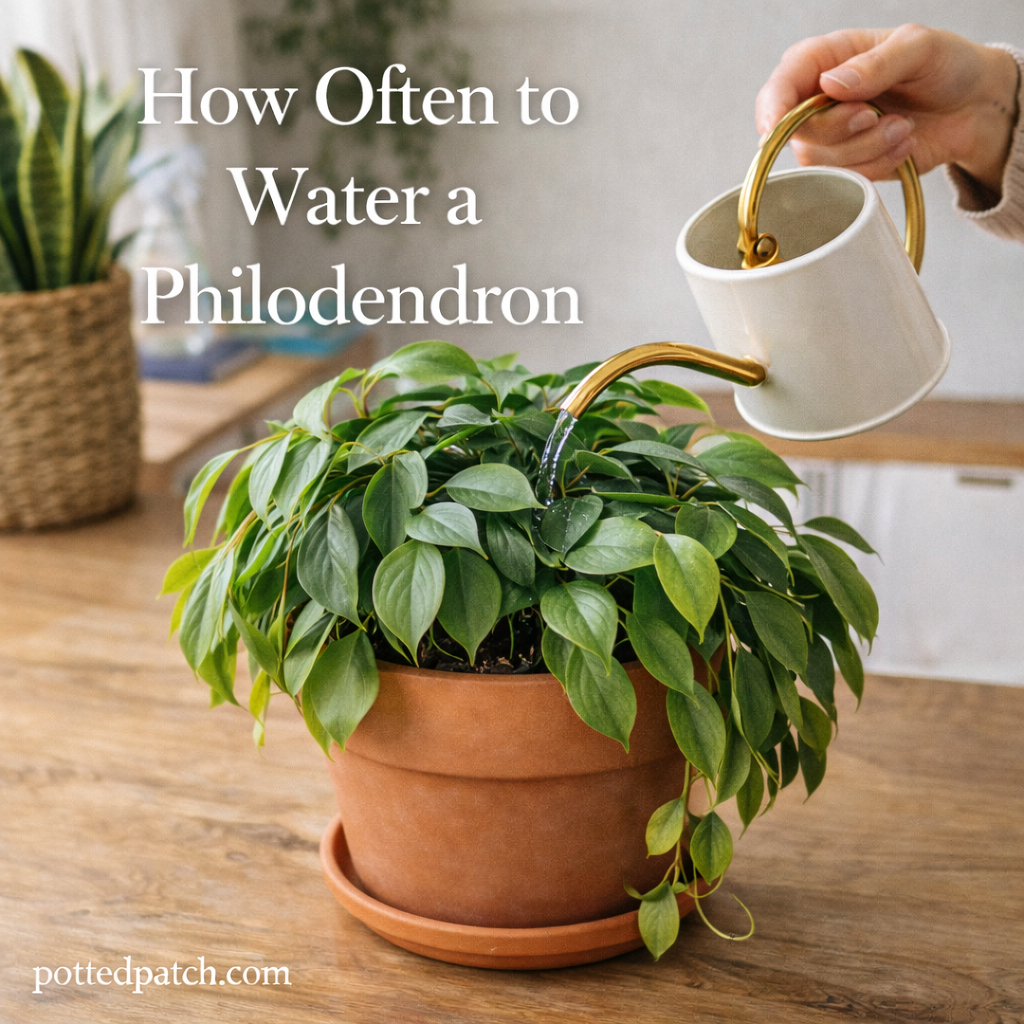
How Often to Water a Philodendron

Person watering a healthy philodendron in a terracotta pot indoors with brass watering can.
Watering a philodendron properly to maintain healthy indoor growth. pottedpatch.com.

Philodendrons are one of the most popular houseplants for a reason — they’re beautiful, adaptable, and relatively low-maintenance. But when it comes to watering, many plant owners either overdo it or forget about it entirely.

So how often should you water a philodendron?

The short answer: Water when the top 1–2 inches of soil are dry.
The real answer depends on light, season, pot size, and your home environment.

Let’s break it down clearly.

Continue reading “How Often to Water a Philodendron”

How to Care for a Philodendron Indoors

Healthy green philodendron plant in a terracotta pot indoors with moss pole and overlay title How to Care for a Philodendron Indoors.
Lush indoor philodendron in a terracotta pot with moss pole support. pottedpatch.com.

Philodendrons are among the easiest and most rewarding houseplants you can grow. Known for their lush foliage and forgiving nature, these tropical plants thrive in typical indoor environments with minimal fuss.

Whether you’re caring for a trailing heartleaf variety or a larger upright type, this guide will walk you through exactly how to care for a philodendron indoors so it stays healthy, vibrant, and growing year-round.

Continue reading “How to Care for a Philodendron Indoors”

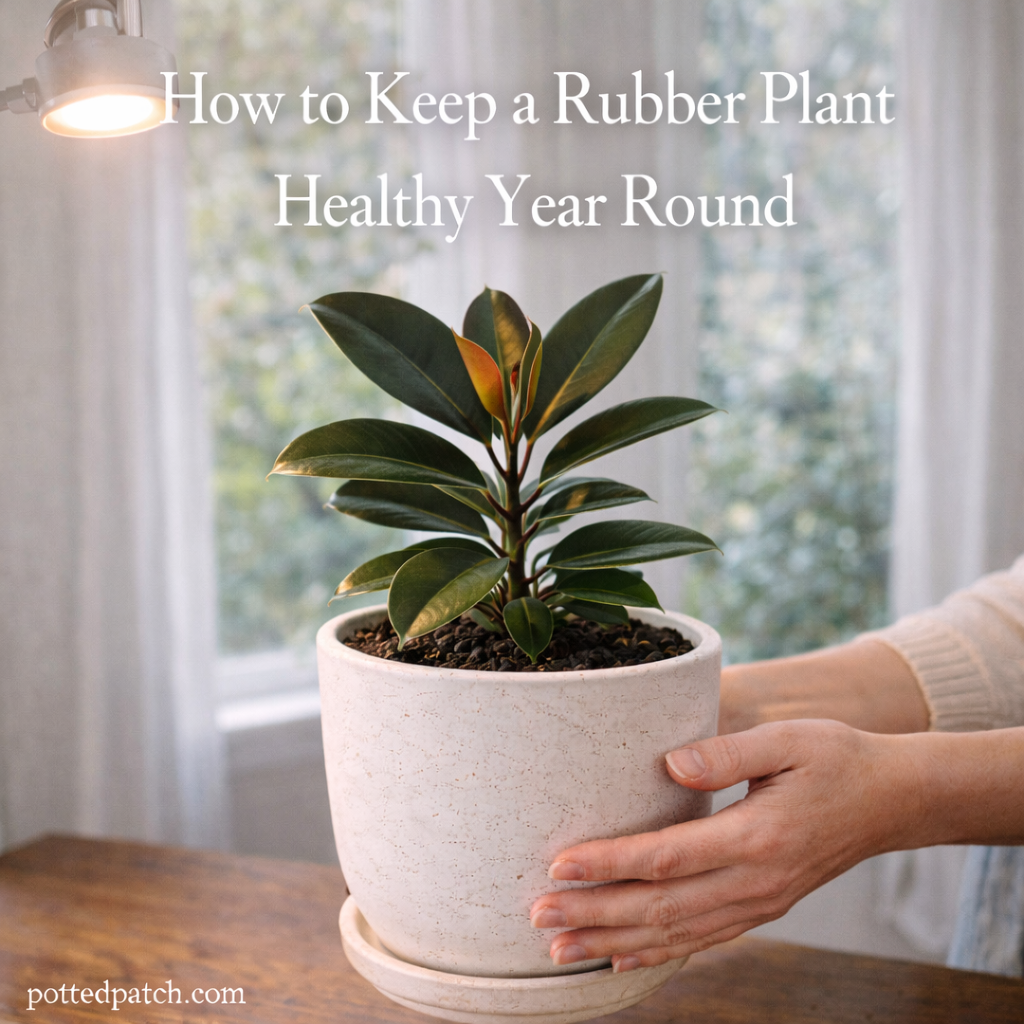
How to Keep a Rubber Plant Healthy Year Round

Healthy rubber plant in a white pot indoors with overlay title How to Keep a Rubber Plant Healthy Year Round and pottedpatch.com watermark.
Maintaining a healthy rubber plant year round with proper indoor care. pottedpatch.com

Rubber plants are hardy and adaptable, but their needs shift slightly with the seasons. If you want consistent growth, glossy leaves, and fewer problems, year-round care adjustments make a big difference.

The key isn’t complicated routines — it’s consistency and seasonal awareness.

Here’s how to keep your rubber plant (Ficus elastica) healthy all year long.

Continue reading “How to Keep a Rubber Plant Healthy Year Round”

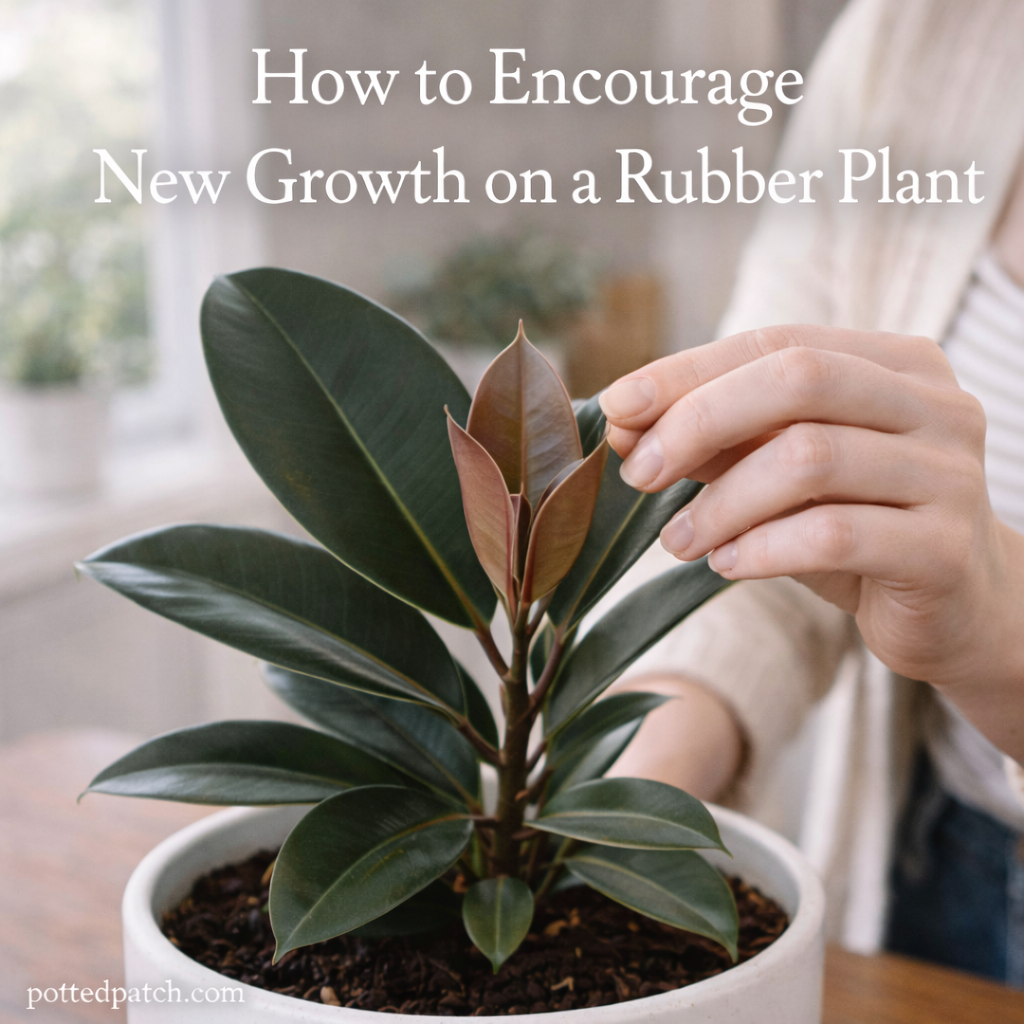
How to Encourage New Growth on a Rubber Plant

Person gently touching new leaf growth on a rubber plant in a white pot indoors with overlay title How to Encourage New Growth on a Rubber Plant and pottedpatch.com watermark.
Encouraging healthy new leaf growth on a rubber plant indoors. pottedpatch.com

Rubber plants are bold, glossy, and dramatic — but sometimes they seem to stall. If your rubber plant hasn’t produced new leaves in months, don’t worry. Slow growth is usually a care issue, not a permanent problem.

The good news? With a few targeted adjustments, you can stimulate healthy, consistent new growth.

Here’s exactly how to do it.

Continue reading “How to Encourage New Growth on a Rubber Plant”

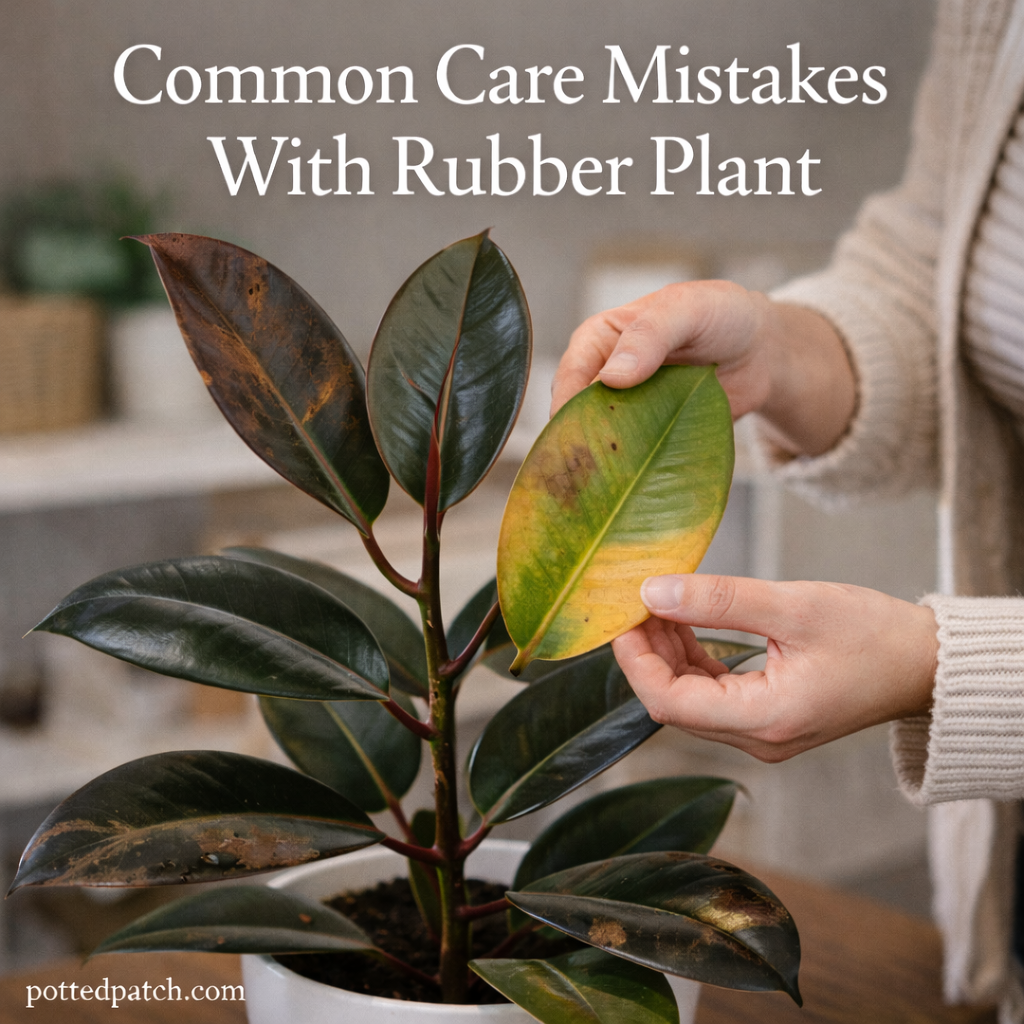
Common Care Mistakes With Rubber Plant

Person examining yellow and brown damaged leaves on a rubber plant indoors with overlay title Common Care Mistakes With Rubber Plant and pottedpatch.com watermark.
Inspecting damaged rubber plant leaves caused by common indoor care mistakes. pottedpatch.com

Rubber plants are bold, glossy, and surprisingly resilient. But despite their reputation as low-maintenance houseplants, they can struggle when basic care needs are overlooked.

If your rubber plant (Ficus elastica) has drooping leaves, brown spots, or slow growth, chances are one of these common care mistakes is the cause.

Let’s break down what to avoid — and how to fix problems before they get worse.

Continue reading “Common Care Mistakes With Rubber Plant”

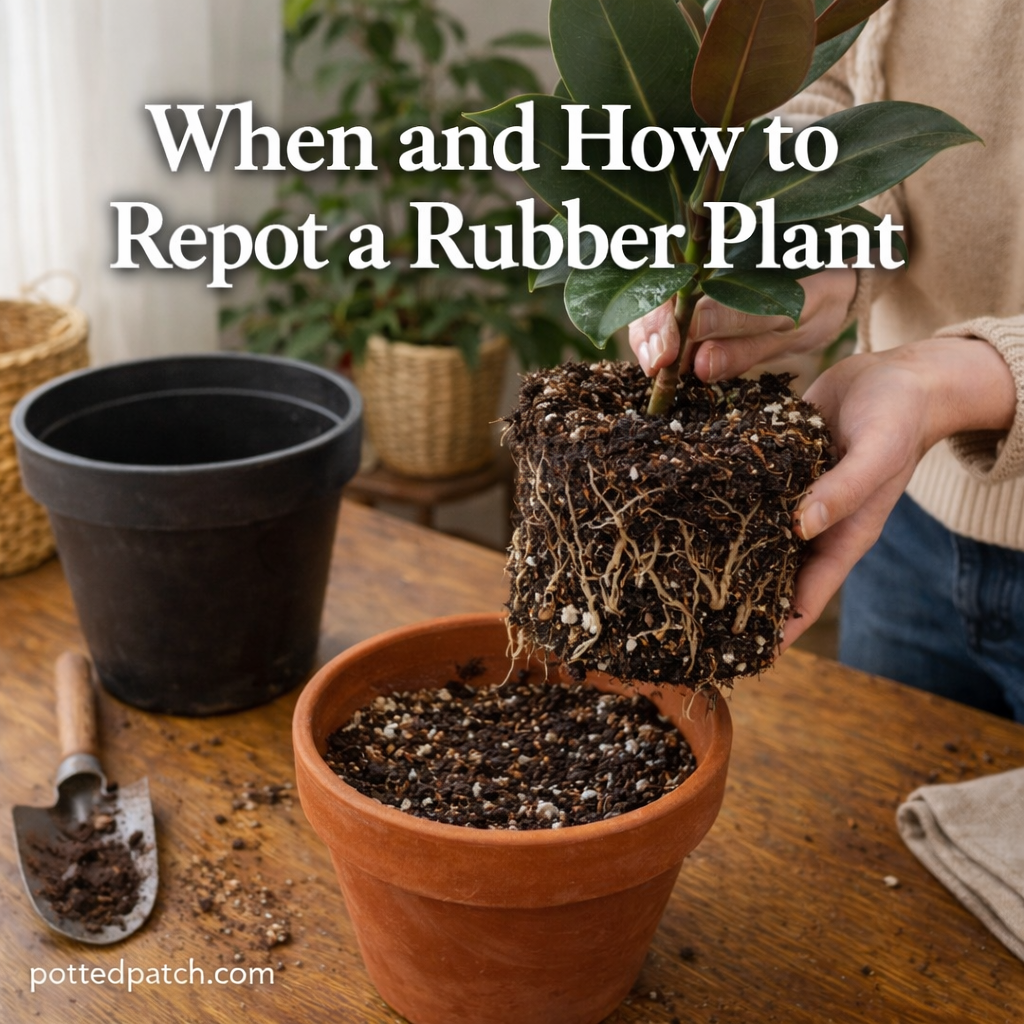
When and How to Repot a Rubber Plant

Person repotting a rubber plant into a larger terracotta pot with fresh soil indoors.
Repotting a rubber plant into a slightly larger pot with fresh, well-draining soil. pottedpatch.com

Rubber plants are strong, resilient houseplants — but even the healthiest one will eventually outgrow its pot.

If your plant’s growth has slowed, roots are circling the bottom, or water runs straight through the pot, it may be time to repot.

In this guide, you’ll learn when to repot a rubber plant, how to do it properly, and how to help it adjust afterward.

Continue reading “When and How to Repot a Rubber Plant”

Best Soil for a Rubber Plant

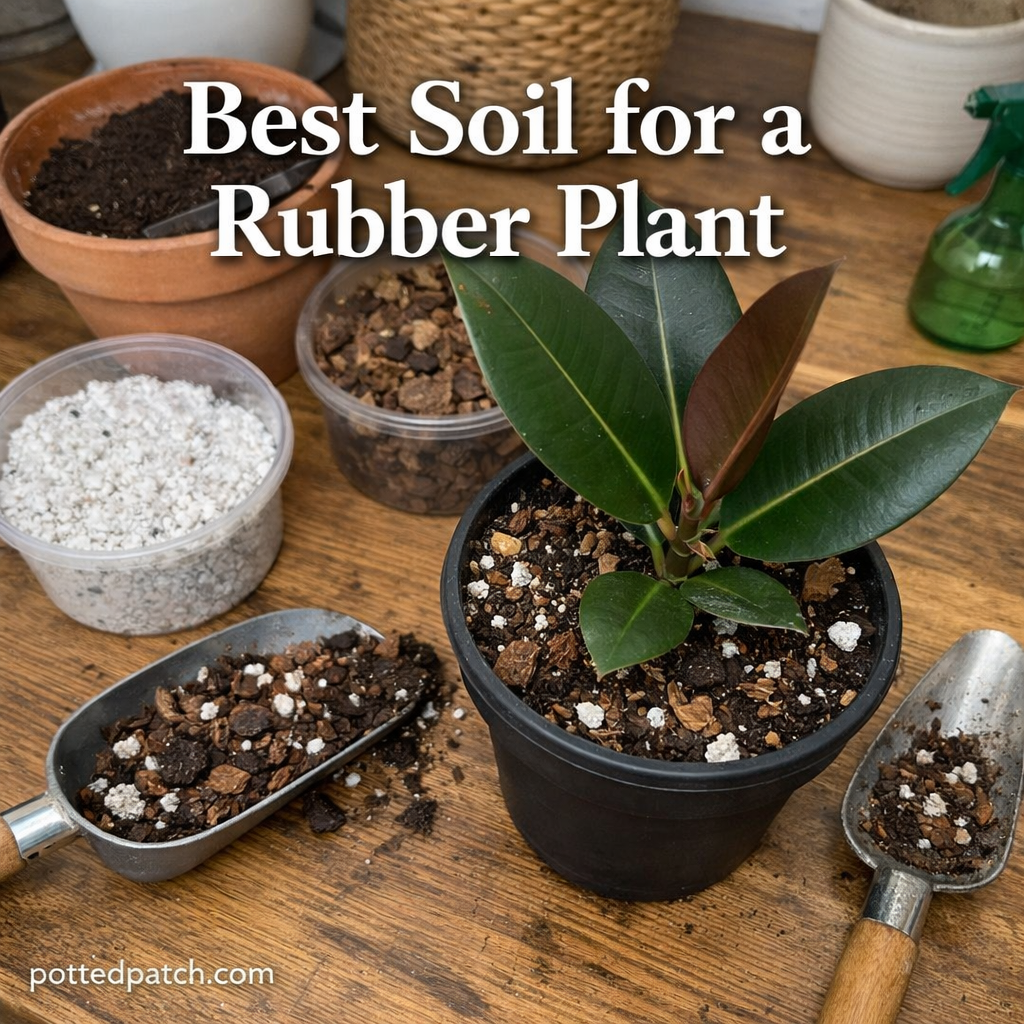
Rubber plant in white pot with well-draining soil mix including perlite and bark for healthy indoor growth.
Rubber plant potted in a well-draining soil mix with perlite and bark. pottedpatch.com

Rubber plants (Ficus elastica) are known for their glossy leaves, strong growth, and ability to adapt to indoor spaces. But if you want thick stems, vibrant foliage, and steady growth, the right soil makes all the difference.

Choosing the best soil for a rubber plant isn’t complicated — but it does require the right balance of drainage, aeration, and moisture retention. In this guide, you’ll learn exactly what type of soil works best, what to avoid, and how to create the perfect mix for long-term health.

Continue reading “Best Soil for a Rubber Plant”

Best Light Conditions for a Rubber Plant

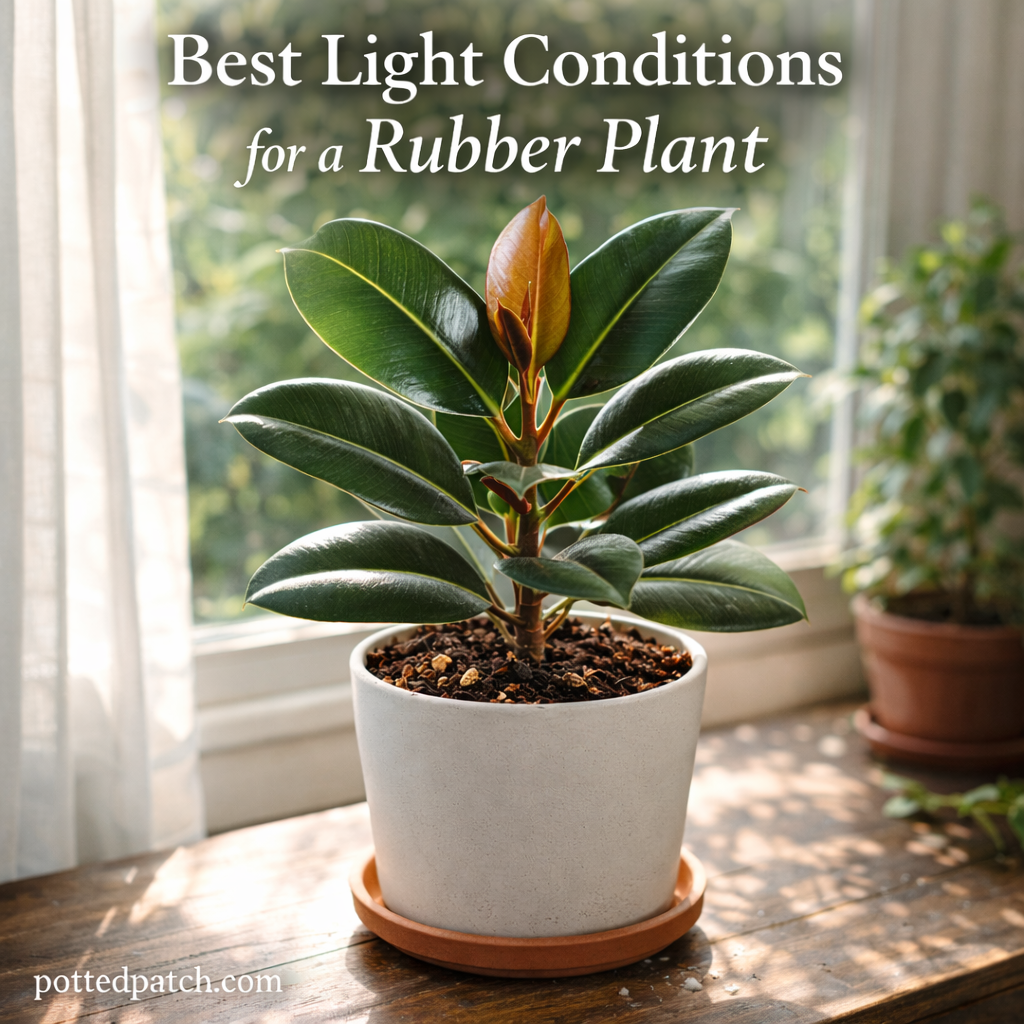
Rubber plant in a white pot placed near a bright window with filtered sunlight, showing ideal light conditions, with pottedpatch.com watermark.
Rubber plant positioned in bright, indirect sunlight near a window. pottedpatch.com

Rubber plants are known for their bold, glossy leaves and upright growth. But if your plant isn’t thriving, light is usually the reason.

Understanding the best light conditions for a rubber plant can mean the difference between steady growth and stalled, drooping leaves.

Let’s break down exactly what your rubber plant needs.

Continue reading “Best Light Conditions for a Rubber Plant”