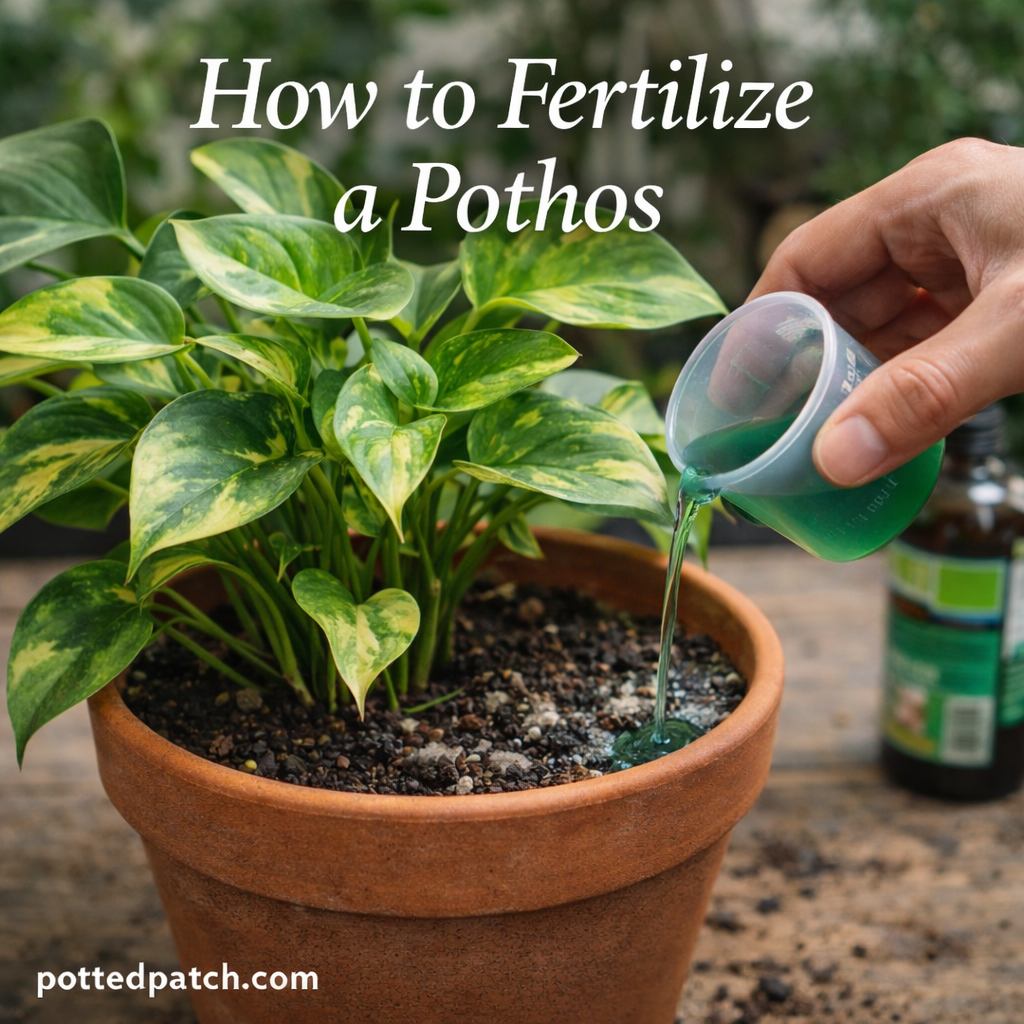
How to Fertilize a Pothos

Applying liquid fertilizer to a pothos plant growing in a terracotta pot indoors.
Fertilizing a pothos plant with diluted liquid fertilizer to support healthy indoor growth. pottedpatch.com.

Pothos plants are known for thriving with minimal care, but proper fertilization can take them from “surviving” to truly flourishing. The key is knowing when, how, and how much to fertilize—because overdoing it can cause more harm than good.

This guide explains exactly how to fertilize a pothos, what type of fertilizer works best, and common mistakes to avoid.

Continue reading “How to Fertilize a Pothos”
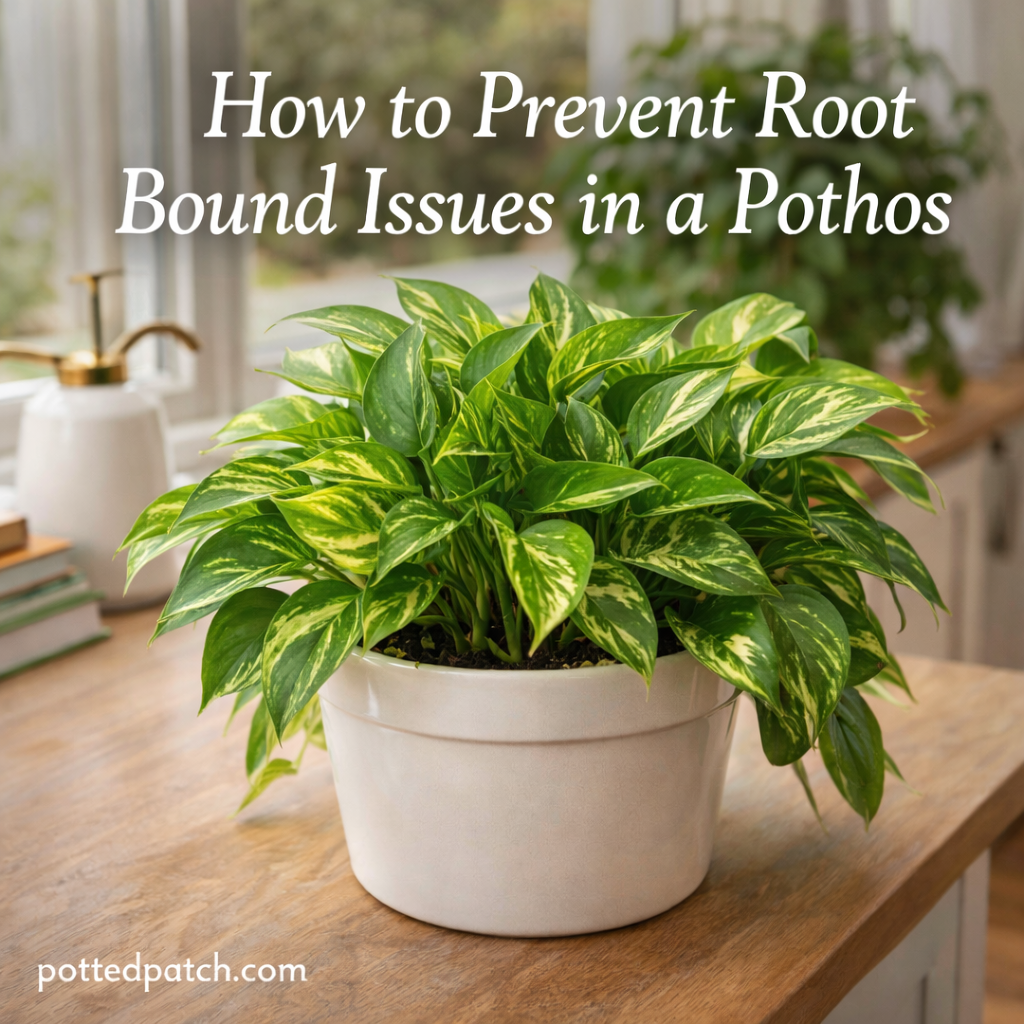
How to Prevent Root Bound Issues in a Pothos

Healthy pothos plant growing in a properly sized pot to prevent root bound issues indoors.
A well-sized container helps prevent root bound issues and supports healthy pothos growth. pottedpatch.com.

Pothos is a fast-growing, resilient houseplant, but even this easygoing plant can struggle when it becomes root bound. When the roots outgrow their container, water absorption, nutrient uptake, and overall growth can suffer.

Understanding how root binding happens—and how to prevent it—keeps your pothos healthy, flexible, and thriving long term.

Continue reading “How to Prevent Root Bound Issues in a Pothos”

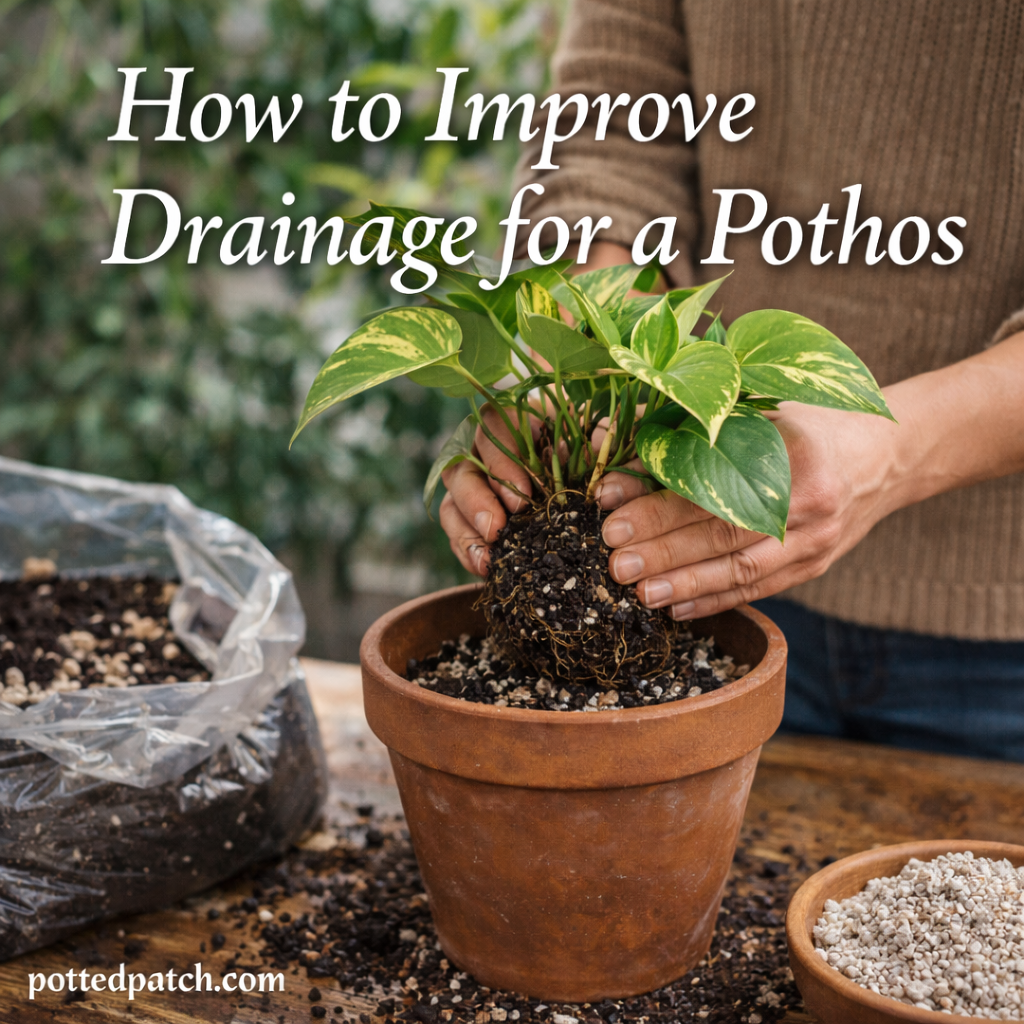
How to Improve Drainage for a Pothos

Repotting a pothos plant into a terracotta pot with well-draining soil to improve drainage.
Repotting a pothos with well-draining soil helps prevent soggy roots and overwatering issues. pottedpatch.com.

Good drainage is one of the most important factors in keeping a pothos healthy. While pothos are tolerant plants, consistently wet soil can quickly lead to yellowing leaves, soft stems, and root rot. Improving drainage helps excess water escape, keeps roots oxygenated, and prevents many common pothos problems.

This guide explains how to improve drainage for a pothos step by step, whether your plant is already struggling or you want to prevent issues before they start.

Continue reading “How to Improve Drainage for a Pothos”

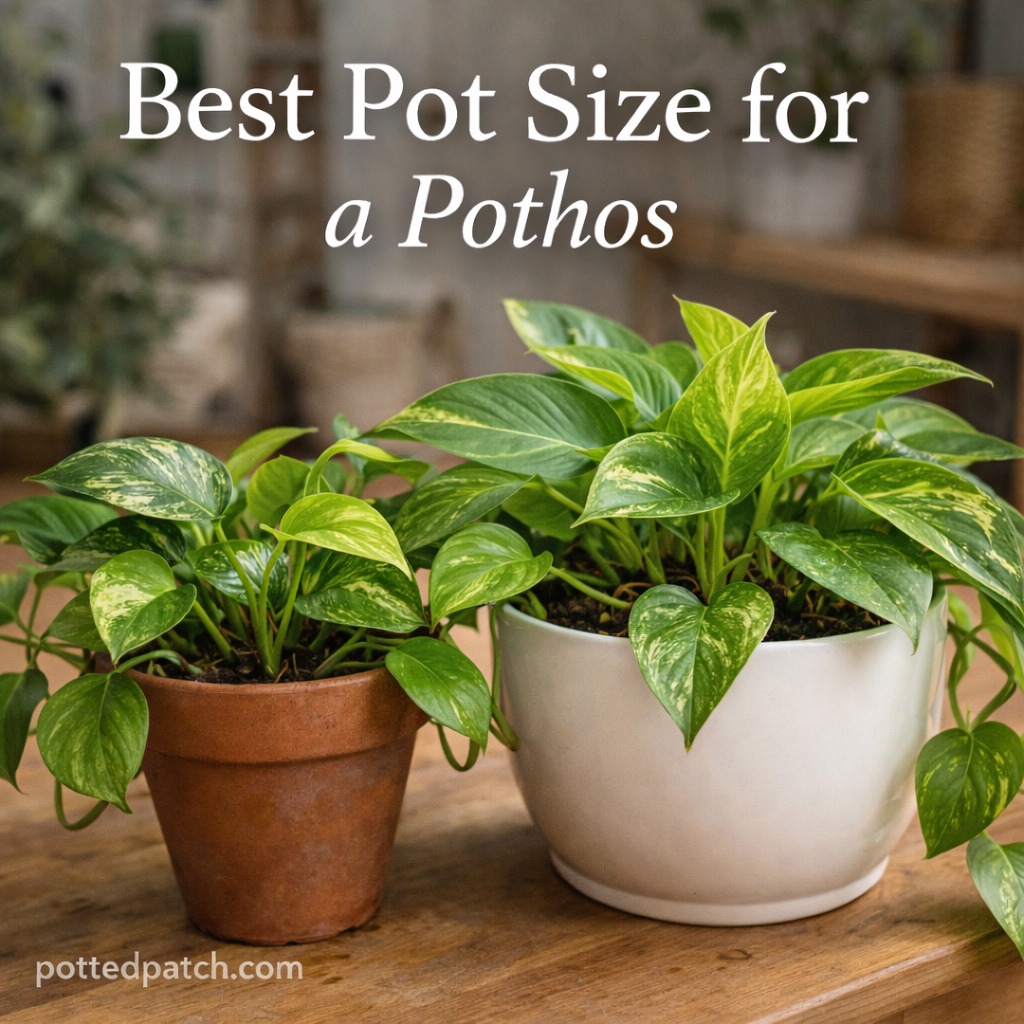
Best Pot Size for a Pothos

Two healthy pothos plants in different-sized pots showing proper container sizing indoors.
Pothos plants in appropriately sized pots to support healthy indoor growth. pottedpatch.com.

Choosing the right pot size is one of the most important — and most overlooked — parts of pothos care. While pothos is famously tolerant, the wrong pot size can slow growth, cause yellowing leaves, or lead to root rot over time.

This guide explains exactly what pot size a pothos needs, how to tell when it’s time to size up, and why bigger is not always better.

Continue reading “Best Pot Size for a Pothos”

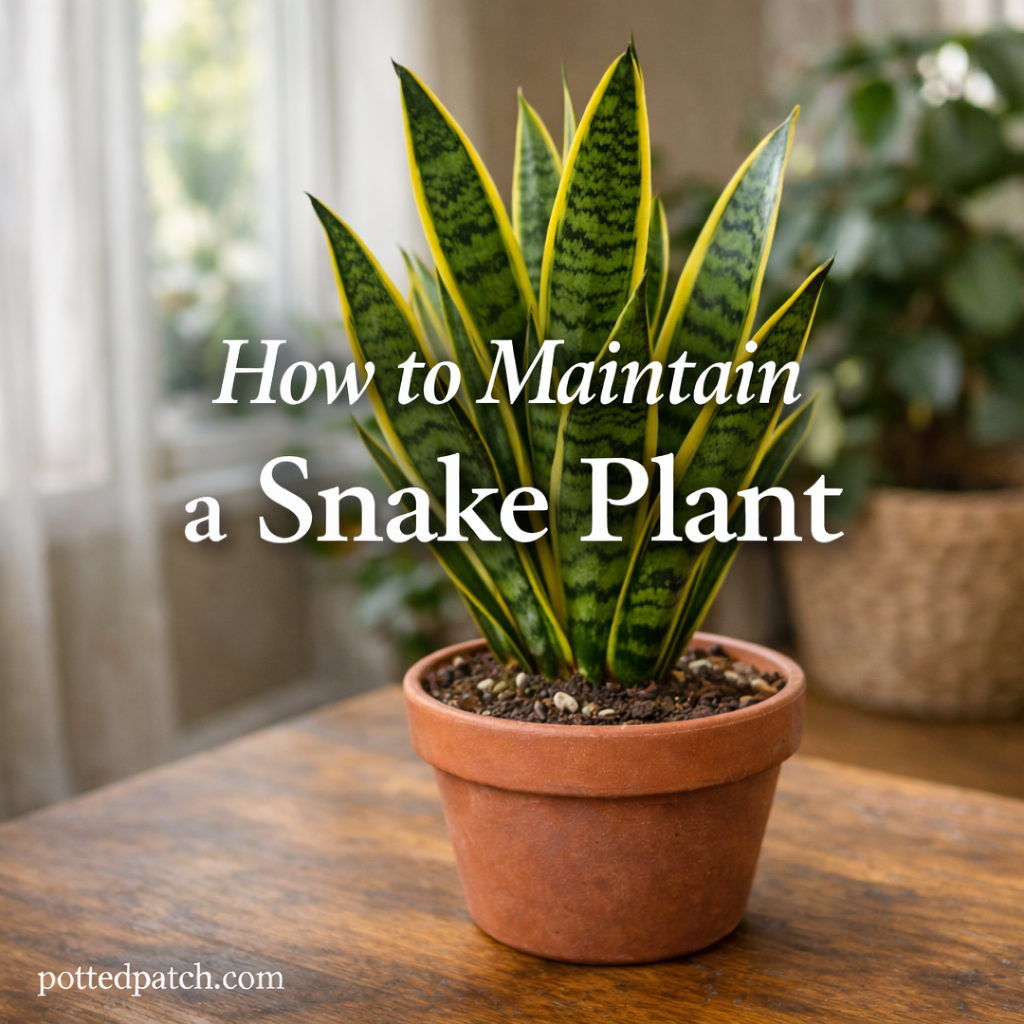
How to Maintain a Snake Plant

Healthy snake plant in a terracotta pot indoors, showing proper container and pot care for long-term maintenance.
A well-maintained snake plant growing in a terracotta pot with proper soil and drainage. pottedpatch.com.

Snake plants are one of the easiest houseplants to live with—but long-term success still depends on a few smart maintenance habits. Proper container choice, soil care, watering rhythm, and occasional upkeep make the difference between a plant that merely survives and one that stays upright, glossy, and healthy for years.

This guide focuses specifically on maintaining a snake plant through good container and pot care, with simple routines you can follow year round.

Continue reading “How to Maintain a Snake Plant”

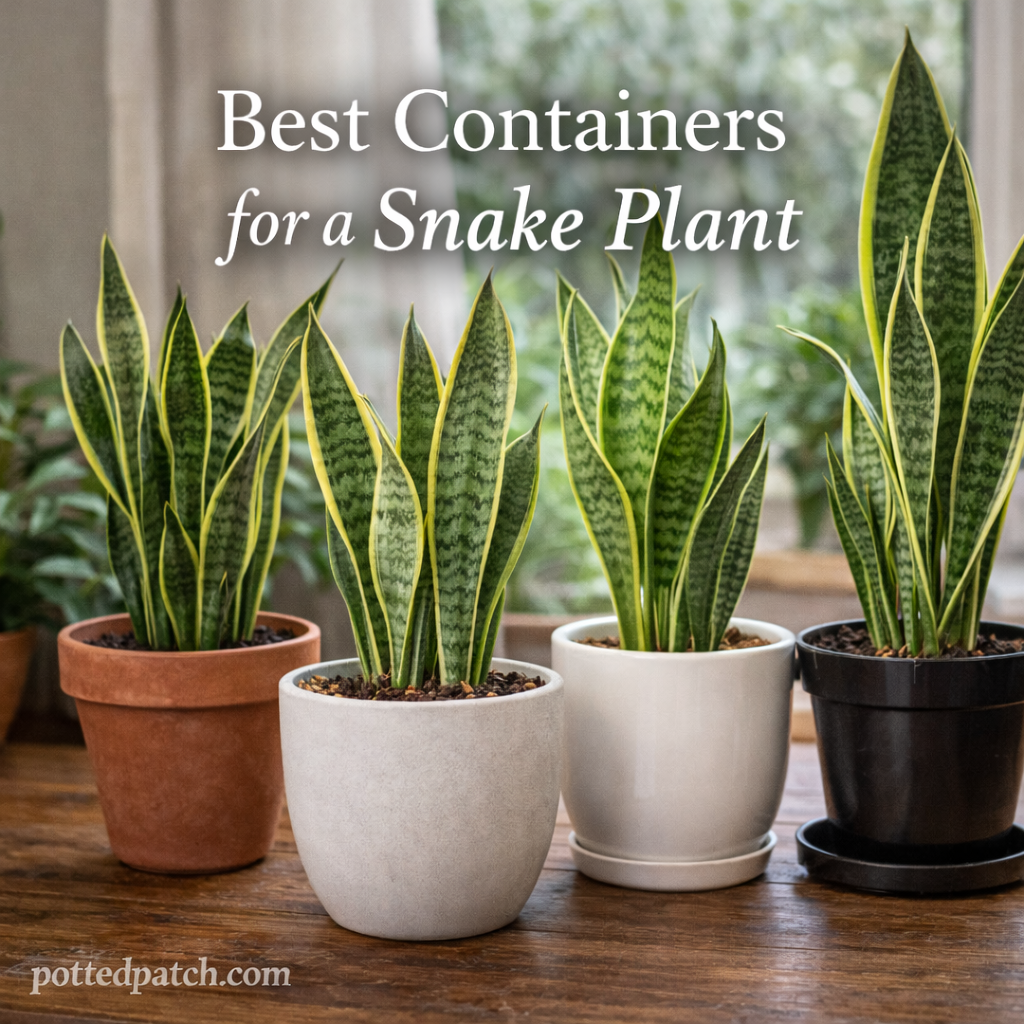
Best Containers for a Snake Plant

Snake plants displayed in terracotta, ceramic, concrete, and plastic containers indoors.
Snake plants shown in different container materials to highlight the best pot options for healthy growth. pottedpatch.com.

Choosing the right container for a snake plant does more than improve how it looks—it directly affects root health, watering success, and long-term growth. While snake plants are forgiving, the wrong pot can quietly cause problems like root rot, stalled growth, or instability as the plant matures.

This guide explains which containers work best for snake plants, which ones to avoid, and how to choose the right size and material for your space.

Continue reading “Best Containers for a Snake Plant”

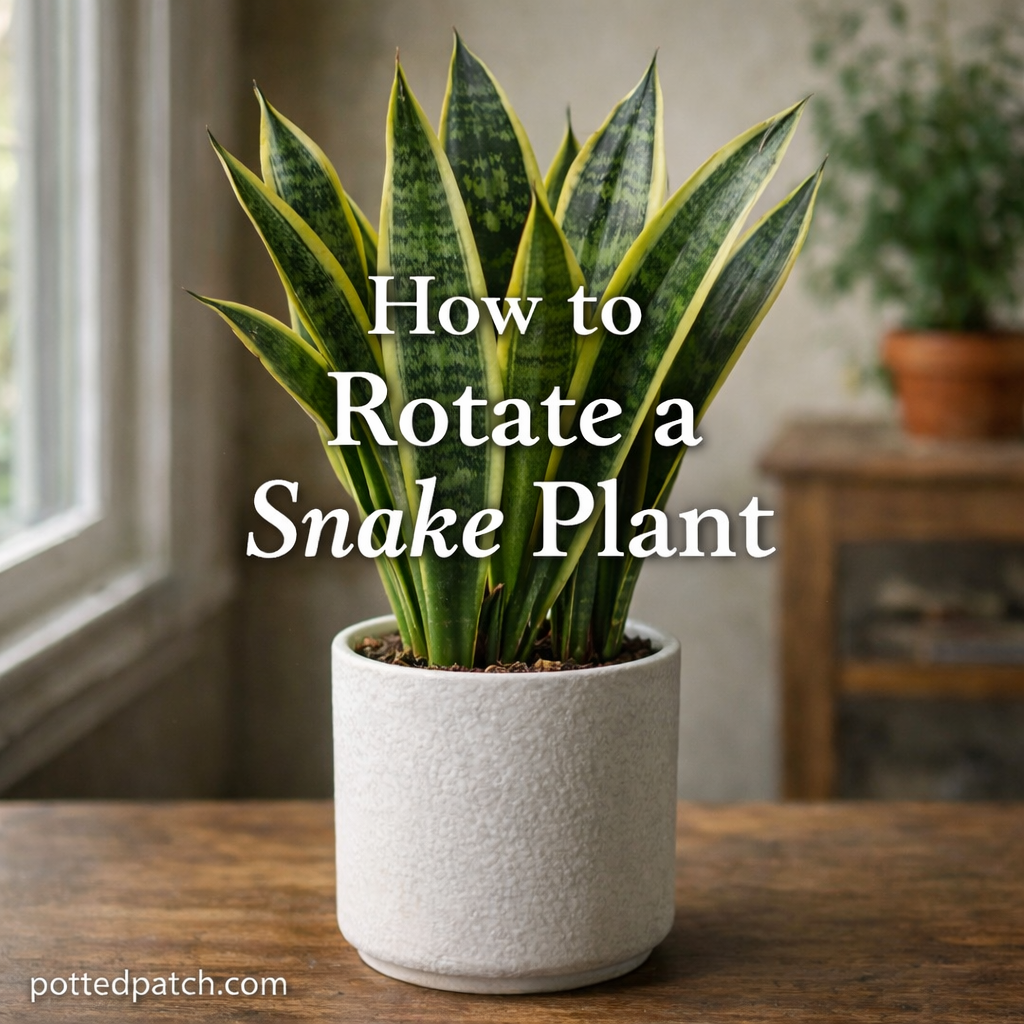
How to Rotate a Snake Plant

Snake plant in a white pot near a window showing upright leaves and balanced growth from regular rotation.
A healthy snake plant positioned near natural light to encourage even, upright growth through regular rotation. pottedpatch.com.

Rotating a snake plant is one of the simplest care habits you can adopt—and one of the most overlooked. While snake plants are famously low-maintenance, they still respond to light direction. Without rotation, they can lean, grow unevenly, or develop lopsided leaves over time.

This guide explains why rotation matters, how often to do it, and the right way to rotate a snake plant without stressing it.

Continue reading “How to Rotate a Snake Plant”

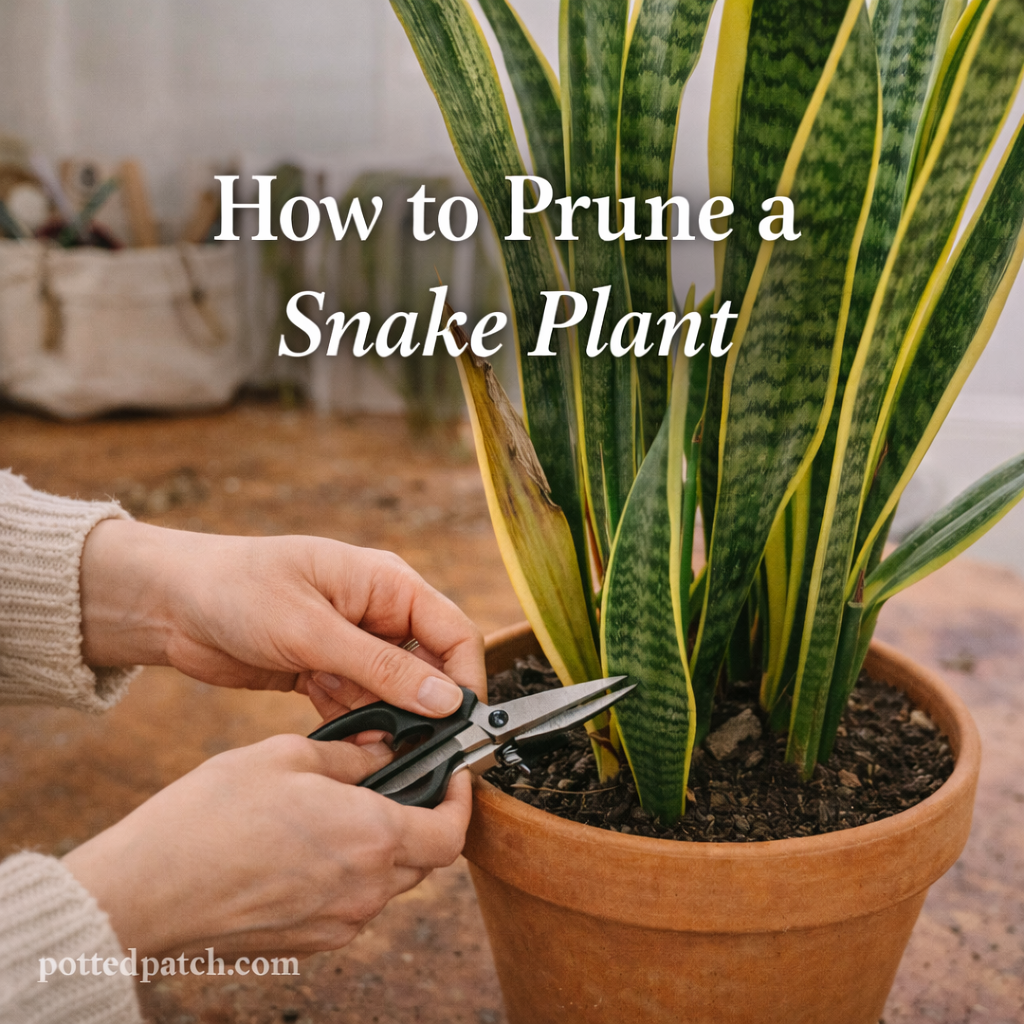
How to Prune a Snake Plant

Person pruning a snake plant at the base using clean scissors for healthy growth.
Pruning damaged leaves from a snake plant using proper technique. pottedpatch.com.

Snake plants are one of the easiest houseplants to maintain, but even they benefit from occasional pruning. Pruning helps remove damaged leaves, improve appearance, and encourage healthier growth. The good news is that pruning a snake plant is simple, low-risk, and doesn’t require frequent maintenance.

This guide explains when pruning is necessary, how to do it safely, and what to expect after trimming your plant.

Continue reading “How to Prune a Snake Plant”

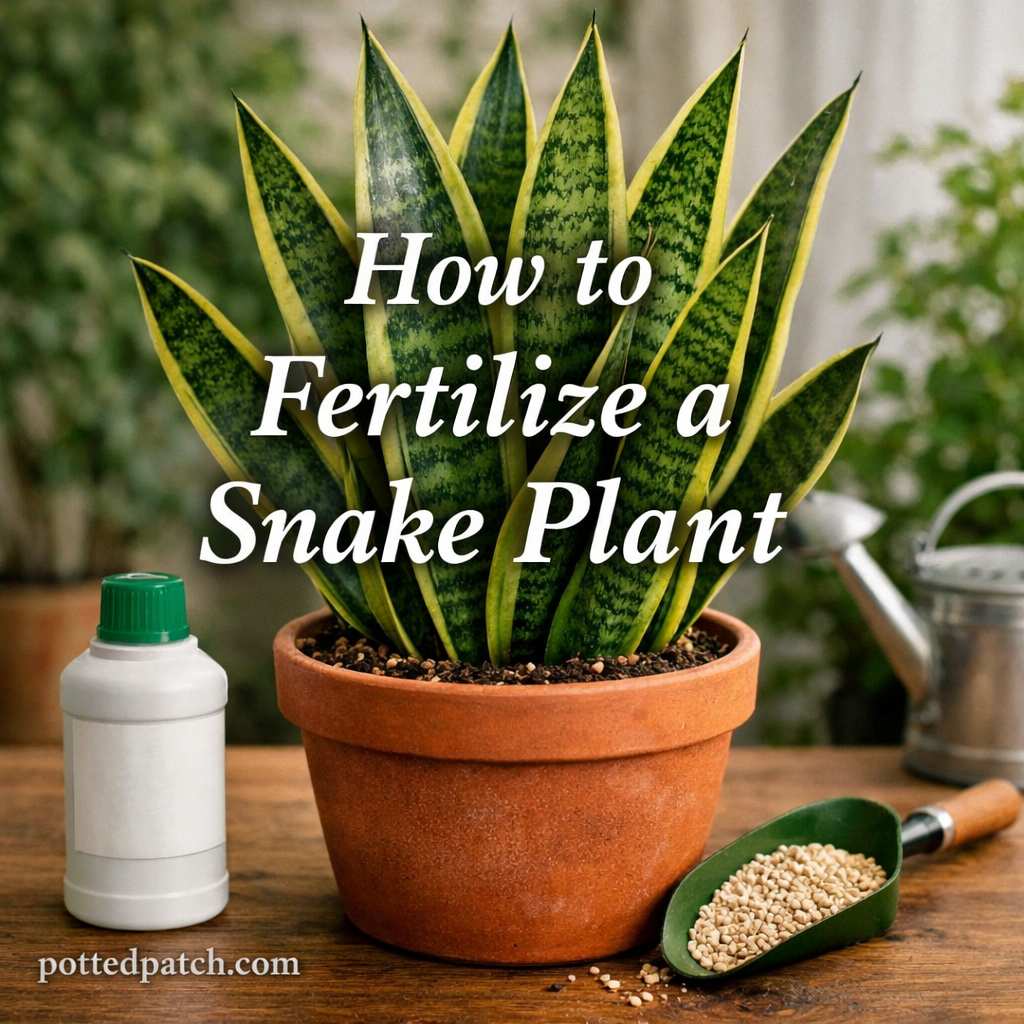
How to Fertilize a Snake Plant

Potted snake plant with fertilizer and watering tools demonstrating how to fertilize a snake plant properly.
A healthy snake plant in a container with fertilizer and watering tools. pottedpatch.com.

Snake plants (Sansevieria, also known as Dracaena trifasciata) are famously low-maintenance, but that doesn’t mean they never need feeding. When fertilized correctly, a snake plant grows stronger leaves, maintains better color, and recovers faster from stress. The key is knowing when to fertilize, what to use, and—just as important—when to stop.

This guide walks you through exactly how to fertilize a snake plant without risking root damage or stunted growth.

Continue reading “How to Fertilize a Snake Plant”

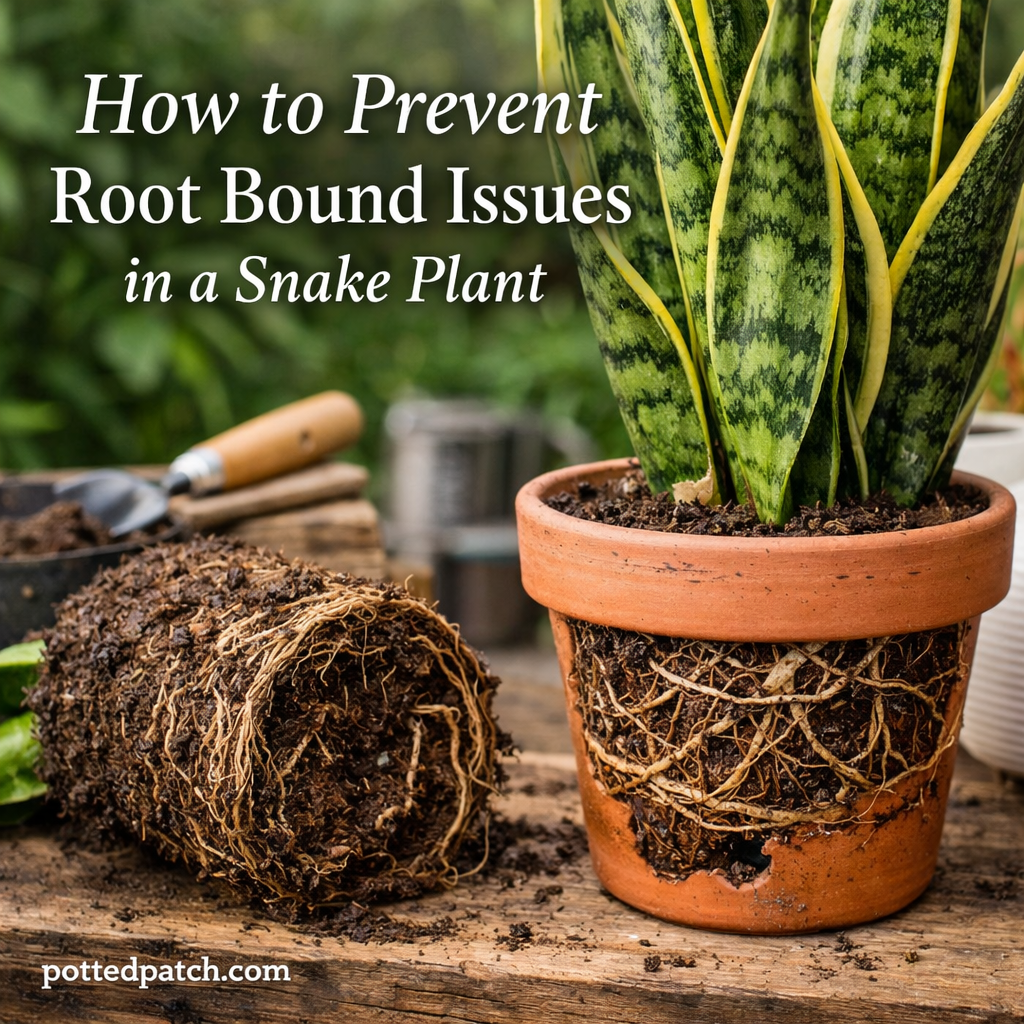
How to Prevent Root Bound Issues in a Snake Plant

Snake plant growing in a pot with visible root bound roots, showing how to prevent root congestion in container plants.
Snake plant showing early signs of root bound growth in a container. pottedpatch.com.

Snake plants are famously low-maintenance, but even the toughest houseplants have limits. One of the most common long-term issues snake plant owners run into is a root bound plant—when the roots outgrow the pot and have nowhere left to go.

The good news is that root bound problems are easy to prevent once you know what to watch for and how to manage pot size, timing, and growth habits. This guide walks you through everything you need to know to keep your snake plant healthy, stable, and stress-free.

Continue reading “How to Prevent Root Bound Issues in a Snake Plant”