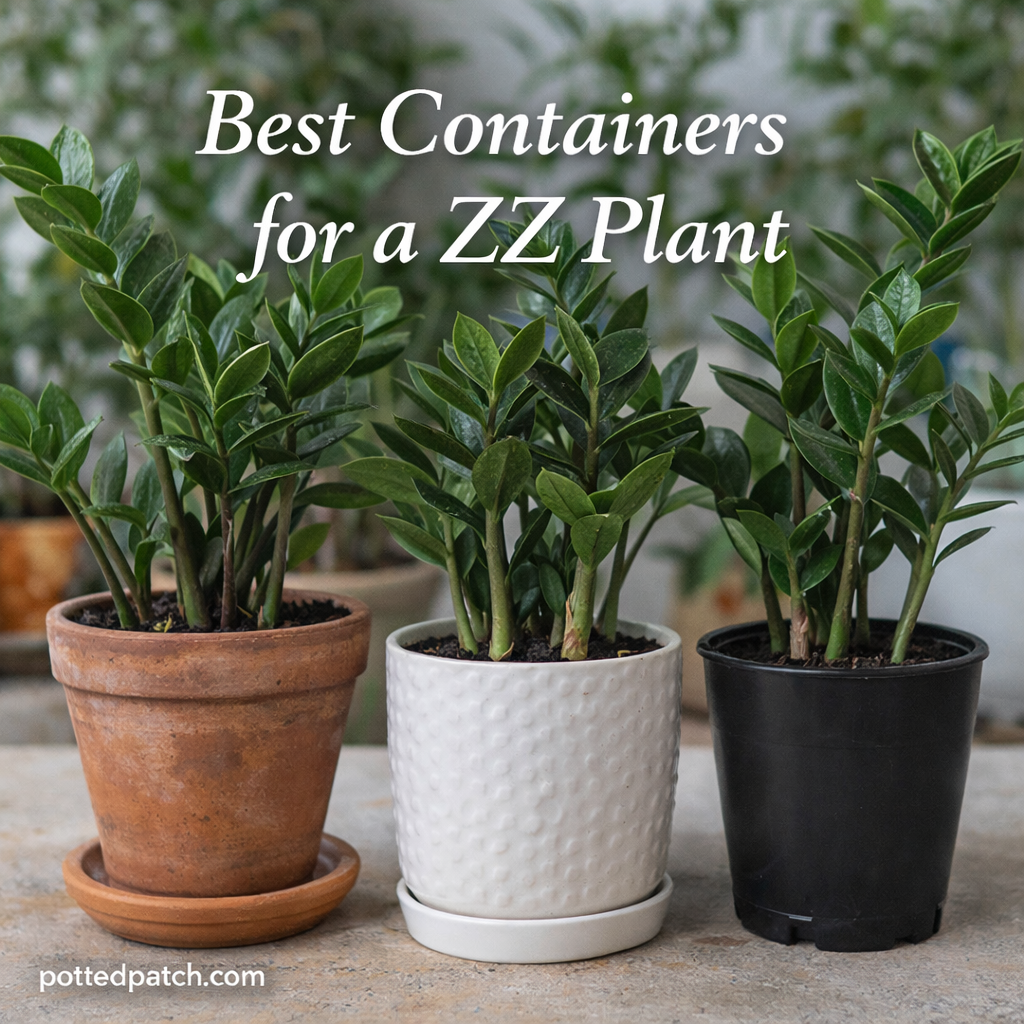
Best Containers for a ZZ Plant

Three ZZ plants in terracotta, ceramic, and plastic pots showing ideal container options.
Comparing terracotta, ceramic, and plastic containers for healthy ZZ plant growth. pottedpatch.com

Choosing the right container for your ZZ plant isn’t just about aesthetics — it directly impacts drainage, root health, and long-term growth.

ZZ plants (Zamioculcas zamiifolia) are drought-tolerant and sensitive to excess moisture. The wrong pot can easily lead to overwatering issues, including root rot.

Here’s how to choose the best container to keep your ZZ plant thriving.

Continue reading “Best Containers for a ZZ Plant”
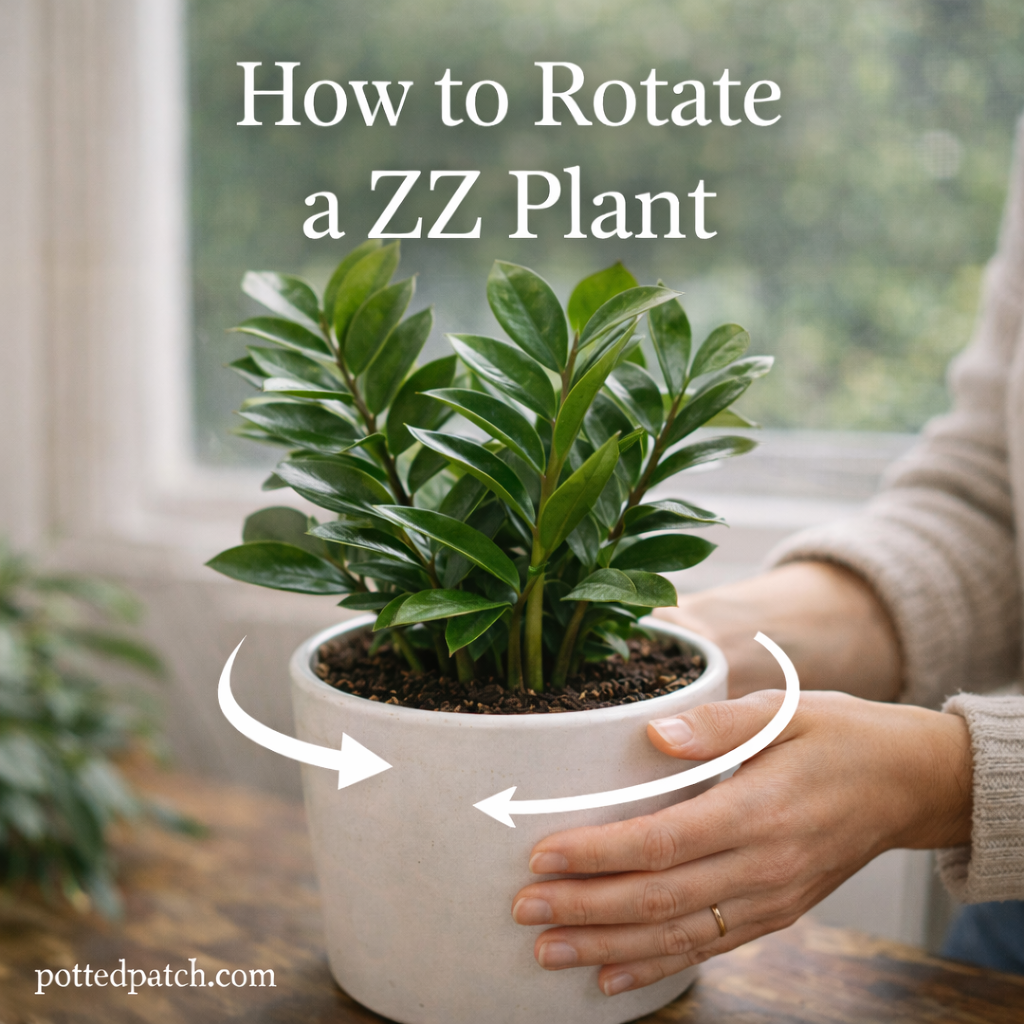
How to Rotate a ZZ Plant

Person rotating a ZZ plant in a white ceramic pot near a window with overlay title How to Rotate a ZZ Plant and pottedpatch.com watermark.
Rotating a ZZ plant to encourage even growth and prevent leaning. pottedpatch.com

Rotating your ZZ plant (Zamioculcas zamiifolia) might seem like a small detail, but it can make a big difference in how your plant grows.

If your ZZ plant is leaning toward a window or developing uneven growth, simple rotation can help maintain its symmetrical, upright shape.

In this guide, you’ll learn why rotating matters, how often to do it, and the right way to rotate your ZZ plant without stressing it.

Continue reading “How to Rotate a ZZ Plant”

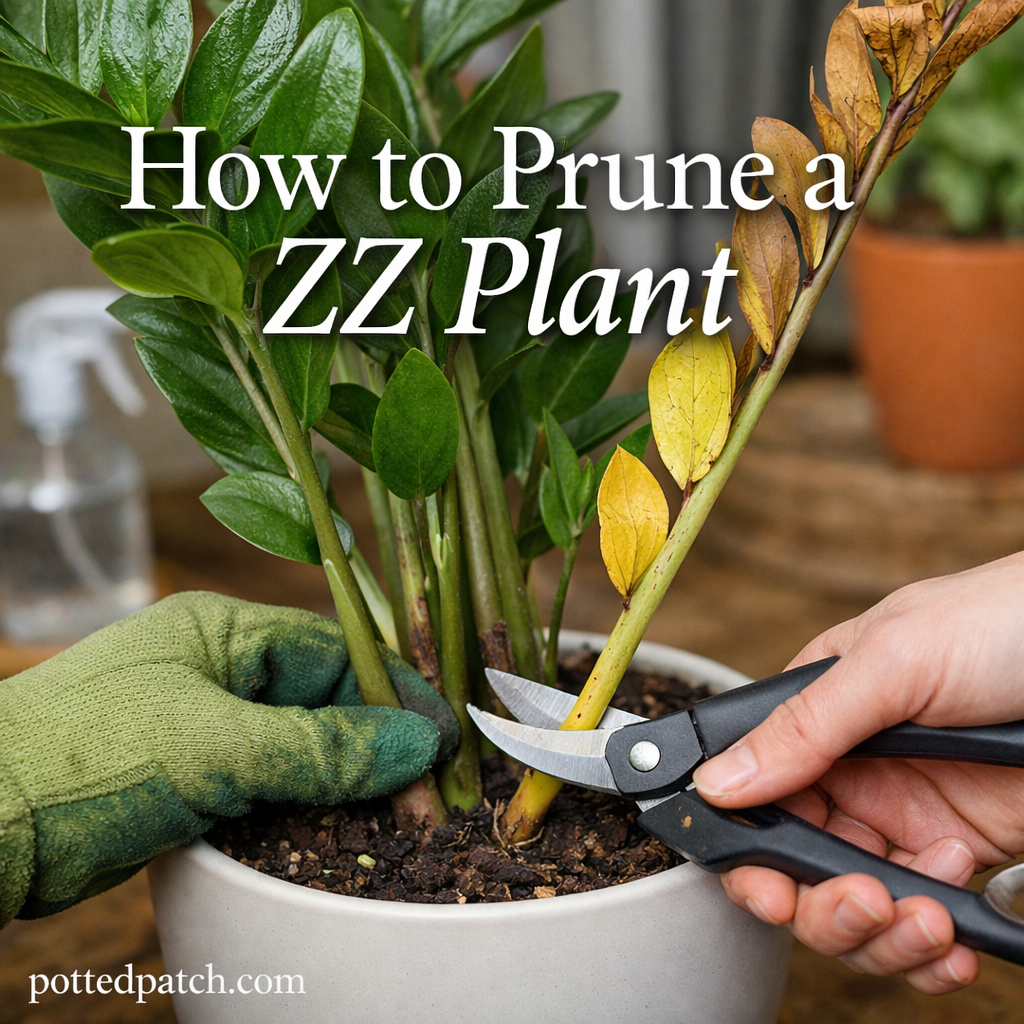
How to Prune a ZZ Plant

Person pruning a ZZ plant stem at the soil line with clean shears to demonstrate proper pruning technique.
Pruning a ZZ plant at the base to remove yellowing stems and maintain healthy growth. pottedpatch.com

ZZ plants (Zamioculcas zamiifolia) are famous for being low-maintenance, slow-growing, and nearly indestructible. Because of that, many plant owners assume pruning isn’t necessary at all. The truth is, occasional pruning keeps a ZZ plant healthier, more attractive, and easier to manage—especially in containers.

The good news? Pruning a ZZ plant is simple, forgiving, and hard to mess up once you understand how the plant grows.

Continue reading “How to Prune a ZZ Plant”

How to Fertilize a ZZ Plant

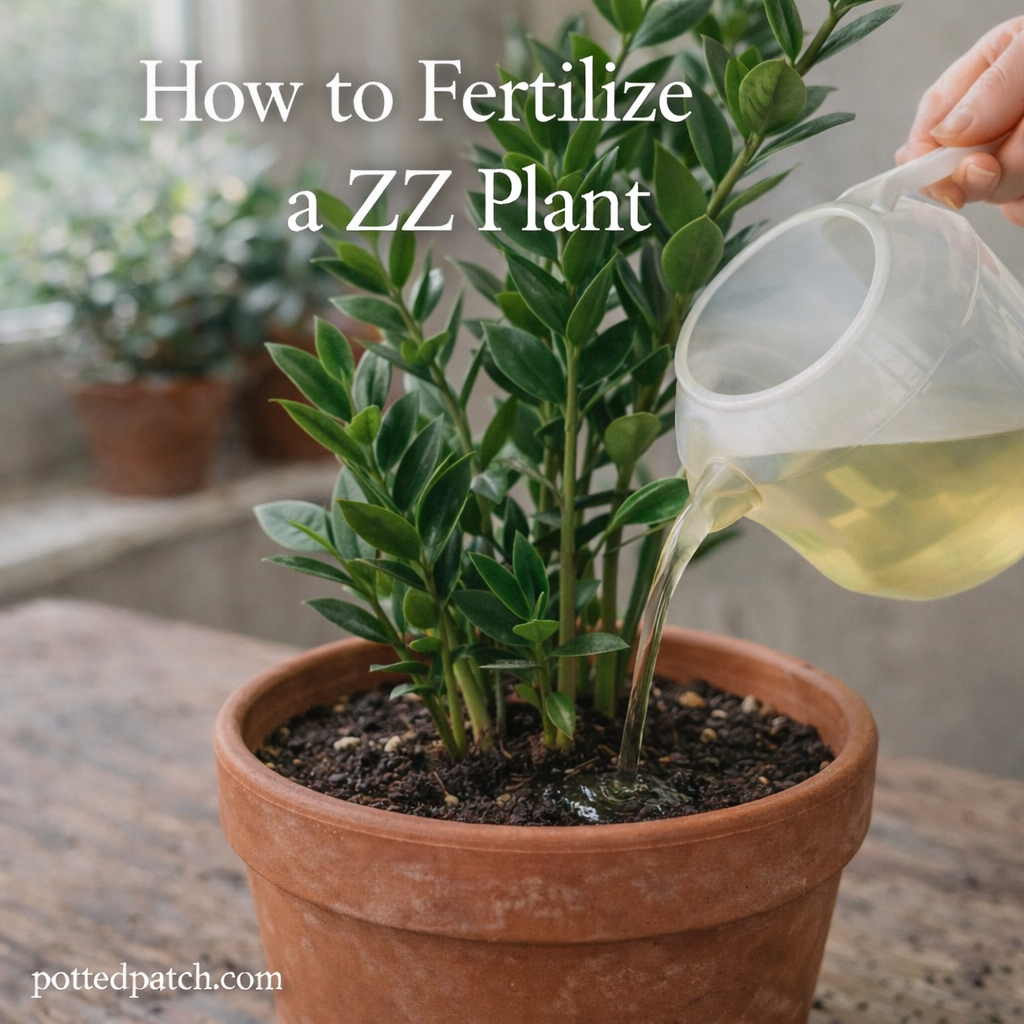
Person fertilizing a ZZ plant in a pot using diluted liquid fertilizer for healthy indoor growth.
A ZZ plant being fertilized with a diluted liquid solution to support steady, healthy growth. pottedpatch.com.

ZZ plants (Zamioculcas zamiifolia) are famously low-maintenance, and fertilizing them is no exception. In fact, one of the most common mistakes with ZZ plants is fertilizing too often. These plants grow slowly and store nutrients in their thick rhizomes, so they need far less feeding than many other houseplants.

This guide explains when to fertilize, what type of fertilizer to use, how much to apply, and how to avoid common mistakes—so you can support healthy growth without stressing your plant.

Continue reading “How to Fertilize a ZZ Plant”

How to Prevent Root Bound Issues in a ZZ Plant

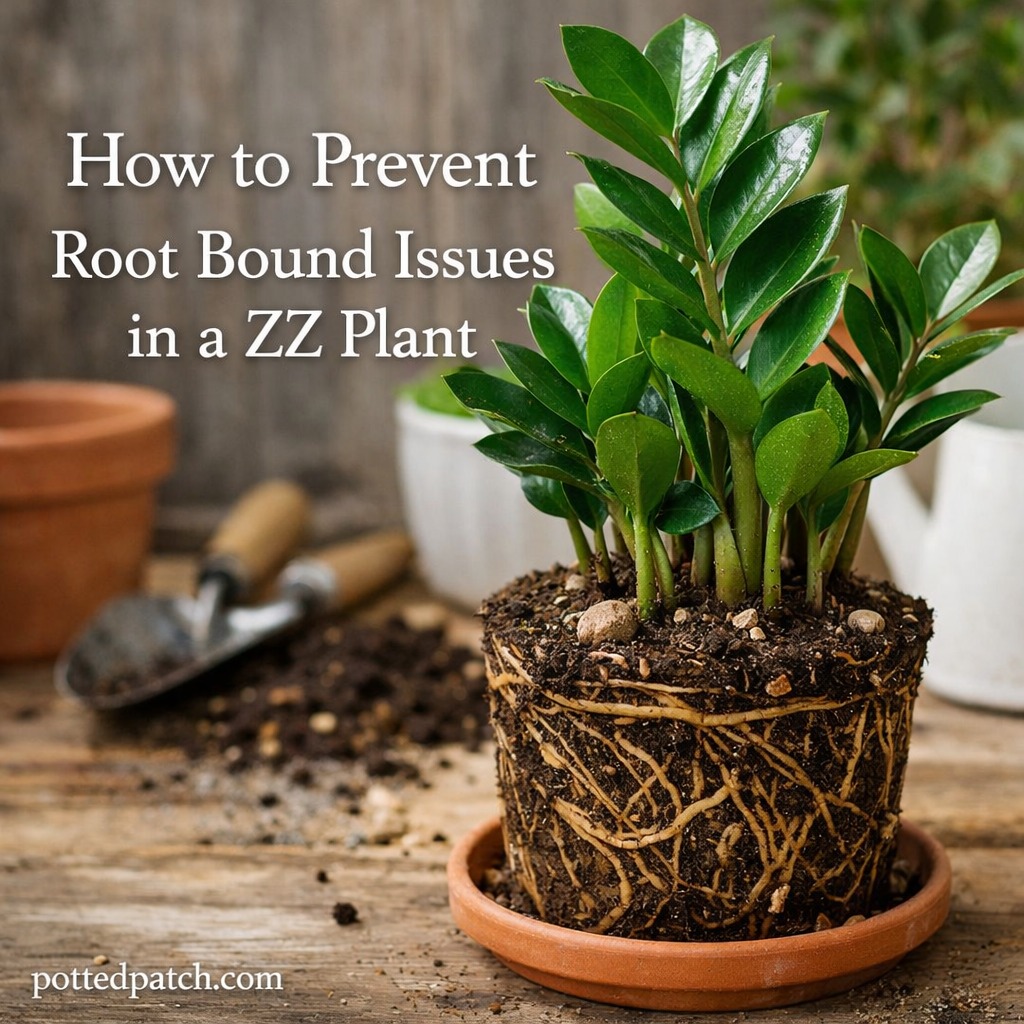
ZZ plant showing root-bound roots in a pot, illustrating how to prevent root bound issues in a ZZ plant.
A ZZ plant removed from its pot to show early root binding and proper container care. pottedpatch.com.

ZZ plants (Zamioculcas zamiifolia) are famously low-maintenance, but even this tough indoor plant can struggle if it becomes root bound. When roots outgrow their container and begin circling tightly, water, nutrients, and overall growth can suffer.

The good news? Root bound issues are easy to prevent once you know what to watch for and how to manage container care correctly. This guide walks you through early warning signs, smart pot choices, repotting timing, and long-term prevention strategies to keep your ZZ plant healthy and thriving.

Continue reading “How to Prevent Root Bound Issues in a ZZ Plant”

How to Improve Drainage for a ZZ Plant

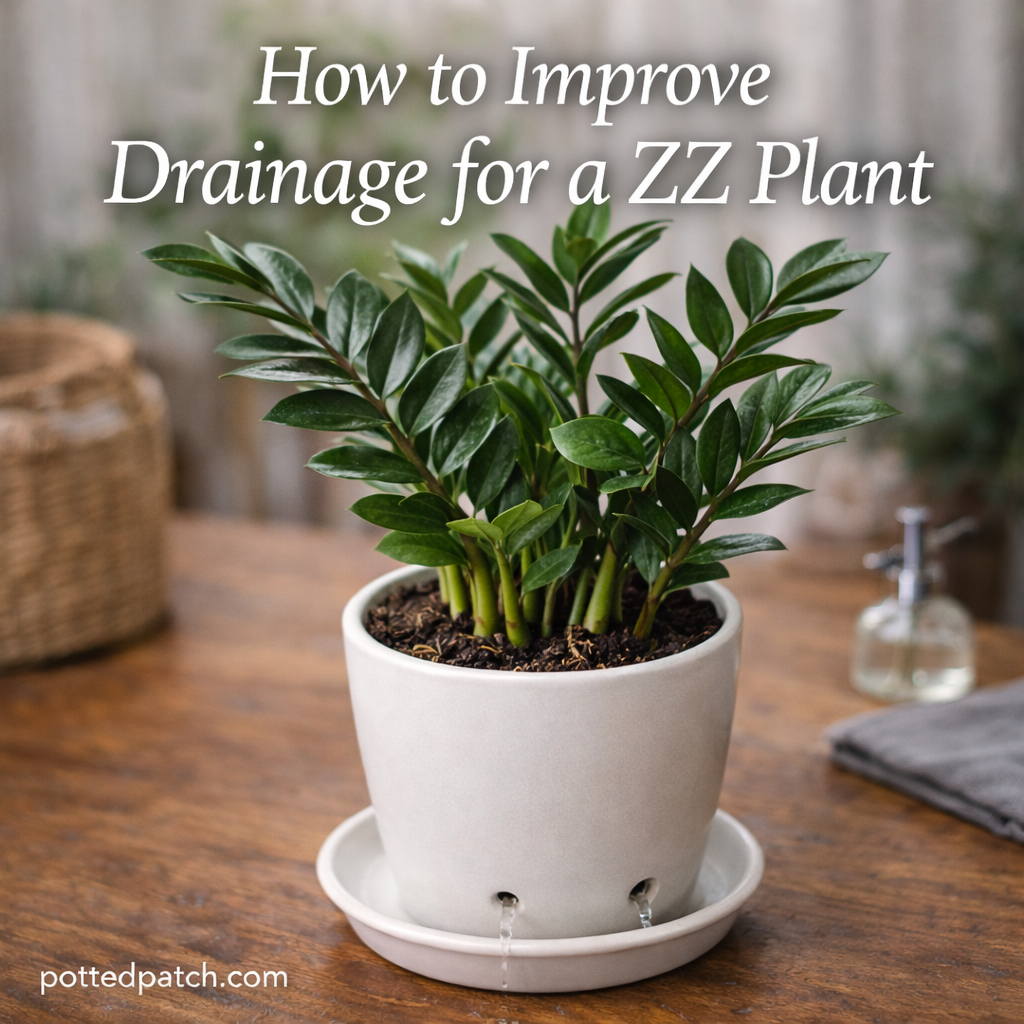
ZZ plant in a pot with drainage holes showing excess water draining properly after watering.
A ZZ plant in a well-draining pot, demonstrating proper drainage to prevent root rot. pottedpatch.com.

ZZ plants (Zamioculcas zamiifolia) are incredibly forgiving, but poor drainage is one mistake they won’t tolerate for long. Even if you water infrequently, compacted soil or a poorly draining pot can trap moisture around the roots and lead to rot.

If your ZZ plant has yellowing leaves, soft stems, or soil that stays wet for days, improving drainage is the fastest way to restore its health.

Continue reading “How to Improve Drainage for a ZZ Plant”

Best Pot Size for a ZZ Plant

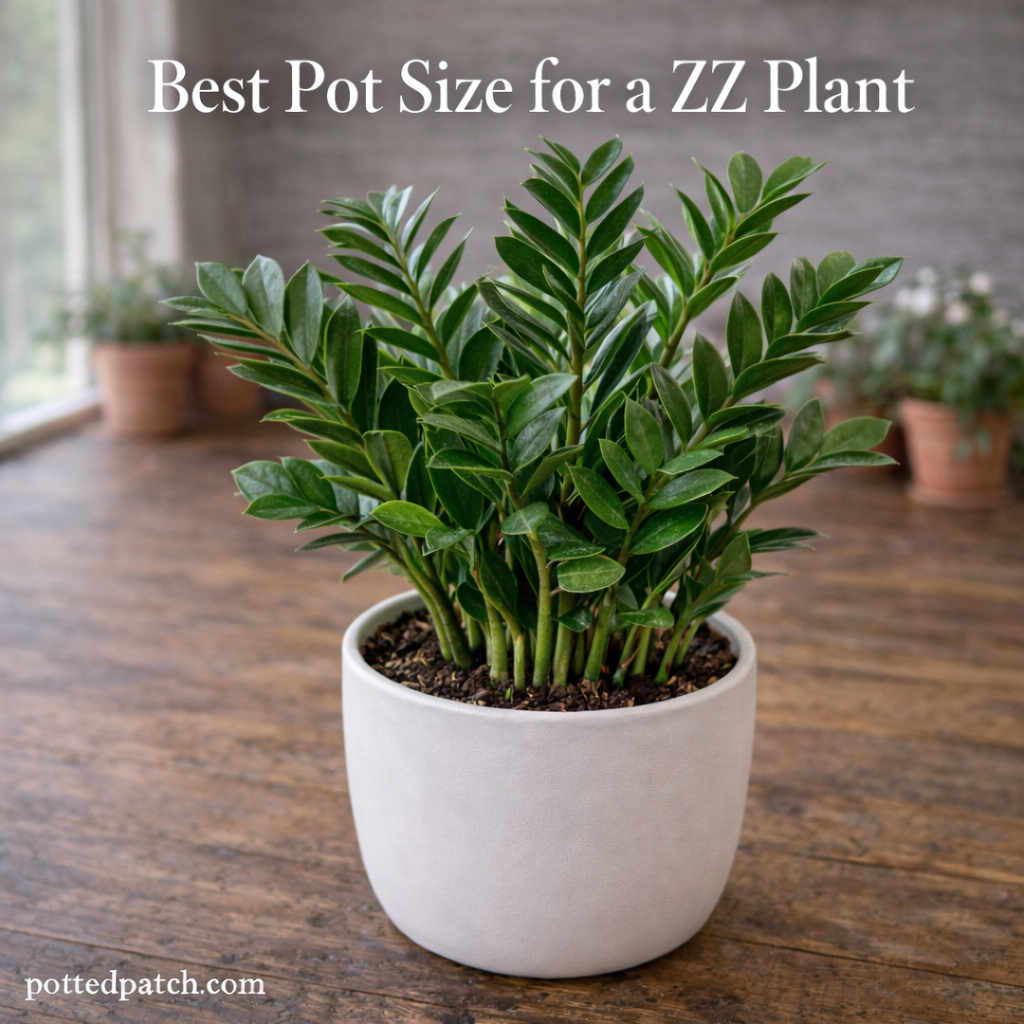
ZZ plant growing in a properly sized pot showing healthy upright stems and glossy leaves.
A ZZ plant growing in an appropriately sized pot that supports healthy root and rhizome growth. pottedpatch.com.

Choosing the right pot size for a ZZ plant is more important than it might seem. While ZZ plants are famously low maintenance, the wrong container can lead to slow growth, wilting, or root rot—even if everything else is done correctly.

This guide explains exactly what pot size a ZZ plant needs, when to size up, and how to avoid common container mistakes.

Continue reading “Best Pot Size for a ZZ Plant”

How to Maintain a Pothos

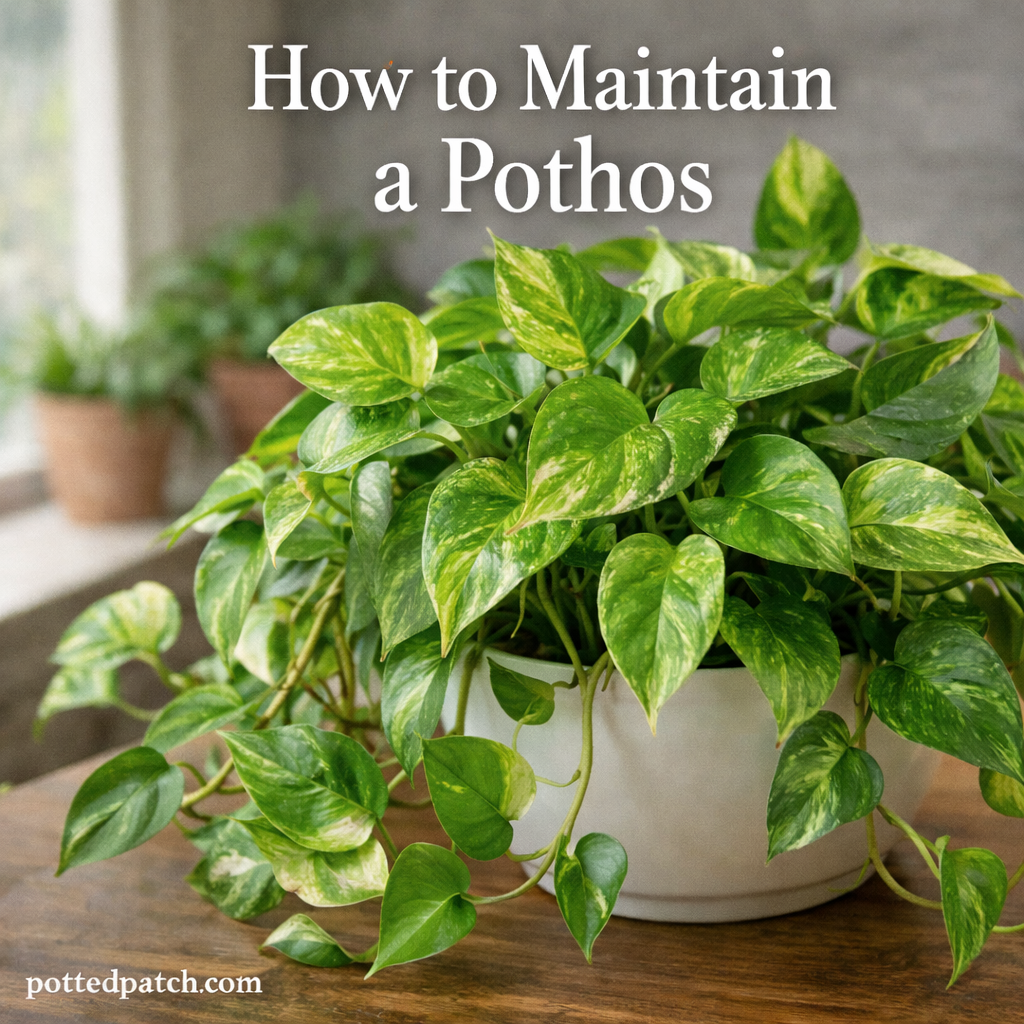
Healthy pothos plant growing in a pot with trailing vines and vibrant green leaves.
A healthy pothos plant with lush trailing growth in a well-draining container. pottedpatch.com.

Pothos is one of the easiest houseplants to care for, which is exactly why it’s so popular. It tolerates missed waterings, adapts to different light levels, and keeps growing even when conditions aren’t perfect.

That said, “low maintenance” doesn’t mean “no maintenance.” With the right care habits, a pothos will grow faster, look fuller, and stay healthy for years.

This guide covers everything you need to know to maintain a pothos plant—without overthinking it.

Continue reading “How to Maintain a Pothos”

How to Rotate a Pothos

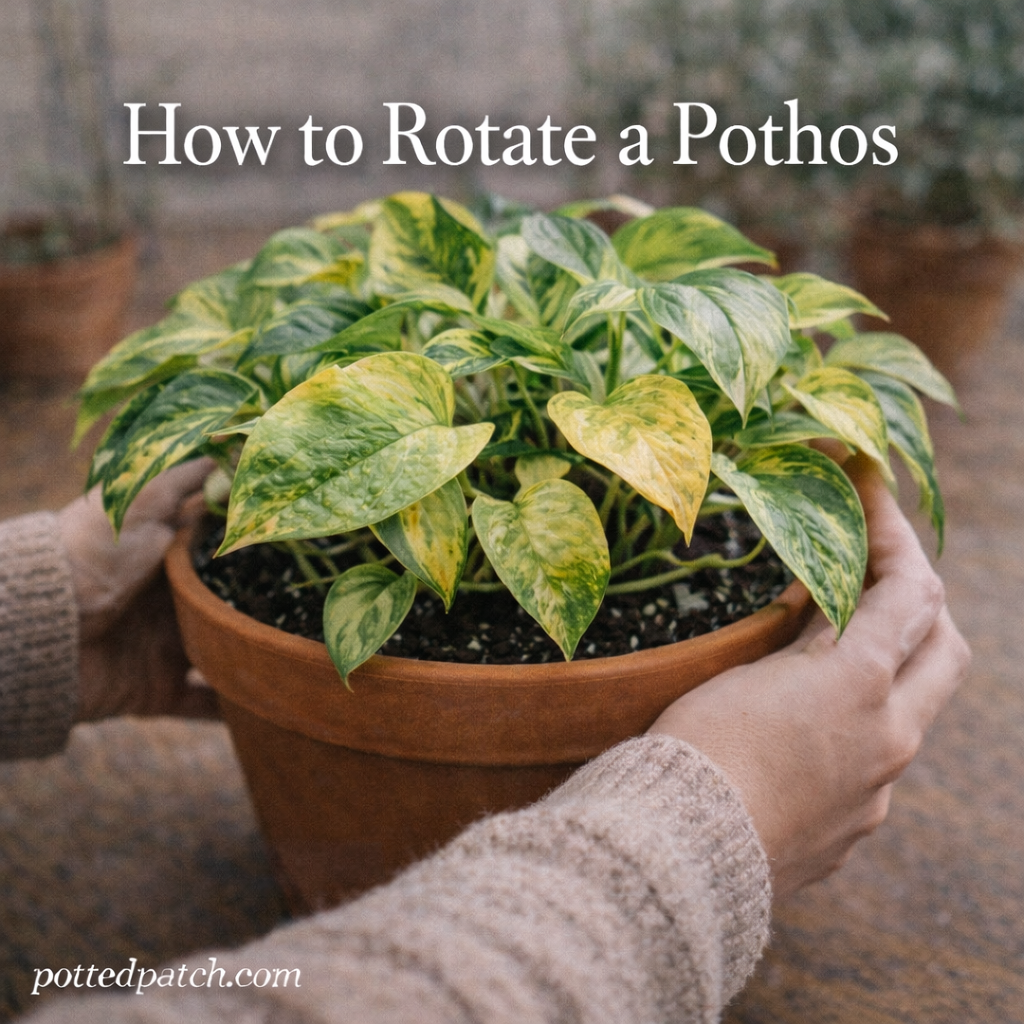
Hands rotating a potted pothos plant to encourage even growth and balanced light exposure.
Rotating a pothos plant helps distribute light evenly and promotes balanced, healthy growth. pottedpatch.com.

Rotating a pothos is one of the simplest care habits you can adopt—and one of the most overlooked. While pothos plants are tolerant and forgiving, they naturally grow toward light. Without rotation, this can lead to uneven growth, lopsided vines, and sparse areas over time.

This guide explains why rotating a pothos matters, how often to do it, and how to rotate your plant correctly to keep growth balanced and healthy.

Continue reading “How to Rotate a Pothos”

How to Prune a Pothos

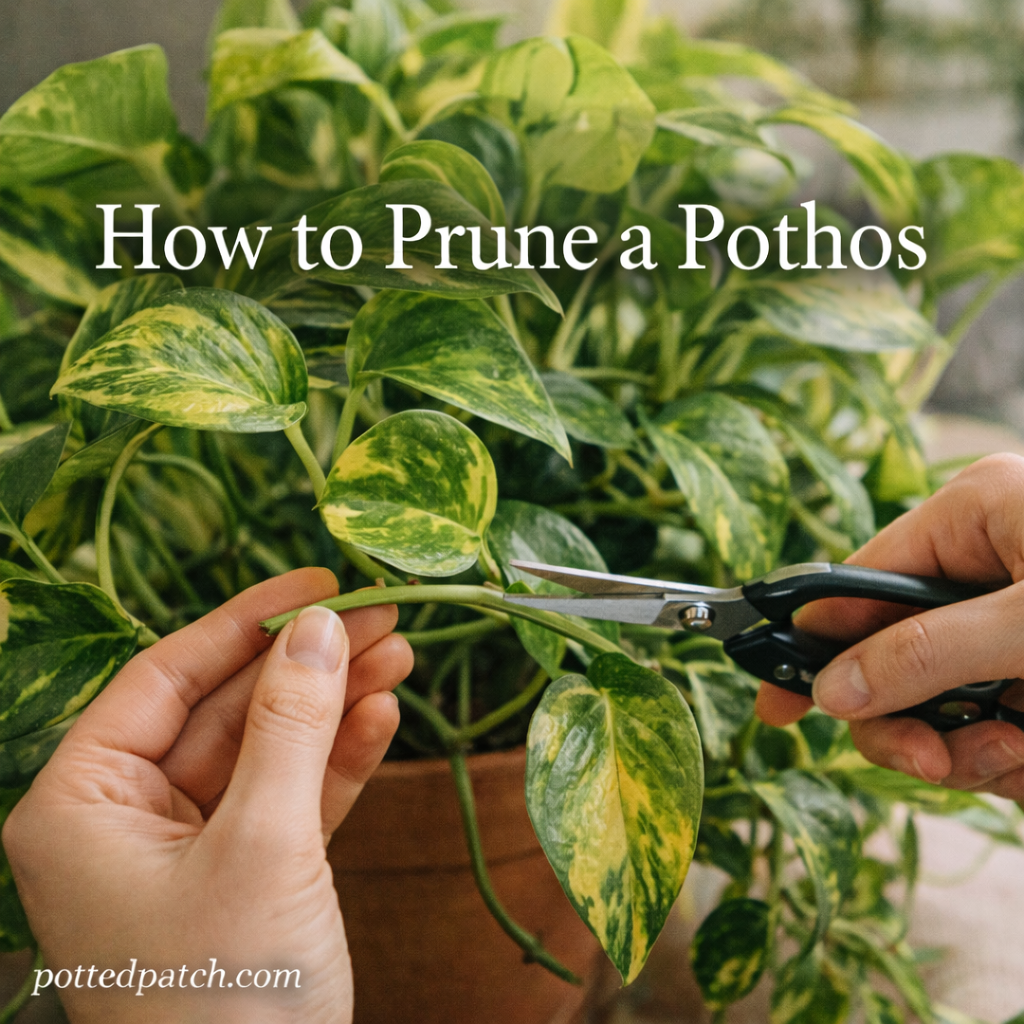
Hands pruning a pothos vine with scissors, cutting just above a node to encourage healthy growth.
Pruning a pothos plant by trimming vines at the node to promote fuller, healthier growth. pottedpatch.com.

Pruning a pothos is one of the easiest ways to keep the plant healthy, full, and visually balanced. Whether your pothos is getting too long, looking sparse, or growing unevenly, a simple trim can quickly refresh its appearance and encourage new growth.

This guide explains when to prune a pothos, how to do it properly, and what to expect afterward—without harming the plant.

Continue reading “How to Prune a Pothos”