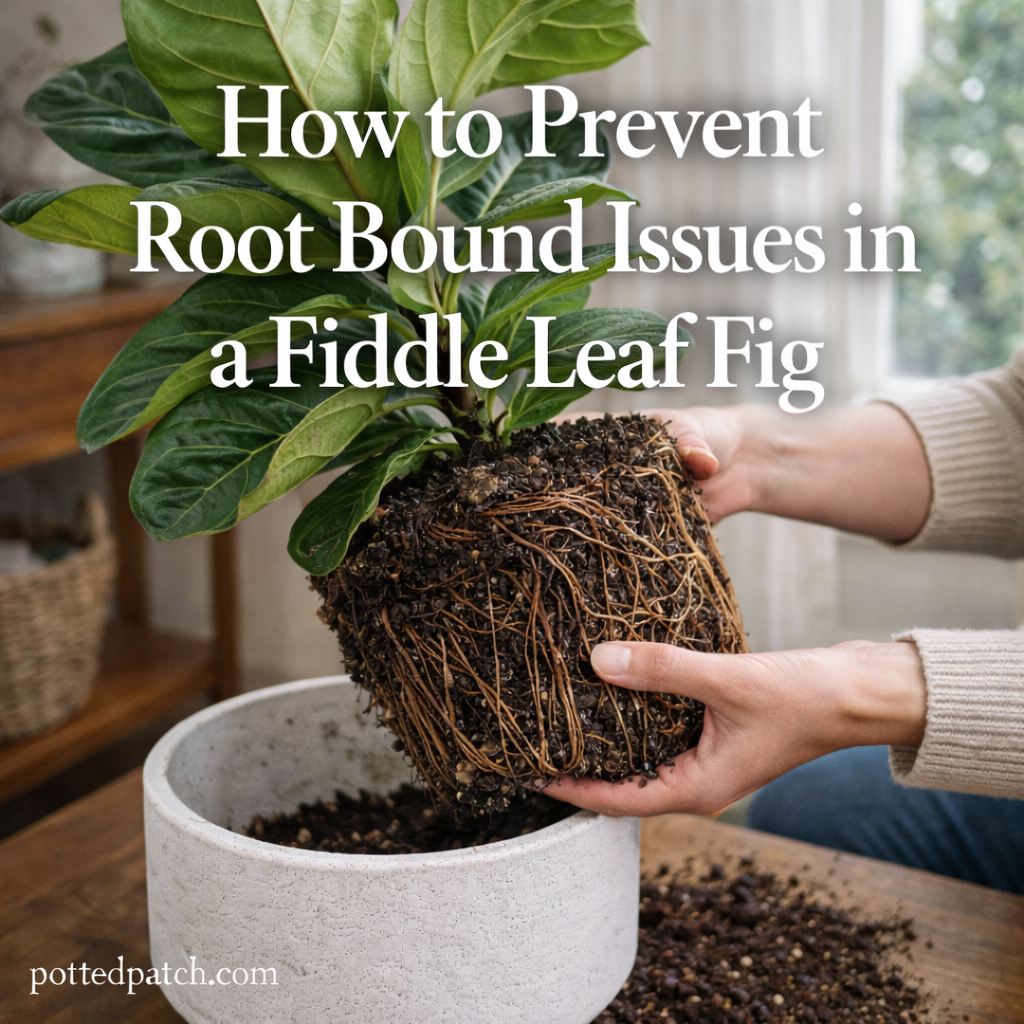
How to Prevent Root Bound Issues in a Fiddle Leaf Fig

Fiddle leaf fig removed from pot showing root bound roots with overlay title How to Prevent Root Bound Issues in a Fiddle Leaf Fig and pottedpatch.com watermark.
Fiddle leaf fig root system showing early signs of becoming root bound. pottedpatch.com.

Fiddle leaf figs grow quickly when they’re happy. But over time, that growth can lead to a common problem: becoming root bound.

When a plant becomes root bound, its roots circle tightly inside the pot with little room to expand. This restricts water absorption, slows growth, and can eventually stress the entire plant.

The good news? Root bound issues are easy to prevent with a few simple habits.

Continue reading “How to Prevent Root Bound Issues in a Fiddle Leaf Fig”
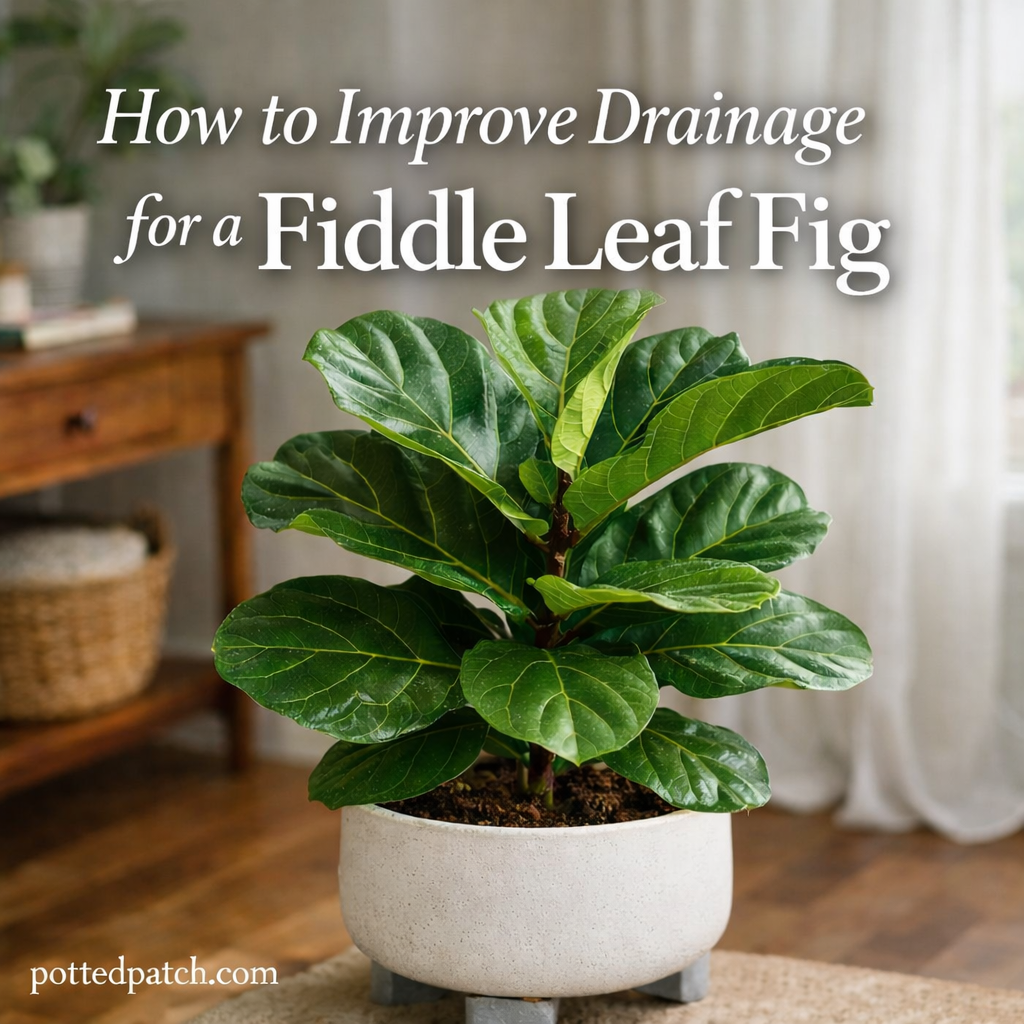

How to Improve Drainage for a Fiddle Leaf Fig

Fiddle leaf fig in a white pot with overlay title How to Improve Drainage for a Fiddle Leaf Fig and pottedpatch.com watermark in a bright indoor setting.
Fiddle leaf fig in a well-draining pot setup indoors. pottedpatch.com.

Fiddle leaf figs are beautiful, bold plants—but they’re extremely sensitive to poor drainage. If your plant has yellowing leaves, brown spots, or a musty soil smell, drainage could be the problem.

Healthy roots need oxygen. When soil stays wet too long, roots suffocate and begin to rot.

The good news? Improving drainage is simple once you understand what to adjust.

Continue reading “How to Improve Drainage for a Fiddle Leaf Fig”

Best Pot Size for a Fiddle Leaf Fig

Healthy fiddle leaf fig in a modern ceramic pot with overlay title Best Pot Size for a Fiddle Leaf Fig and pottedpatch.com watermark.
Fiddle leaf fig displayed in an appropriately sized indoor pot for healthy root growth. pottedpatch.com

Choosing the right pot size for a fiddle leaf fig is one of the most important decisions you can make for long-term plant health. Too small, and roots become cramped. Too large, and excess soil can hold moisture that leads to root rot.

The goal is balance — enough room for steady growth without overwhelming the root system.

Here’s how to choose the best pot size for a fiddle leaf fig.

Continue reading “Best Pot Size for a Fiddle Leaf Fig”

How to Maintain a Spider Plant

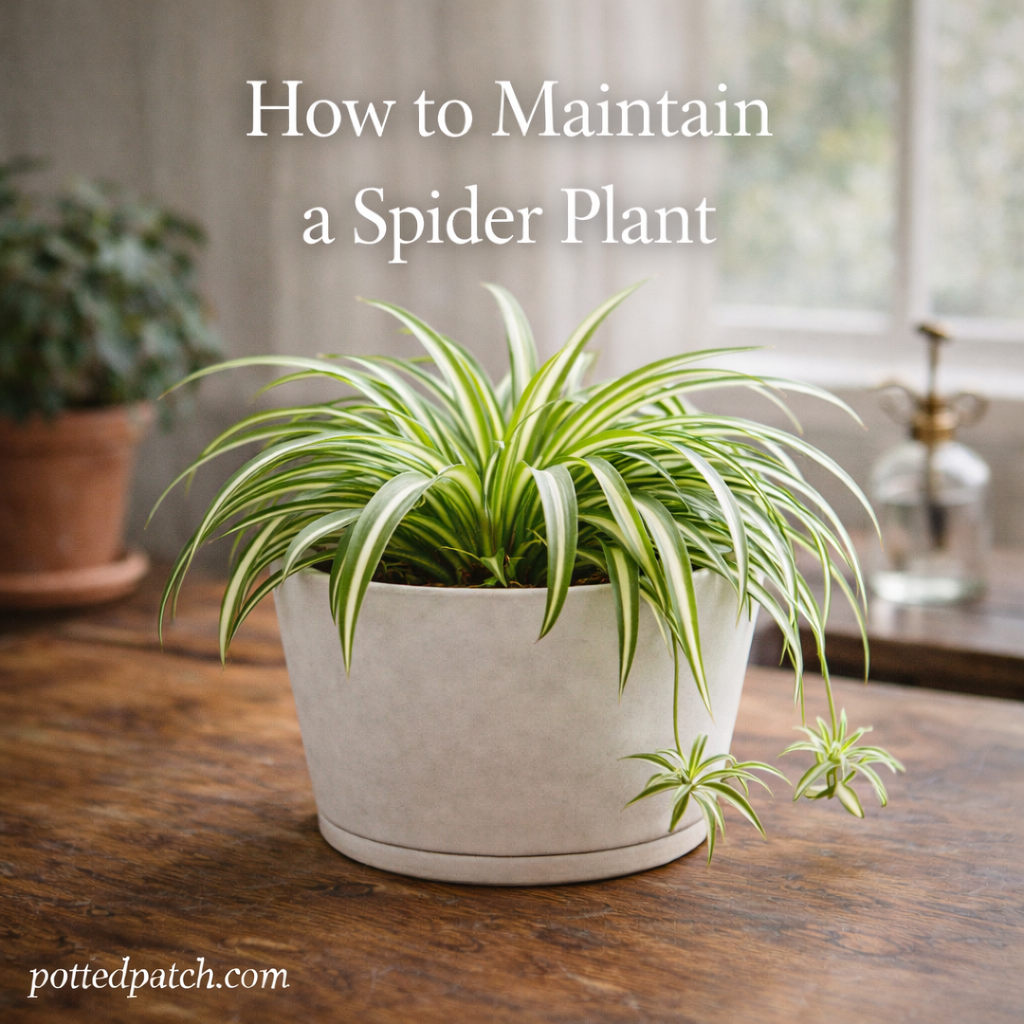
Healthy spider plant in white pot indoors with overlay title How to Maintain a Spider Plant and pottedpatch.com watermark.
Healthy indoor spider plant with vibrant green and white leaves thriving in a bright space. pottedpatch.com

Spider plants are low-maintenance, adaptable, and rewarding indoor plants. Their arching green-and-white leaves and cascading spiderettes make them a favorite for shelves, tabletops, and hanging baskets.

While they’re forgiving, proper ongoing maintenance keeps them looking vibrant and growing steadily. With the right routine, a spider plant can thrive for years.

Here’s how to maintain a spider plant the right way.

Continue reading “How to Maintain a Spider Plant”

Best Containers for a Spider Plant

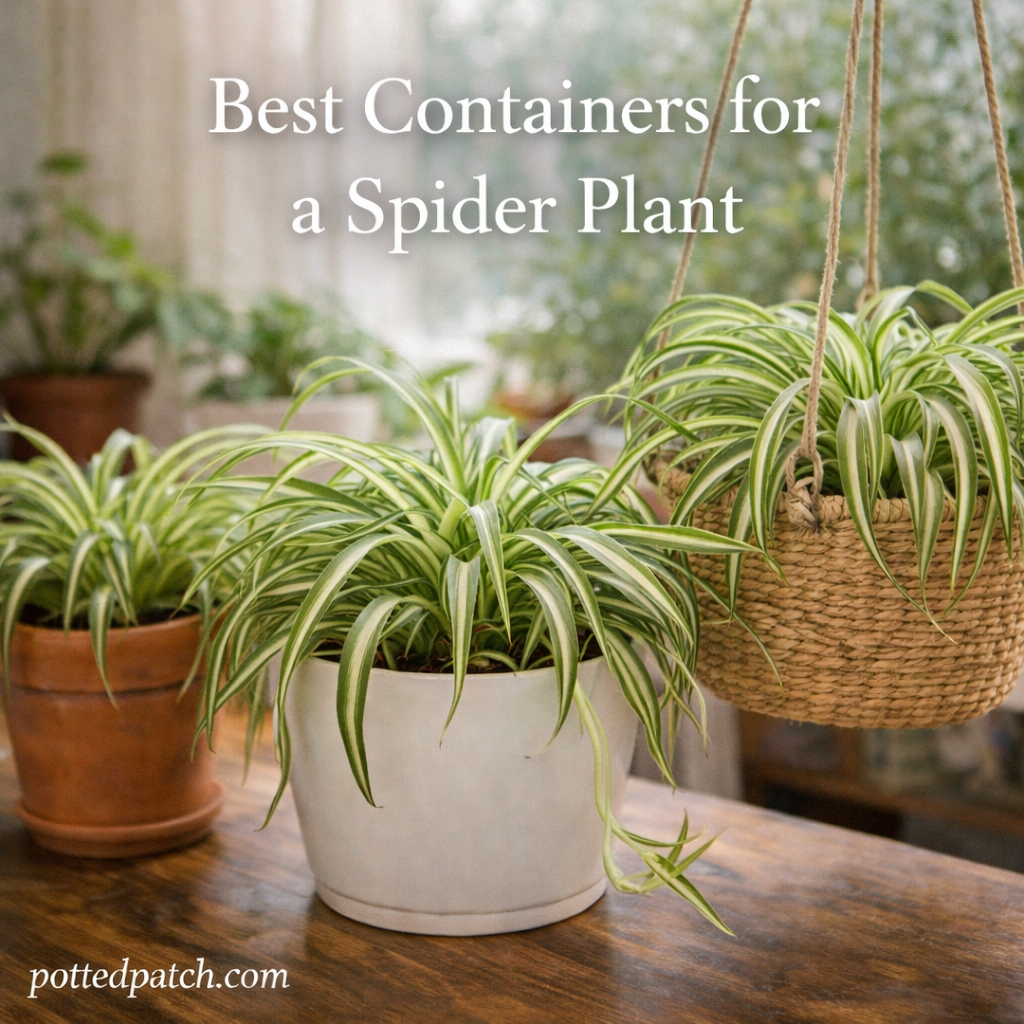
Spider plants displayed in terracotta, ceramic, and hanging basket containers with overlay title Best Containers for a Spider Plant and pottedpatch.com watermark.
Spider plants styled in terracotta, ceramic, and hanging basket containers for healthy indoor growth. pottedpatch.com

Spider plants are adaptable, fast-growing, and forgiving — but the container you choose plays a major role in how well they thrive.

The right pot improves drainage, encourages strong roots, and even enhances spiderette production. The wrong one can lead to soggy soil, root rot, or stunted growth.

Here’s how to choose the best container for a spider plant and what to avoid.

Continue reading “Best Containers for a Spider Plant”

How to Rotate a Spider Plant

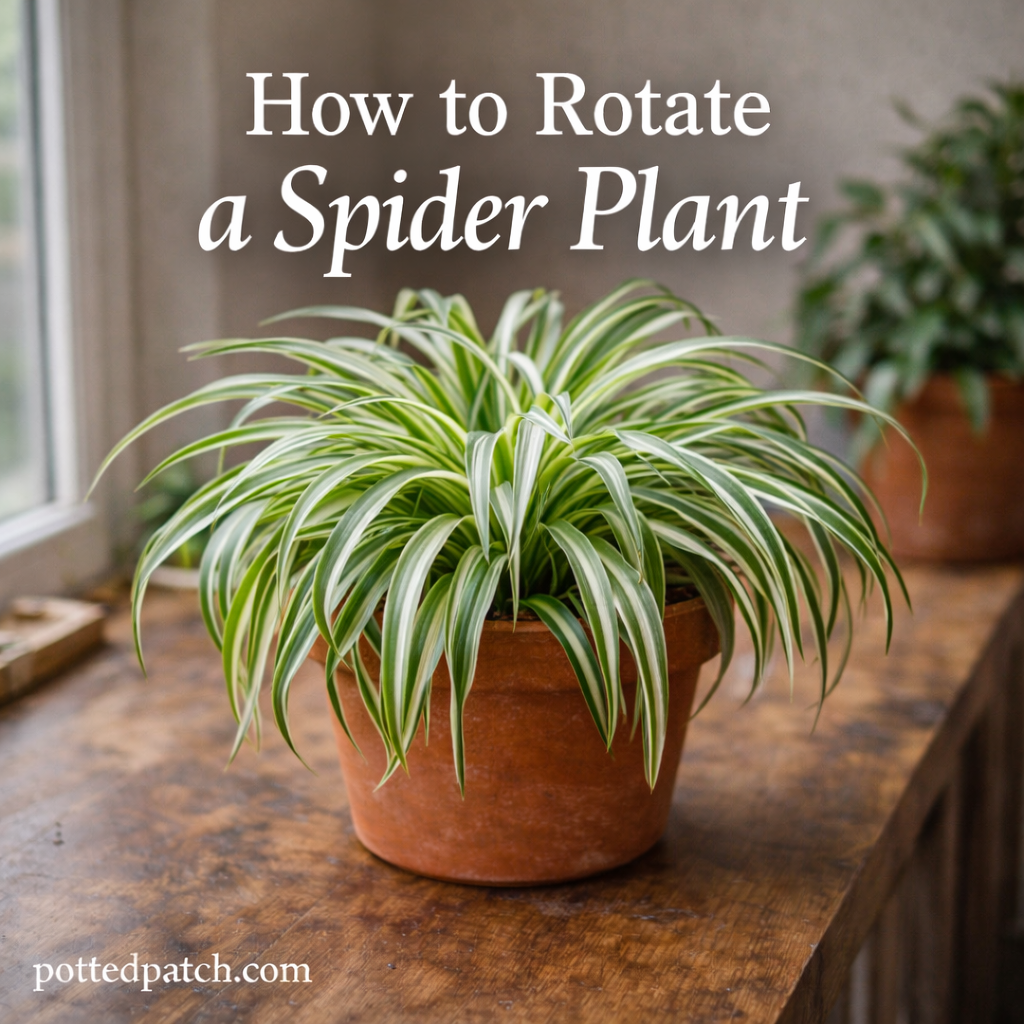
Spider plant in terracotta pot with overlay title “How to Rotate a Spider Plant” and pottedpatch.com watermark.
Healthy spider plant positioned near a window to demonstrate proper rotation for balanced growth. pottedpatch.com.

Spider plants (Chlorophytum comosum) are known for their arching, striped leaves and easygoing nature. But if your plant starts leaning heavily to one side or growing unevenly, the issue is often simple:

It needs to be rotated.

Rotating a spider plant is one of the easiest ways to maintain balanced, symmetrical growth — and it only takes seconds to do.

This guide explains why rotation matters, how often to do it, and the best way to rotate your spider plant for healthy, even growth.

Continue reading “How to Rotate a Spider Plant”

How to Prune a Spider Plant

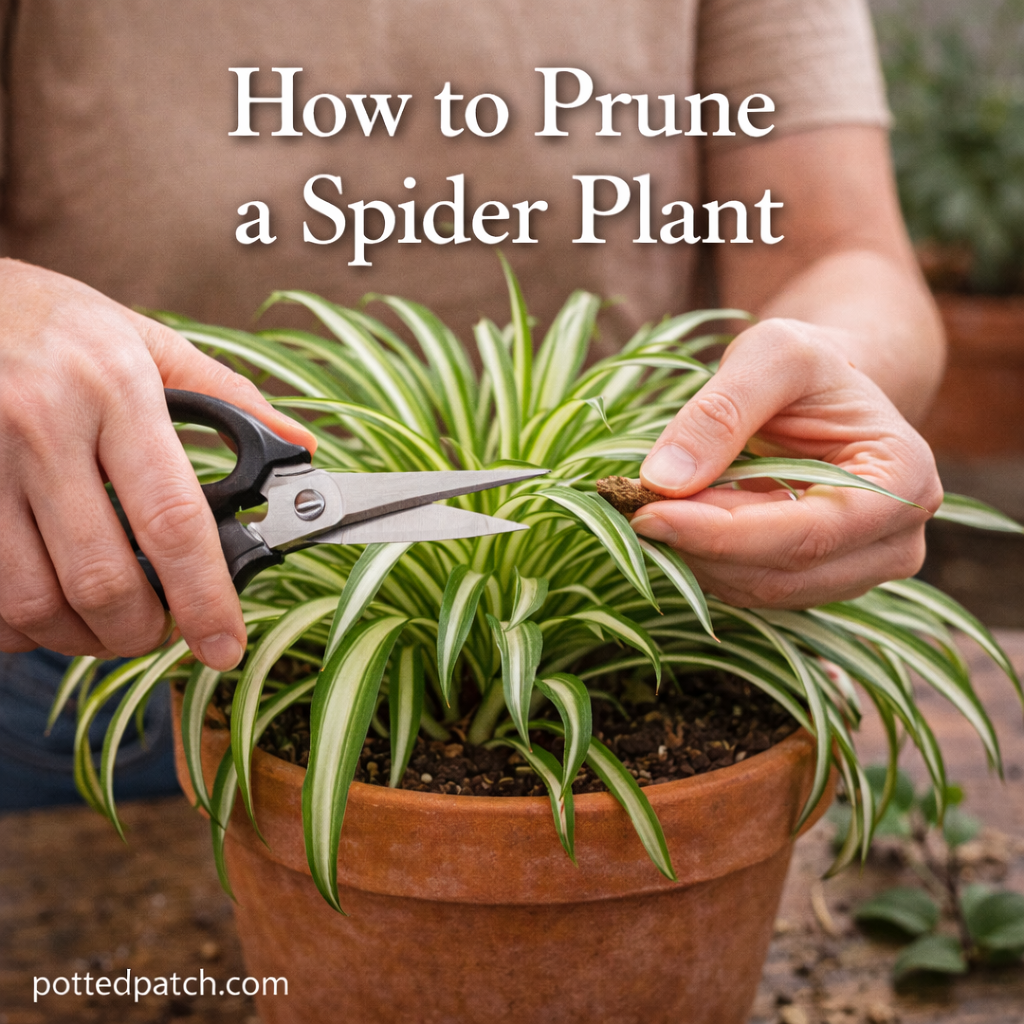
Person trimming brown tips from a spider plant with scissors in a terracotta pot indoors.
Pruning brown tips and damaged leaves from a healthy spider plant. pottedpatch.com.

Spider plants are fast growers known for their arching leaves and cascading baby plantlets. Over time, they can become crowded, leggy, or develop brown tips. Pruning keeps your plant tidy, healthy, and productive.

In this guide, you’ll learn when and how to prune a spider plant properly — without stressing it.

Continue reading “How to Prune a Spider Plant”

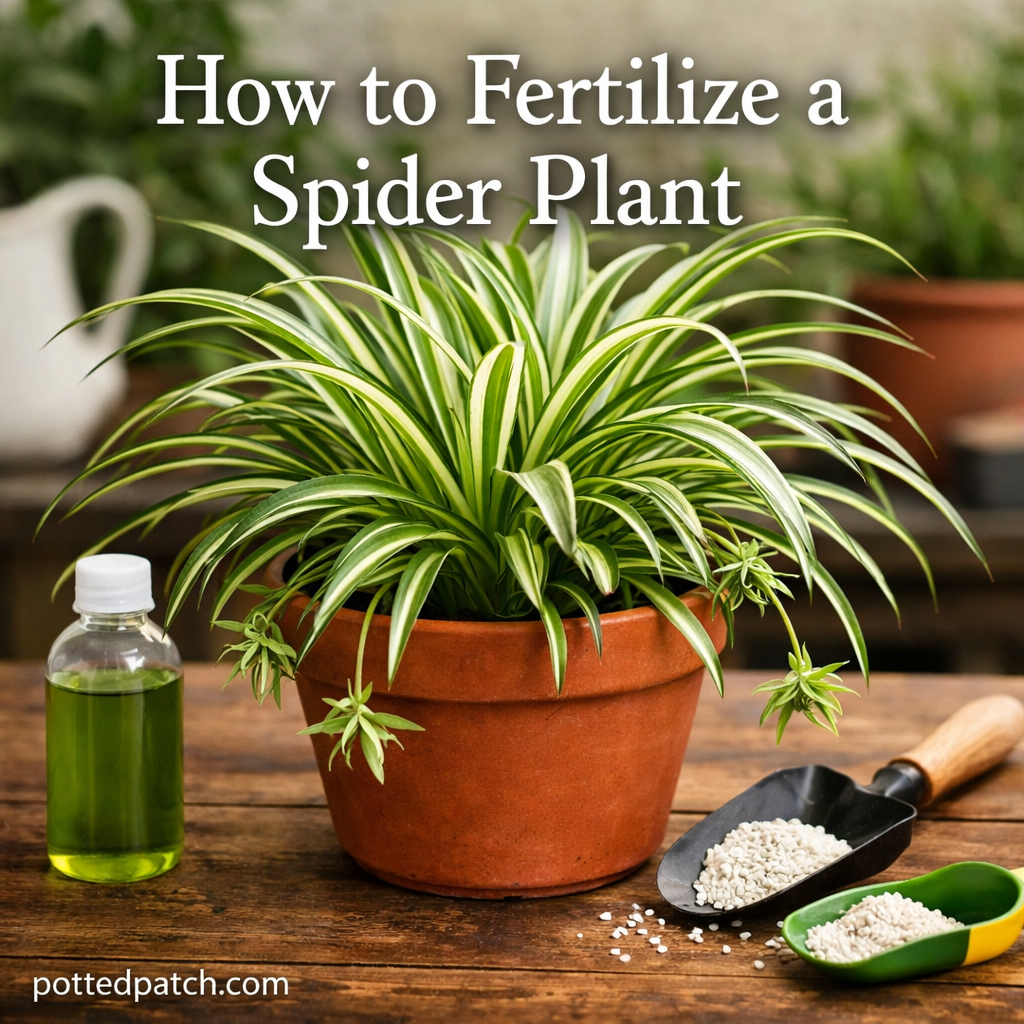
How to Fertilize a Spider Plant

Healthy spider plant in a terracotta pot with fertilizer and gardening tools on a wooden table.
Spider plant in a terracotta pot with fertilizer and tools for proper feeding. pottedpatch.com.

Spider plants are famous for being low-maintenance, adaptable, and beginner-friendly. But even hardy houseplants need nutrients to stay vibrant. If your plant looks pale, slow-growing, or less full than usual, it may simply need feeding.

In this guide, you’ll learn exactly how to fertilize a spider plant, when to do it, and how to avoid common mistakes that can damage the roots.

Continue reading “How to Fertilize a Spider Plant”

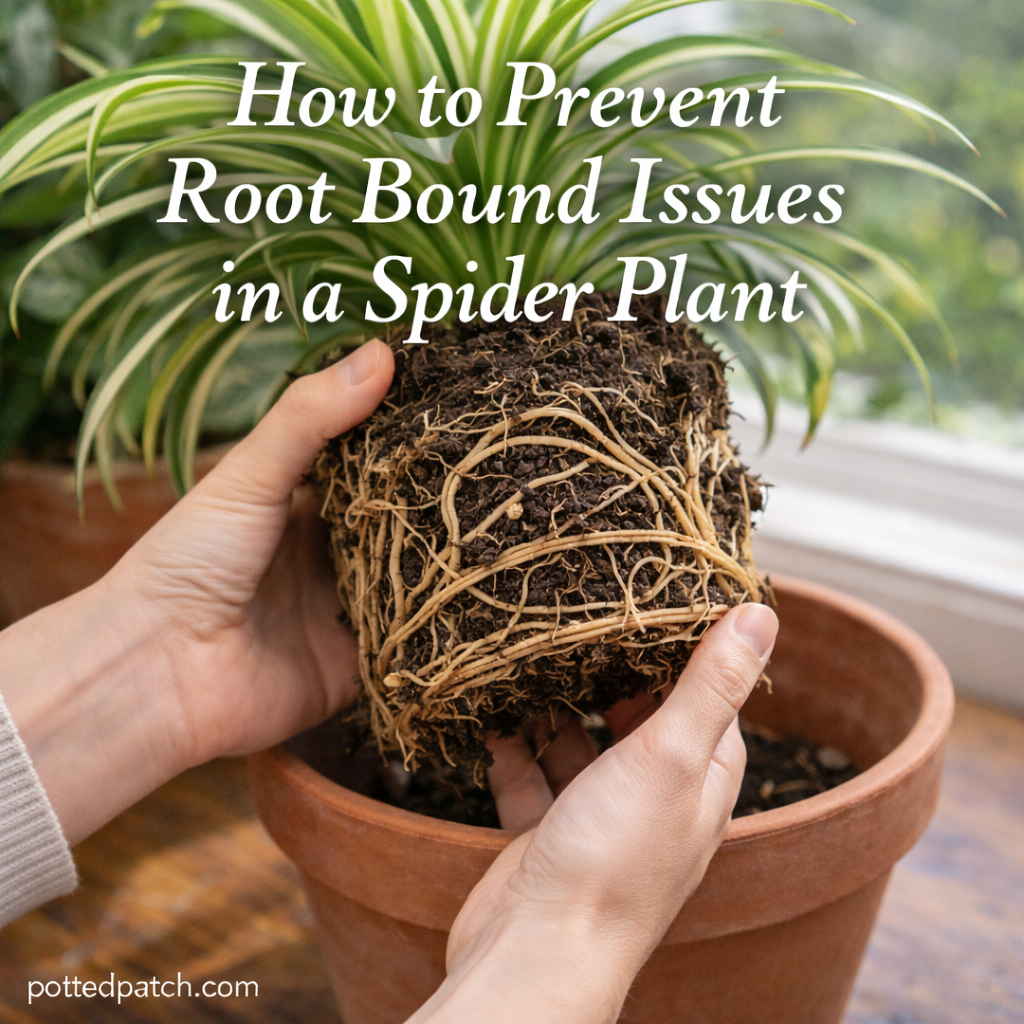
How to Prevent Root Bound Issues in a Spider Plant

Spider plant being lifted from a pot showing tightly circling roots indicating root bound condition.
Checking spider plant roots to prevent severe root bound issues and improve growth. pottedpatch.com

Spider plants grow fast — especially when they’re happy. But that rapid growth can quickly lead to root bound issues if the plant outgrows its container.

While spider plants tolerate being slightly snug, severely cramped roots can limit growth, reduce drainage, and cause stress symptoms.

Here’s how to prevent root bound problems before they affect your plant’s health.

Continue reading “How to Prevent Root Bound Issues in a Spider Plant”

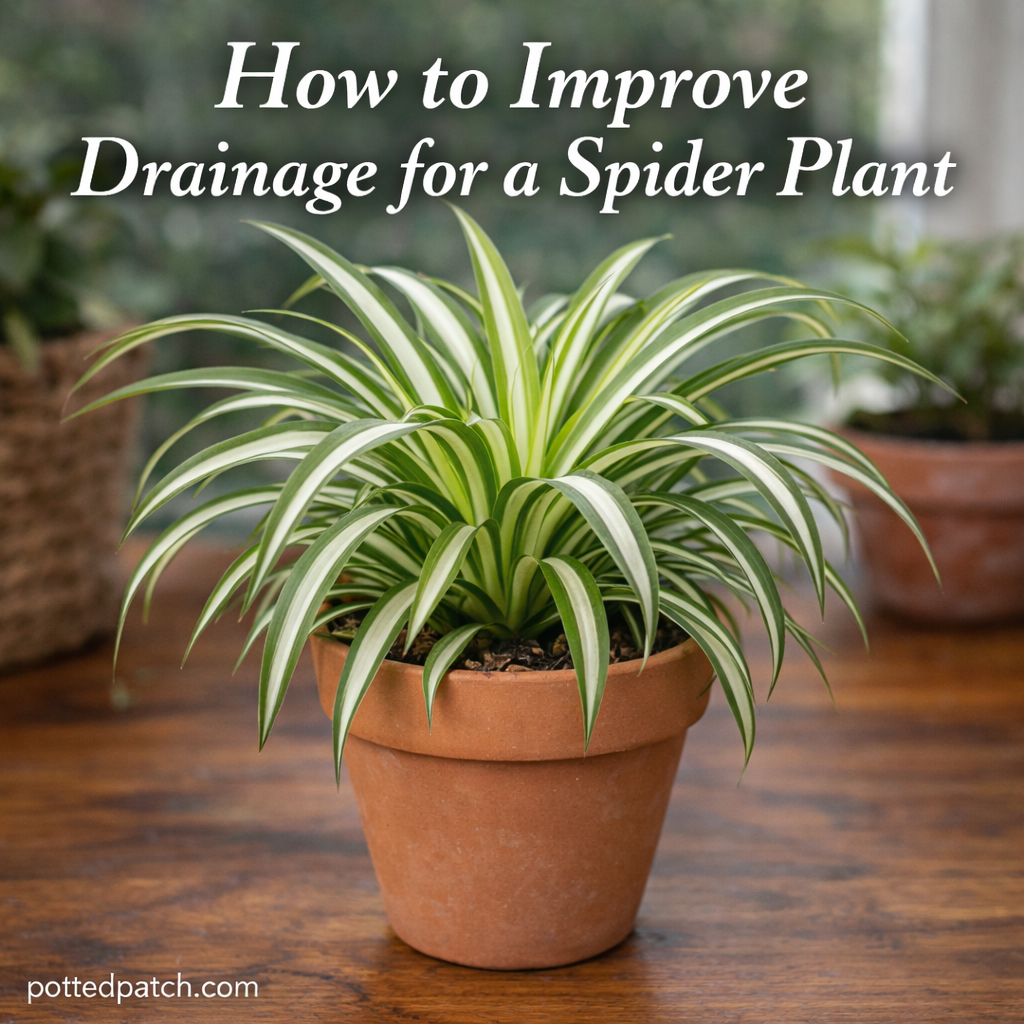
How to Improve Drainage for a Spider Plant

Healthy spider plant in a terracotta pot with improved drainage setup indoors.
Proper drainage helps spider plants thrive and prevents root rot. pottedpatch.com

Spider plants are resilient, beginner-friendly houseplants. But even hardy plants struggle when their roots sit in water too long.

If your spider plant has yellowing leaves, brown tips, or drooping growth, poor drainage may be the culprit.

The good news? Improving drainage is simple and can dramatically boost your plant’s health.

Continue reading “How to Improve Drainage for a Spider Plant”