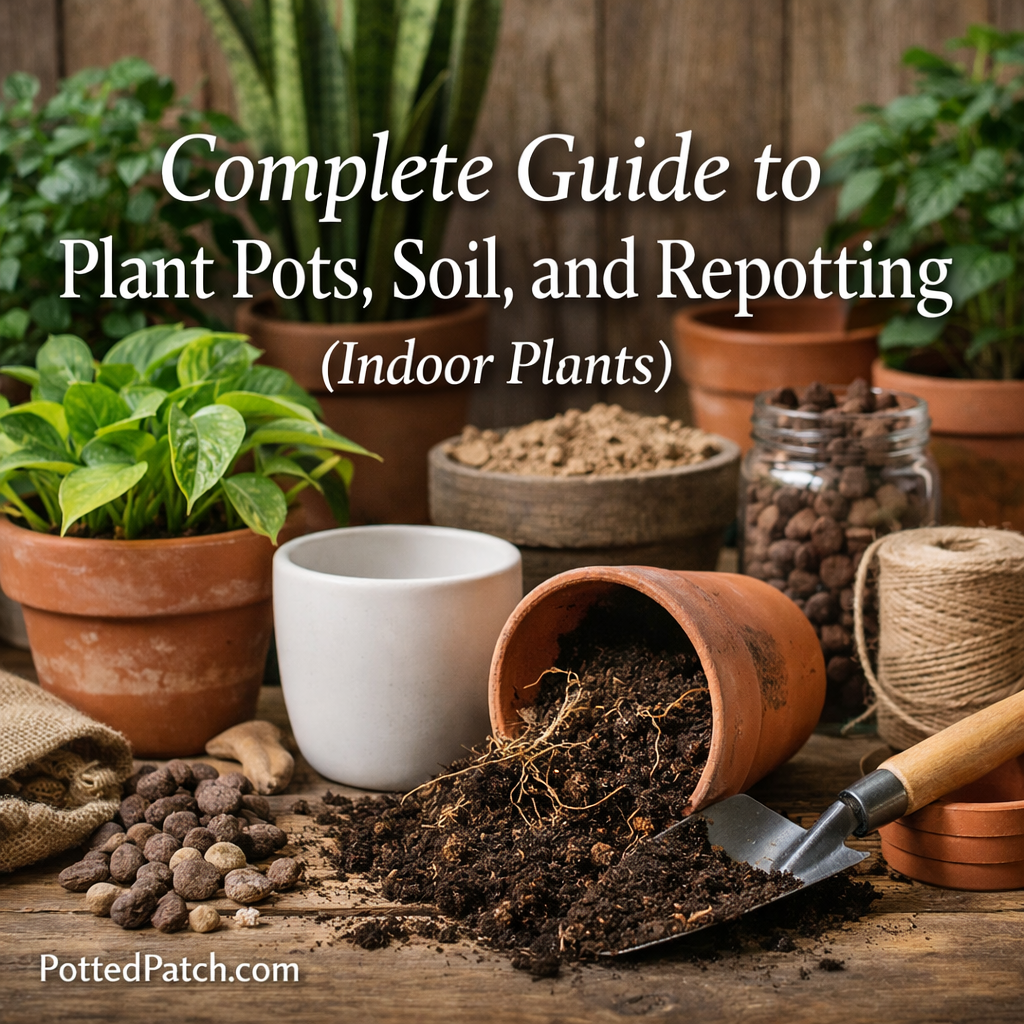
Complete Guide to Plant Pots, Soil, and Repotting (Indoor Plants)

Indoor plant repotting setup with terracotta pots, soil, and tools showing how to repot houseplants properly.
Indoor plant repotting setup with pots, soil, and tools demonstrating proper container care for healthy houseplants. pottedpatch.com.

Choosing the right pot and soil is one of the most important parts of indoor plant care. Even if watering and light are correct, poor container setup can lead to root problems, slow growth, and unhealthy plants.

If you’re new to plant care, start here:
👉 Beginner’s Guide to Indoor Plants (Start Here)

This guide will help you understand how pots, soil, and repotting all work together.

Continue reading “Complete Guide to Plant Pots, Soil, and Repotting (Indoor Plants)”
How to Rotate a Philodendron

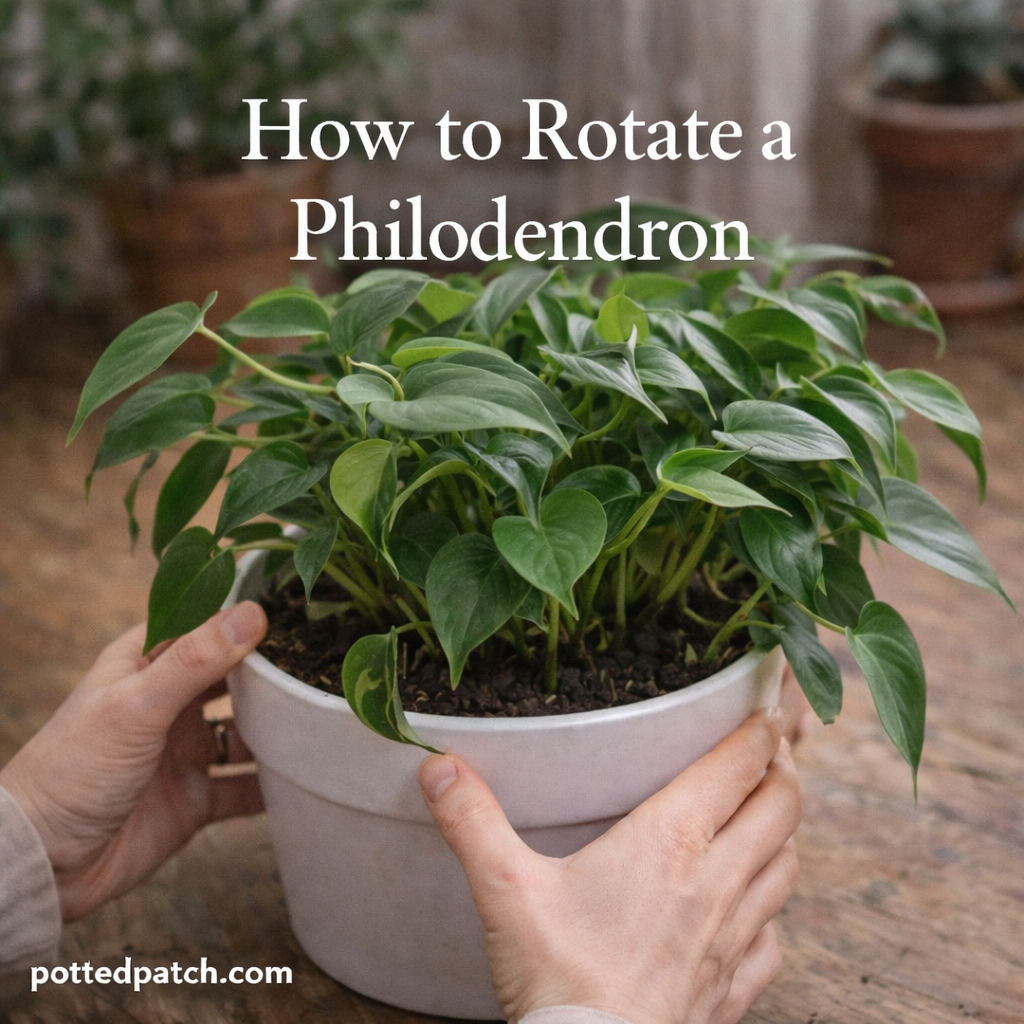
Person rotating a philodendron plant in a white pot with overlay title How to Rotate a Philodendron and pottedpatch.com watermark.
Rotating a philodendron to encourage even, balanced growth. pottedpatch.com.

Philodendrons naturally grow toward light. If you leave your plant in the same position for too long, it will start leaning, stretching, or becoming uneven.

Rotating your philodendron is a simple habit that keeps it:

  • Balanced and symmetrical
  • Fuller and bushier
  • Less leggy
  • Stronger over time

Here’s exactly how to rotate your philodendron correctly — and how often to do it.

Continue reading “How to Rotate a Philodendron”

How to Prune a Philodendron

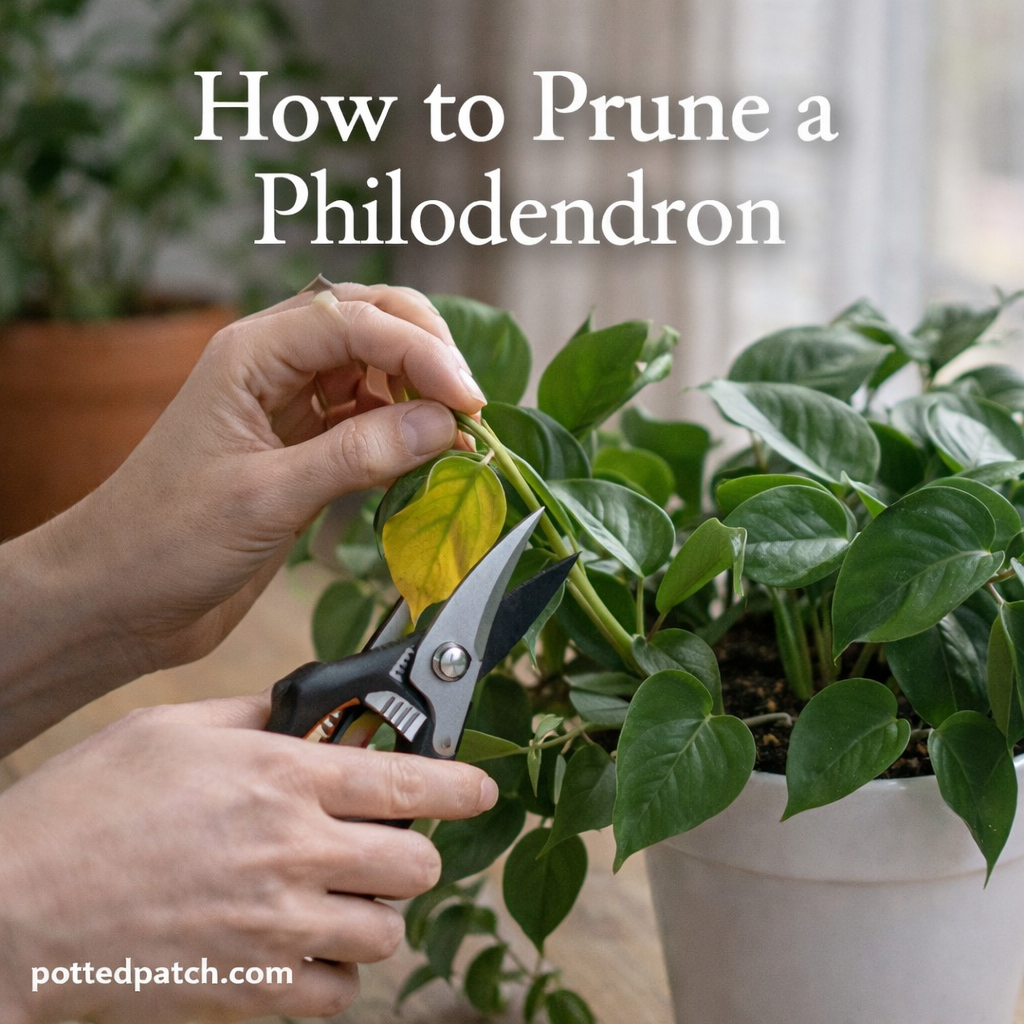
Hands pruning a philodendron plant with garden shears and overlay title How to Prune a Philodendron with pottedpatch.com watermark.
Pruning a philodendron to encourage fuller, healthier growth. pottedpatch.com.

Philodendrons are popular for their lush, trailing vines and easygoing nature. But even low-maintenance plants need occasional pruning.

Learning how to prune a philodendron properly keeps it:

  • Full and bushy
  • Free from leggy growth
  • Healthy and pest-resistant
  • Shaped to fit your space

Whether you have a climbing or trailing variety, this guide will walk you through exactly how to prune your philodendron safely and effectively.

Continue reading “How to Prune a Philodendron”

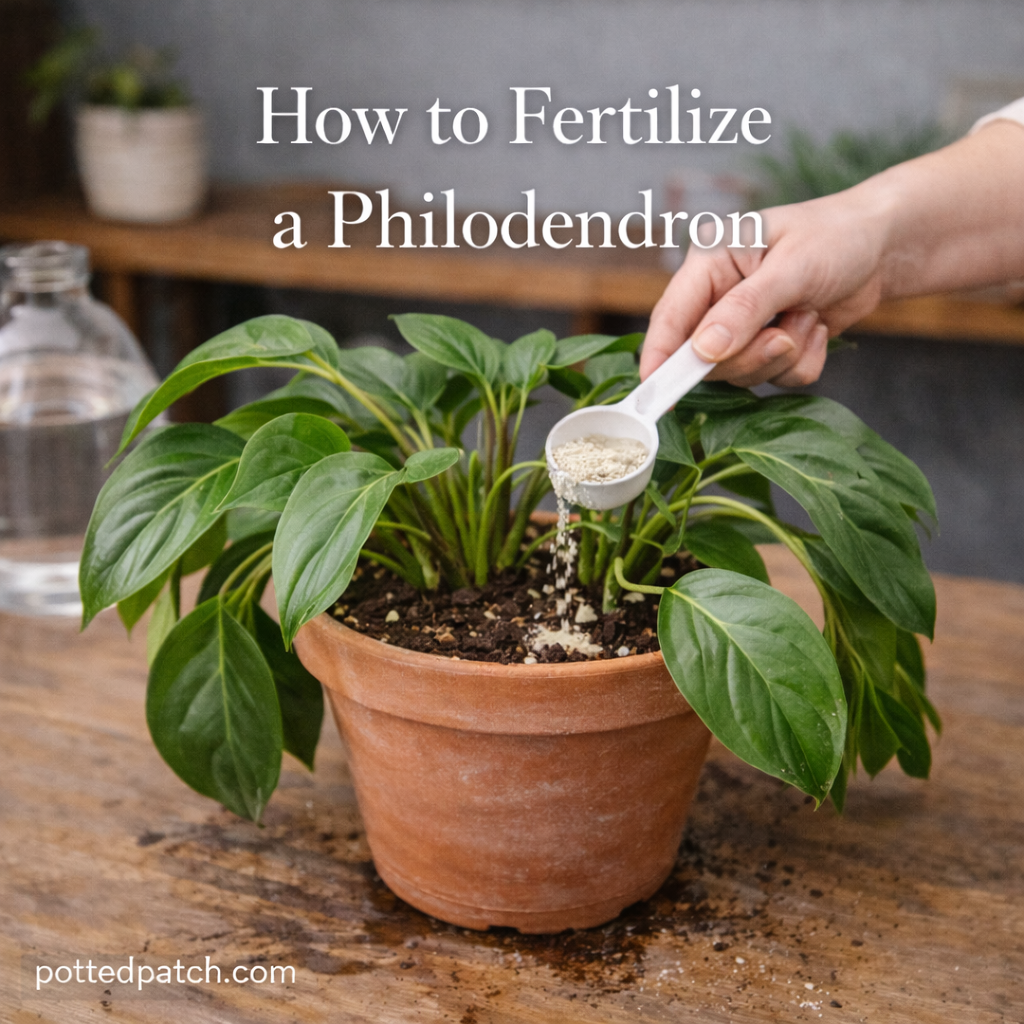
How to Fertilize a Philodendron

Applying fertilizer to a philodendron in a terracotta pot indoors.
Fertilizing a philodendron during the growing season for healthy leaf growth. pottedpatch.com

Philodendrons are known for their lush leaves and steady growth. While they aren’t heavy feeders, proper fertilization can dramatically improve leaf size, color, and overall plant health.

If your philodendron looks pale, slow-growing, or less vibrant than usual, it may be time to adjust your feeding routine.

Here’s exactly how to fertilize a philodendron the right way.

Continue reading “How to Fertilize a Philodendron”

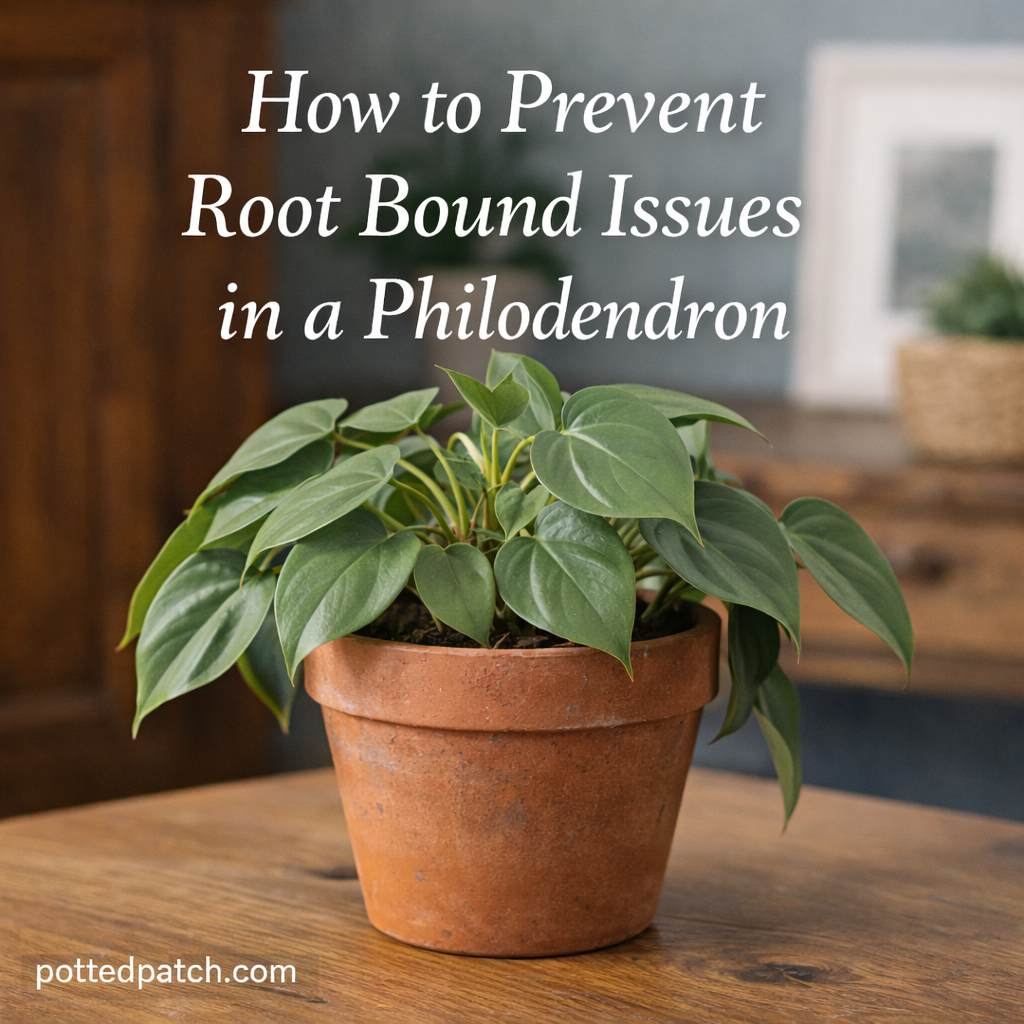
How to Prevent Root Bound Issues in a Philodendron

Healthy philodendron plant in terracotta pot with lush green leaves indoors.
Healthy philodendron growing in a terracotta pot indoors. pottedpatch.com

Philodendrons are fast growers. Whether you’re growing a trailing heartleaf variety or a large upright type, their roots can quickly fill a container.

When a philodendron becomes root bound, growth slows, leaves shrink, and watering problems begin. The good news? Root binding is easy to prevent with a few proactive habits.

Here’s exactly how to keep your philodendron healthy and unrestricted.

Continue reading “How to Prevent Root Bound Issues in a Philodendron”

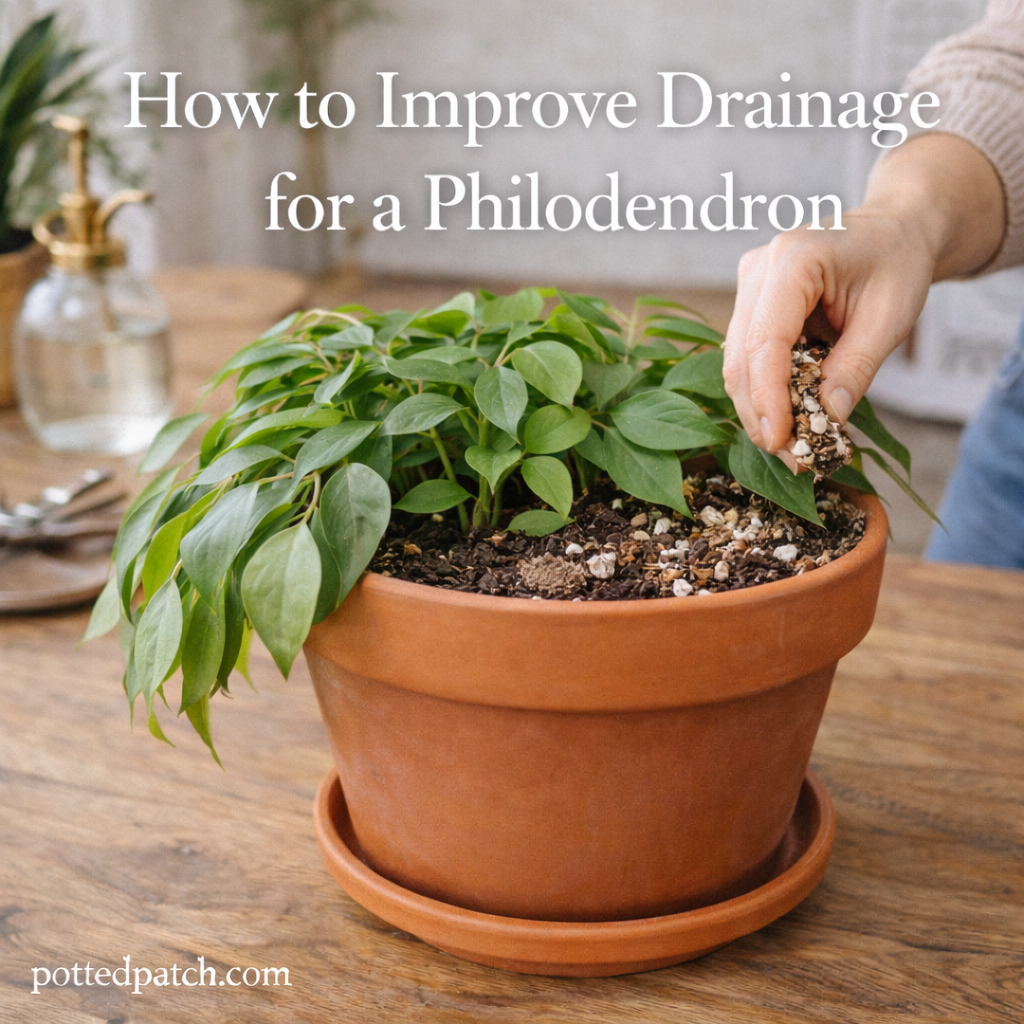
How to Improve Drainage for a Philodendron

Person adding perlite to soil in a terracotta potted philodendron to improve drainage indoors.
Improving soil drainage for a philodendron using perlite and airy potting mix. pottedpatch.com.

Proper drainage is one of the most important factors in keeping a philodendron healthy. While these tropical plants enjoy consistent moisture, they do not tolerate sitting in soggy soil.

Poor drainage can quickly lead to yellow leaves, drooping stems, and root rot.

If your philodendron’s soil stays wet for too long, here’s how to improve drainage and protect your plant.

Continue reading “How to Improve Drainage for a Philodendron”

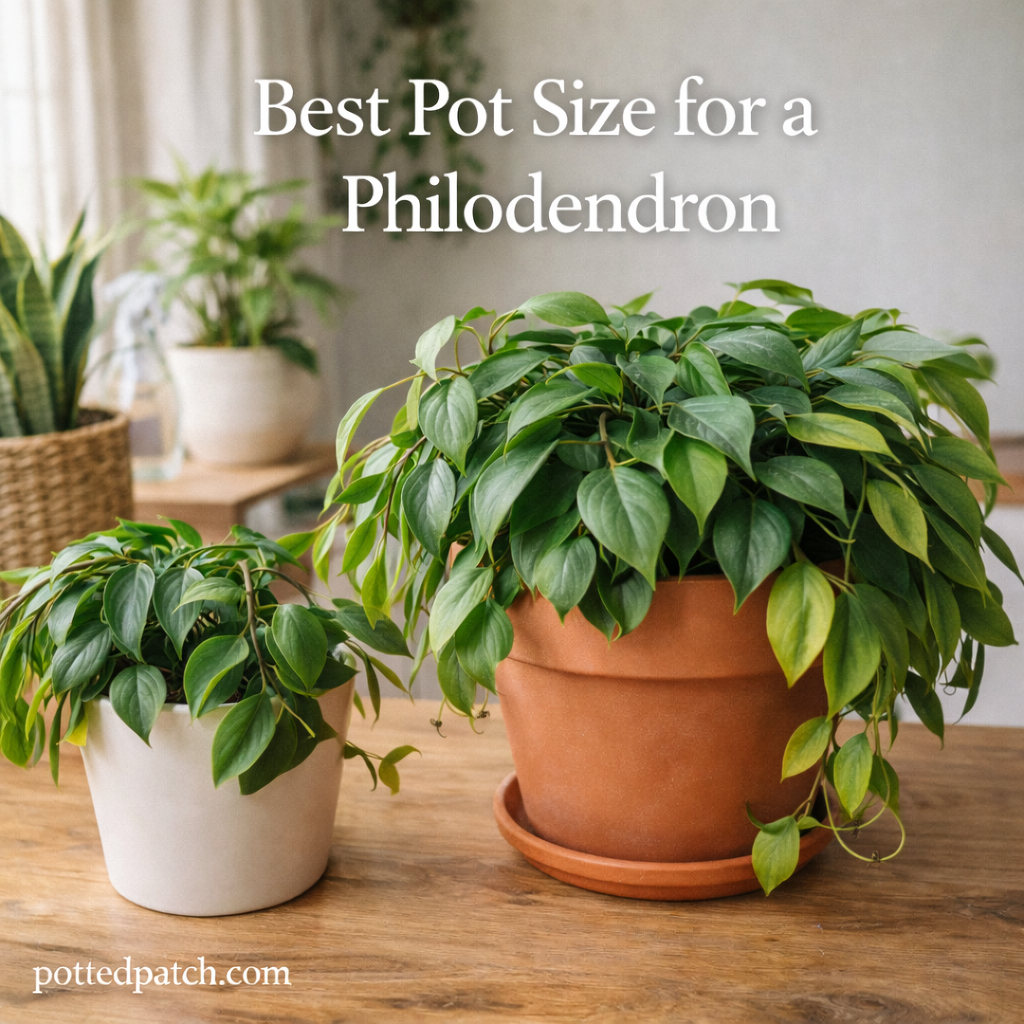
Best Pot Size for a Philodendron

Two healthy philodendron plants in different sized pots showing ideal container sizing indoors.
Philodendrons in properly sized pots to promote healthy root growth indoors. pottedpatch.com.

Choosing the right pot size for your philodendron is one of the most important decisions you’ll make for its long-term health. While these tropical plants are forgiving, the wrong container size can lead to slow growth, root rot, or unnecessary stress.

In this guide, you’ll learn how to select the best pot size for a philodendron, when to repot, and how to avoid common container mistakes.

Continue reading “Best Pot Size for a Philodendron”

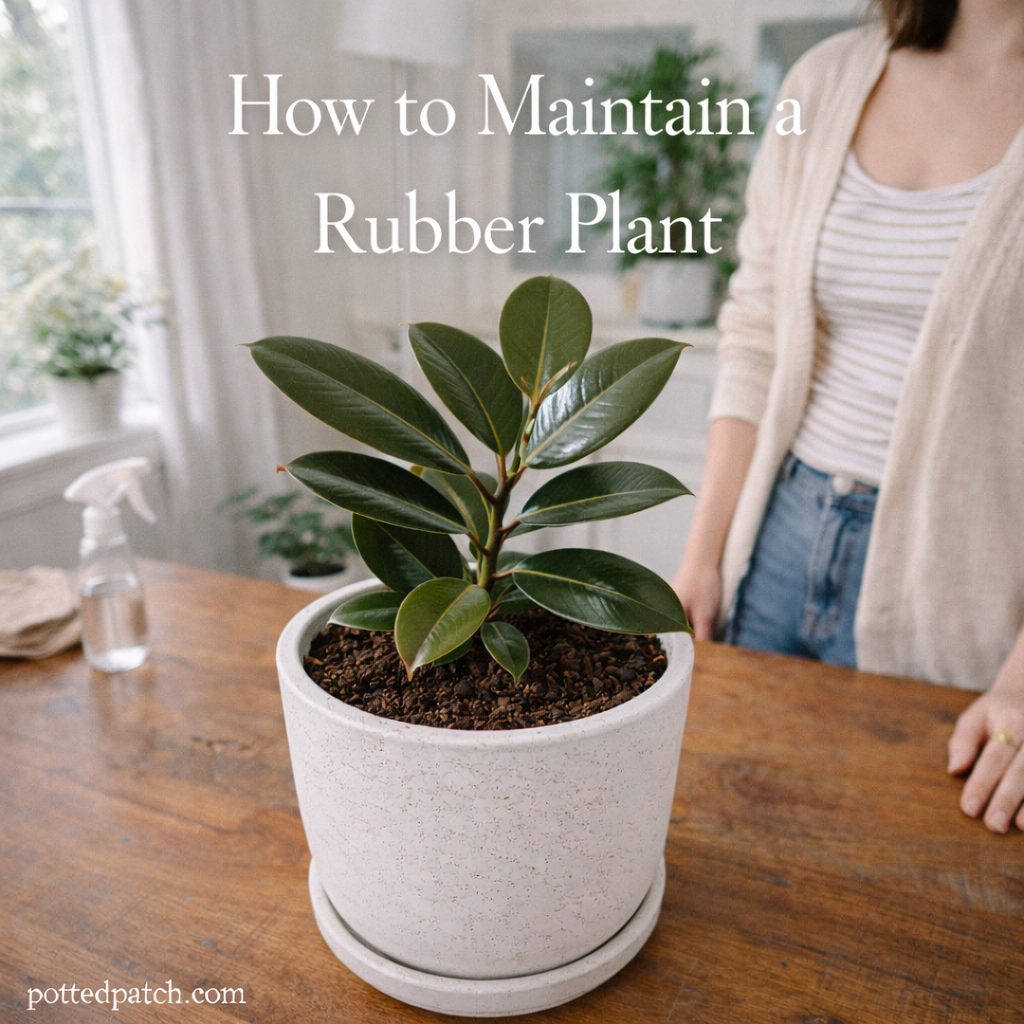
How to Maintain a Rubber Plant

Healthy rubber plant in a white pot indoors with overlay title How to Maintain a Rubber Plant and pottedpatch.com watermark.
Healthy rubber plant maintained with proper indoor care and routine upkeep. pottedpatch.com

Rubber plants are known for their bold, glossy leaves and upright growth. While they’re relatively low-maintenance, consistent care is what keeps them thriving long term.

If you want steady growth, strong stems, and deep green leaves, maintenance isn’t complicated — it’s about doing the basics well.

Here’s how to properly maintain a rubber plant year round.

Continue reading “How to Maintain a Rubber Plant”

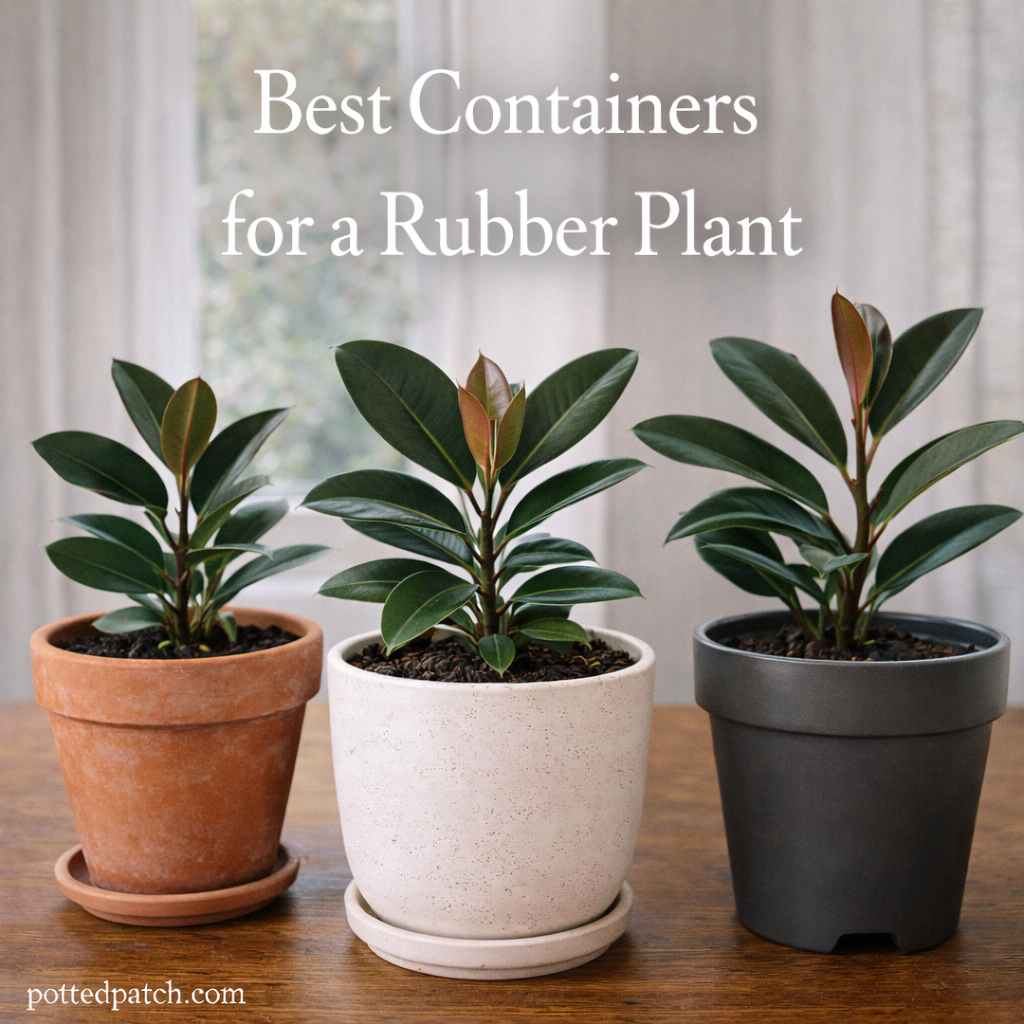
Best Containers for a Rubber Plant

Three rubber plants in terracotta, ceramic, and plastic pots indoors with overlay title Best Containers for a Rubber Plant and pottedpatch.com watermark.
Comparing terracotta, ceramic, and plastic containers for a rubber plant. pottedpatch.com

Choosing the right container for your rubber plant can make the difference between steady growth and constant care problems.

While rubber plants (Ficus elastica) are hardy, they are sensitive to poor drainage and unstable pots. The right container supports healthy roots, balanced growth, and easier maintenance.

Here’s what to look for — and which types of pots work best.

Continue reading “Best Containers for a Rubber Plant”

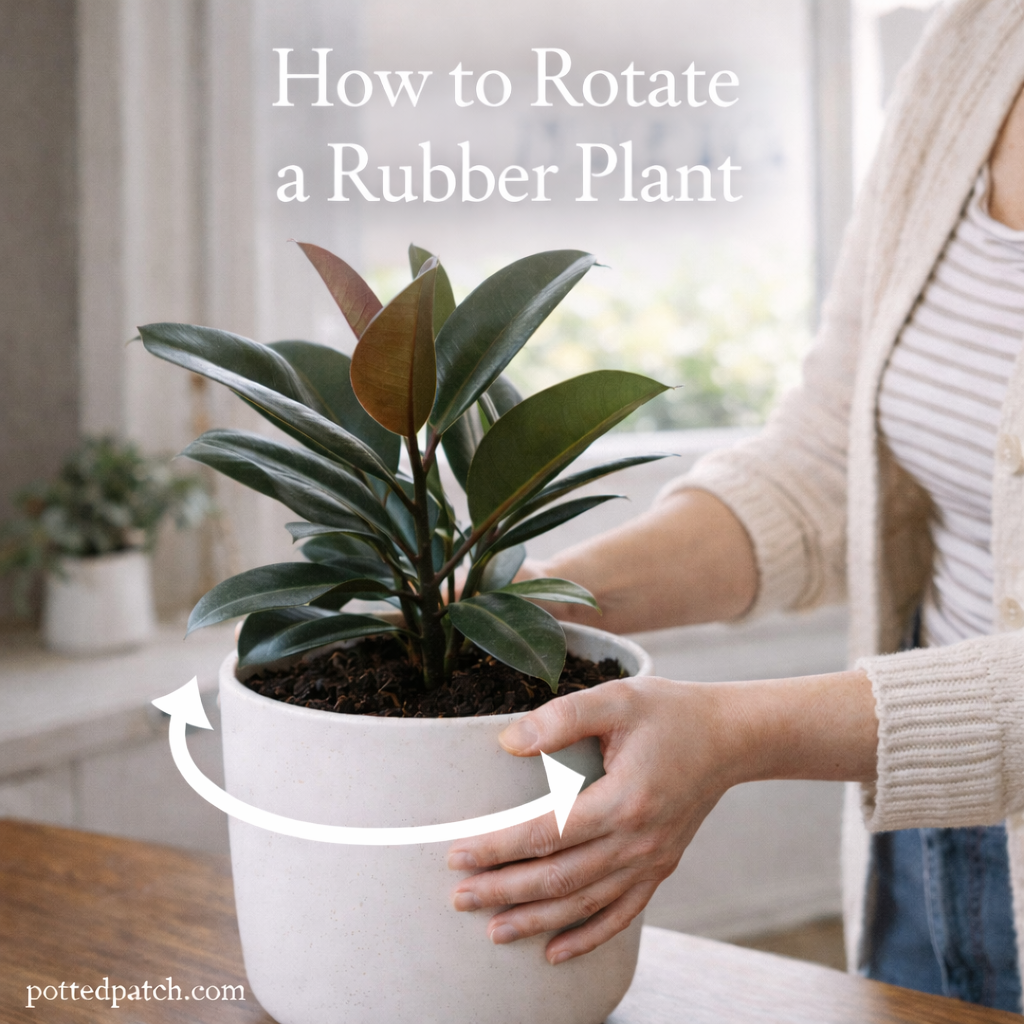
How to Rotate a Rubber Plant

Person rotating a rubber plant in a white pot indoors with white directional arrows, overlay title How to Rotate a Rubber Plant, and pottedpatch.com watermark.
Rotating a rubber plant to encourage balanced and even growth indoors. pottedpatch.com

Rubber plants are known for their large, glossy leaves and upright growth. But if you’ve noticed your plant leaning toward a window or growing unevenly, it may be time to rotate it.

Learning how to rotate a rubber plant properly helps maintain balanced growth, stronger stems, and a fuller overall shape.

Here’s exactly how to do it — and how often.

Continue reading “How to Rotate a Rubber Plant”