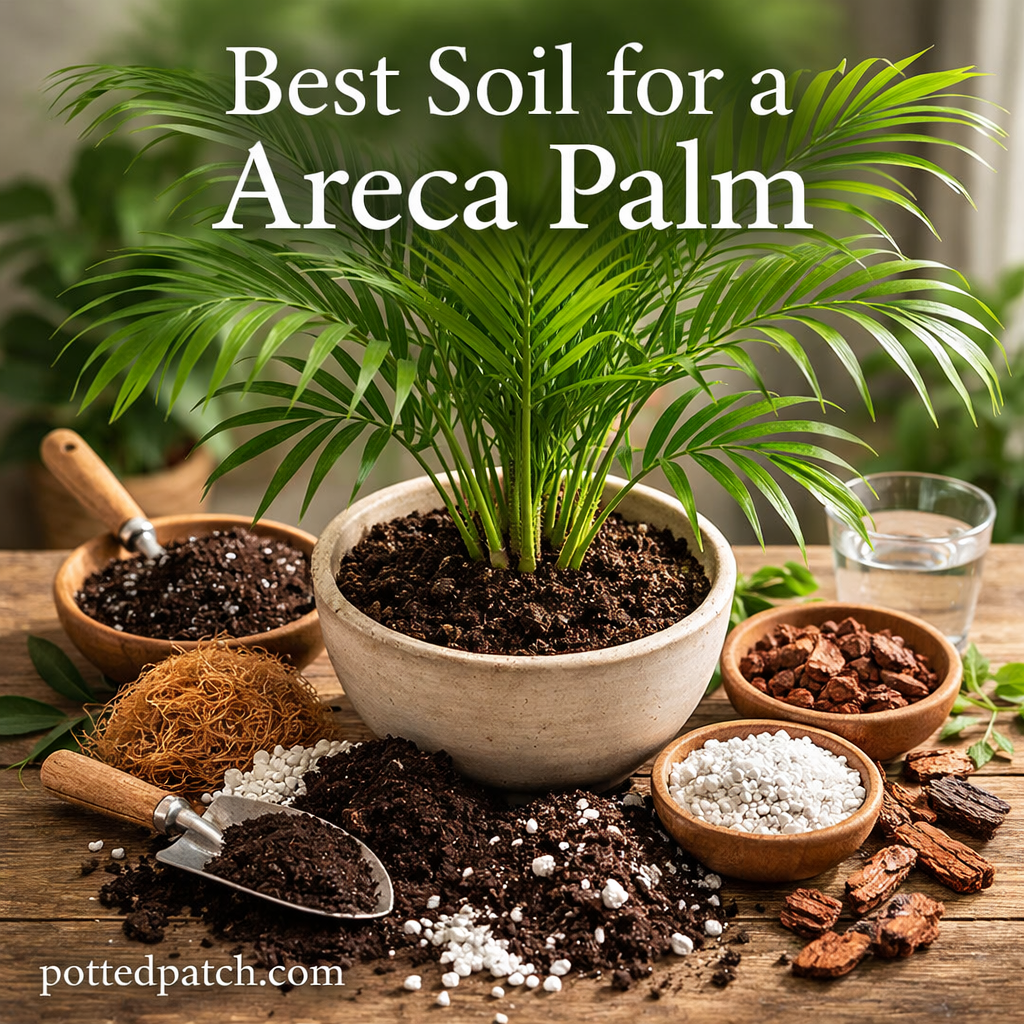
Areca palms are loved for their feathery fronds and tropical vibe, but their long-term health depends heavily on the soil you use. The wrong mix can lead to root rot, yellowing leaves, and slow growth.
In this guide, you’ll learn exactly what type of soil an Areca palm needs, what to avoid, and how to mix your own for strong, healthy roots.
Why Soil Matters for Areca Palms
The Areca palm (Dypsis lutescens) is native to Madagascar, where it grows in well-draining, slightly sandy soil. Indoors, it needs a potting mix that:
- Drains excess water quickly
- Retains moderate moisture
- Allows airflow around roots
- Contains light organic nutrients
- Has a slightly acidic to neutral pH (6.0–7.0)
If the soil stays soggy, the roots suffocate. If it dries too quickly, the plant becomes stressed and develops brown tips.
Balance is everything.
The Best Soil Type for an Areca Palm
The ideal soil for an Areca palm is:
A Well-Draining, Peat-Based Potting Mix with Added Aeration
Look for a high-quality indoor potting mix that includes:
- Peat moss or coco coir (for moisture retention)
- Perlite or pumice (for drainage and airflow)
- Pine bark or composted bark (for structure)
- Light organic matter (for nutrients)
Avoid heavy garden soil or dense mixes designed for moisture-loving plants.
The Ideal DIY Soil Mix for Areca Palm
If you prefer to mix your own soil, use this simple, proven formula:
Recommended Ratio
- 2 parts high-quality potting soil
- 1 part perlite or pumice
- 1 part pine bark fines
Optional: Add a small handful of horticultural charcoal for improved drainage and odor control.
This combination creates:
- Excellent drainage
- Root aeration
- Stable moisture levels
- Reduced risk of root rot
It mimics the palm’s natural environment while still supporting indoor growth.
Soil pH for Areca Palm
Areca palms prefer slightly acidic to neutral soil.
Ideal range: pH 6.0 to 7.0
If soil is too alkaline, you may notice:
- Yellowing leaves (especially between veins)
- Slower growth
- Nutrient deficiencies
Most indoor potting mixes already fall within the correct range, so pH adjustments are rarely necessary.
What Soil to Avoid
Certain soil types will quickly cause problems.
Avoid:
- Heavy clay soil
- Outdoor garden soil
- Moisture control potting mixes (they retain too much water)
- Succulent or cactus mixes without amendments (too fast draining alone)
- Pure peat moss without drainage materials
Areca palms are sensitive to soggy roots. Dense soil is one of the most common causes of decline.
Should You Use Cactus Soil for Areca Palm?
Not by itself.
Cactus soil drains too quickly and doesn’t retain enough moisture for an Areca palm. However, you can blend it into a custom mix.
Better approach:
- 2 parts potting soil
- 1 part cactus mix
- 1 part perlite
This improves drainage while maintaining enough moisture for healthy growth.
Signs Your Soil Is Wrong
If your Areca palm is struggling, the soil may be the issue.
Soil Too Dense
- Yellow leaves
- Mushy stems
- Foul smell from soil
- Fungus gnats
- Slow growth
Soil Too Fast Draining
- Crispy brown tips
- Drooping fronds
- Frequent wilting
- Needing water every 1–2 days
If you notice these signs, repotting into a better mix can revive the plant.
When to Repot with Fresh Soil
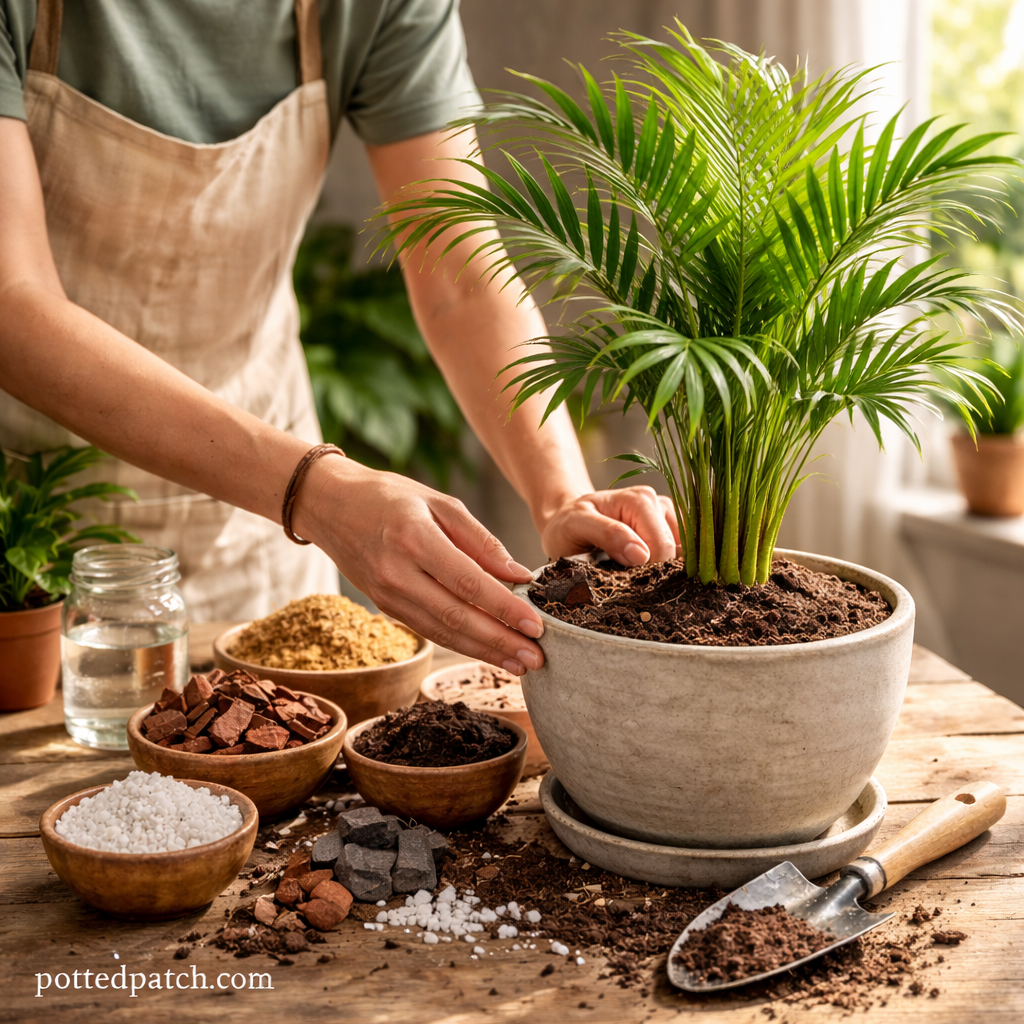
Repot your Areca palm when:
- Roots are circling the bottom of the pot
- Water sits on the surface before draining
- Growth has slowed significantly
- Soil compacts and becomes hard
Spring and early summer are the best times to repot.
Avoid repotting in winter unless the plant is in serious distress.
Pro Tips for Healthy Areca Palm Roots
- Always use a pot with drainage holes
- Add a thin layer of bark at the bottom (not rocks)
- Let the top 1–2 inches of soil dry before watering
- Avoid compacting the soil when repotting
- Refresh the top layer of soil annually
Healthy roots mean fuller, greener fronds.
Final Thoughts
The best soil for an Areca palm is loose, airy, and well-draining while still holding moderate moisture. A peat-based indoor mix with added perlite and bark creates the perfect balance.
Avoid heavy or water-retaining soils, and your palm will reward you with lush, tropical growth year after year.
Getting the soil right is one of the most important steps in successful indoor palm care.