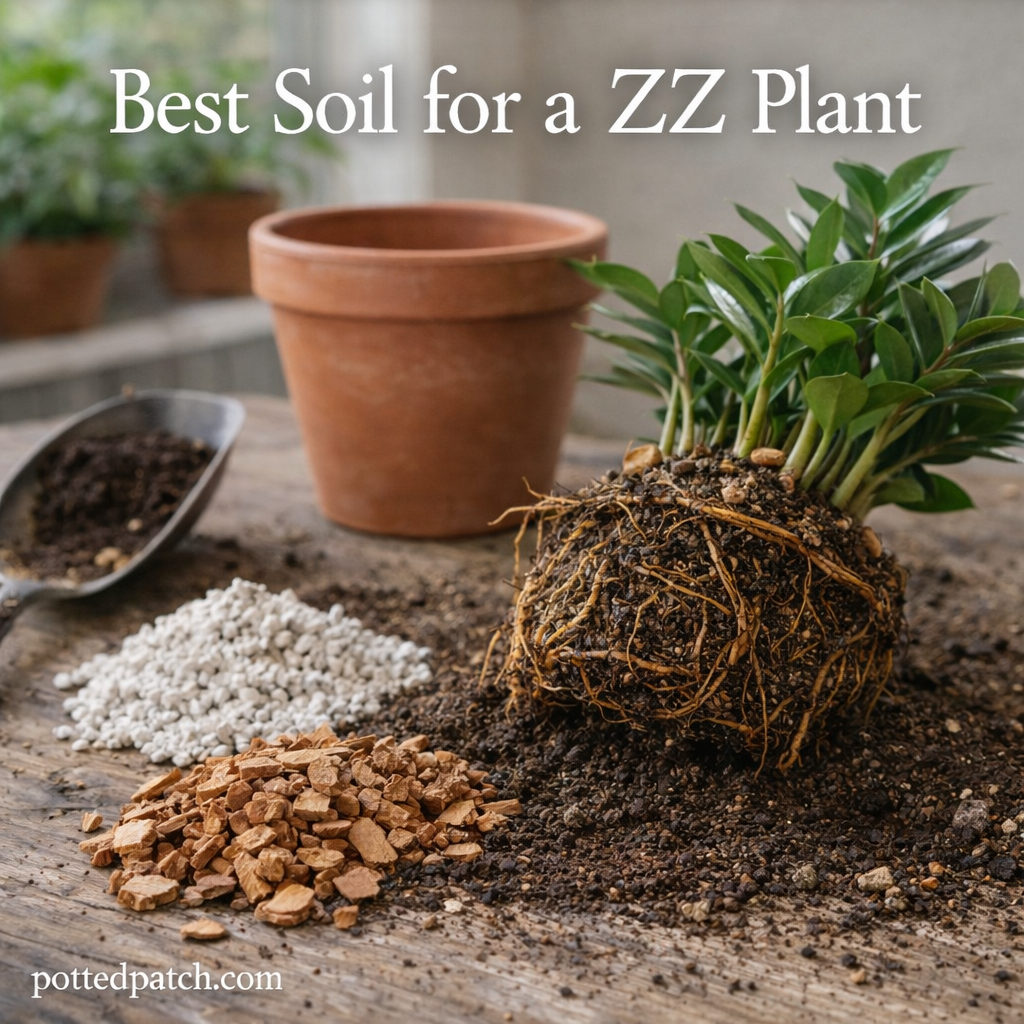
ZZ plants (Zamioculcas zamiifolia) are known for being nearly indestructible—but soil choice still plays a major role in how well they grow. The wrong soil can hold too much moisture, leading to root rot, while the right mix supports healthy roots, steady growth, and long-term plant health.
This guide breaks down exactly what type of soil a ZZ plant needs, what to avoid, and how to create the perfect mix for thriving indoor plants.
Why Soil Choice Matters for ZZ Plants
ZZ plants grow from thick rhizomes that store water. This makes them drought-tolerant, but also vulnerable to excess moisture sitting around the roots.
Proper soil helps by:
- Draining water quickly
- Preventing soggy conditions
- Allowing oxygen to reach roots
- Supporting slow, steady growth
Even the best watering routine can fail if the soil holds too much water.
Key Characteristics of the Best Soil for a ZZ Plant
The ideal ZZ plant soil is not complicated—it just needs the right balance.
What to Look For in ZZ Plant Soil
- Fast-draining structure
- Loose, airy texture
- Light moisture retention without compaction
Soil should feel crumbly, not dense or muddy, when watered.
Best Ready-Made Soil Options
If you prefer convenience, several store-bought options work well.
Recommended Store-Bought Soils
- Standard indoor potting mix (with amendments)
- Cactus or succulent mix
- Aroid or tropical plant mix with added drainage
On their own, most potting soils are slightly too dense—but they become excellent with simple additions.
How to Make the Perfect ZZ Plant Soil Mix
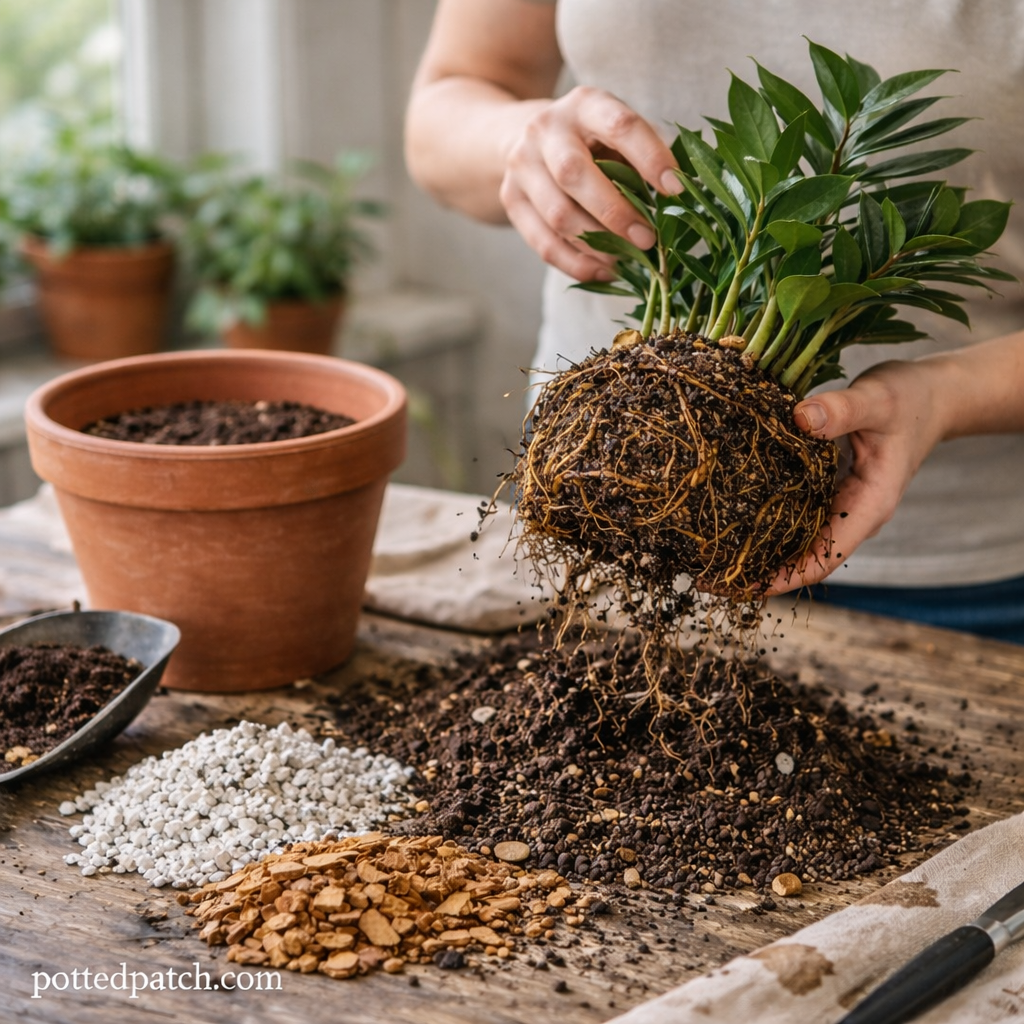
Custom soil mixes offer the most control and consistency.
DIY ZZ Plant Soil Mix (Easy Recipe)
Use the following ratio:
- 2 parts indoor potting soil
- 1 part perlite or pumice
- 1 part coarse sand or orchid bark
This combination drains well while still holding enough moisture for the plant’s needs.
Ingredients Explained
Understanding each component helps you adjust as needed.
Potting Soil
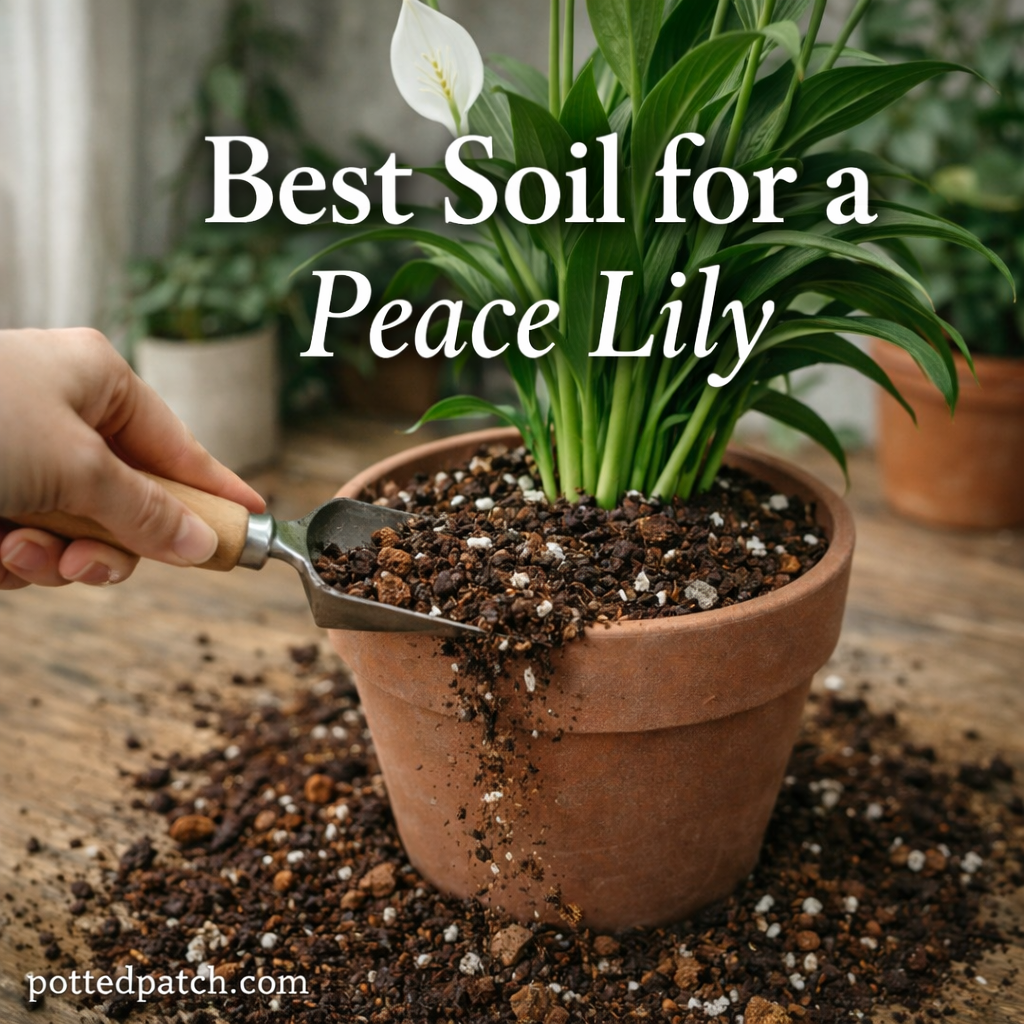
Provides nutrients and basic structure. Always use soil labeled for containers, not garden soil.
Perlite or Pumice
Improves drainage and airflow. This prevents water from pooling around rhizomes.
Coarse Sand or Orchid Bark
Adds chunkiness to the mix, encouraging roots to spread naturally instead of compacting.
Soil Types to Avoid for ZZ Plants
Some soils create problems no matter how careful you are with watering.
Avoid using:
- Garden soil
- Heavy clay-based mixes
- Moisture-retaining or water-control soils
- Soil without added drainage material
These options trap water and increase the risk of root rot.
Does ZZ Plant Soil Need Fertilizer?
ZZ plants are light feeders.
- Fresh potting mix usually provides enough nutrients for 3–6 months
- Fertilize lightly during spring and summer
- Avoid fertilizing in winter
Too much fertilizer can burn roots and slow growth.
How Often Should You Replace the Soil?
Soil breaks down over time and loses drainage quality.
General guidelines:
- Refresh soil every 2–3 years
- Replace soil when repotting
- Change soil sooner if it becomes compacted or stays wet too long
Fresh soil improves oxygen flow and root health.
Signs Your ZZ Plant’s Soil Needs Improvement
Your plant often tells you when the soil isn’t right.
Watch for:
- Yellowing leaves
- Mushy or soft rhizomes
- Soil staying wet for days
- Slow or stalled growth
If these appear, improving drainage is usually the solution.
Pot Choice and Soil Work Together
Even perfect soil won’t help if the pot traps water.
Always pair good soil with:
- Pots that have drainage holes
- Saucers emptied after watering
- Containers sized just slightly larger than the root ball
Soil and container function as a team.
Final Thoughts
The best soil for a ZZ plant is fast-draining, airy, and simple. Whether you choose a ready-made mix or create your own, the goal is the same: keep roots dry between waterings while still supporting steady growth.
With the right soil, ZZ plants live up to their reputation—low effort, long life, and consistently healthy growth.