Rubber plants (Ficus elastica) are known for their glossy leaves, strong growth, and ability to adapt to indoor spaces. But if you want thick stems, vibrant foliage, and steady growth, the right soil makes all the difference.
Choosing the best soil for a rubber plant isn’t complicated — but it does require the right balance of drainage, aeration, and moisture retention. In this guide, you’ll learn exactly what type of soil works best, what to avoid, and how to create the perfect mix for long-term health.
What Kind of Soil Do Rubber Plants Need?
Rubber plants prefer soil that is:
- Well-draining
- Slightly moisture-retentive (but never soggy)
- Rich in organic matter
- Slightly acidic to neutral (pH 6.0–7.0)
- Loose and airy around the roots
In their natural habitat, rubber plants grow in tropical environments with nutrient-rich but fast-draining soil. Indoors, you want to replicate those conditions as closely as possible.
Heavy, compacted soil is the fastest way to cause root rot — the most common problem rubber plant owners face.
The Best Store-Bought Soil Options
If you prefer convenience, you can use:
1. High-Quality Indoor Potting Mix
Look for a general indoor potting mix labeled for houseplants. These are typically peat-based or coco-coir based and provide a good starting structure.
However, most standard potting soils hold too much moisture on their own. You’ll need to amend them.
2. Potting Mix + Perlite (Best Easy Option)
A simple upgrade:
- 2 parts indoor potting mix
- 1 part perlite
This improves drainage and keeps roots from sitting in water.
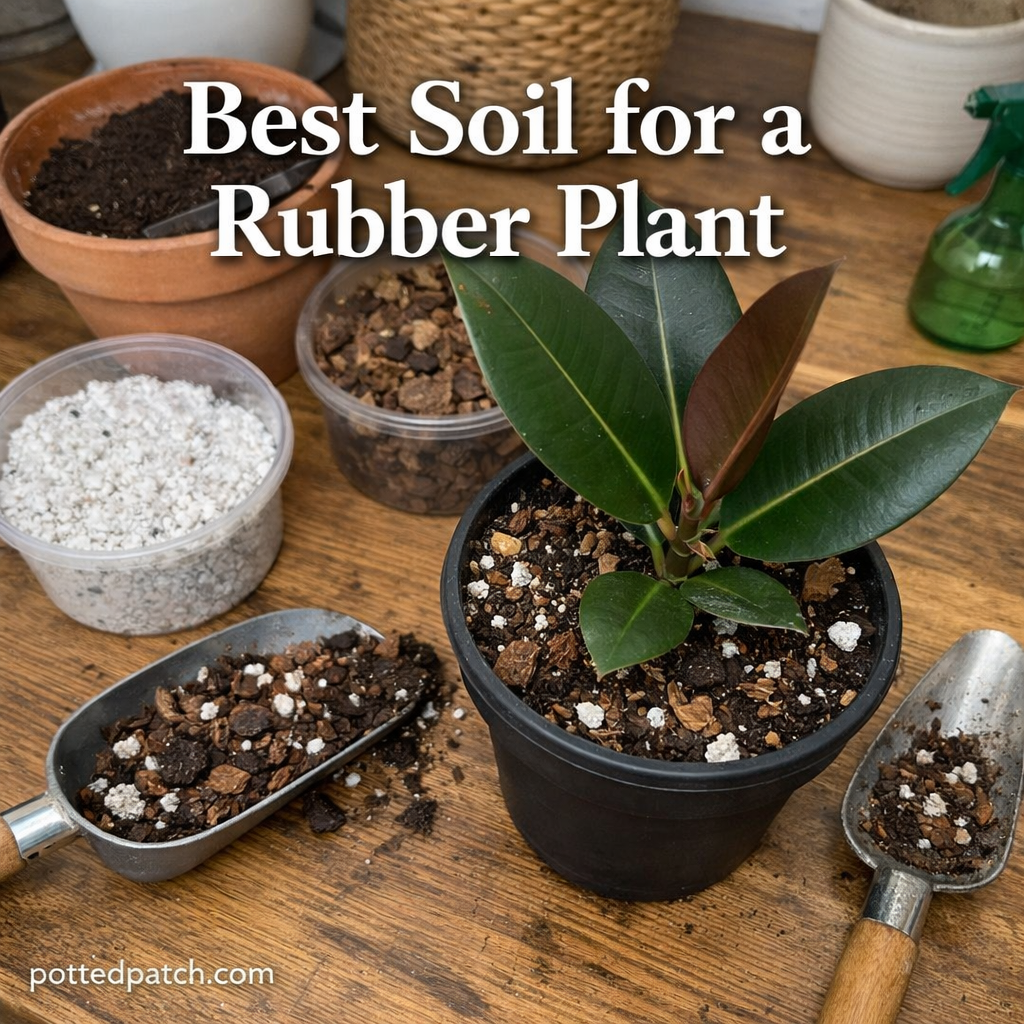
3. Potting Mix + Orchid Bark + Perlite (Best Overall)
For optimal aeration:
- 2 parts potting mix
- 1 part orchid bark
- 1 part perlite
This combination mimics the chunky, breathable soil structure rubber plants love.
DIY Rubber Plant Soil Recipe (Ideal Blend)
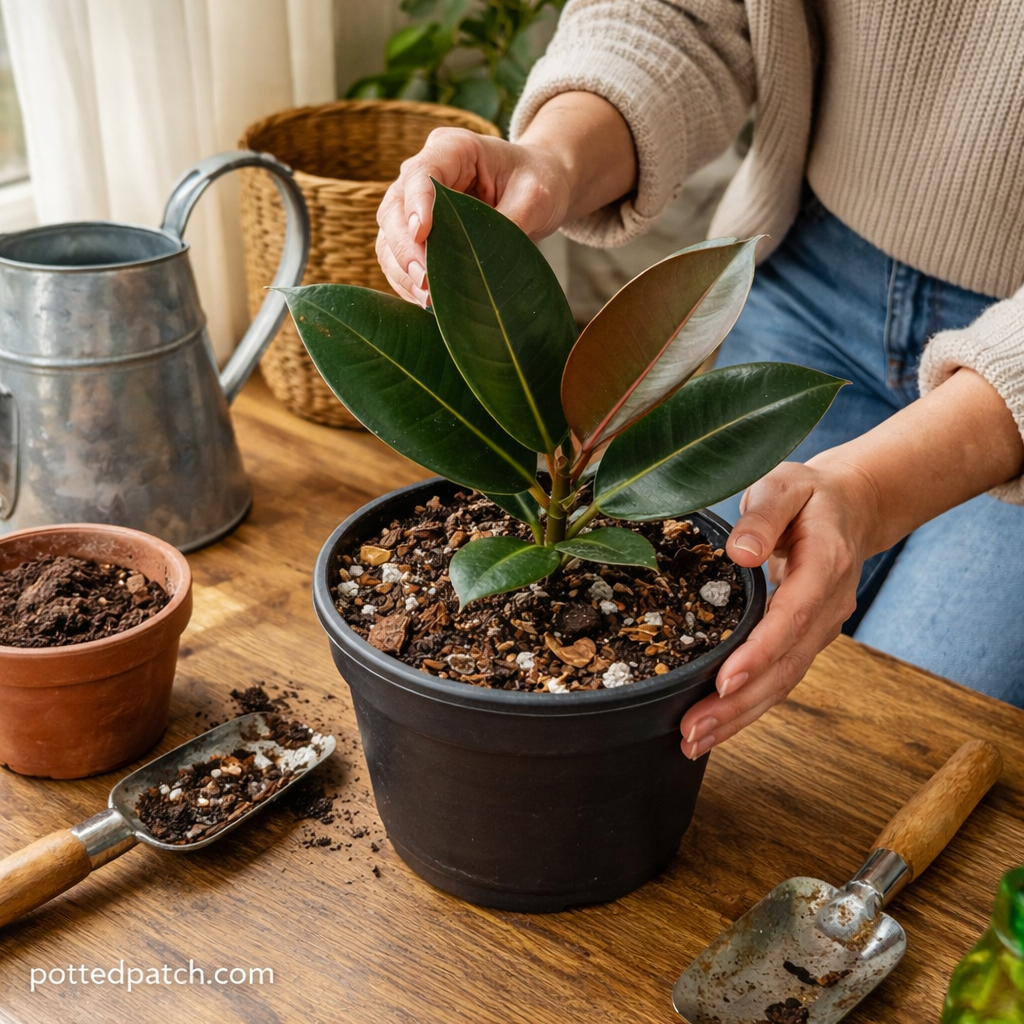
If you want the healthiest long-term setup, mix your own soil using:
- 40% high-quality potting soil
- 30% orchid bark
- 20% perlite
- 10% compost or worm castings
Why this works:
- Potting soil provides base structure and nutrients
- Orchid bark improves airflow
- Perlite prevents compaction
- Compost adds slow-release nutrients
This blend drains well while still retaining enough moisture to prevent constant watering.
Soil Ingredients Explained
Understanding what each component does helps you adjust your mix over time.
Perlite
- Lightweight volcanic material
- Improves drainage
- Prevents root suffocation
Orchid Bark
- Adds chunky structure
- Encourages oxygen flow
- Reduces risk of root rot
Coco Coir
- Holds moisture evenly
- More sustainable than peat
- Helps prevent soil from drying too fast
Compost or Worm Castings
- Adds nutrients naturally
- Improves soil biology
- Supports long-term plant health
Soil Mistakes to Avoid
Rubber plants are forgiving, but poor soil will eventually cause problems.
Avoid:
- Heavy garden soil (too dense for indoor containers)
- Pure peat moss (retains too much moisture alone)
- Soil without drainage amendments
- Pots without drainage holes
If your soil stays wet for more than 5–7 days after watering, it’s too dense.
When to Replace Rubber Plant Soil
You should refresh or repot your rubber plant:
- Every 1–2 years
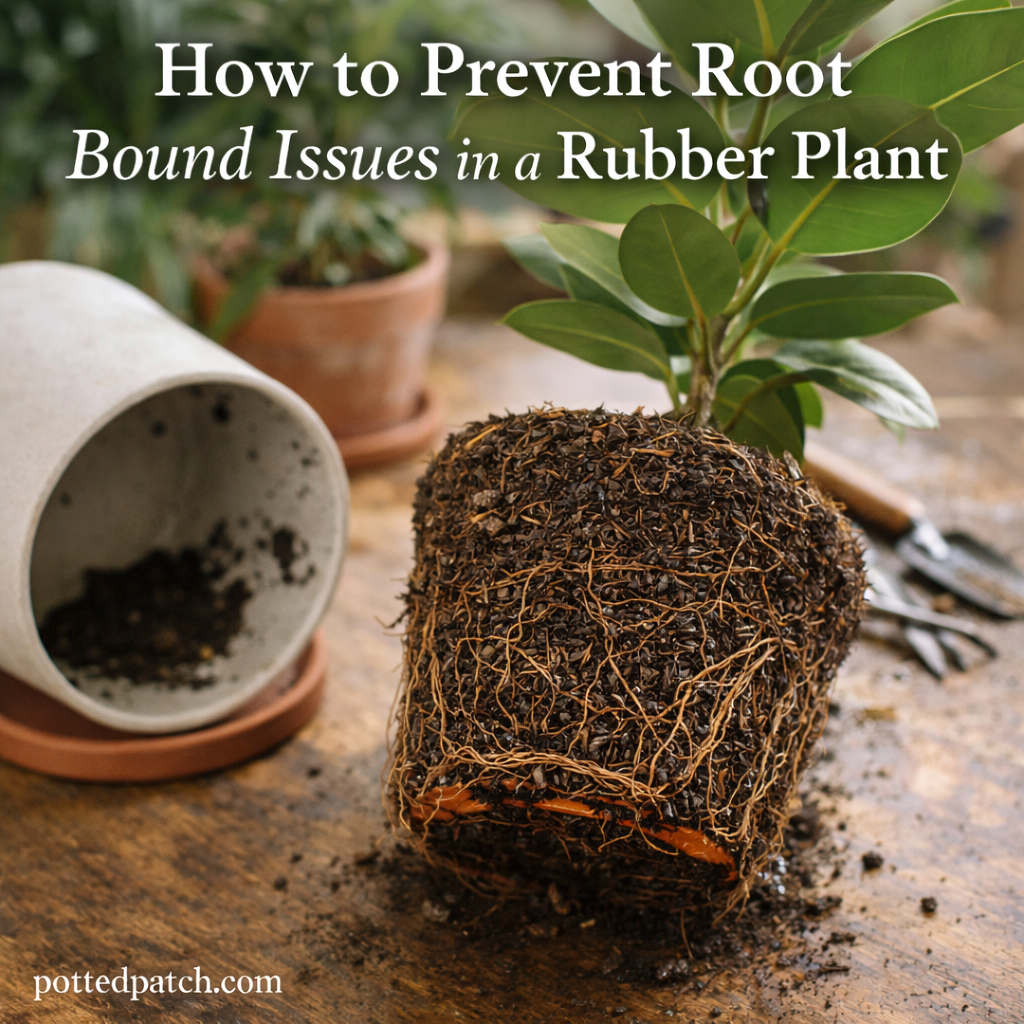
- When roots circle the pot
- If soil smells sour or musty
- If water runs straight through without absorbing
Fresh soil restores nutrients and improves structure.
Signs Your Rubber Plant Needs Better Soil
Watch for:
- Yellowing lower leaves
- Drooping despite moist soil
- Slow growth during growing season
- Fungus gnats around soil
- Mushy or dark roots
These are often signs of poor drainage or compacted soil.
Final Thoughts
The best soil for a rubber plant is loose, breathable, and well-draining — never heavy or waterlogged.
For most plant owners, the easiest and most effective mix is:
2 parts quality indoor potting soil + 1 part perlite + 1 part orchid bark.
With the right soil foundation, your rubber plant can grow taller, stronger, and fuller for years to come.
Healthy roots mean healthy leaves — and great soil is where it all begins.