Philodendrons are easygoing plants — but the wrong soil can quickly lead to yellow leaves, root rot, or slow growth.
If you want lush foliage and strong roots, choosing the right soil mix is one of the most important decisions you can make.
Here’s exactly what philodendrons need and how to build the ideal soil blend.
What Kind of Soil Do Philodendrons Prefer?
Philodendrons naturally grow in tropical forests where the soil is:
- Loose
- Well-draining
- Rich in organic matter
- Slightly airy
They do not like heavy, compacted soil that holds excess moisture.
The goal is balance: moisture retention without sogginess.
Why Regular Potting Soil Isn’t Enough
Standard potting mix often holds too much water for philodendrons.
While it may work short term, dense soil can cause:
- Root rot
- Poor oxygen flow
- Fungal issues
- Slow growth
Philodendrons need oxygen around their roots just as much as they need water.
The Ideal Soil Mix for Philodendrons
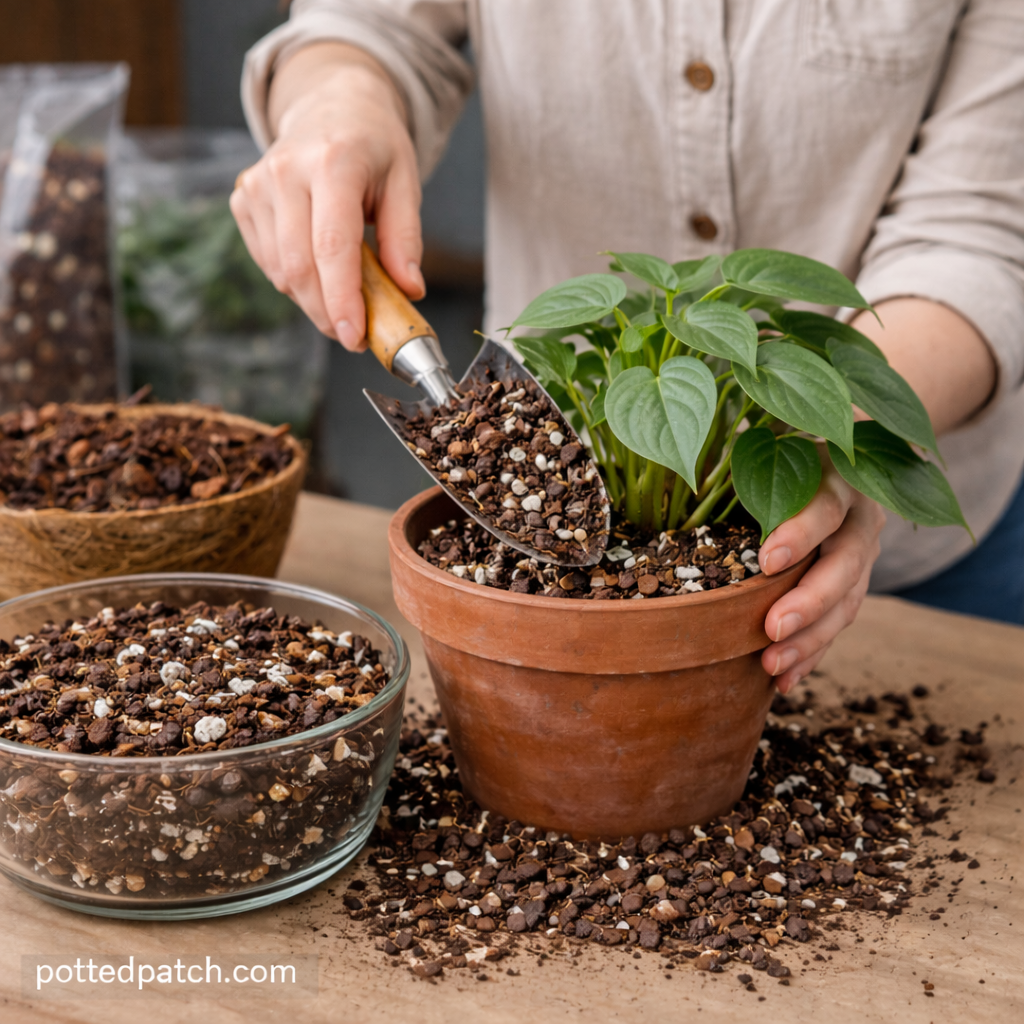
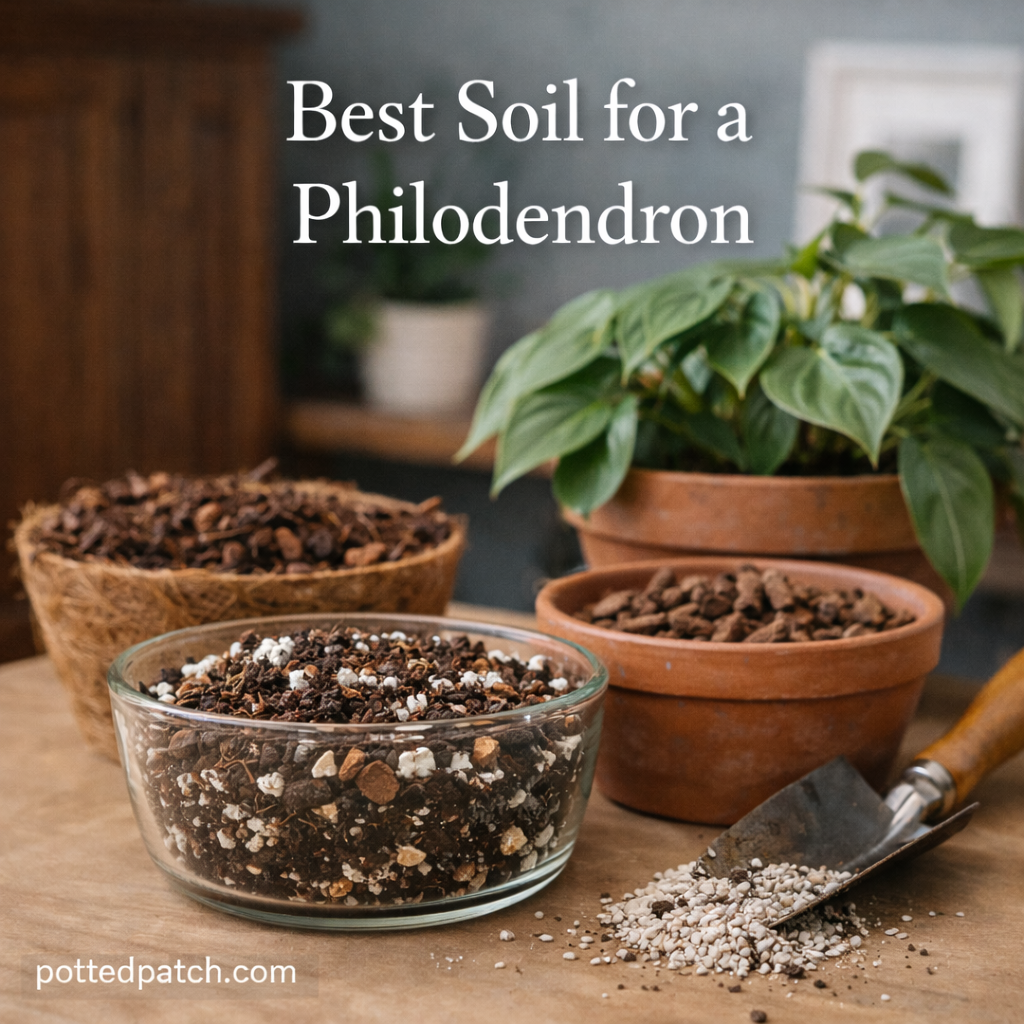
The best soil is chunky and breathable.
Simple DIY Philodendron Soil Mix
Combine:
- 2 parts high-quality potting soil
- 1 part perlite
- 1 part orchid bark
This creates a structure that:
- Drains excess water quickly
- Prevents compaction
- Encourages healthy root expansion
You can also add a small amount of coco coir for moisture balance.
What Makes Soil “Well-Draining”?
Well-draining soil:
- Allows water to flow through easily
- Does not stay wet for days
- Feels light and fluffy
- Contains visible chunky particles
If water pools on top or drains extremely slowly, the mix is too dense.
Best Store-Bought Options
If you prefer ready-made mixes, look for:
- Aroid soil blends
- Tropical plant mixes
- Orchid-based houseplant soil
Check the ingredient list. You should see things like:
- Bark
- Perlite
- Pumice
- Coco coir
Avoid mixes that list mostly peat without aeration materials.
Soil pH for Philodendrons
Philodendrons prefer slightly acidic to neutral soil.
Ideal pH range:
6.0 to 7.0
Most indoor potting mixes naturally fall within this range.
Signs Your Soil Needs Improvement
Your philodendron may be in the wrong soil if you notice:
- Yellowing leaves
- Soggy soil for several days
- Mushy roots
- Slow or stunted growth
- Fungus gnats
Improving soil structure often solves these problems quickly.
When to Refresh the Soil
Even good soil breaks down over time.
Repot and refresh the mix:
- Every 1–2 years
- When roots become crowded
- If soil smells sour
- After a root rot issue
Fresh soil restores airflow and nutrient balance.
Extra Drainage Tips
In addition to proper soil:
- Always use a pot with drainage holes
- Avoid adding rocks at the bottom (this doesn’t improve drainage)
- Empty saucers after watering
Drainage holes are non-negotiable for philodendron health.
Final Thoughts
The best soil for a philodendron is airy, chunky, and well-draining.
Avoid dense, waterlogged mixes and focus on blends that allow oxygen to reach the roots.
When soil structure is right, your philodendron will grow faster, produce larger leaves, and stay vibrant year-round.
Healthy roots always start with the right foundation.