If you want your Parlor Palm to thrive indoors, choosing the right soil is one of the most important decisions you’ll make. The wrong mix can lead to root rot, yellowing leaves, or slow growth. The right one? Healthy roots, steady growth, and that elegant tropical look that makes Parlor Palms so popular.
In this guide, we’ll break down exactly what kind of soil your Parlor Palm needs, what to avoid, and how to mix your own perfect blend.
Why Soil Matters for a Parlor Palm
Parlor Palms (Chamaedorea elegans) are native to the rainforests of Central America. In their natural habitat, they grow in loose, well-draining soil rich in organic matter.
Indoors, their biggest enemy isn’t drought — it’s soggy roots.
Heavy, compacted soil holds too much moisture. When water lingers around the roots, oxygen can’t circulate properly. That’s when root rot begins.
Good soil should:
- Drain well
- Retain some moisture (but not stay wet)
- Allow airflow to roots
- Contain light nutrients
What Is the Best Soil for a Parlor Palm?
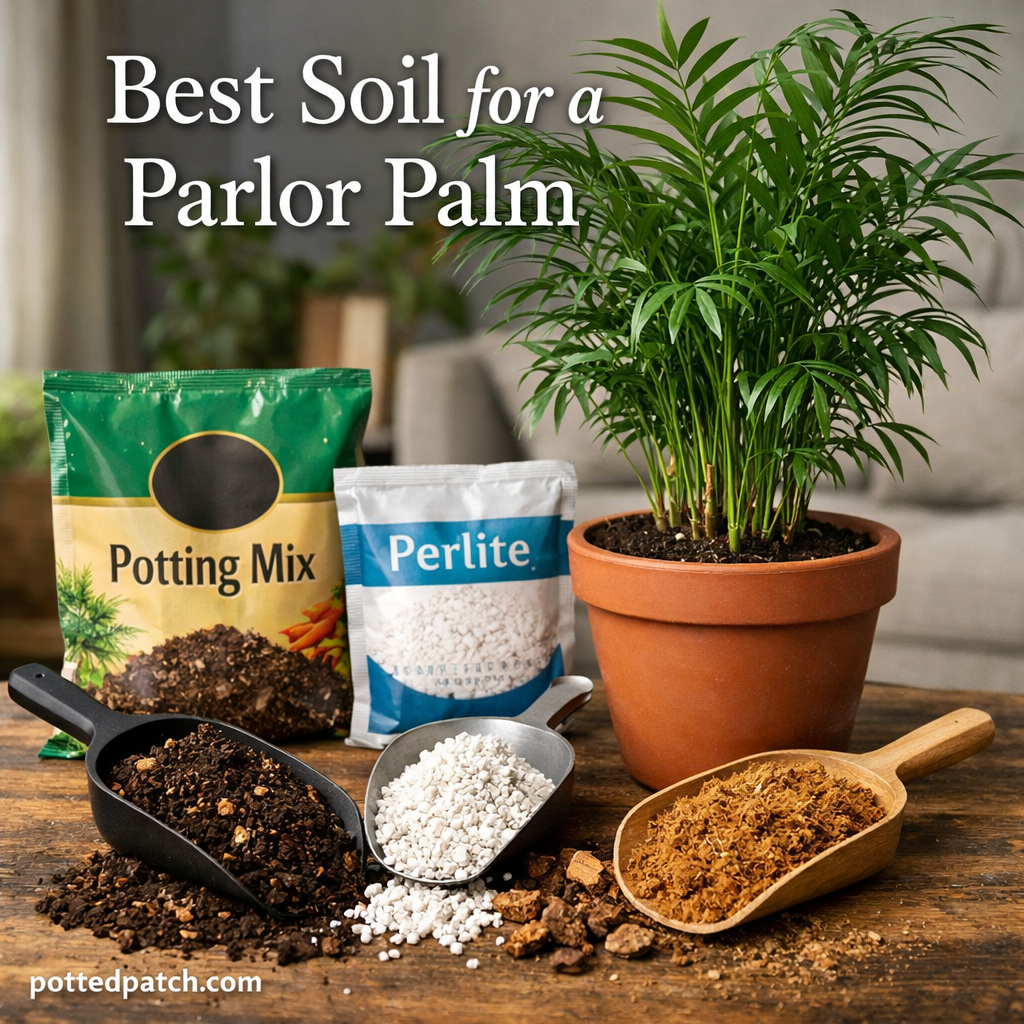
The best soil for a Parlor Palm is a well-draining, peat-based potting mix amended with aeration materials.
Ideal Soil Characteristics
Look for a mix that is:
- Light and fluffy (not dense)
- Slightly acidic to neutral (pH 6.0–7.0)
- Rich in organic matter
- Fast-draining but moisture-retentive
A standard indoor potting mix works — but it becomes much better with a few additions.
The Perfect DIY Soil Mix (Highly Recommended)
If you want optimal growth, mix your own blend:
- 2 parts quality indoor potting soil
- 1 part perlite (for drainage and airflow)
- 1 part coco coir or peat moss (for moisture retention)
Optional:
- A handful of orchid bark for extra aeration
This blend mimics the loose forest-floor soil Parlor Palms love.
Can You Use Regular Potting Soil?
Yes — but not by itself.
Many all-purpose potting soils hold too much water for Parlor Palms, especially in low-light indoor environments where soil dries slowly.
If you’re using regular potting mix:
- Add 25–40% perlite.
- Make sure the pot has drainage holes.
- Avoid heavy garden soil (never use outdoor soil indoors).
Soil Ingredients to Avoid
Certain soil components can cause problems.
Avoid:
- Heavy clay-based mixes
- Moisture-control soils that stay wet
- Pure peat moss (too compact over time)
- Outdoor garden soil
- Sand-heavy cactus mixes (dries too fast)
Parlor Palms prefer consistency — not extremes.
What About Cactus or Succulent Soil?
Cactus soil drains quickly, but it often dries out too fast for Parlor Palms.
If cactus mix is all you have, amend it by adding:
- Extra potting soil
- Coco coir
- Compost
The goal is balanced drainage — not rapid drying.
Signs Your Soil Is Wrong
If your soil isn’t ideal, your plant will show it.
Soil Too Heavy (Overwatering Risk)
- Yellowing leaves
- Mushy stems
- Persistent wet soil
- Foul smell from pot
Soil Too Dry or Fast-Draining
- Crispy brown tips
- Drooping fronds
- Soil pulling away from pot edges
Healthy soil should feel lightly moist — never soggy and never bone dry for extended periods.
When to Repot with Fresh Soil
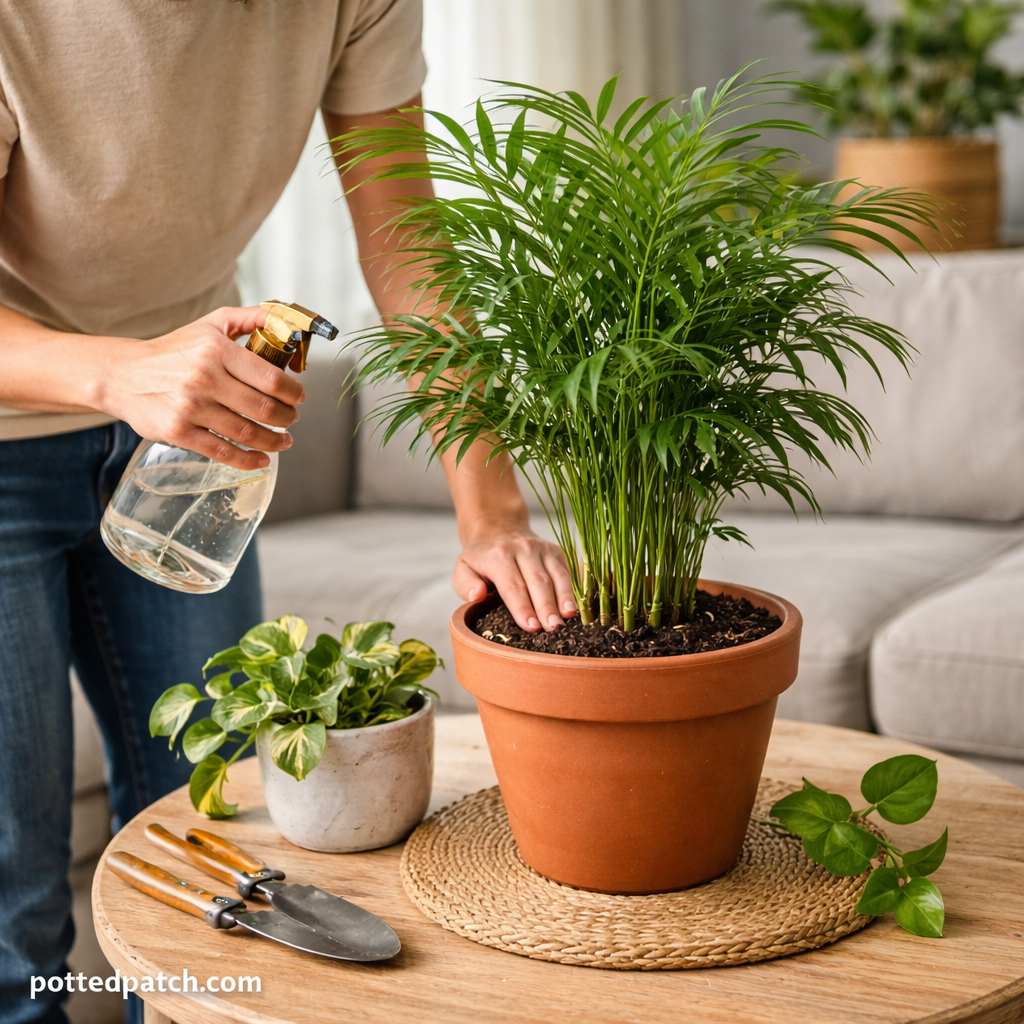
Repot your Parlor Palm:
- Every 2–3 years
- When roots are circling the bottom
- If soil stays wet for more than a week
- If you notice compacted or hardened soil
Spring is the best time to repot, as the plant enters its active growing season.
Pro Tips for Long-Term Soil Health
Even perfect soil can degrade over time. Keep it healthy with these practices:
- Avoid overwatering
- Empty drainage trays after watering
- Gently loosen compacted topsoil occasionally
- Use a breathable pot (terracotta improves airflow)
- Fertilize lightly during spring and summer
Healthy roots mean a healthier plant overall.
Final Thoughts
The best soil for a Parlor Palm is light, well-draining, and slightly moisture-retentive. A basic potting mix improved with perlite and coco coir gives you the ideal balance.
Remember: most Parlor Palm problems start below the surface. If the soil is right, everything else becomes easier — from watering to long-term growth.
Give the roots what they need, and your Parlor Palm will reward you with lush, graceful fronds for years to come.