If your fiddle leaf fig is struggling with yellow leaves, slow growth, or root rot, the problem might not be your watering schedule—it might be the soil.
The right soil mix is essential for healthy roots. Fiddle leaf figs need a balance of moisture retention and fast drainage. Too dense, and the roots suffocate. Too loose, and the plant dries out too quickly.
Here’s exactly what to use—and why it works.
What Kind of Soil Does a Fiddle Leaf Fig Need?
Fiddle leaf figs thrive in soil that is:
- Well-draining
- Light and airy
- Slightly moisture-retentive
- Rich in organic matter
Their roots need both water and oxygen. A good soil mix allows water to pass through while still holding enough moisture for consistent hydration.
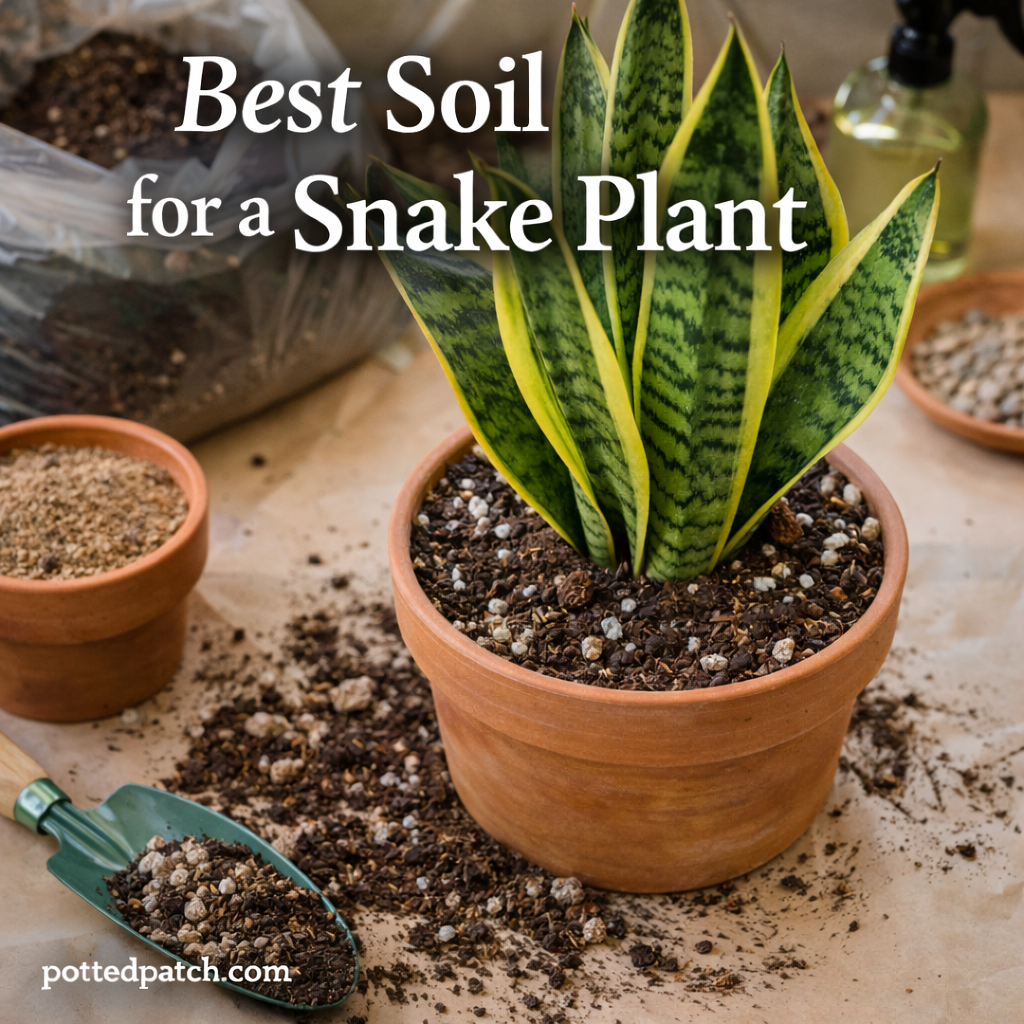
The Ideal Soil Mix Recipe
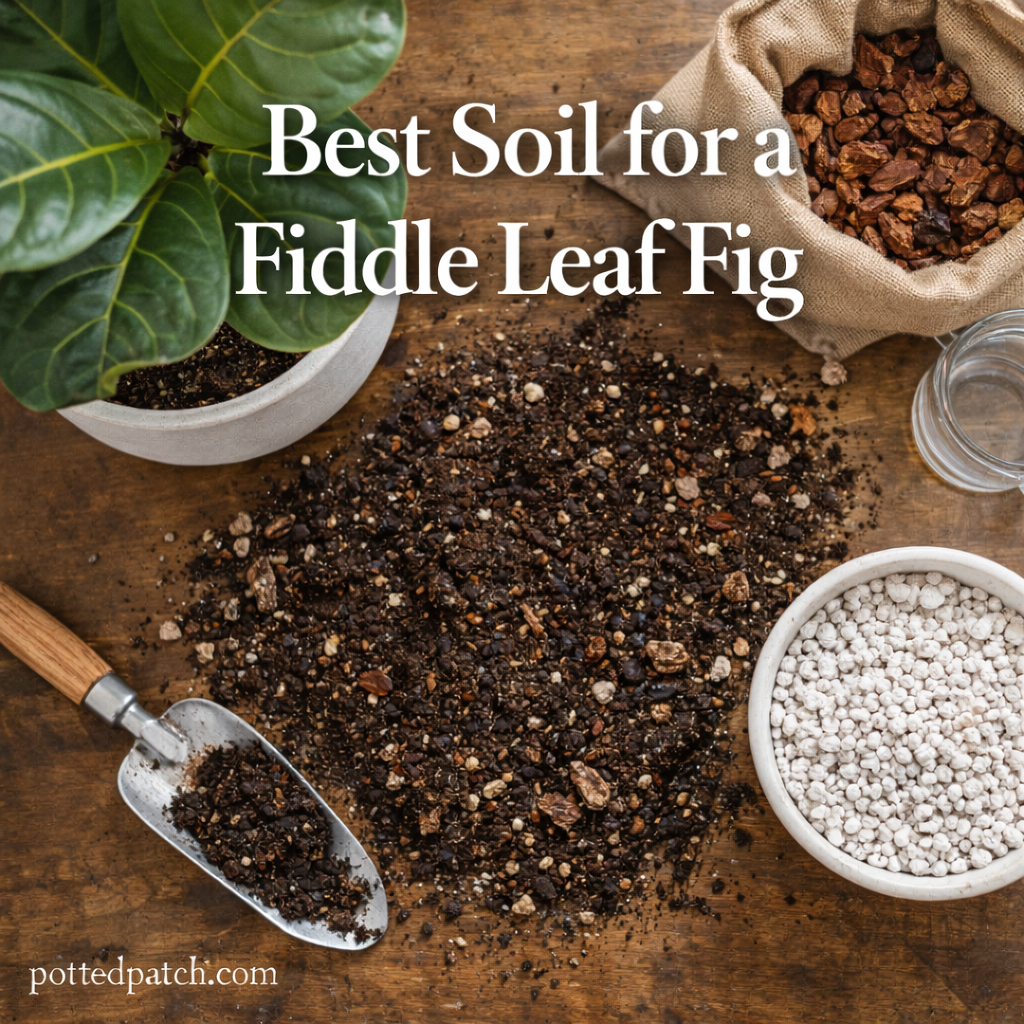
For best results, use this blend:
- 2 parts high-quality indoor potting soil
- 1 part perlite
- 1 part orchid bark
Why This Works:
- Potting soil provides nutrients.
- Perlite improves drainage and aeration.
- Orchid bark creates airflow pockets around roots.
This combination prevents compaction and reduces the risk of root rot.
Can You Use Regular Potting Soil?
You can—but it often needs amendment.
Many standard potting soils hold too much moisture for fiddle leaf figs, especially indoors where airflow is limited.
If using regular potting soil:
- Mix in perlite to improve drainage.
- Avoid moisture-control formulas.
- Ensure the pot has drainage holes.
Without modifications, dense soil increases root rot risk.
What to Avoid
Avoid soil mixes that are:
- Heavy and clay-based
- Labeled “moisture control”
- Compact and slow-draining
- Garden soil (too dense for containers)
These types of soil restrict airflow and keep roots too wet.
Signs Your Soil Isn’t Right
If your soil mix needs improvement, you may notice:
- Water pooling on the surface
- Soil staying wet for more than 10 days
- Fungus gnats
- Yellowing lower leaves
- Musty smell from the pot
Healthy soil should feel slightly crumbly—not sticky or muddy.
How Often Should You Replace Soil?
Even good soil breaks down over time.
Plan to refresh soil:
- Every 12–18 months for young plants
- Every 18–24 months for mature plants
Old soil compacts, reducing aeration and drainage.
Should You Add Sand or Rocks?
Adding sand is usually unnecessary and can make soil heavier.
Adding rocks at the bottom of the pot does not improve drainage. Instead, it creates a perched water table that can increase root problems.
The better solution is using a well-aerated soil mix throughout the pot.
Soil pH for Fiddle Leaf Figs
Fiddle leaf figs prefer slightly acidic to neutral soil.
Ideal pH range:
- 6.0–7.0
Most indoor potting soils already fall within this range.
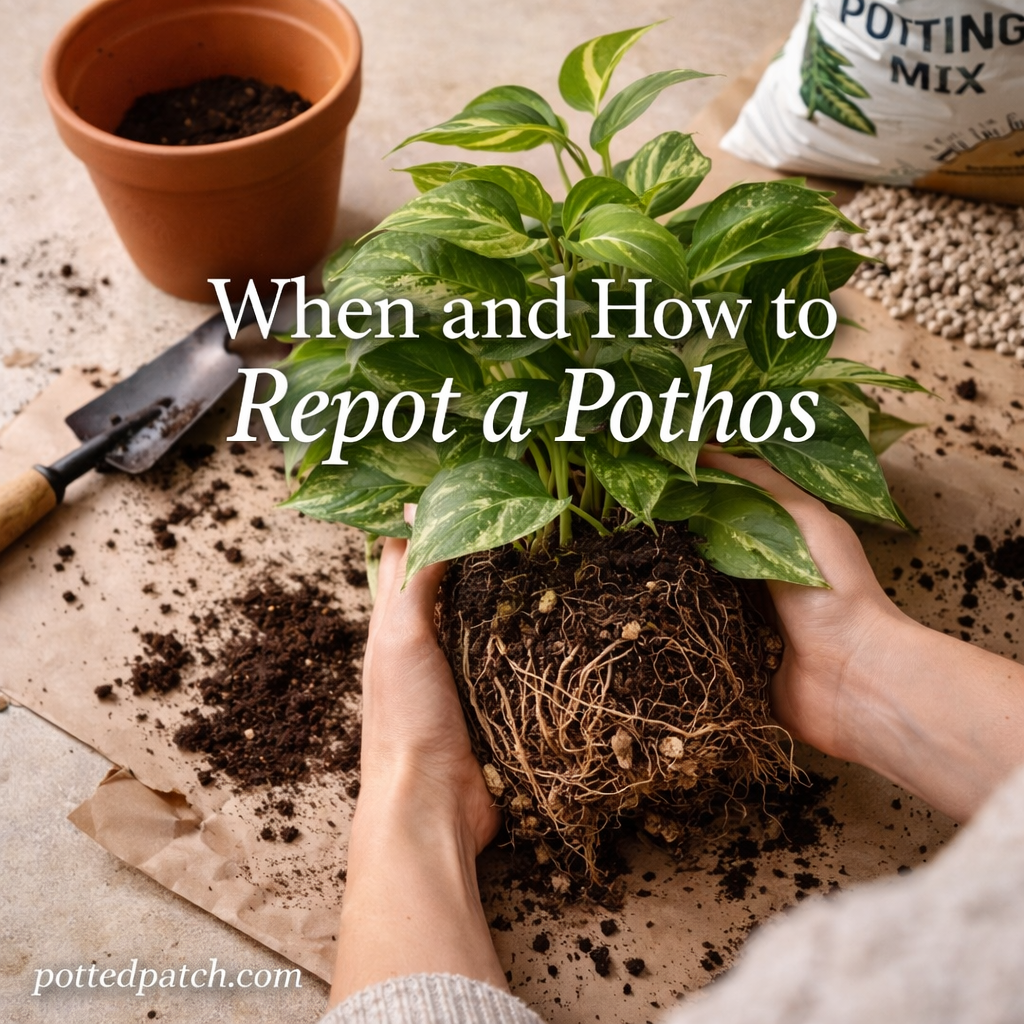
Step-by-Step: Repotting With the Right Soil
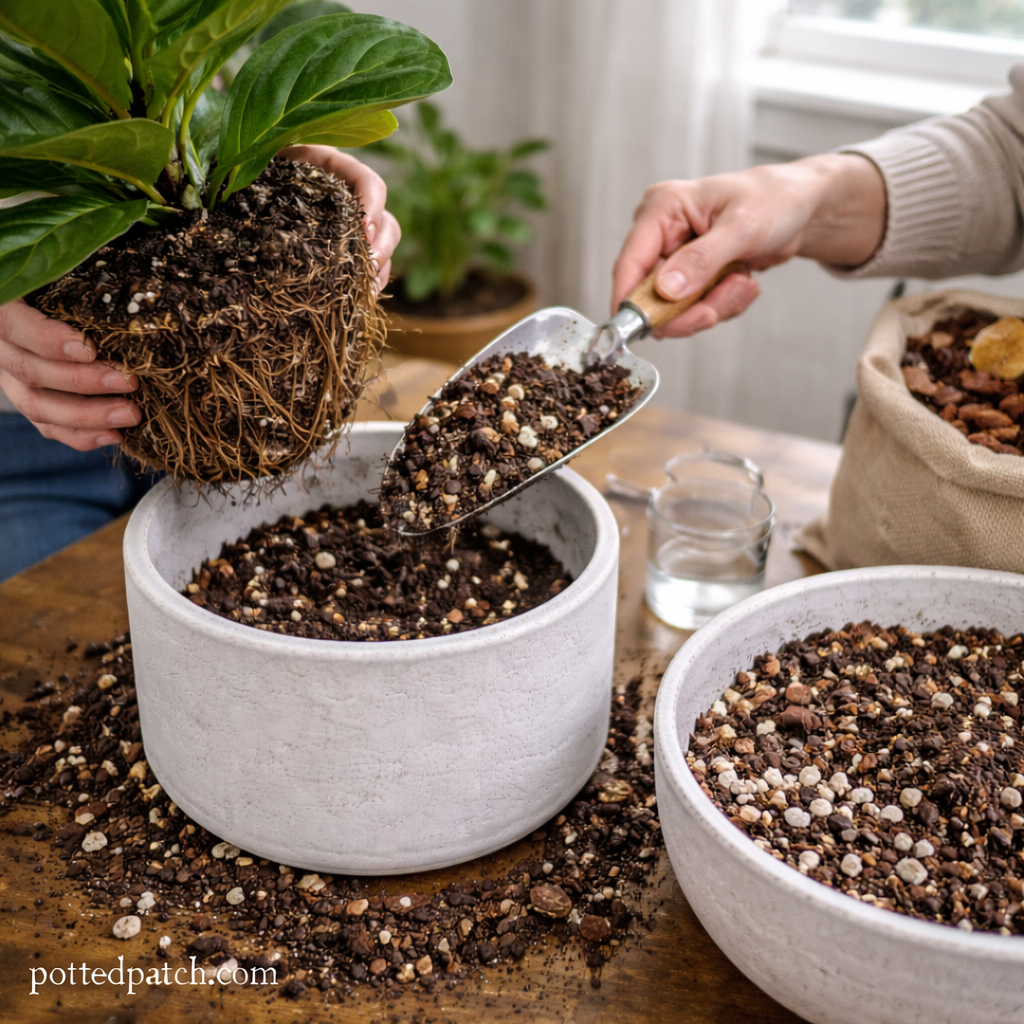
When repotting:
- Choose a pot 1–2 inches larger than the current one.
- Add fresh, well-draining soil mix.
- Position the plant at the same depth as before.
- Gently fill around the roots without compacting.
- Water thoroughly and allow excess to drain.
Proper soil supports faster recovery after repotting.
Final Thoughts
The best soil for a fiddle leaf fig is one that balances drainage with moisture retention.
Focus on:
- Light, airy texture
- Added perlite and bark
- Proper drainage holes
- Regular soil refresh
Healthy soil leads to strong roots—and strong roots produce large, glossy leaves.
When the foundation is right, everything else becomes easier.