
Ferns are elegant, timeless houseplants that bring a soft, natural feel to any room. But if your fern is struggling — turning brown, drooping, or refusing to grow — the issue often starts below the surface.
Choosing the best soil for a fern is one of the most important steps in keeping it healthy indoors. Unlike many common houseplants, ferns have specific soil preferences that mimic their natural woodland environment.
In this guide, you’ll learn exactly what type of soil ferns need, what to avoid, and how to create the perfect mix at home.
Why Soil Matters for Ferns
Ferns naturally grow in forests where the soil is:
- Rich in organic matter
- Light and airy
- Slightly acidic
- Consistently moist but never soggy
Standard houseplant potting mix doesn’t always meet these needs. If soil is too dense or drains poorly, fern roots can suffocate or rot. If it drains too quickly, the plant may dry out and develop crispy fronds.
Getting the balance right is key.
The Ideal Soil Characteristics for Ferns
The best soil for a fern should have four main qualities:
1. Excellent Drainage
Ferns like moisture, but they do not tolerate waterlogged soil. The mix should allow excess water to flow out easily while still retaining some moisture.
2. Moisture Retention
Ferns prefer evenly moist soil. A good mix holds water long enough to hydrate roots without becoming swampy.
3. High Organic Content
Ferns thrive in nutrient-rich soil filled with decomposed plant material. Organic matter helps retain moisture and supports healthy root development.
4. Slight Acidity
Most ferns prefer a slightly acidic pH between 5.5 and 6.5. This mirrors their natural woodland habitat.
Best Soil Mix for Indoor Ferns
You have two options: buy a pre-made mix or create your own.
Option 1: Store-Bought Mix
Look for:
- High-quality indoor potting mix
- Peat-based or coco coir-based blends
- Mixes labeled for tropical plants
Avoid cactus or succulent soil — it drains too quickly for ferns.
To improve a standard potting mix, you can add:
- Perlite (for drainage)
- Orchid bark (for aeration)
A simple upgrade formula:
- 2 parts indoor potting mix
- 1 part perlite
- 1 part orchid bark
Option 2: DIY Fern Soil Mix
For optimal results, make your own blend:
- 2 parts peat moss or coco coir
- 1 part perlite
- 1 part compost
- Optional: small amount of pine bark fines
This mix provides:
- Air circulation around roots
- Gentle nutrient availability
- Balanced moisture retention
If you live in a dry climate, increase the peat or coco slightly. In humid climates, add a little extra perlite.
Soil Types to Avoid
Using the wrong soil can quickly lead to problems.
Avoid:
- Heavy garden soil
- Clay-based mixes
- Straight compost (too dense)
- Cactus or succulent mix
- Soil without drainage amendments
Dense soil prevents oxygen from reaching roots, which leads to root rot and weak growth.
Repotting Tips for Ferns
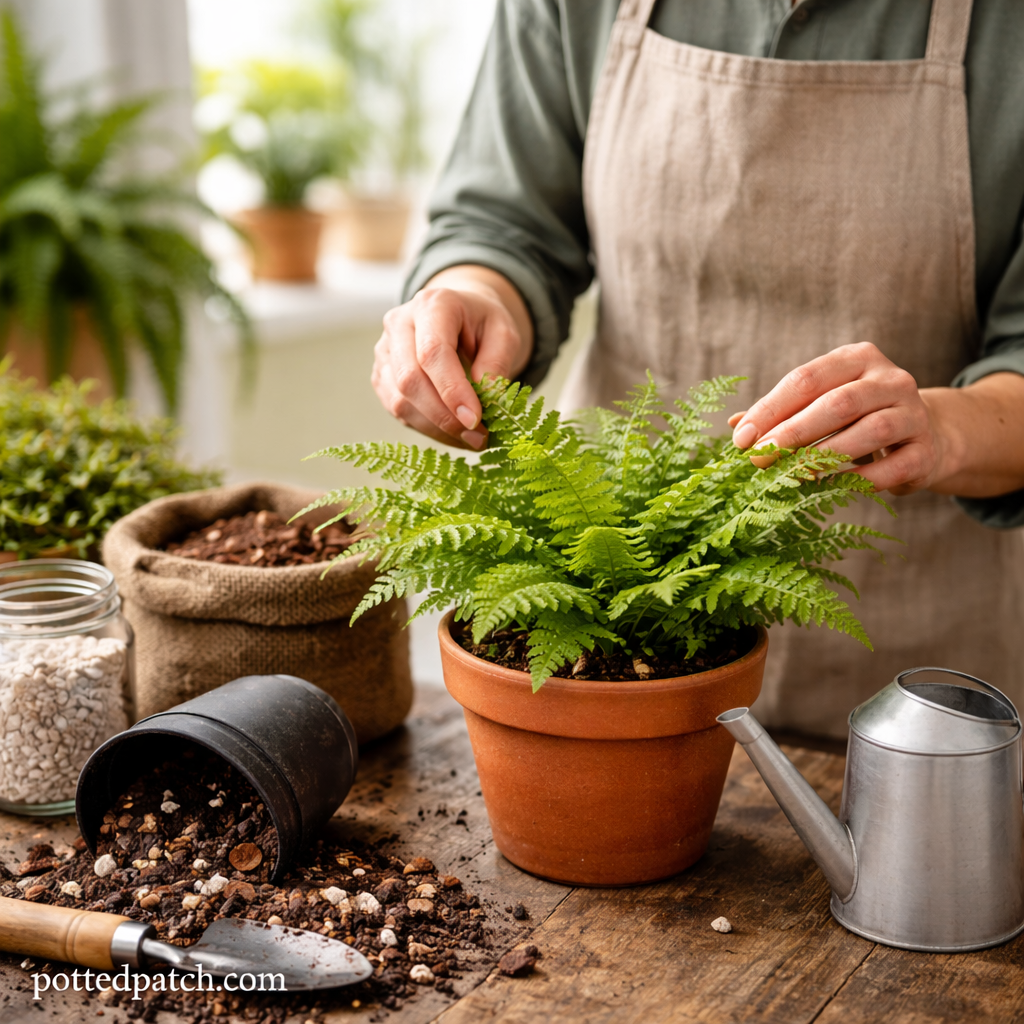
Even with the right soil, technique matters.
Follow these steps when repotting:
- Choose a pot with drainage holes.
- Add a thin layer of fresh soil at the bottom.
- Gently loosen the root ball if compacted.
- Position the fern at the same depth as before.
- Fill around the sides with your prepared mix.
- Water thoroughly after repotting.
Do not compact the soil tightly. Fern roots prefer loose, airy conditions.
Signs Your Fern Soil Needs Improvement
Your fern may be in the wrong soil if you notice:
- Yellowing fronds
- Brown, crispy leaf tips
- Persistent soggy surface
- Mold growth on topsoil
- Stunted growth
If this happens, check drainage first. If the soil feels heavy or stays wet for days, repot into a lighter mix.
Soil Care After Planting
Maintaining soil quality is just as important as choosing the right mix.
To keep fern soil healthy:
- Water when the top inch feels slightly dry
- Avoid letting soil fully dry out
- Use diluted liquid fertilizer during the growing season
- Replace the top inch of soil yearly if not repotting
Most indoor ferns benefit from repotting every 1–2 years to refresh nutrients and prevent compaction.
Final Thoughts
The best soil for a fern is light, rich, slightly acidic, and well-draining — but never dry and sandy. When you recreate a forest-like soil environment, your fern rewards you with lush, vibrant fronds and steady growth.
If your fern isn’t thriving, start by checking the soil. Small adjustments below the surface often make the biggest difference above it.