Dracaenas are popular indoor plants because they’re hardy, stylish, and low-maintenance. But if you want healthy growth, strong roots, and fewer problems like yellowing or root rot, the right soil mix is essential.
Using the wrong soil is one of the most common reasons dracaenas struggle indoors.
In this guide, you’ll learn exactly what type of soil dracaenas prefer, what to avoid, and how to create the perfect mix.
What Kind of Soil Does a Dracaena Need?
Dracaenas prefer soil that is:
- Well-draining
- Light and airy
- Slightly acidic to neutral (pH 6.0–7.0)
- Able to retain some moisture without staying soggy
These plants are sensitive to overwatering and compacted soil. Their roots need oxygen just as much as they need moisture.
Heavy, dense soil suffocates the roots and increases the risk of root rot.
Why Regular Potting Soil Isn’t Always Enough
Standard indoor potting mix can work — but only if it drains well.
Many store-bought potting soils are peat-heavy and hold too much water. Over time, they also become compacted, especially in low-light indoor conditions.
For dracaenas, soil should:
- Drain quickly after watering
- Never stay wet for days
- Feel light and crumbly, not dense
If your current soil feels muddy or takes more than a few days to dry, it likely needs improvement.
The Ideal Soil Mix for Dracaena
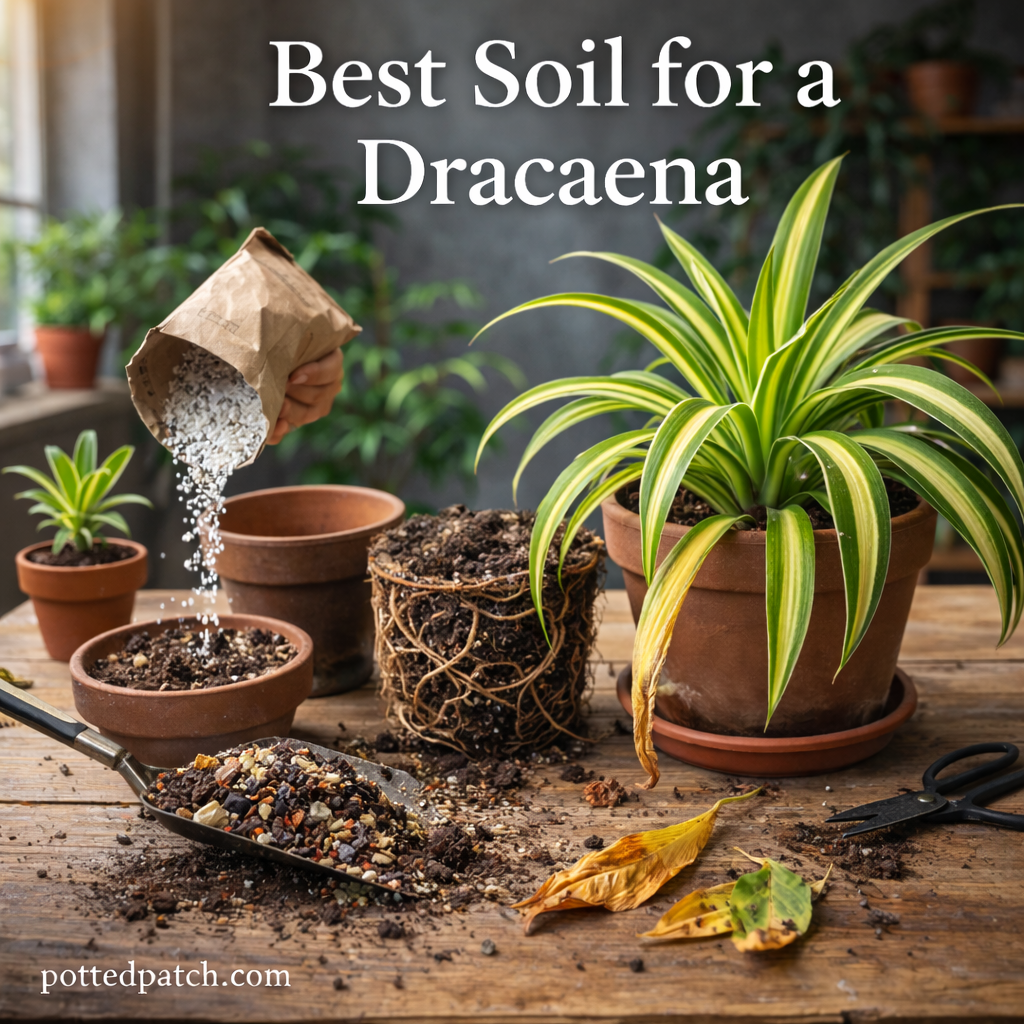
You can buy a well-draining indoor plant mix, or you can create your own blend.
Recommended DIY Mix:
- 2 parts high-quality potting soil
- 1 part perlite (for drainage and airflow)
- 1 part coarse sand or orchid bark
This combination creates a structure that allows water to pass through while still retaining enough moisture for healthy roots.
Perlite is especially important because it prevents compaction over time.
Can You Use Cactus or Succulent Soil?
Cactus soil drains very quickly, which is good — but it may dry out too fast for dracaenas.
If using cactus mix, modify it slightly:
- 2 parts cactus soil
- 1 part regular potting mix
This balances drainage with moisture retention.
Signs Your Dracaena Soil Is Wrong
Your plant will tell you if the soil isn’t right.
Soil too heavy:
- Yellowing leaves
- Mushy stems
- Foul smell from soil
- Fungus gnats
Soil too dry or sandy:
- Brown leaf tips
- Soil pulling away from pot edges
- Drooping between waterings
Correcting soil quality often improves plant health quickly.
Drainage Matters More Than You Think
Even the best soil won’t help if your pot doesn’t drain.
Always use a container with drainage holes. Dracaenas are extremely sensitive to sitting in water.
After watering:
- Let excess water drain completely.
- Empty the saucer underneath.
- Never allow the pot to sit in standing water.
Good drainage prevents root rot more than anything else.
When to Repot With Fresh Soil
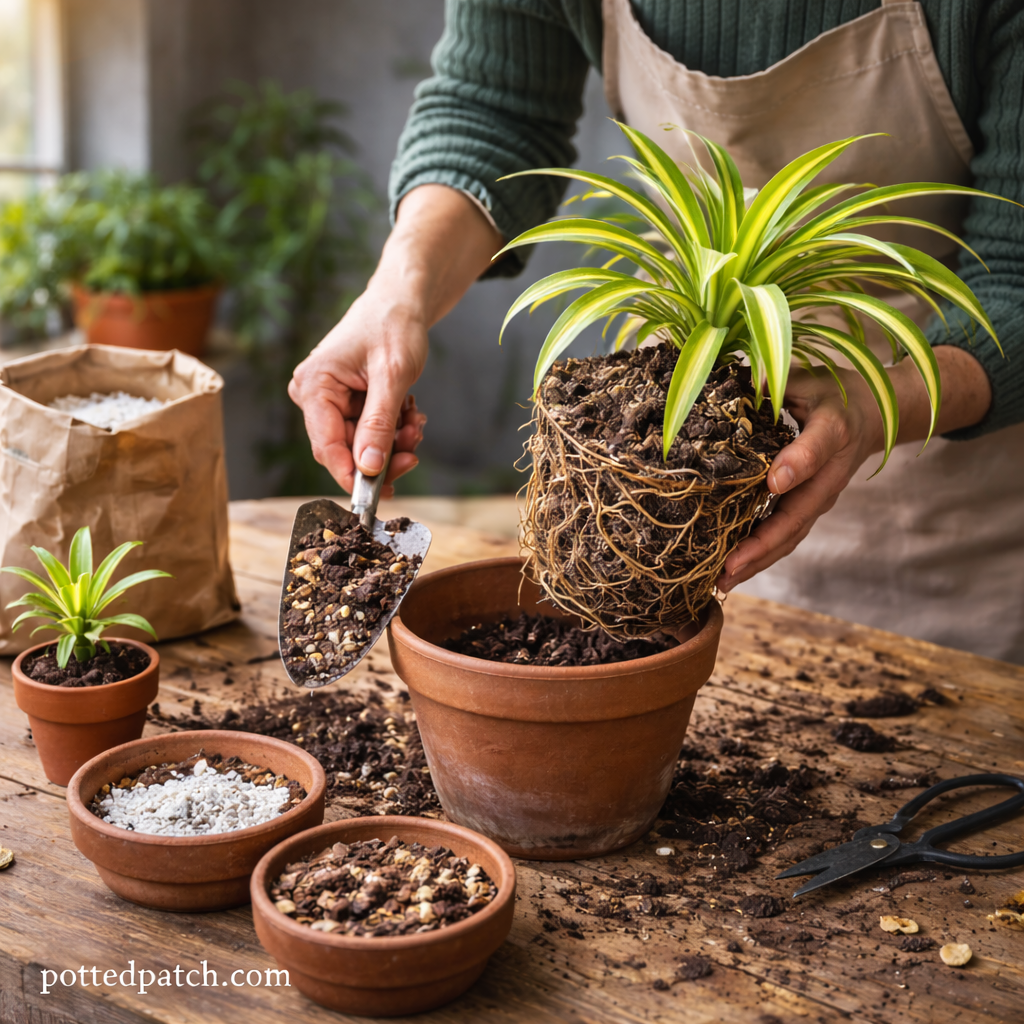
Dracaenas don’t need frequent repotting. Every 1–2 years is usually enough.
Repot when you notice:
- Roots growing out of drainage holes
- Soil compacting or shrinking
- Slowed growth
- Water running straight through without absorbing
When repotting, gently loosen old soil from the roots and replace it with fresh, well-draining mix.
Should You Add Fertilizer to the Soil?
Dracaenas are light feeders.
Instead of mixing fertilizer into the soil, use a diluted liquid fertilizer during the growing season (spring and summer). Over-fertilizing can burn roots and damage leaves.
It’s better to feed lightly than heavily.
Quick Soil Checklist for Healthy Dracaena Growth
Use this simple checklist:
- Light, fluffy texture
- Drains within seconds after watering
- Contains perlite or bark
- Pot has drainage holes
- No sour smell
If your soil meets these conditions, your dracaena is set up for success.
Final Thoughts
The best soil for a dracaena is well-draining, breathable, and lightly moisture-retentive.
Most dracaena problems — yellowing leaves, drooping, root rot — start below the surface. Choosing the right soil mix prevents those issues before they begin.
Give the roots air, avoid soggy conditions, and your dracaena will reward you with steady, healthy growth for years.