Calatheas are known for their bold leaf patterns and slightly dramatic personalities. If yours has crispy edges, drooping leaves, or slow growth, the soil may be the hidden issue.
These tropical plants are particular about moisture and drainage. The wrong mix can suffocate roots or dry out too quickly.
Here’s exactly what kind of soil a Calathea needs — and how to create the perfect blend at home.
What Kind of Soil Does a Calathea Need?
Calatheas prefer soil that is:
- Moisture-retentive but not soggy
- Light and airy
- Well-draining
- Rich in organic matter
They naturally grow on the forest floor, where soil is loose, slightly acidic, and full of decaying plant material.
Heavy, compacted potting soil is one of the biggest reasons Calatheas struggle indoors.
Why Regular Potting Soil Isn’t Always Enough
Standard indoor potting mix can:
- Hold too much water
- Become compacted over time
- Limit airflow to roots
Calathea roots need oxygen just as much as moisture. When soil stays dense and wet, roots can suffocate, leading to yellow leaves and root rot.
The goal is balance — consistent moisture with excellent drainage.
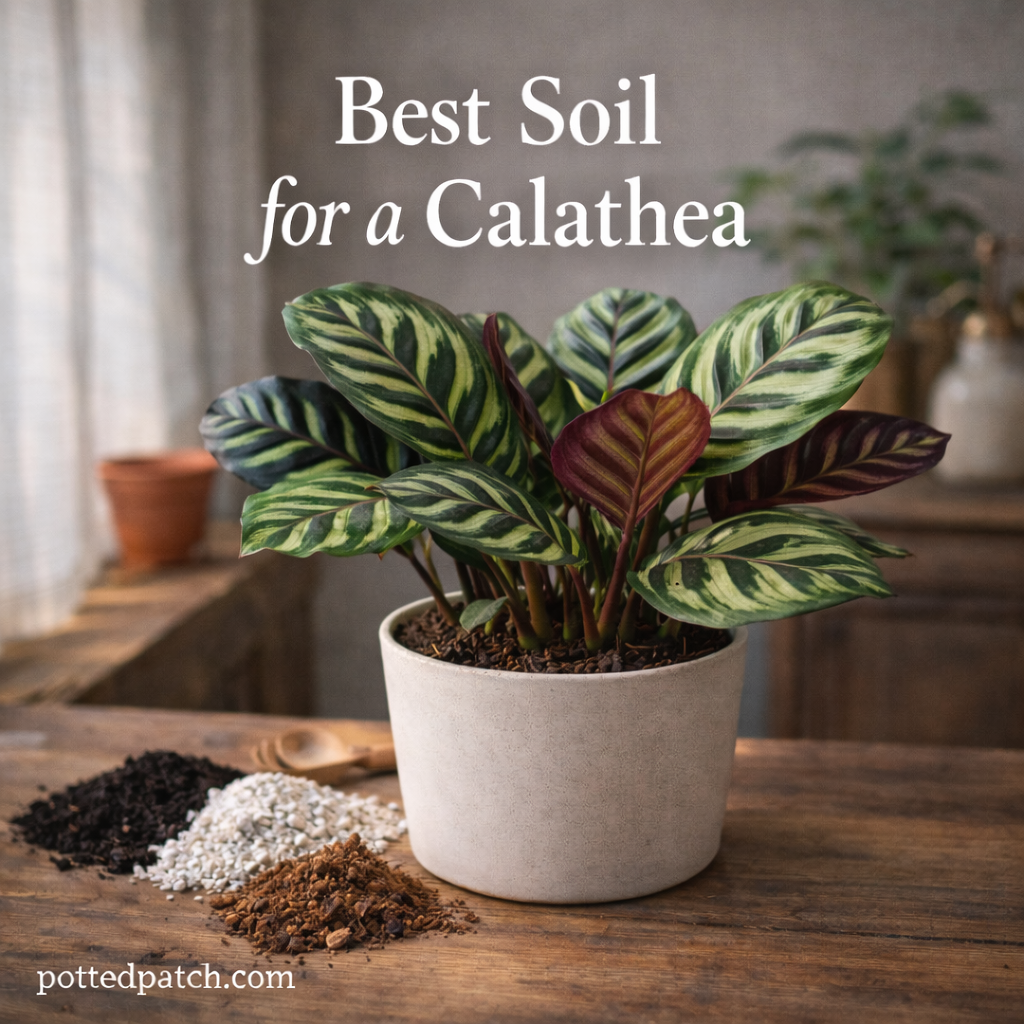
The Ideal Calathea Soil Recipe
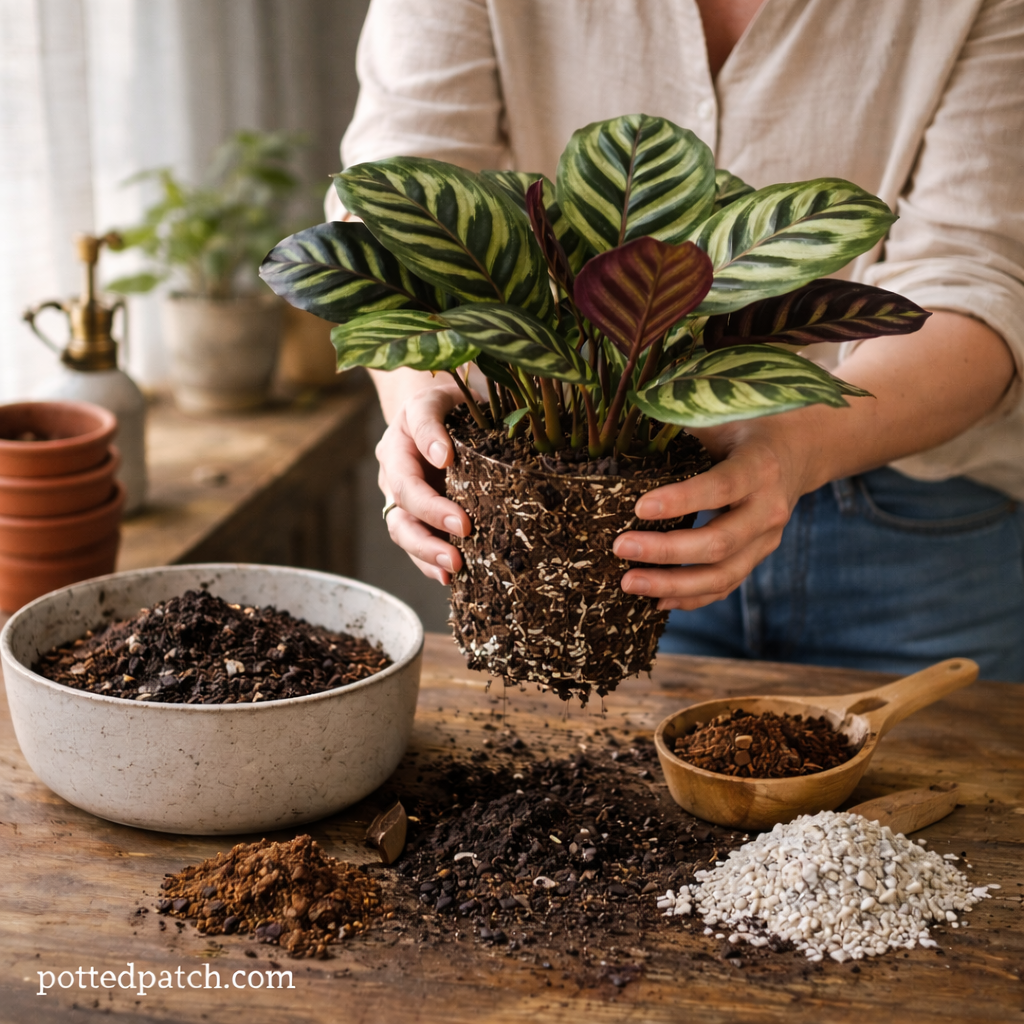
You can create the perfect mix using simple ingredients.
Recommended DIY Blend
- 2 parts high-quality indoor potting soil
- 1 part coco coir or peat moss
- 1 part perlite or pumice
- Optional: small handful of orchid bark
This combination:
- Retains enough moisture
- Prevents waterlogging
- Improves airflow
- Mimics tropical forest conditions
Mix thoroughly before repotting.
Store-Bought Soil Options
If you prefer ready-made soil, look for:
- Aroid mixes
- Tropical plant blends
- Well-draining indoor potting soil amended with perlite
Avoid cactus or succulent mixes unless you add moisture-retaining components. Those blends drain too quickly for Calatheas.
Should Calathea Soil Be Acidic?
Yes — slightly.
Calatheas prefer a soil pH between 6.0 and 6.5.
Most quality indoor potting soils already fall within this range. Adding coco coir or peat moss helps maintain mild acidity.
Highly alkaline soil can lead to nutrient absorption problems.
Signs Your Soil Is Wrong
Here’s how to tell if your soil needs improvement:
Soil Too Heavy
- Leaves yellowing
- Persistent dampness
- Foul smell
- Mushy stems
Soil Too Fast-Draining
- Soil dries within a day or two
- Leaves curl frequently
- Crispy brown edges
If either issue appears, consider repotting with a better-balanced mix.
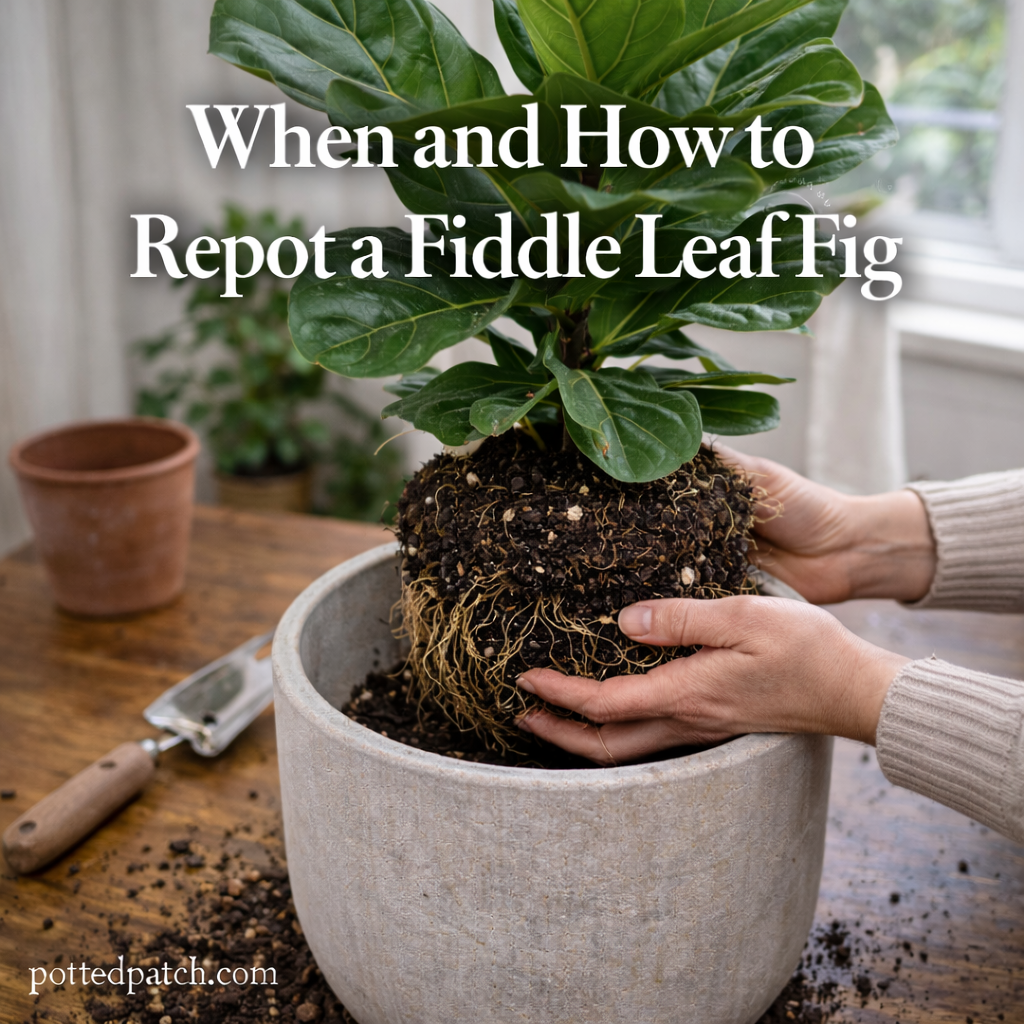
When to Repot a Calathea
Repotting is best done in spring or early summer when the plant is actively growing.
Repot if:
- Roots circle the bottom of the pot
- Soil compacts and shrinks from the edges
- Water runs straight through without absorption
Choose a pot only 1–2 inches larger in diameter to avoid excess moisture retention.
Drainage Matters Just as Much as Soil
Even perfect soil won’t help if the pot doesn’t drain.
Always use:
- A container with drainage holes
- A saucer to catch excess water
- A habit of emptying standing water after watering
Calatheas dislike sitting in water.
How to Maintain Healthy Soil Long-Term
To keep your soil healthy:
- Loosen the top layer gently every few months.
- Avoid over-fertilizing.
- Replace soil every 1–2 years.
- Watch for compaction.
Healthy soil equals healthier roots — and healthier roots produce vibrant foliage.
Final Thoughts
The best soil for a Calathea is airy, slightly acidic, and able to hold moisture without staying soggy.
If your plant struggles despite proper watering and lighting, upgrading the soil mix may be the missing piece.
A well-balanced blend gives your Calathea the foundation it needs to thrive indoors.