Choosing the right soil is one of the most important decisions you can make for your cactus.
Cacti are adapted to dry, fast-draining desert environments. Regular potting soil holds too much moisture and can quickly lead to root rot.
If you want healthy roots, strong growth, and fewer watering problems, the soil mix matters.
What Makes Good Cactus Soil?
Cactus soil should:
- Drain quickly
- Hold minimal moisture
- Allow airflow around roots
- Prevent compaction
- Dry out evenly
The goal is to mimic natural desert conditions.
Why Regular Potting Soil Doesn’t Work
Standard indoor potting mix is designed for tropical plants that like moisture.
It tends to:
- Retain water too long
- Stay damp in low light
- Compact over time
- Suffocate cactus roots
Using regular soil is one of the fastest ways to cause overwatering issues.
Best Store-Bought Soil for Cactus
Look for soil labeled:
- Cactus mix
- Succulent mix
- Fast-draining blend
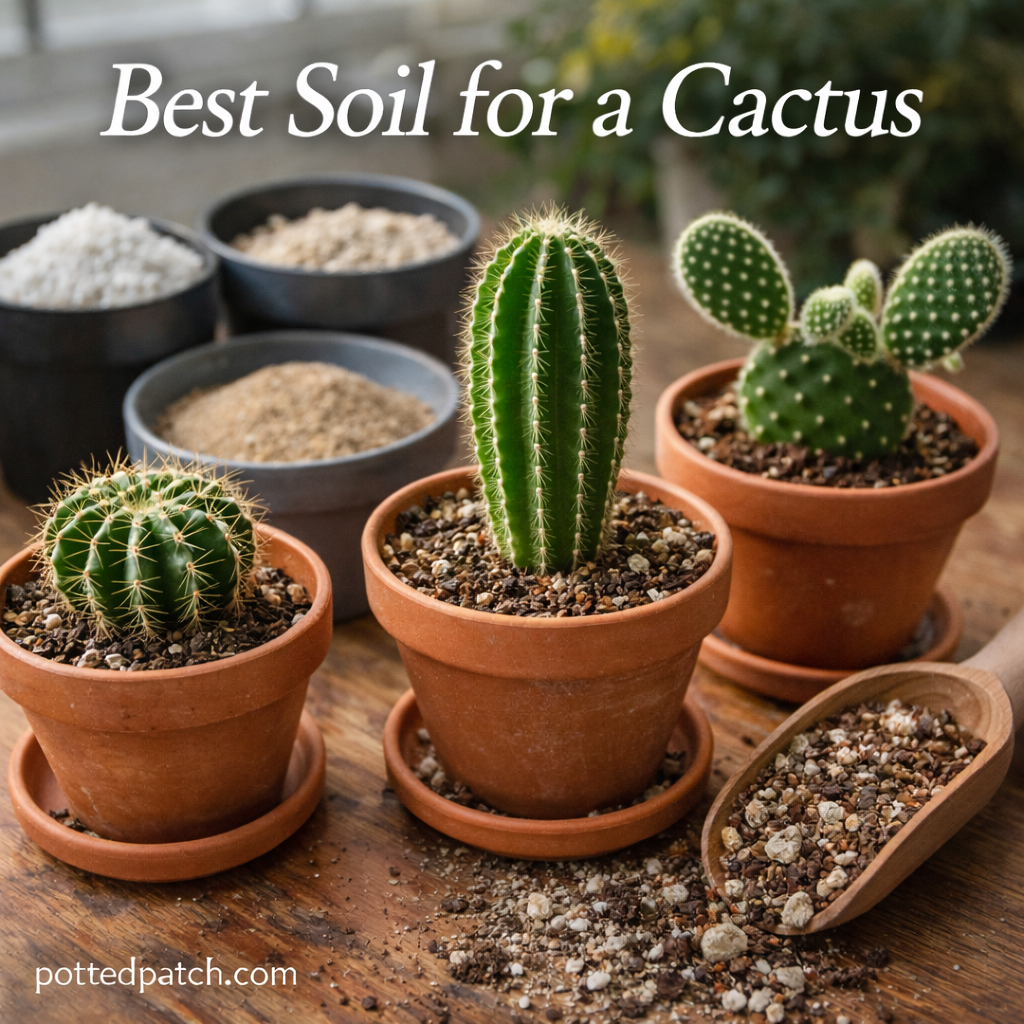
These mixes typically contain:
- Sand
- Perlite
- Pumice
- Lightweight organic matter
They are designed to dry quickly while still providing some structure.
Always check that the mix feels gritty rather than dense.
DIY Cactus Soil Recipe
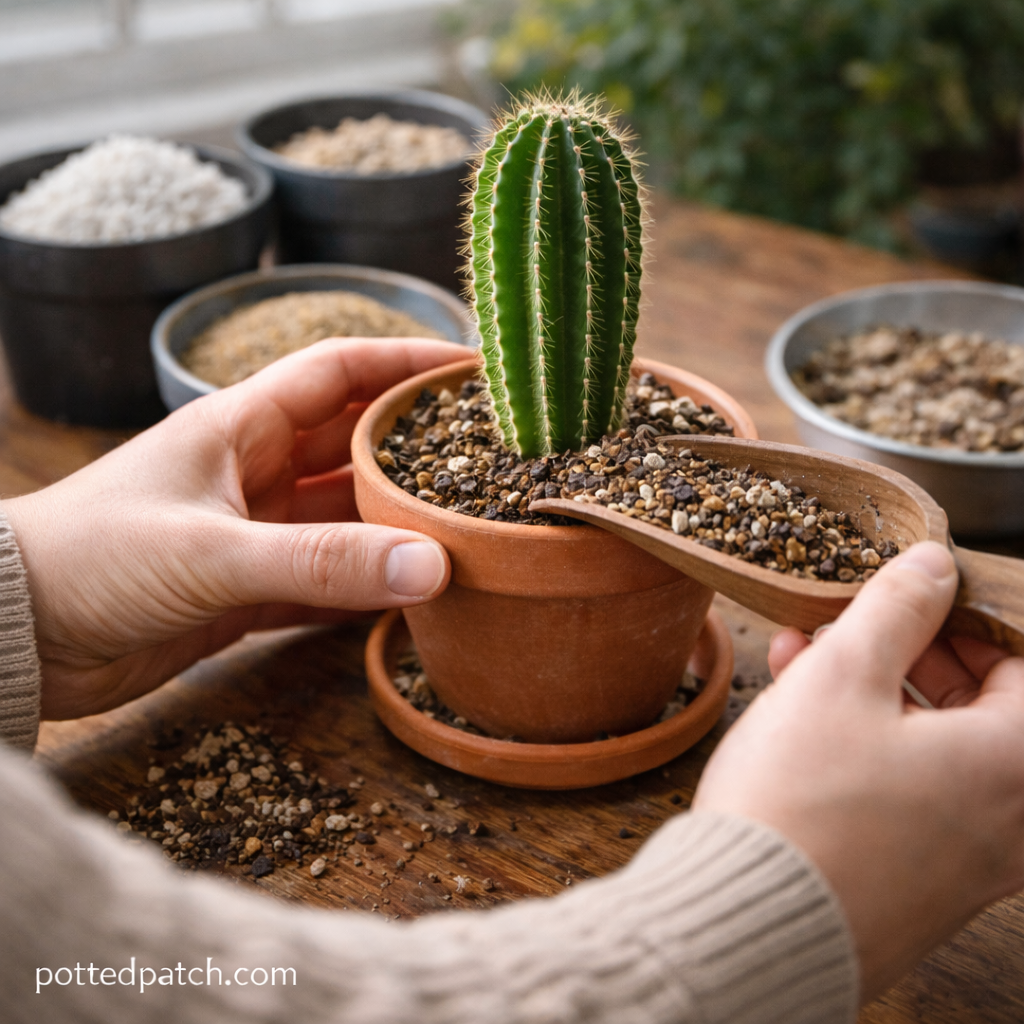
You can easily make your own cactus soil.
Simple 3-Part Mix
- 1 part potting soil
- 1 part coarse sand
- 1 part perlite or pumice
This blend increases drainage and reduces water retention.
For even better drainage, increase the mineral content (sand and perlite) slightly.
Key Ingredients Explained
Sand
Improves drainage and prevents compaction.
Use coarse sand — not fine beach sand.
Perlite
Lightweight volcanic material that improves airflow and drainage.
Pumice
Similar to perlite but heavier and more durable. Excellent for long-term structure.
Orchid Bark (Optional)
Adds extra aeration and reduces water retention.
Soil Texture Test
After mixing or buying soil, test it.
When dry, it should:
- Feel gritty
- Crumble easily
- Not clump tightly in your hand
When watered, it should drain quickly and not stay soggy.
If water pools on the surface, drainage needs improvement.
Soil and Pot Work Together
Even perfect soil won’t help without proper drainage.
Always use:
- A pot with drainage holes
- Terracotta pots for faster drying
- A saucer that you empty after watering
Soil and container must work as a system.
When to Replace Cactus Soil
Over time, soil breaks down and holds more moisture.
Repot and refresh soil every:
- 2–3 years
- When drainage slows
- If you notice compaction
Fresh soil helps prevent root rot and supports healthy growth.
Common Soil Mistakes to Avoid
Avoid:
- Using garden soil indoors
- Using moisture-control potting mix
- Packing soil tightly around roots
- Skipping drainage holes
Loose, breathable soil is essential.
Quick Cactus Soil Checklist
The best soil for a cactus:
- Drains fast
- Contains mineral material (sand, perlite, pumice)
- Does not stay wet for days
- Feels gritty and airy
- Works with a drainage pot
If the soil dries within a few days after watering, you’re on the right track.
Final Thoughts
Cactus care becomes much easier when the soil is correct.
Instead of adjusting watering constantly, focus on creating a fast-draining foundation.
Good soil prevents overwatering, protects roots, and supports strong, compact growth.
Healthy roots begin with breathable soil.