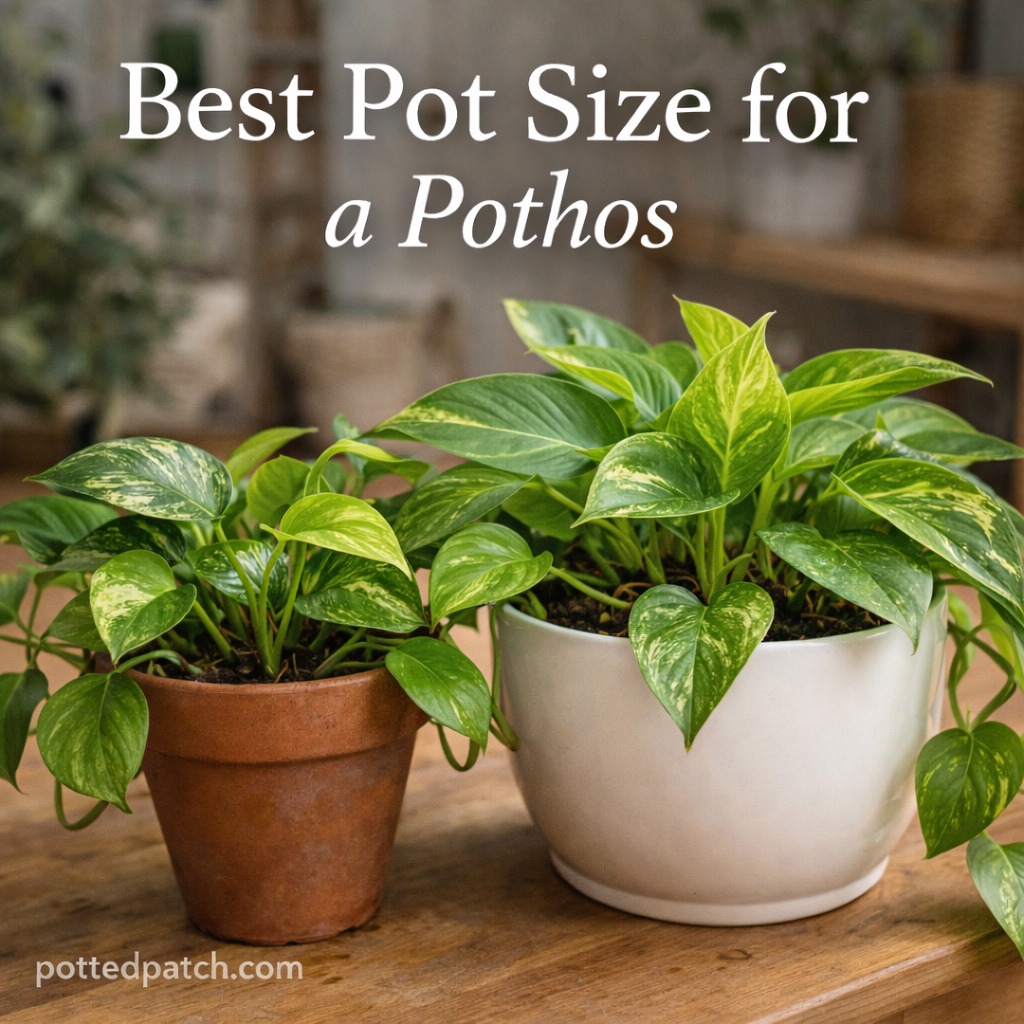
Choosing the right pot size is one of the most important — and most overlooked — parts of pothos care. While pothos is famously tolerant, the wrong pot size can slow growth, cause yellowing leaves, or lead to root rot over time.
This guide explains exactly what pot size a pothos needs, how to tell when it’s time to size up, and why bigger is not always better.
Why Pot Size Matters for Pothos
Pothos prefers a balance between root space and moisture control. The pot directly affects how long soil stays wet, how oxygen reaches the roots, and how quickly the plant grows.
An ideal pot:
- Allows roots to spread gradually
- Drains excess water efficiently
- Prevents soil from staying soggy too long
- Supports steady, healthy growth
Using a pot that’s too large or too small disrupts this balance.
The Ideal Pot Size for a Pothos
General rule of thumb
A pothos should be planted in a pot that is 1–2 inches wider in diameter than its root ball.
This gives the roots room to grow without overwhelming them with excess soil.
Common pothos pot size guidelines
- Small starter pothos: 4–6 inch pot
- Medium pothos: 6–8 inch pot
- Large, mature pothos: 8–10 inch pot
- Very large or floor pothos: 10–12 inch pot
Pothos grows best when slightly snug rather than swimming in soil.
What Happens If the Pot Is Too Large
A pot that’s too big is more dangerous than one that’s slightly small.
Problems caused by oversized pots
- Soil stays wet longer than roots can use water
- Roots receive less oxygen
- Higher risk of root rot
- Soft stems and yellowing leaves
- Slow or stalled growth
Even if you water carefully, excess soil holds moisture longer than pothos prefers.
What Happens If the Pot Is Too Small
While pothos tolerates being root-bound better than many plants, a pot that’s too small can still cause issues.
Signs the pot is too small
- Roots growing out of drainage holes
- Soil drying out extremely fast
- Reduced leaf size
- Slower growth during spring and summer
- Frequent wilting between waterings
A slightly tight pot is fine, but severely crowded roots limit nutrient and water uptake.
How to Tell When Your Pothos Needs a Bigger Pot
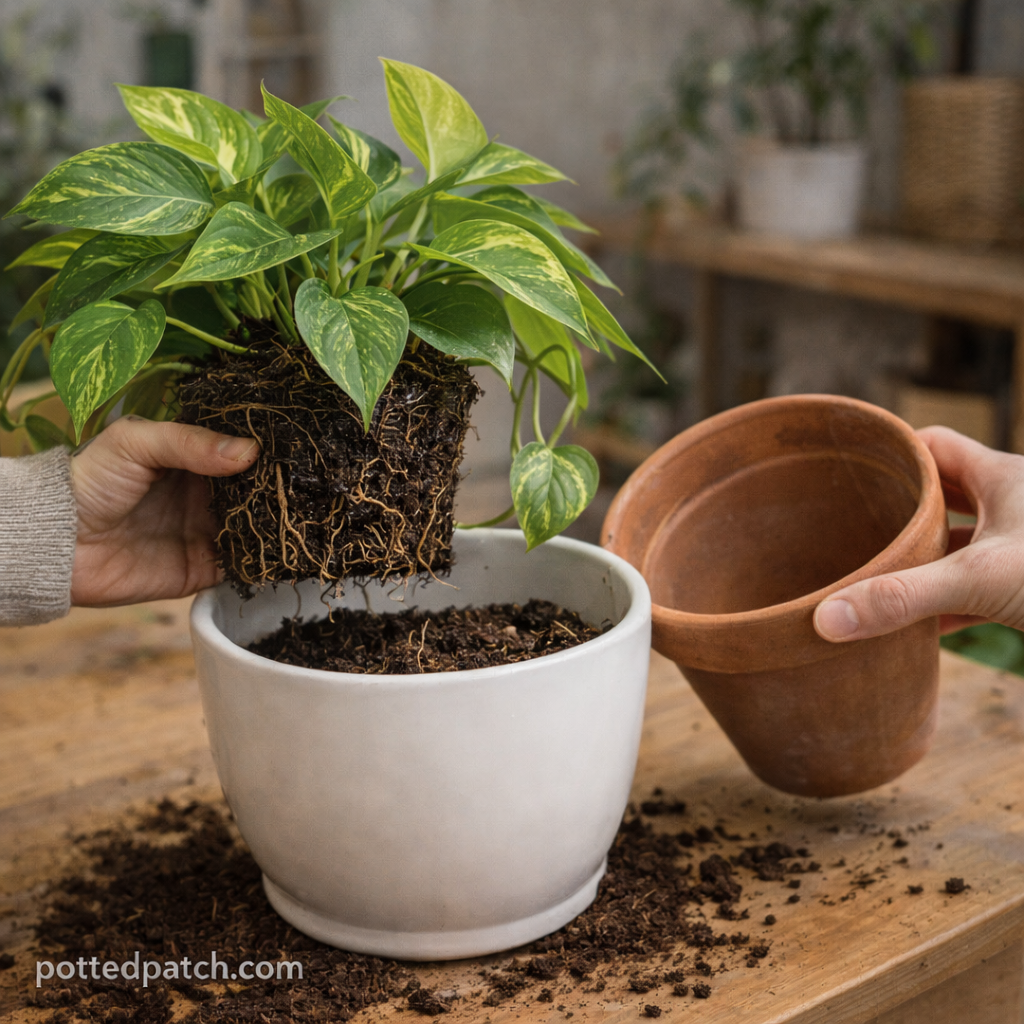
Pothos usually needs repotting every 1–2 years.
Clear signs it’s time to size up
- Roots circling the inside of the pot
- Water runs straight through without soaking in
- Plant dries out within a day or two
- Growth has noticeably slowed during active seasons
If you see these signs, increase pot size gradually — never jump multiple sizes at once.
Best Pot Type for Pothos
Pot size works best when paired with the right material and drainage.
Drainage is non-negotiable
- Always use pots with drainage holes
- Empty saucers after watering
- Avoid decorative cache pots without inner drainage
Pot materials that work well
- Terracotta: dries faster, great for heavy waterers
- Plastic: retains moisture longer, lighter weight
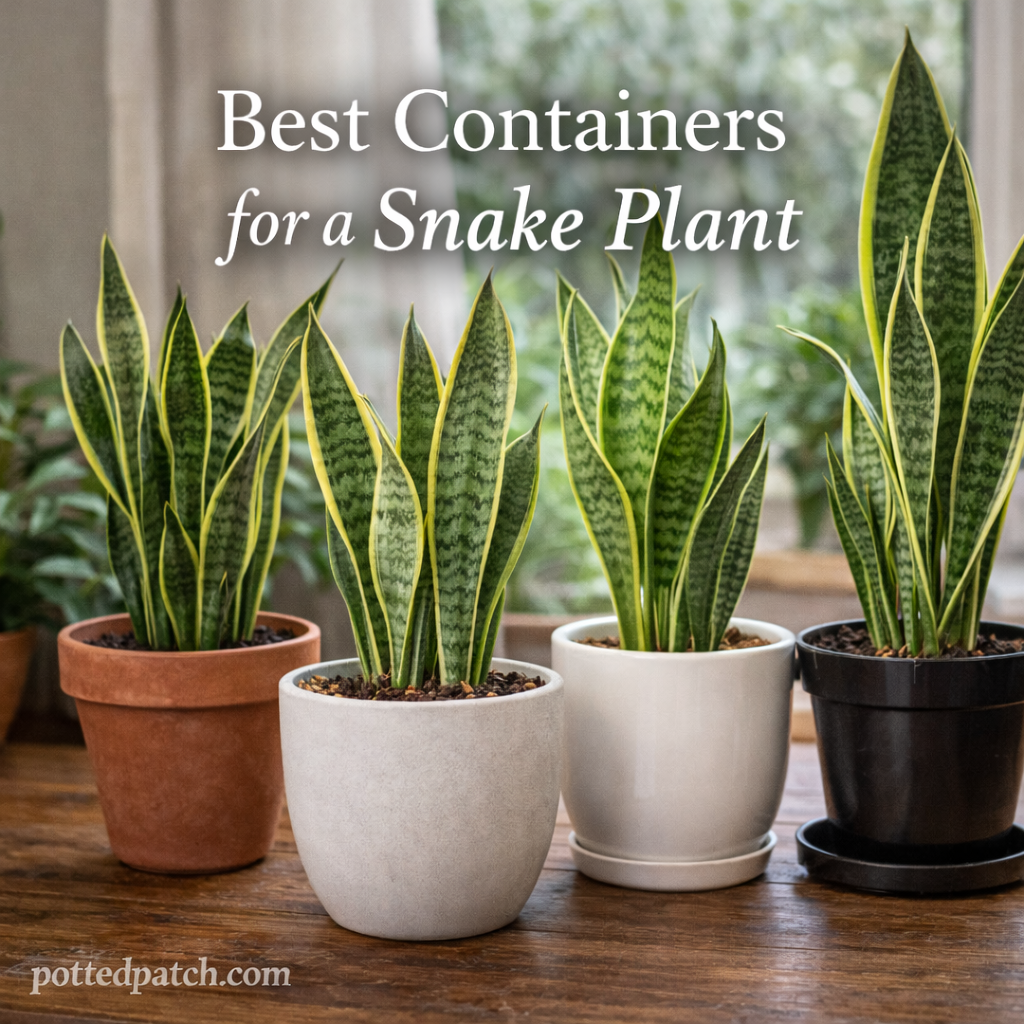
- Ceramic: works well if drainage holes are present
The pot material doesn’t matter as much as proper drainage and correct sizing.
Best Pot Size for Hanging Pothos
Hanging pothos often does better in slightly smaller pots.
Why smaller pots work for hanging plants
- Better weight balance
- Faster drying soil
- Reduced risk of overwatering
- Encourages trailing growth instead of root focus
For hanging pothos, choose a pot just 1 inch larger than the root ball rather than sizing up aggressively.
Repotting a Pothos the Right Way
When repotting, gradual changes are key.
Repotting steps
- Choose a pot 1–2 inches larger than the current one
- Use fresh, well-draining indoor potting mix
- Gently loosen roots if tightly bound
- Set the plant at the same depth as before
- Water lightly and allow excess to drain
Repotting in spring or early summer helps pothos recover faster.
Should You Upsize for Faster Growth?
Bigger pots do not automatically mean faster growth.
In fact:
- Pothos prioritizes root growth in oversized pots
- Leaf growth often slows temporarily
- Overwatering risk increases
Steady, gradual pot increases lead to healthier long-term growth than jumping sizes.
Final Thoughts
The best pot size for a pothos is one that gives the roots just enough room to grow without holding excess moisture. A pot that’s 1–2 inches larger than the root ball, combined with good drainage, keeps pothos healthy, resilient, and growing steadily.
When in doubt, choose slightly smaller rather than larger — your pothos will thank you with stronger roots and fuller vines.