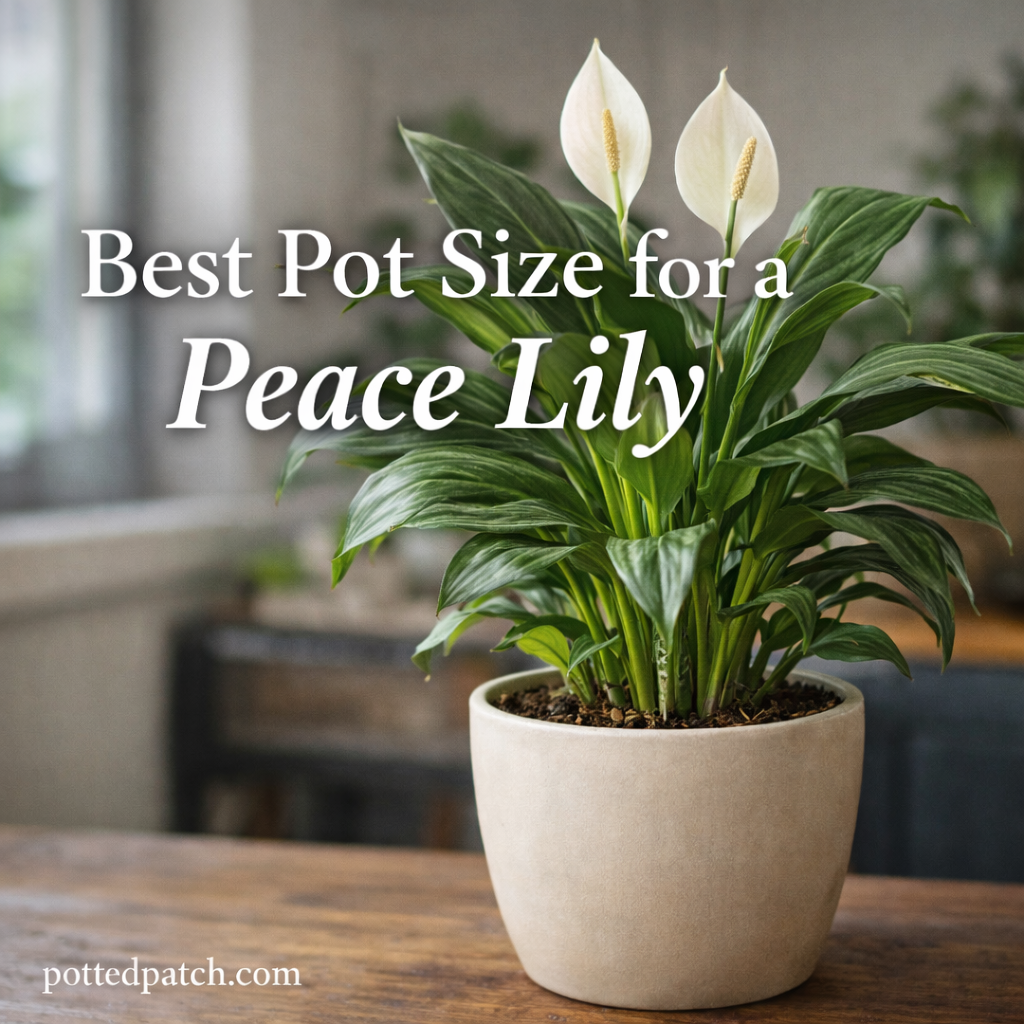
Peace lilies (Spathiphyllum) are elegant, low-maintenance houseplants — but choosing the right pot size makes a major difference in their health, flowering, and overall growth.
If your peace lily is drooping often, not blooming, or growing slowly, the pot may be part of the problem.
Here’s how to choose the best pot size for a peace lily and when to repot.
Why Pot Size Matters for Peace Lilies
Peace lilies prefer slightly snug conditions. A pot that is too large holds excess moisture, while a pot that is too small can restrict root growth.
The right pot size helps:
- Prevent root rot
- Encourage blooming
- Maintain balanced moisture
- Support steady, healthy growth
Getting the size right is more important than many people realize.
General Rule for Pot Size
When repotting a peace lily:
- Choose a pot 1–2 inches wider than the current pot.
- Do not jump more than one size up.
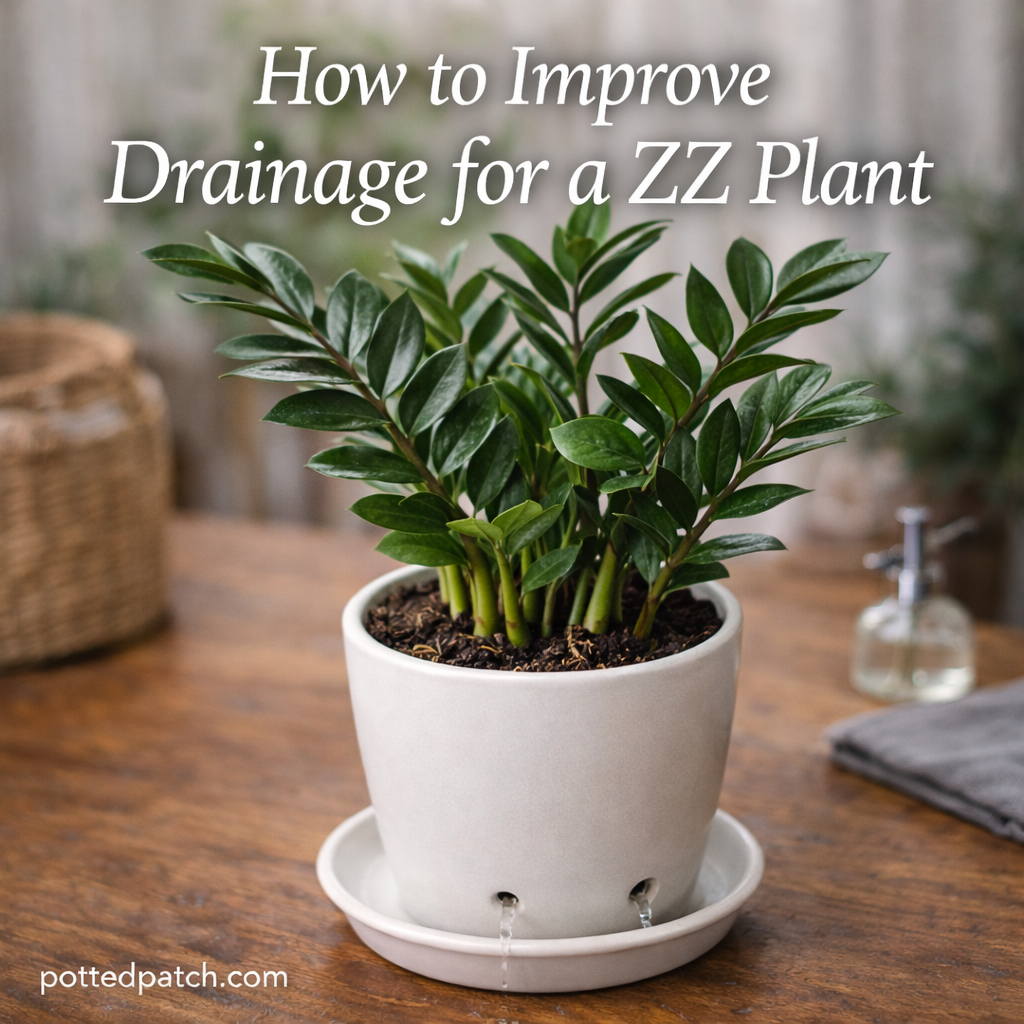
- Always use a pot with drainage holes.
For example:
- 6-inch pot → move to 8-inch pot
- 8-inch pot → move to 10-inch pot
Avoid dramatically upsizing, as this increases the risk of overwatering.
Signs Your Peace Lily Needs a Bigger Pot
Peace lilies typically need repotting every 1–2 years.
Look for these signs:
- Roots growing out of drainage holes
- Soil drying out very quickly
- Plant drooping soon after watering
- Slower growth despite proper care
- Roots circling tightly inside the pot
If you gently slide the plant out and see dense, tangled roots with very little soil visible, it’s time to size up.
What Happens If the Pot Is Too Big?
Many plant owners assume bigger is better — but for peace lilies, that’s not true.
A pot that is too large:
- Holds excess moisture
- Increases root rot risk
- Delays blooming
- Slows growth
Peace lilies bloom best when slightly rootbound. A little tightness actually encourages flower production.
What Happens If the Pot Is Too Small?
A pot that’s too small can also cause problems.
Common symptoms include:
- Frequent wilting
- Stunted growth
- Yellowing leaves
- Compacted soil
- Difficulty absorbing water
If watering feels like it runs straight through the pot, roots may have taken over.
Ideal Pot Type for Peace Lilies
Size matters — but so does material.
Best Pot Materials
- Plastic (retains moisture slightly longer)
- Glazed ceramic (balanced moisture control)
- Terracotta (dries faster; good for overwaterers)
If you tend to overwater, terracotta may help regulate moisture. If your home is dry, plastic or glazed ceramic may work better.
Step-by-Step: Repotting to the Correct Size
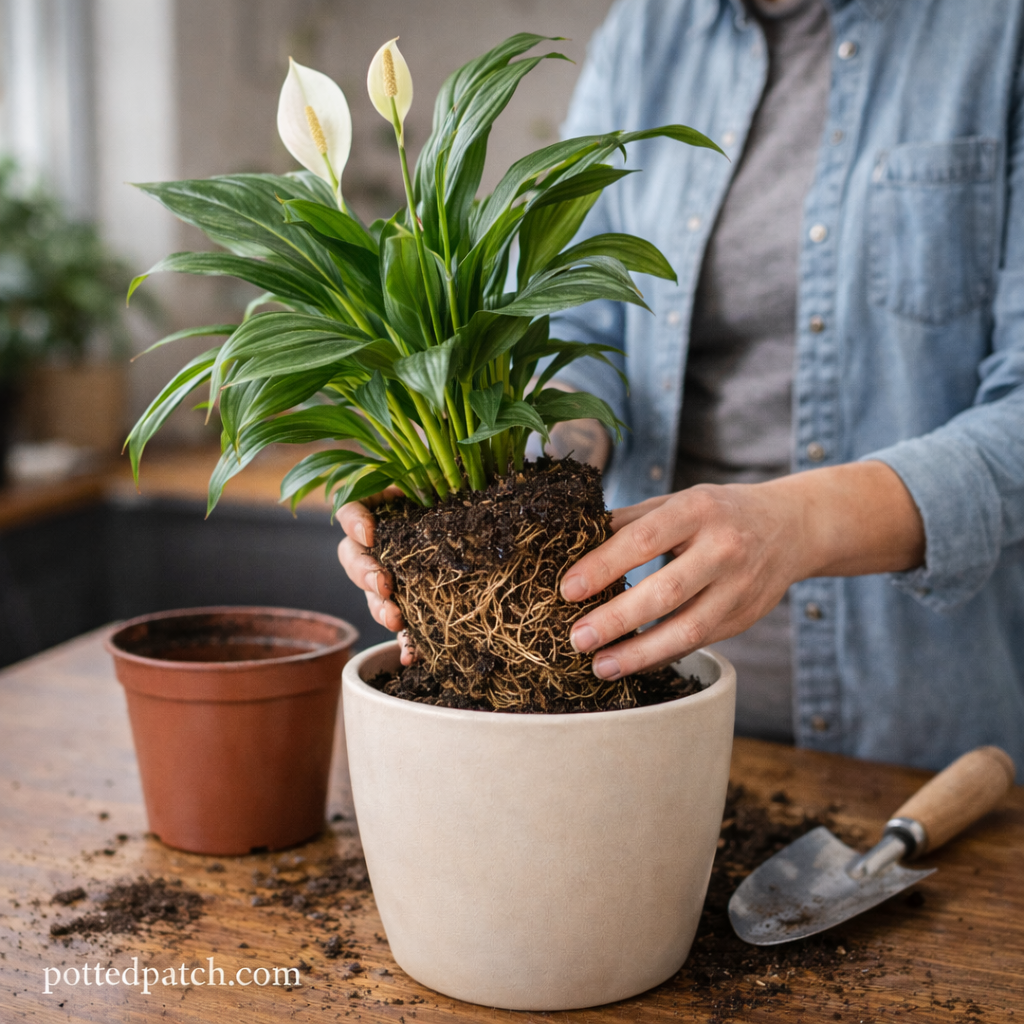
- Water the plant lightly the day before repotting.
- Gently remove the plant from its current pot.
- Loosen tightly bound roots.
- Place in a pot 1–2 inches wider.
- Fill with fresh, well-draining potting mix.
- Water thoroughly and allow excess to drain.
Avoid compacting the soil too tightly.
How Pot Size Affects Blooming
Peace lilies flower best when:
- Roots are slightly snug
- Light is bright but indirect
- Soil stays evenly moist (not soggy)
If your plant is healthy but not blooming, check the pot size before adjusting anything else.
Too much root space often leads to leaf growth instead of flowers.
When to Avoid Repotting
Do not repot:
- During winter dormancy
- When the plant is actively blooming
- If the plant looks healthy and stable
Unnecessary repotting can stress the plant.
Final Thoughts
The best pot size for a peace lily is just slightly larger than its current one — never dramatically bigger.
Stick to the 1–2 inch rule, ensure proper drainage, and aim for a slightly snug root system. This balance supports strong growth, healthy roots, and consistent flowering.
When in doubt, size up gradually.