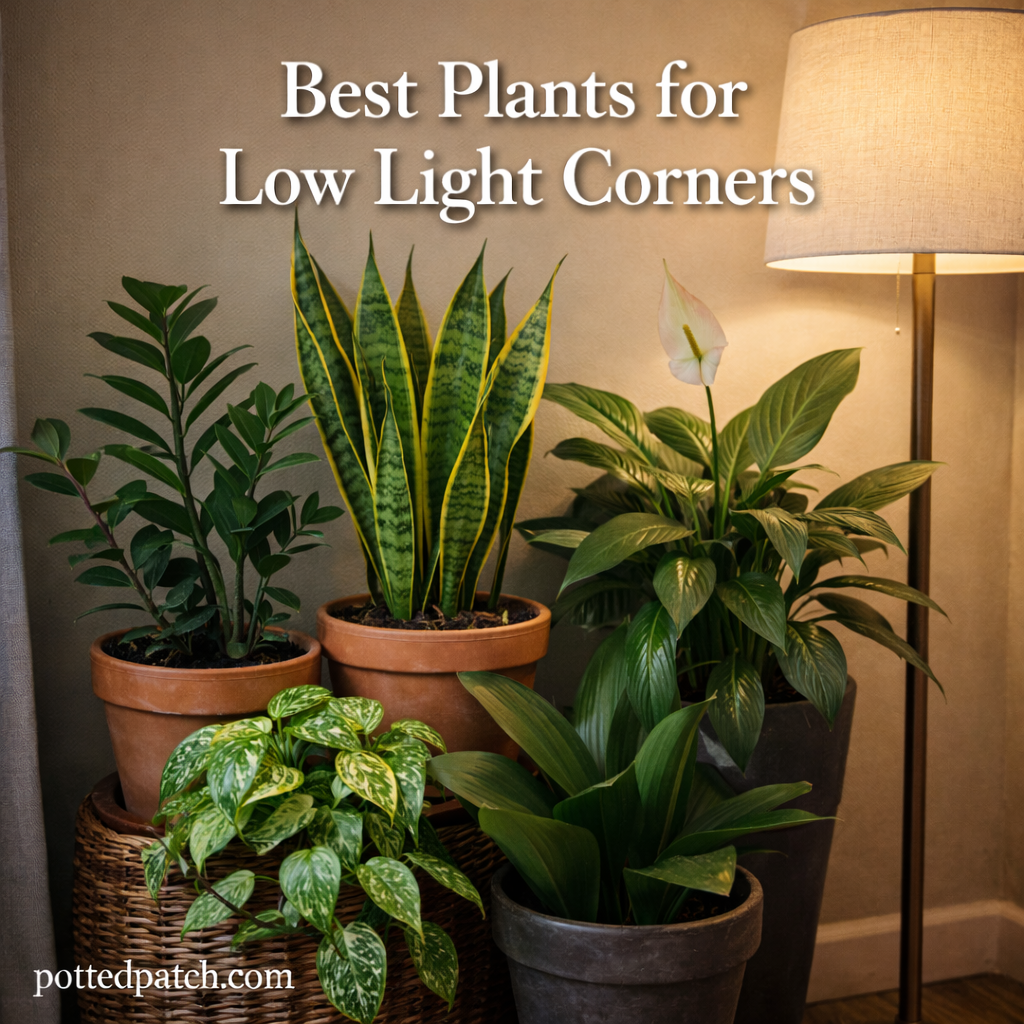
Low light corners are one of the trickiest spots in any home. They’re often far from windows, receive indirect or filtered light at best, and can feel like dead zones for plants. The good news is that many houseplants don’t just tolerate low light—they actually prefer it.
This guide covers the best plants for low light corners, what “low light” really means, and how to keep these plants healthy long term.
What Counts as a Low Light Corner?
Low light doesn’t mean no light at all.
A low light corner typically:
- Is several feet away from a window
- Receives indirect or reflected light only
- Has no direct sun at any point in the day
- Still allows you to comfortably read during daylight
If the space feels dim but not dark, it’s suitable for low light plants.
Best Plants for Low Light Corners
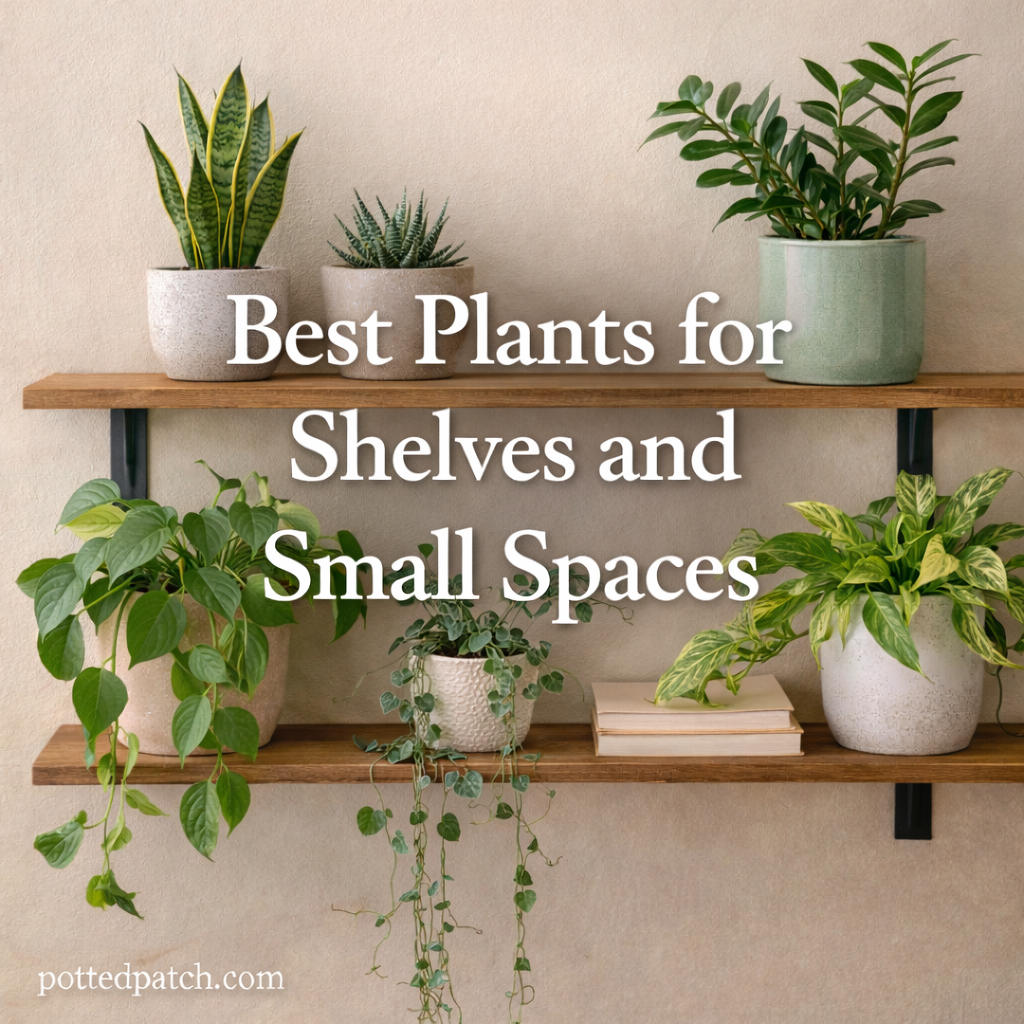
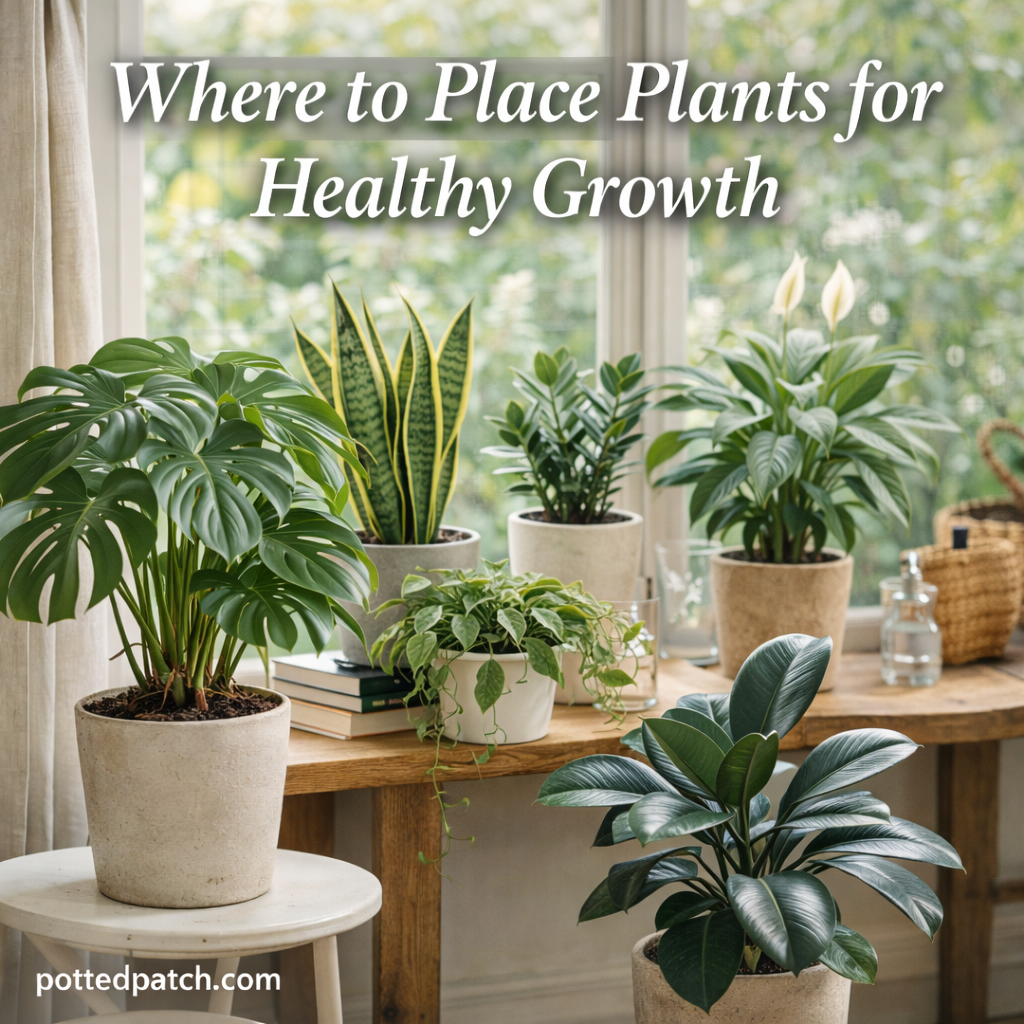
Snake Plant
Snake plants are one of the most reliable choices for low light areas.
Why they work:
- Tolerate very low light
- Maintain structure without stretching
- Need infrequent watering
They grow slowly in low light but remain healthy and upright, making them ideal for corners and hallways.
ZZ Plant
ZZ plants thrive where many others fail.
Benefits:
- Extremely tolerant of low light
- Thick stems store water
- Minimal maintenance
They’re perfect for corners where light is consistent but limited.
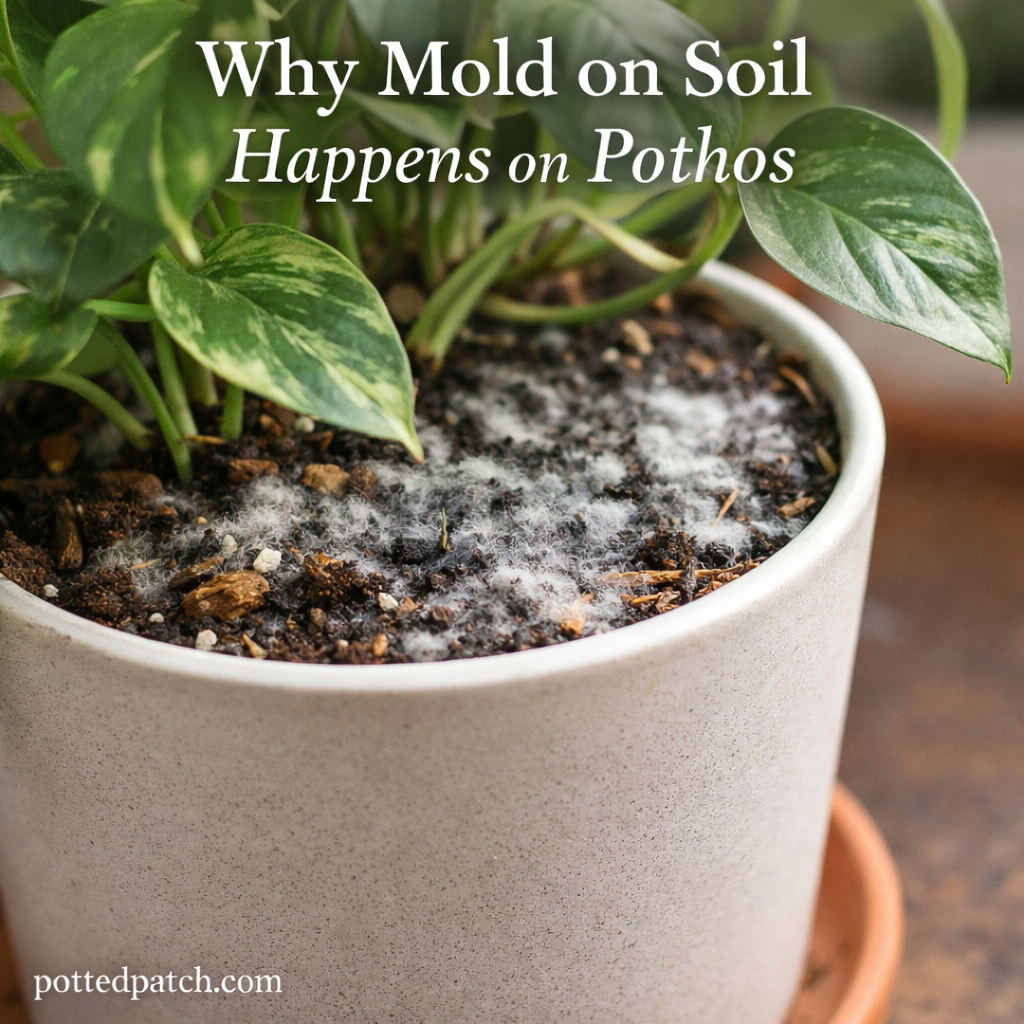
Pothos
Pothos adapt well to a wide range of lighting conditions.
Why they’re great:
- Handle low light without dropping leaves
- Trailing growth softens dark corners
- Very forgiving of missed waterings
Leaf color may be less vibrant in low light, but the plant will remain healthy.
Cast Iron Plant
True to its name, this plant is tough.
Ideal for:
- Very low light rooms
- Areas with temperature fluctuations
- Corners that other plants struggle in
It grows slowly but lives a long time with minimal care.
Peace Lily
Peace lilies can tolerate low light better than many flowering plants.
What to expect:
- Fewer blooms in low light
- Healthy green foliage
- Clear visual signals when thirsty
They prefer consistent moisture but adapt well to indirect lighting.
Chinese Evergreen
Chinese evergreens are classic low light houseplants.
Why they work:
- Designed for forest-floor light levels
- Handle corners and shaded rooms
- Available in many leaf patterns
Avoid direct sun, which can scorch the leaves.
Philodendron
Many philodendron varieties tolerate low light.
Benefits:
- Softens corners with trailing or upright growth
- Adjusts well to indirect light
- Easy to prune and shape
They’re a good option if you want fullness without needing bright conditions.
Plants to Avoid in Low Light Corners
Some plants struggle without bright light.
Avoid placing these in low light:
- Succulents and cacti
- Fiddle leaf figs
- Crotons
- Most flowering plants
These will stretch, lose leaves, or decline over time.
Tips for Success in Low Light Spaces
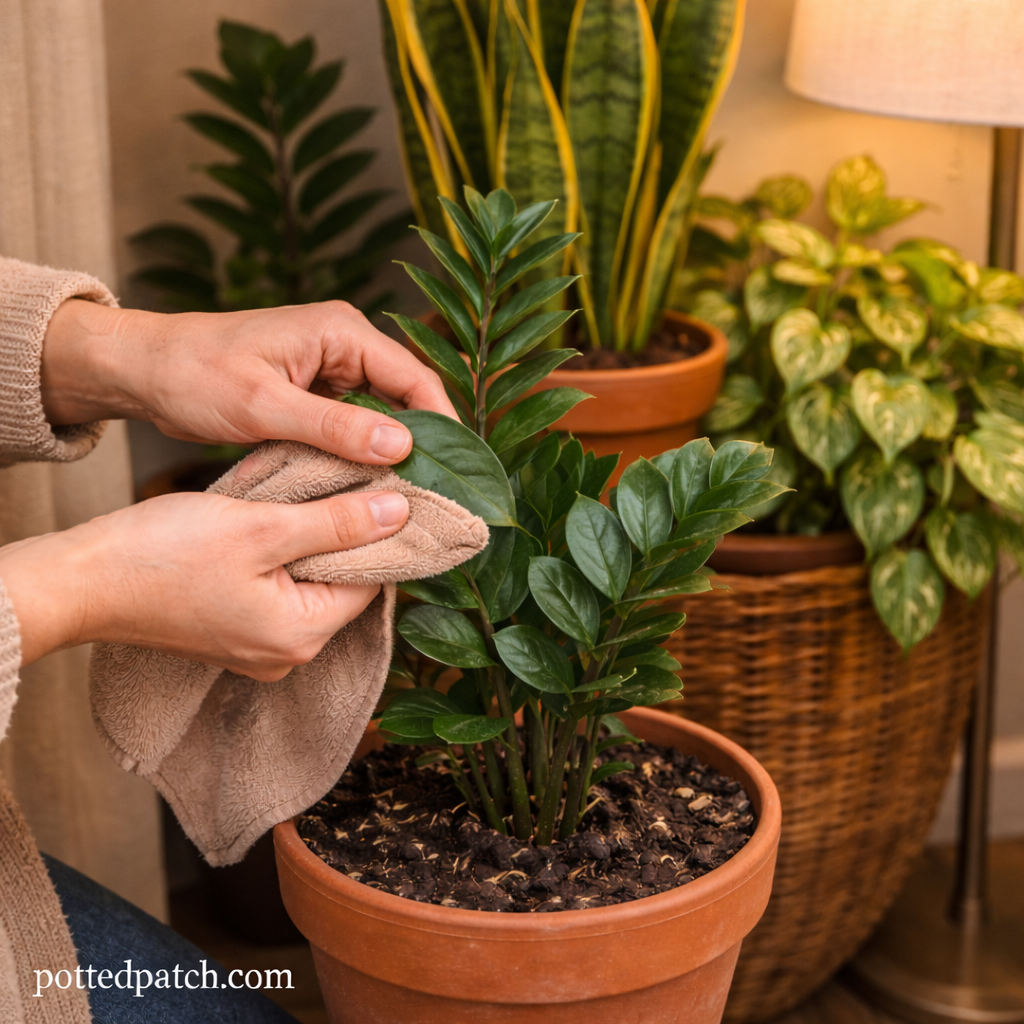
To keep plants healthy in darker corners:
- Water less frequently than in bright areas
- Rotate plants occasionally for even growth
- Dust leaves so they can absorb available light
- Use lighter-colored walls to reflect light
- Consider supplemental grow lights if needed
Low light plants prefer consistency over perfection.
How to Tell If a Corner Is Too Dark
Even low light plants have limits.
Warning signs:
- No new growth for long periods
- Stems stretching toward distant light
- Yellowing leaves without overwatering
If this happens, move the plant closer to a light source or add indirect lighting.
Final Thoughts
Low light corners don’t have to stay empty. With the right plants, these spaces can feel intentional, calm, and alive. Focus on durable, adaptable species and adjust your watering habits to match the lower light conditions.
When chosen carefully, low light plants can thrive exactly where others fail.