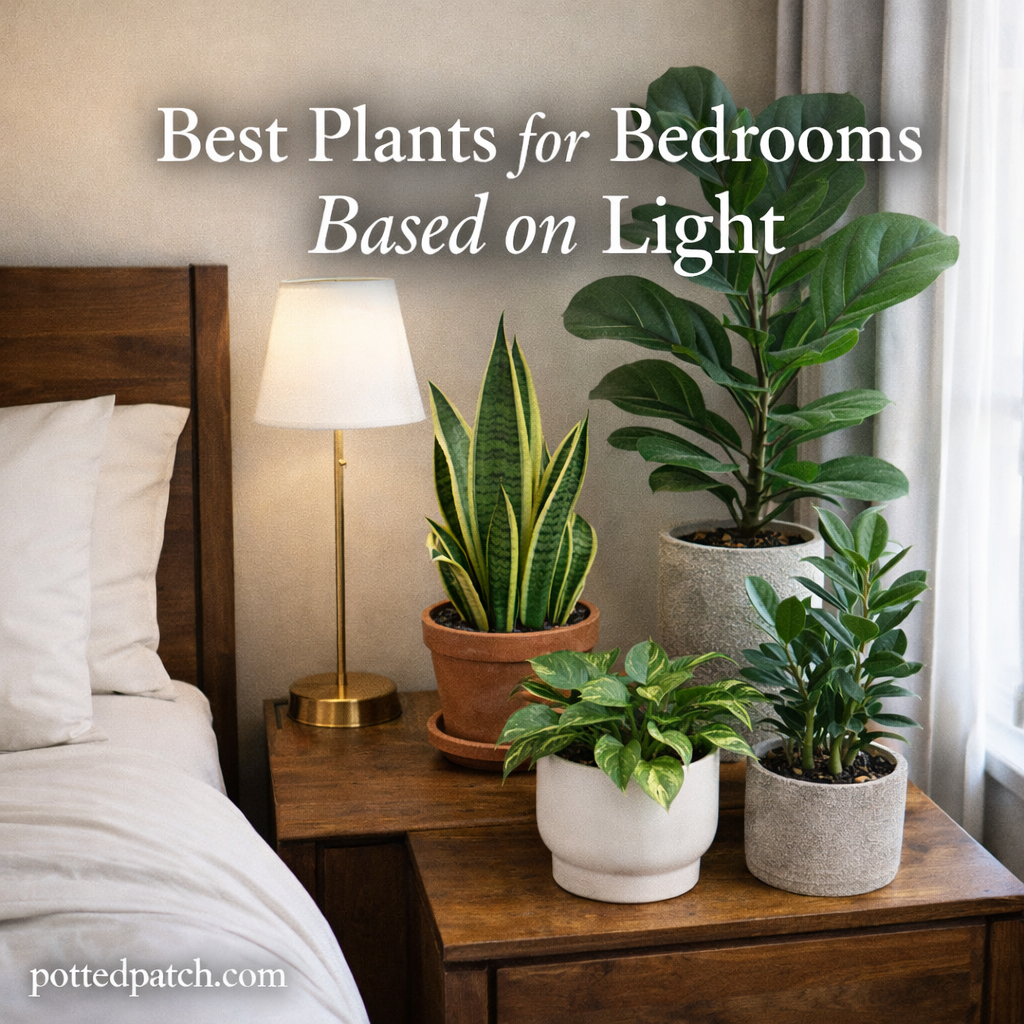
Choosing plants for your bedroom isn’t just about aesthetics—it’s about matching plants to the light you actually have. Bedrooms often have lower or inconsistent light compared to living rooms, which means some popular houseplants struggle there.
This guide breaks down the best plants for bedrooms based on light conditions, so you can choose options that thrive without constant adjustments or stress.
Why Light Matters More in Bedrooms
Bedrooms tend to have:
- Fewer windows
- Curtains or blinds that block daylight
- Less time with lights on during the day
Because of this, selecting plants that match your bedroom’s natural light is far more important than picking plants based on looks alone.
How to Identify Bedroom Light Levels
Before choosing plants, take a quick look at your space.
Low Light Bedrooms
- North-facing windows
- Small or shaded windows
- Light is present, but never bright
- You can see, but shadows are soft or minimal
Medium (Indirect) Light Bedrooms
- East-facing windows
- Filtered sunlight through curtains
- Bright during part of the day, indirect the rest
Bright Light Bedrooms
- South- or west-facing windows
- Several hours of strong natural light
- Clear shadows near windows
Once you know your light level, plant choice becomes much easier.
Best Bedroom Plants for Low Light
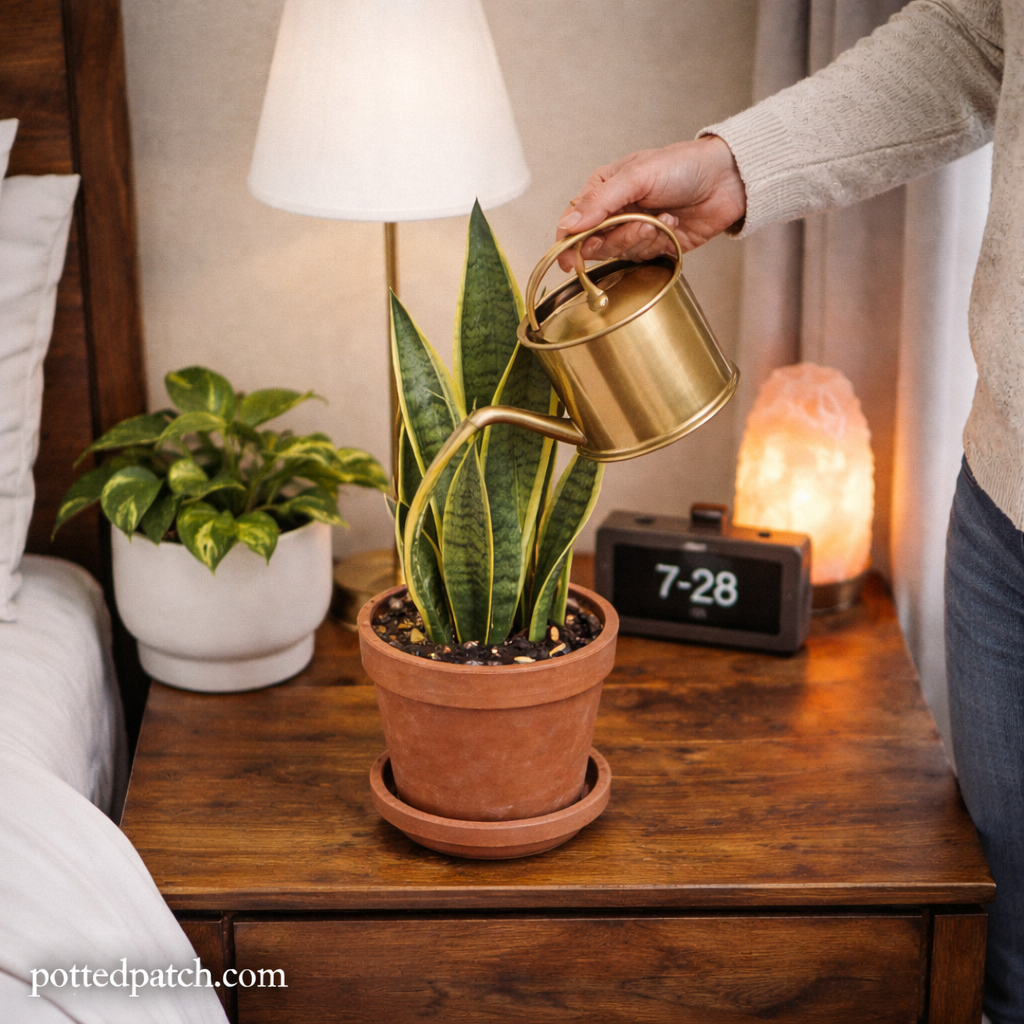
These plants tolerate limited light and are ideal for darker bedrooms.
Snake Plant
- Thrives in very low light
- Needs infrequent watering
- Upright growth fits small spaces
ZZ Plant
- Extremely low maintenance
- Handles shade well
- Thick leaves store moisture
Cast Iron Plant
- Slow-growing but very durable
- Tolerates low light and neglect
- Great for corners or floor placement
Pothos (Low-Light Tolerant Varieties)
- Adapts to shade
- Trailing growth works well on shelves
- Easy to propagate
Low-light plants prefer consistency. Avoid moving them frequently.
Best Bedroom Plants for Medium (Indirect) Light
This is the most common bedroom light level and offers the most options.
Peace Lily
- Thrives in bright, indirect light
- Indicates thirst by drooping
- Compact and bedroom-friendly
Philodendron
- Handles indirect light well
- Flexible growth habits
- Forgiving of minor care mistakes
Spider Plant
- Brightens rooms without needing sun
- Produces “baby” plants
- Handles cooler bedroom temperatures
Chinese Evergreen
- Tolerates lower and medium light
- Decorative foliage
- Slow, steady growth
Medium-light bedrooms are ideal for beginners.
Best Bedroom Plants for Bright Light
If your bedroom gets strong natural light, these plants will thrive.
Rubber Plant
- Loves bright, indirect light
- Glossy leaves add visual impact
- Grows upright without spreading
Monstera
- Prefers bright, indirect light
- Large leaves make a statement
- Needs space to grow
Fiddle Leaf Fig (Only If Light Is Consistent)
- Requires bright light daily
- Sensitive to change
- Best near large windows
Bright-light plants should be placed slightly back from direct sun to prevent leaf scorch.
Best Small Plants for Nightstands and Dressers
For limited space, choose compact plants that tolerate indoor conditions.
Good options include:
- Small snake plants
- Mini pothos
- Succulents (only in bright rooms)
- ZZ plant starters
Avoid overcrowding surfaces—plants need airflow.
Bedroom Plant Placement Tips
Where you place plants matters just as much as which ones you choose.
- Keep plants 2–6 feet from windows unless they need strong light
- Avoid placing plants directly above beds
- Rotate plants every few weeks for even growth
- Keep plants away from heating or cooling vents
Stable conditions help bedroom plants thrive.
Plants to Avoid in Bedrooms
Some plants aren’t ideal for bedroom environments.
Consider avoiding:
- Plants needing direct sunlight
- High-maintenance or moisture-loving plants
- Strongly scented plants that may disrupt sleep
- Large plants in very small rooms
The goal is calm, not constant care.
How Many Plants Should You Keep in a Bedroom?
More isn’t always better.
A good rule:
- Small bedroom: 1–2 plants
- Medium bedroom: 2–4 plants
- Large bedroom: 3–5 plants
Too many plants can increase humidity and clutter.
Common Bedroom Plant Mistakes
- Overwatering due to slower soil drying
- Assuming all plants tolerate low light
- Blocking airflow with large foliage
- Moving plants too often
Bedrooms usually require less water than brighter rooms.
Final Thoughts
The best plants for bedrooms are the ones that match your light—not the ones trending online. By choosing plants suited to low, medium, or bright bedroom light, you’ll spend less time troubleshooting and more time enjoying a calm, green space.
Start with one or two plants, place them thoughtfully, and let your bedroom light guide every decision. 🌿