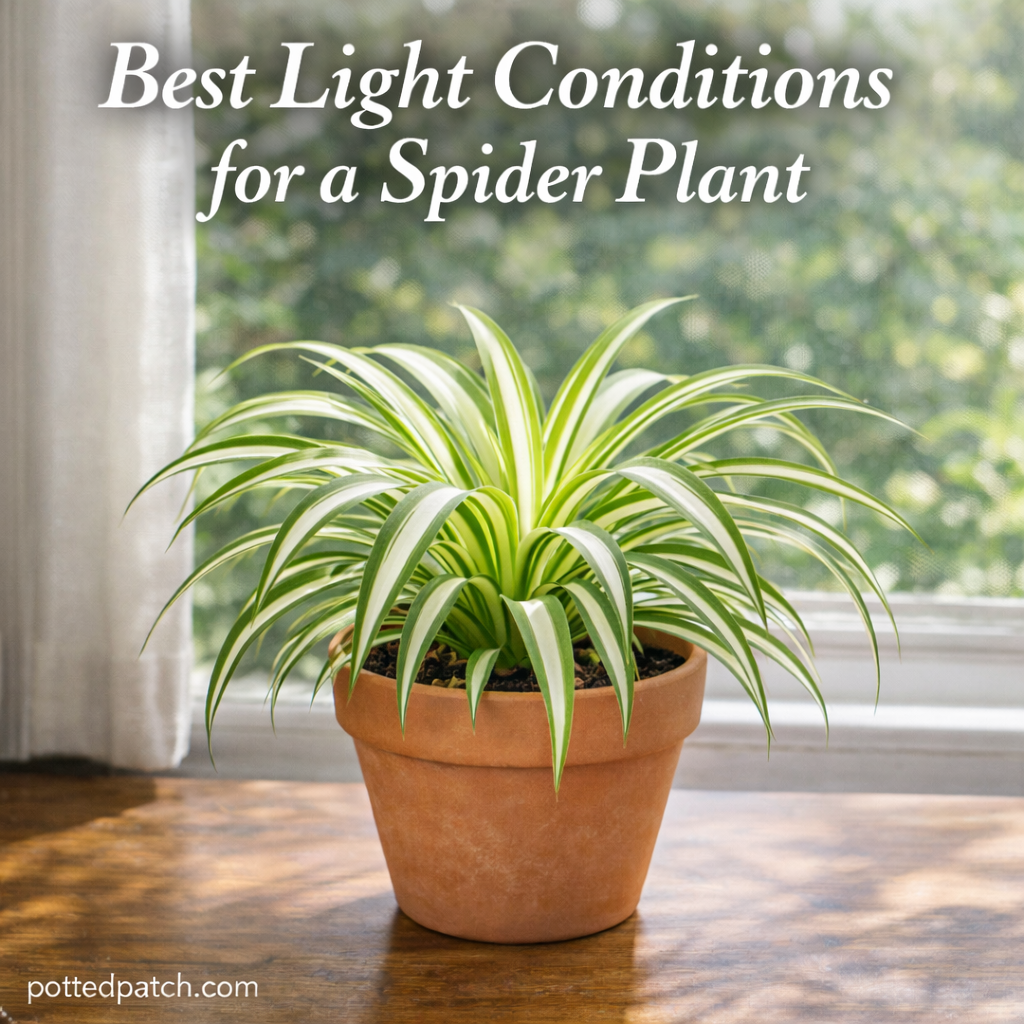
Spider plants are known for their adaptability, but light plays a major role in how full, vibrant, and fast-growing they become.
If your spider plant looks dull, pale, or stretched out, lighting may be the issue.
Here’s exactly how to give your spider plant the best light conditions for strong, healthy growth.
What Type of Light Do Spider Plants Prefer?
Spider plants thrive in bright, indirect light.
This means:
- Plenty of natural light
- No harsh, direct sun hitting the leaves
- A well-lit room without intense afternoon exposure
Bright indirect light encourages fuller foliage, stronger variegation, and faster baby plant (spiderette) production.
What Happens in Low Light?
Spider plants can tolerate low light, but they won’t thrive.
Signs of Too Little Light
- Slower growth
- Smaller leaves
- Faded variegation (less white striping)
- Sparse or leggy appearance
- Fewer spiderettes
Low light won’t usually kill a spider plant, but it will limit its potential.
If possible, move it closer to a window for noticeable improvement.
Can Spider Plants Handle Direct Sun?
Short answer: not much.
Direct sunlight — especially afternoon sun — can scorch the leaves.
Signs of Too Much Sun
- Brown or crispy leaf tips
- Pale, bleached patches
- Dry soil very quickly
Morning sun is generally safe, but intense midday or afternoon sun should be filtered with sheer curtains.
Best Window Placement
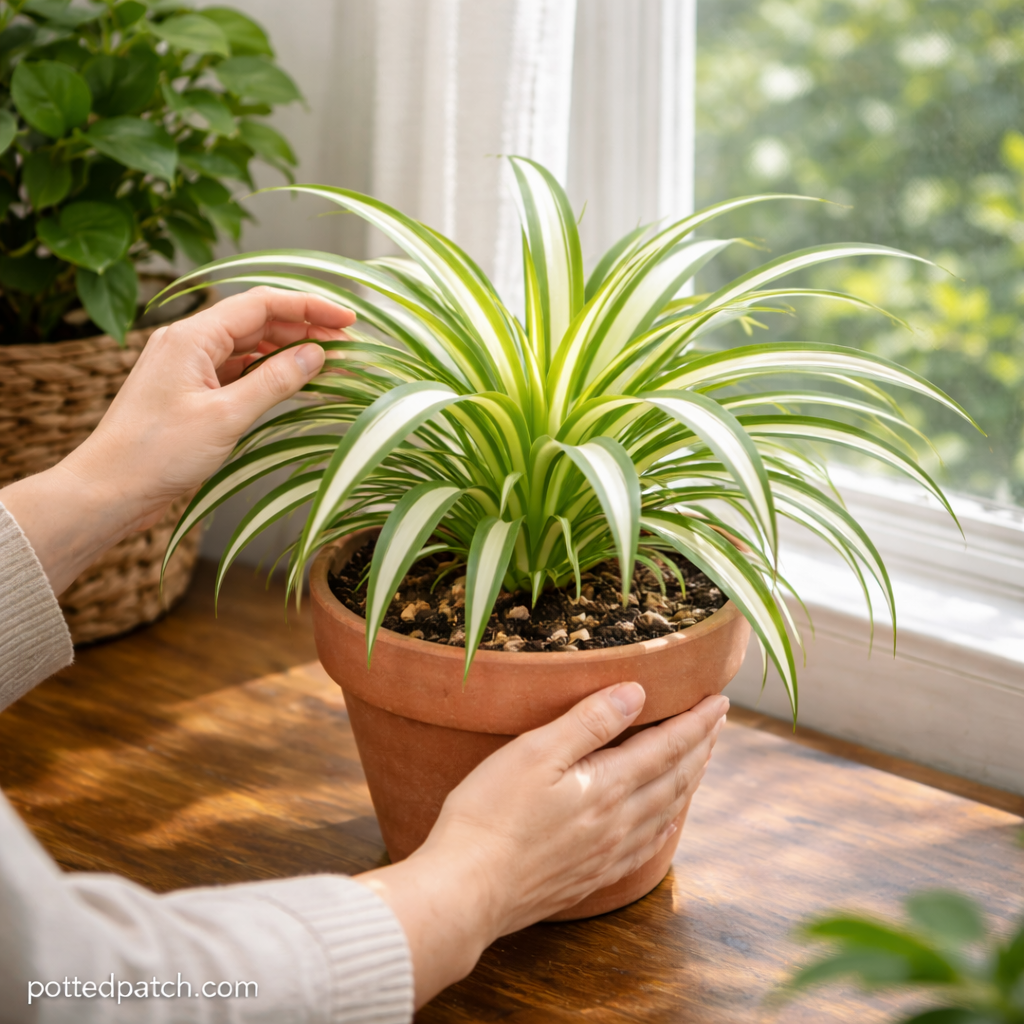
Here’s how to position your spider plant for ideal lighting:
East-Facing Window
- Excellent option
- Gentle morning sun
- Bright light for most of the day
West-Facing Window
- Good, but monitor afternoon sun
- May need light filtering
South-Facing Window
- Very bright
- Place plant a few feet away or use sheer curtains
North-Facing Window
- Lower light
- Acceptable, but growth may slow
If your plant sits in a north-facing room, try placing it as close to the window as possible.
How Far From the Window?
A good general rule:
- 1–3 feet from a bright window is ideal.
- If you can comfortably read a book without turning on lights, it’s usually bright enough.
Light intensity decreases quickly as you move farther from the source.
Using Artificial Light
Spider plants respond well to grow lights.
If your space lacks natural light:
- Use a full-spectrum LED grow light
- Keep it 12–18 inches above the plant
- Run it for 10–12 hours daily
Artificial lighting is especially helpful in winter months.
Seasonal Light Adjustments
Light conditions change throughout the year.
Summer
- Brighter, stronger light
- Watch for leaf scorch
- Water more frequently
Winter
- Lower light levels
- Growth slows
- Reduce watering slightly
Rotating your spider plant every few weeks helps promote even growth.
How to Tell If Lighting Is Perfect
When your spider plant has ideal lighting, you’ll notice:
- Bright green leaves with crisp white stripes
- Upright, arching growth
- Steady production of spiderettes
- No yellowing or scorch marks
Healthy lighting supports overall plant resilience.
Common Light Mistakes
Avoid these frequent errors:
- Placing in deep shade long-term
- Exposing to harsh afternoon sun
- Forgetting to rotate the plant
- Assuming all windows provide equal light
Small lighting adjustments can dramatically improve plant appearance.
Final Thoughts
Spider plants are forgiving, but the right light makes all the difference.
Aim for bright, indirect light, protect from harsh sun, and adjust seasonally. With proper lighting, your spider plant will grow fuller, greener, and produce more baby plants over time.
Good light is the foundation of healthy indoor plant care.