
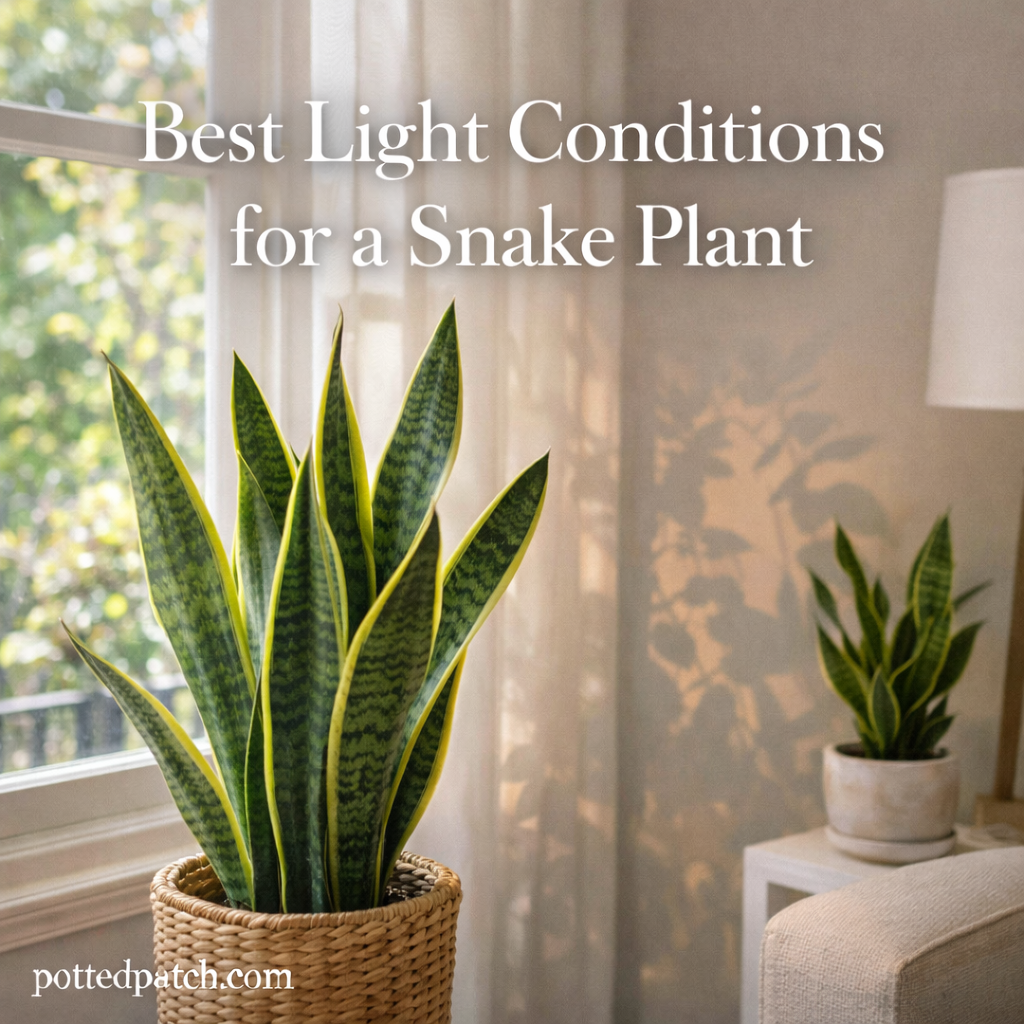
Snake plants are often labeled as “low light plants,” but that description can be misleading. While they tolerate low light better than many houseplants, the right lighting conditions make a noticeable difference in growth, color, and overall health.
This guide explains the best light conditions for a snake plant, how different light levels affect it, and how to adjust placement in your home for the best results.
Do Snake Plants Really Like Low Light?
Snake plants tolerate low light, but they don’t prefer it.
Low light survival:
- The plant stays alive
- Growth slows significantly
- Leaves may become thinner
- Variegation can fade
Low light is acceptable, but it’s not ideal for long-term appearance and strength.
Best Light for Snake Plants
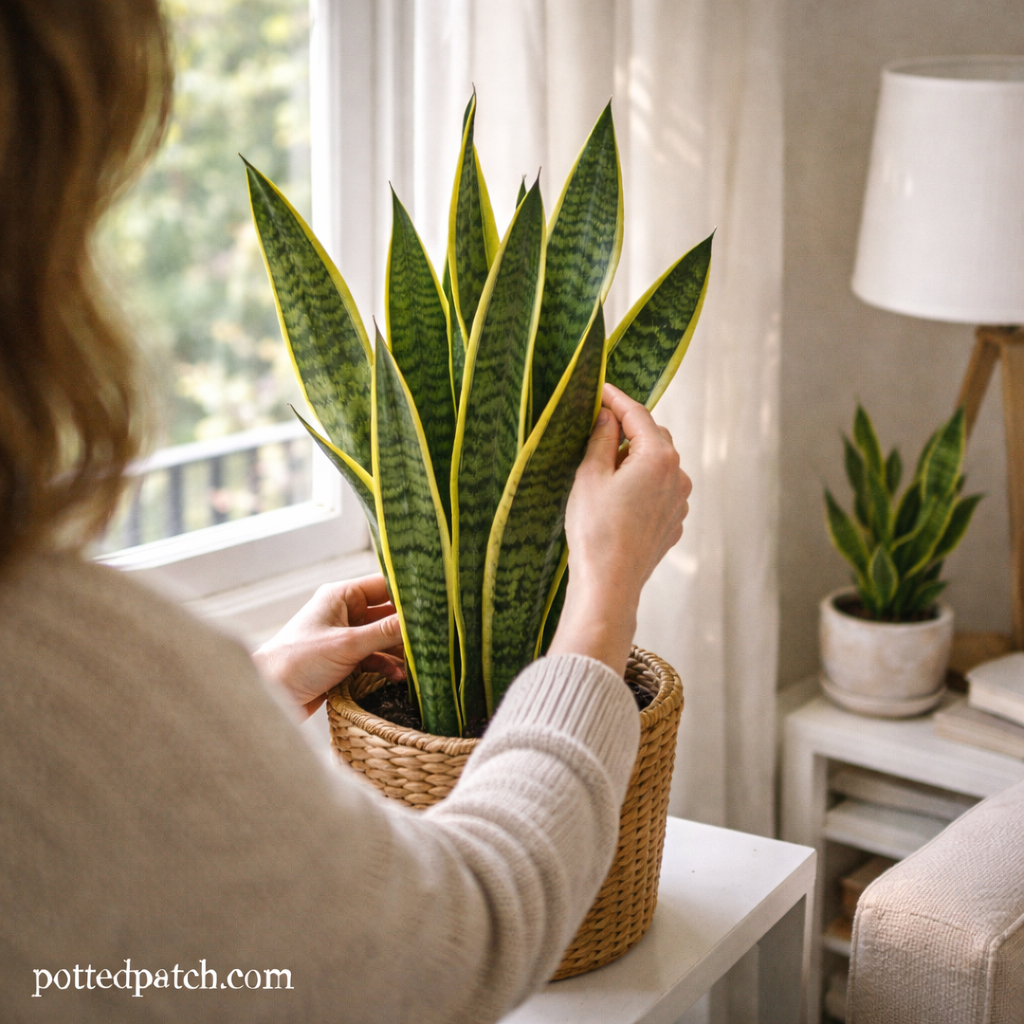
Bright Indirect Light
This is the ideal condition.
Bright indirect light means:
- Light-filled rooms without harsh sun
- Filtered light through curtains
- Placement a few feet away from a bright window
Benefits:
- Faster, healthier growth
- Stronger, thicker leaves
- Better leaf color and pattern
- More frequent new growth
Snake plants thrive in this range and show their best form.
Medium Light
Medium light works well and is common in most homes.
What to expect:
- Steady but slower growth
- Healthy leaves with slightly less vibrancy
- Minimal stress or damage
This is a great option if bright indirect light isn’t available.
Low Light
Snake plants can survive low light conditions, such as:
- Shaded corners
- Rooms with small or distant windows
- Hallways with ambient light only
Trade-offs:
- Very slow growth
- Increased watering sensitivity
- Higher risk of overwatering issues
If kept in low light, watering must be reduced significantly.
Can Snake Plants Handle Direct Sunlight?
Limited direct sunlight is fine, but too much can cause damage.
Safe exposure:
- Gentle morning sun
- Short periods of late afternoon sun
Risky exposure:
- Intense midday sun
- Long hours of direct light through glass
Too much direct sun can cause:
- Leaf scorch
- Brown or bleached patches
- Curling or stress
If leaves feel hot to the touch, the light is too strong.
Best Window Placement for Snake Plants
North-Facing Windows
- Low to medium indirect light
- Good for slow, steady growth
- Ideal for low-maintenance setups
East-Facing Windows
- Gentle morning light
- Excellent balance of brightness
- One of the best placements overall
South-Facing Windows
- Very bright light
- Best when filtered with sheer curtains
- Keep plant a few feet away from the window
West-Facing Windows
- Strong afternoon sun
- Can work with distance or filtered light
- Monitor for leaf scorch
Signs Your Snake Plant Isn’t Getting the Right Light
Too Little Light
Watch for:
- Very slow or no new growth
- Leaves becoming thin or floppy
- Fading yellow edges or patterns
- Increased sensitivity to watering
Too Much Light
Watch for:
- Brown, dry patches on leaves
- Bleached or pale areas
- Curling near leaf edges
Adjust placement gradually rather than moving the plant suddenly.
Rotating Your Snake Plant
Snake plants grow toward light sources.
Helpful habit:
- Rotate the pot every few weeks
- Keeps growth even
- Prevents leaning or uneven leaves
Rotation is especially helpful near windows.
Can Snake Plants Grow Under Artificial Light?
Yes, they adapt well to artificial lighting.
Good conditions:
- Bright room lighting
- LED grow lights
- Consistent daily exposure
Avoid:
- Dim overhead lighting only
- Short, inconsistent light periods
Artificial light can support growth when natural light is limited.
Seasonal Light Changes to Watch For
Light levels change throughout the year.
In winter:
- Light is weaker
- Growth slows naturally
- Reduce watering frequency
In summer:
- Light intensity increases
- Growth speeds up
- Watch for sun scorch near windows
Adjust placement slightly as seasons shift.
Quick Light Guide for Snake Plants
- Best light: bright indirect
- Tolerates: medium to low light
- Limited direct sun: okay
- Prolonged direct sun: avoid
- Rotate plant regularly
- Adjust watering based on light level
Final Thoughts
Snake plants are adaptable, but light still plays a major role in how they look and grow. If you want strong leaves, visible patterns, and steady growth, bright indirect light is the best choice. Low light works for survival, but better light brings out the plant’s full potential.
When in doubt, give your snake plant more light—not more water. 🌿