Rubber plants are known for their bold, glossy leaves and upright growth. But if your plant isn’t thriving, light is usually the reason.
Understanding the best light conditions for a rubber plant can mean the difference between steady growth and stalled, drooping leaves.
Let’s break down exactly what your rubber plant needs.
Why Light Matters for Rubber Plants
Rubber plants (Ficus elastica) are native to tropical regions where they grow under bright, filtered sunlight.
Indoors, they rely entirely on you to recreate those conditions.
Proper light helps:
- Promote strong, upright growth
- Maintain deep green or burgundy leaf color
- Encourage new leaf production
- Prevent leaf drop
Too little light slows growth. Too much direct sun can scorch leaves.
Balance is key.
Ideal Light Conditions for a Rubber Plant
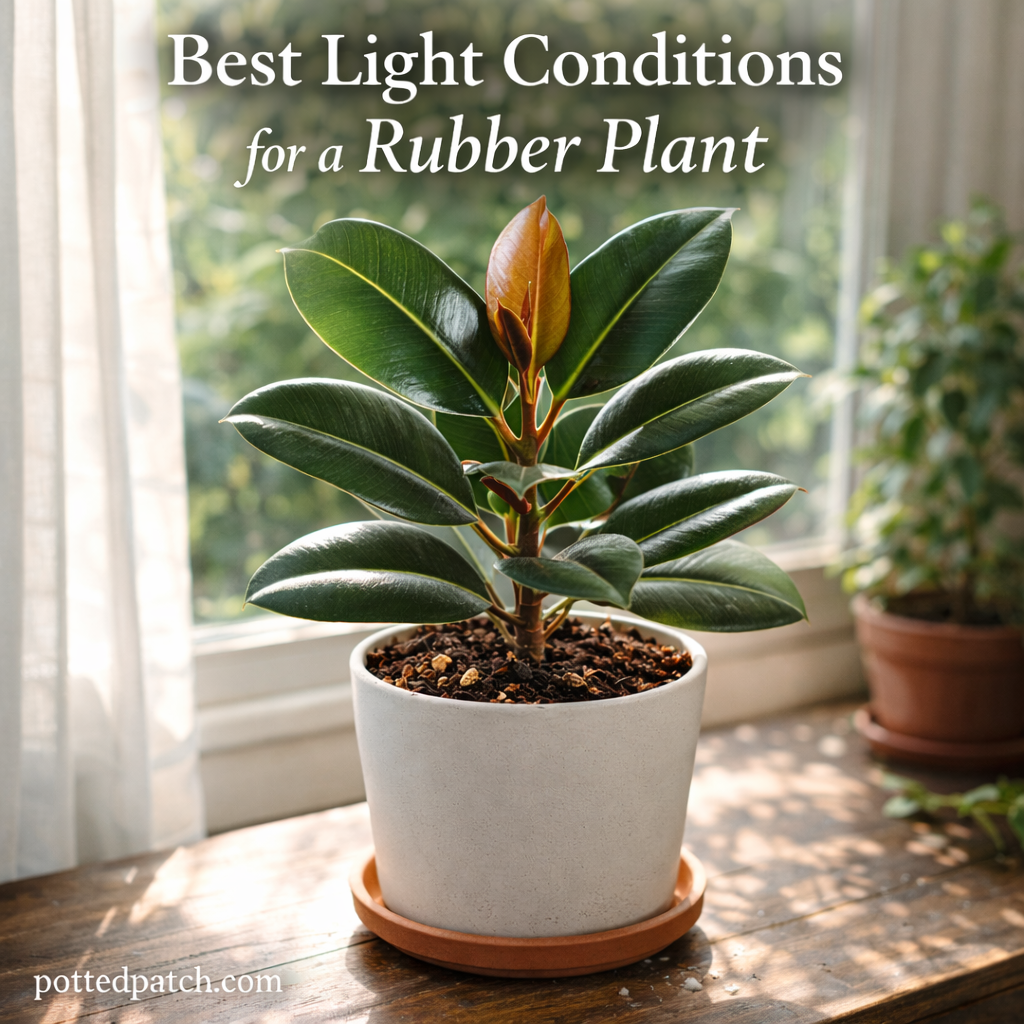
Bright, Indirect Light (Best Option)
This is the sweet spot.
Bright, indirect light means:
- A room with large windows
- Sunlight that fills the room but doesn’t directly hit the leaves for long periods
- Light filtered through sheer curtains
A rubber plant placed near an east-facing window is usually perfect. South or west windows can also work if filtered.
Can Rubber Plants Handle Direct Sunlight?
Yes — but cautiously.
Morning sun is generally safe. Harsh afternoon sun can cause:
- Brown leaf edges
- Bleached spots
- Crispy texture
If placing near a south or west window:
- Move the plant 3–6 feet away
- Use sheer curtains
- Rotate the plant weekly
What Happens in Low Light?
Rubber plants can tolerate moderate light, but they won’t thrive in dark spaces.
In low light, you may notice:
- Slower growth
- Smaller new leaves
- Leggy stems
- Increased leaf drop
If your plant is stretching toward the window, it’s asking for more light.
Best Window Placement Guide
Here’s a simple breakdown:
East-Facing Window
Ideal. Gentle morning light supports healthy growth.
South-Facing Window
Excellent if filtered. Too intense without protection.
West-Facing Window
Good with distance or sheer curtain.
North-Facing Window
Often too dim unless the room is very bright.
How to Tell If Your Rubber Plant Is Getting Enough Light
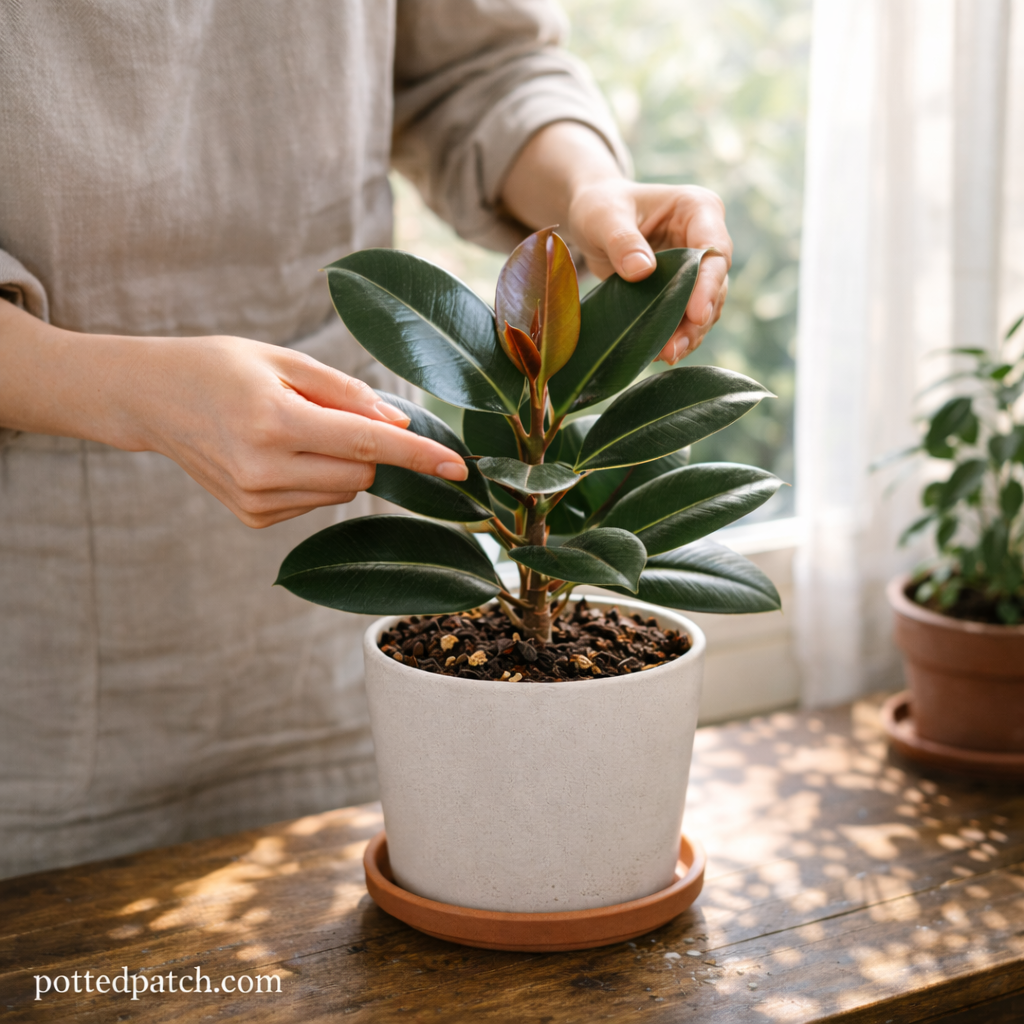
Look for these signs of healthy lighting:
- Large, glossy leaves
- Upright stem growth
- New leaves forming every few weeks in growing season
- Rich, consistent leaf color
Warning signs of poor lighting:
- Yellowing lower leaves
- Leaf drop
- No new growth for months
- Pale or faded leaf color
Can You Use Grow Lights?
Yes.
If your space lacks natural light, a grow light can help maintain healthy growth.
For best results:
- Use a full-spectrum LED grow light
- Place 12–18 inches above the plant
- Keep on for 10–12 hours daily
Grow lights are especially helpful during winter.
Seasonal Light Adjustments
Light intensity changes throughout the year.
In winter:
- Move the plant slightly closer to windows
- Clean dust off leaves to improve light absorption
In summer:
- Pull back from intense afternoon sun
- Watch for leaf scorch
Rotate your plant every few weeks for even growth.
Quick Light Checklist
Your rubber plant is likely in good lighting if:
- It receives bright but indirect sunlight
- Leaves stay glossy and firm
- No scorched spots appear
- Growth is steady during spring and summer
If unsure, err slightly brighter rather than darker.
Final Thoughts
The best light conditions for a rubber plant are bright, indirect light with protection from harsh afternoon sun.
Think tropical canopy — not desert exposure.
Get the lighting right, and your rubber plant will reward you with bold leaves and steady growth for years.