
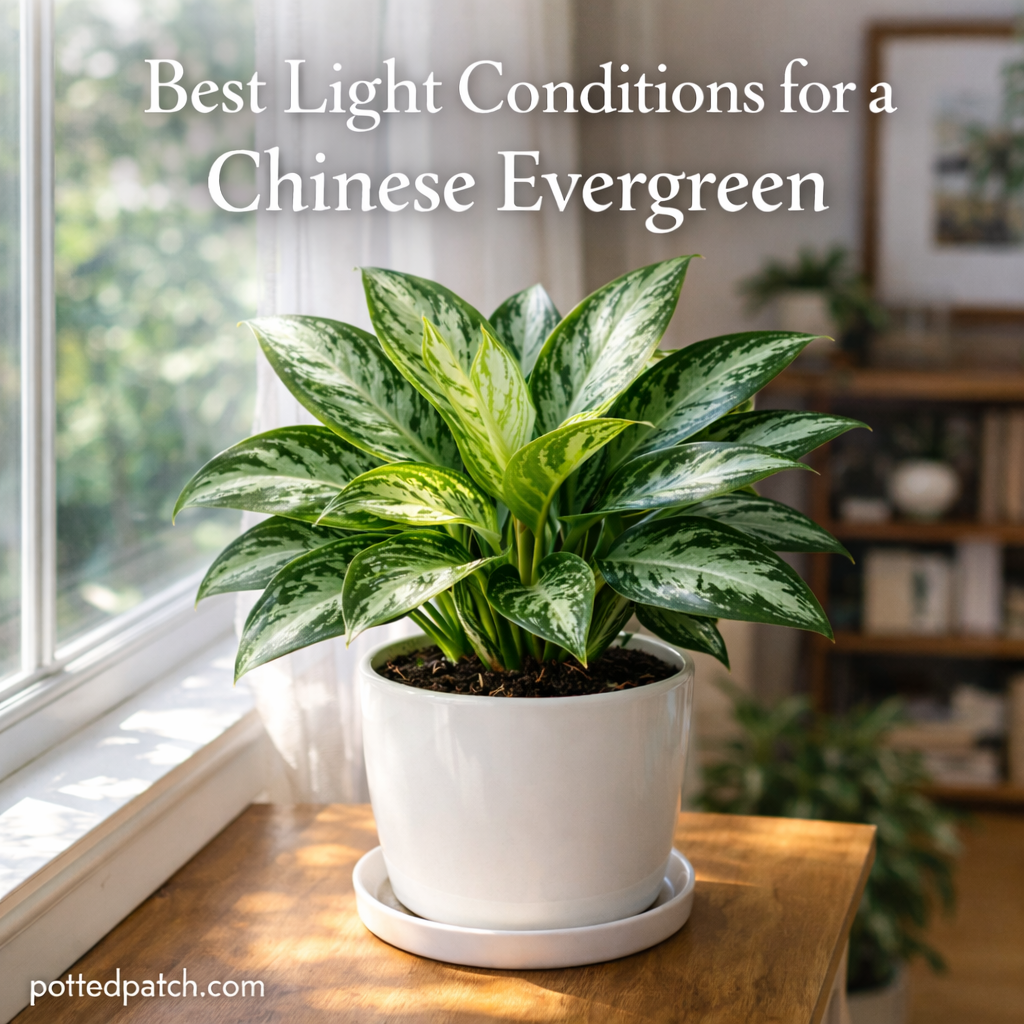
Chinese Evergreen, botanically known as Aglaonema, is one of the most adaptable indoor plants when it comes to lighting. Its ability to tolerate lower light makes it a favorite for apartments, offices, and rooms with limited sunlight.
But while it survives in low light, it truly thrives in the right conditions. Here’s exactly what kind of light your Chinese Evergreen needs to stay healthy and vibrant.
Ideal Light: Bright, Indirect Light
The best light for a Chinese Evergreen is bright, indirect light.
This means:
- Near a window with filtered sunlight
- A few feet away from a bright south- or west-facing window
- In an east-facing window with gentle morning sun
Bright indirect light encourages:
- Faster growth
- Stronger stems
- More vibrant leaf coloration
- Fuller, bushier shape
If you want your plant to look its best, this is the sweet spot.
Can Chinese Evergreen Grow in Low Light?
Yes — and that’s one reason it’s so popular.
Chinese Evergreen can tolerate:
- North-facing windows
- Rooms with minimal natural light
- Spaces lit mainly by artificial light
However, in low light:
- Growth slows down
- Leaves may lose some vibrancy
- The plant may become slightly leggy
It will survive, but it won’t grow as quickly or look as full.
Direct Sunlight: Avoid It
Direct sunlight is the biggest lighting mistake with Chinese Evergreen.
Strong sun can cause:
- Leaf scorch
- Brown patches
- Faded variegation
- Curling edges
If sunlight hits the leaves directly for extended periods, move the plant back or filter the light with a sheer curtain.
Light Needs by Variety
Different varieties of Chinese Evergreen have slightly different light tolerances.
Dark Green Varieties
- Handle lower light better
- Maintain color even in dim rooms
- Ideal for offices and bedrooms
Silver, Red, or Pink Varieties
- Need brighter indirect light
- Color fades in low light
- Benefit from placement near brighter windows
If your colorful variety looks dull, it likely needs more light.
How to Tell If Light Is Too Low
Your plant will give you signs.
Watch for:
- Slower growth than usual
- Stems stretching toward the light
- Sparse, thin foliage
- Leaves losing variegation
If you notice these symptoms, move the plant closer to a light source.
How to Tell If Light Is Too Strong
Too much light can also cause problems.
Look for:
- Crispy brown spots
- Yellowing patches
- Bleached-looking leaves
If this happens, shift the plant a few feet away from the window or add light filtering.
Can You Use Artificial Light?
Yes.
Chinese Evergreen does well under:
- LED grow lights
- Bright office lighting
- Fluorescent indoor lighting
For grow lights:
- Keep them 12–18 inches above the plant
- Provide 10–12 hours of light daily
Artificial lighting is a great solution for low-sun homes.
Best Placement in Your Home
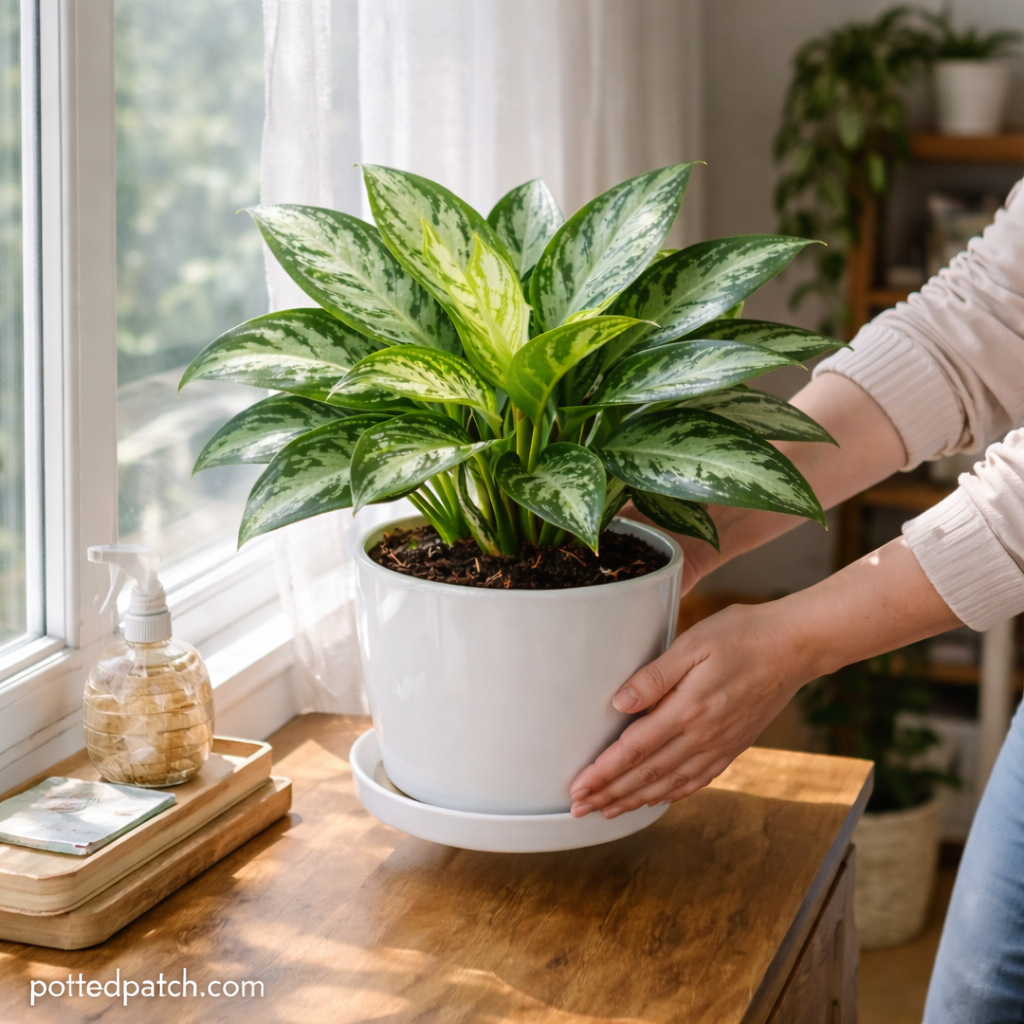
Here are practical placement ideas:
- 3–6 feet from a bright window
- Near an east-facing window
- In a bright bathroom (if warm)
- In a well-lit office with overhead lighting
Avoid:
- Direct window sills in full sun
- Cold drafty windows
- Dark corners with zero natural light
Quick Light Summary
For healthy Chinese Evergreen growth:
- Best: Bright, indirect light
- Good: Medium light
- Tolerable: Low light
- Avoid: Direct, harsh sunlight
If you’re unsure, aim for filtered brightness. It’s the safest and most growth-friendly choice.
With the right light conditions, your Chinese Evergreen will stay lush, colorful, and easy to care for year-round.