
Light is the single most important factor in keeping a cactus healthy indoors.
Without enough light, cacti become weak, stretched, pale, and prone to rot. With proper light, they grow compact, firm, and sometimes even bloom.
If you’re unsure whether your cactus is getting the right amount of light, this guide will help you create the ideal setup.
How Much Light Does a Cactus Need?
Most desert cacti need:
- 6–8 hours of bright, direct sunlight daily
- Consistent light exposure
- Strong, unobstructed light
Indoors, this can be challenging — especially in low-light homes.
The brighter the environment, the healthier your cactus will be.
Best Window Placement for Indoor Cacti
Window direction makes a major difference.
South-Facing Windows (Best Option)
- Provide the strongest light
- Offer several hours of direct sun
- Ideal for most desert cactus varieties
Place the cactus directly on the windowsill for maximum exposure.
West-Facing Windows (Very Good Option)
- Provide strong afternoon light
- Suitable for most indoor cacti
- May need slight rotation to prevent leaning
West-facing light is intense but slightly shorter in duration.
East-Facing Windows (Moderate Option)
- Gentle morning sunlight
- Works for smaller or less demanding cactus types
- May not be strong enough for high-light species
If using an east-facing window, monitor for stretching.
North-Facing Windows (Usually Too Dim)
- Very little direct sunlight
- Often insufficient for desert cacti
- May require supplemental grow lights
North-facing setups are typically too low in intensity.
Signs Your Cactus Isn’t Getting Enough Light
Insufficient light causes visible changes.
Watch for:
- Elongated, stretched growth (etiolation)
- Thin stems
- Pale or faded color
- Leaning toward a light source
Once stretched, growth will not revert. Correct lighting early.
Signs of Too Much Light
While rare indoors, extreme direct sun through glass can cause:
- Sunburn (bleached or brown patches)
- Scarring
- Dry, crispy spots
If this happens, move the plant slightly back from the window or use sheer curtains.
Using Grow Lights for Cactus
If natural sunlight is limited, grow lights are an excellent solution.
Look for:
- Full-spectrum LED grow lights
- 10–12 hours of daily exposure
- Placement 6–12 inches above the plant
Grow lights provide consistent intensity, especially in winter.
Rotating Your Cactus
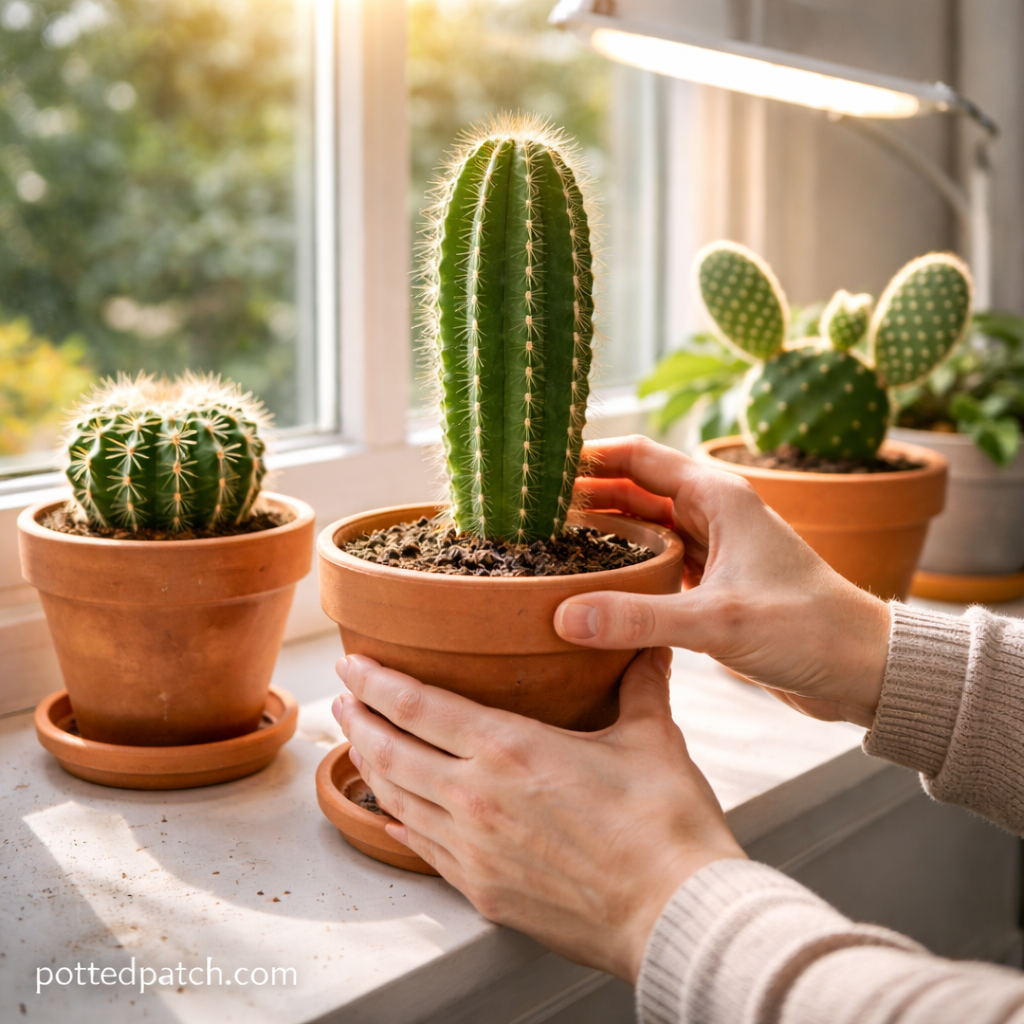
Cacti naturally lean toward light.
To encourage even growth:
- Rotate the plant every 1–2 weeks
- Keep the strongest light source consistent
- Avoid frequently moving between drastically different light levels
Consistency supports balanced development.
Seasonal Light Changes
Light intensity shifts throughout the year.
Summer
- Longer daylight hours
- Stronger sun exposure
- Monitor for overheating near glass
Winter
- Shorter days
- Weaker sunlight
- May require grow lights
Cacti often enter dormancy in winter, so adjust watering accordingly.
Indoor Lighting Mistakes to Avoid
Common errors include:
- Placing cactus in dim corners
- Assuming bright room equals bright light
- Keeping cactus far from windows
- Not adjusting for seasonal changes
Brightness is measured at the plant level — not across the room.
Quick Light Checklist
Your cactus is likely receiving proper light if:
- Growth is compact and firm
- Color is vibrant green (or natural species color)
- No stretching is visible
- Soil dries at a steady pace
Healthy light equals healthy structure.
Final Thoughts
Cacti thrive in bright, direct sunlight.
If your plant looks weak or stretched, increase light before adjusting watering or fertilizer.
Place it in the brightest window available.
Supplement with grow lights if needed.
Rotate regularly for even growth.
When you match their desert origins, cacti reward you with strong, resilient growth.