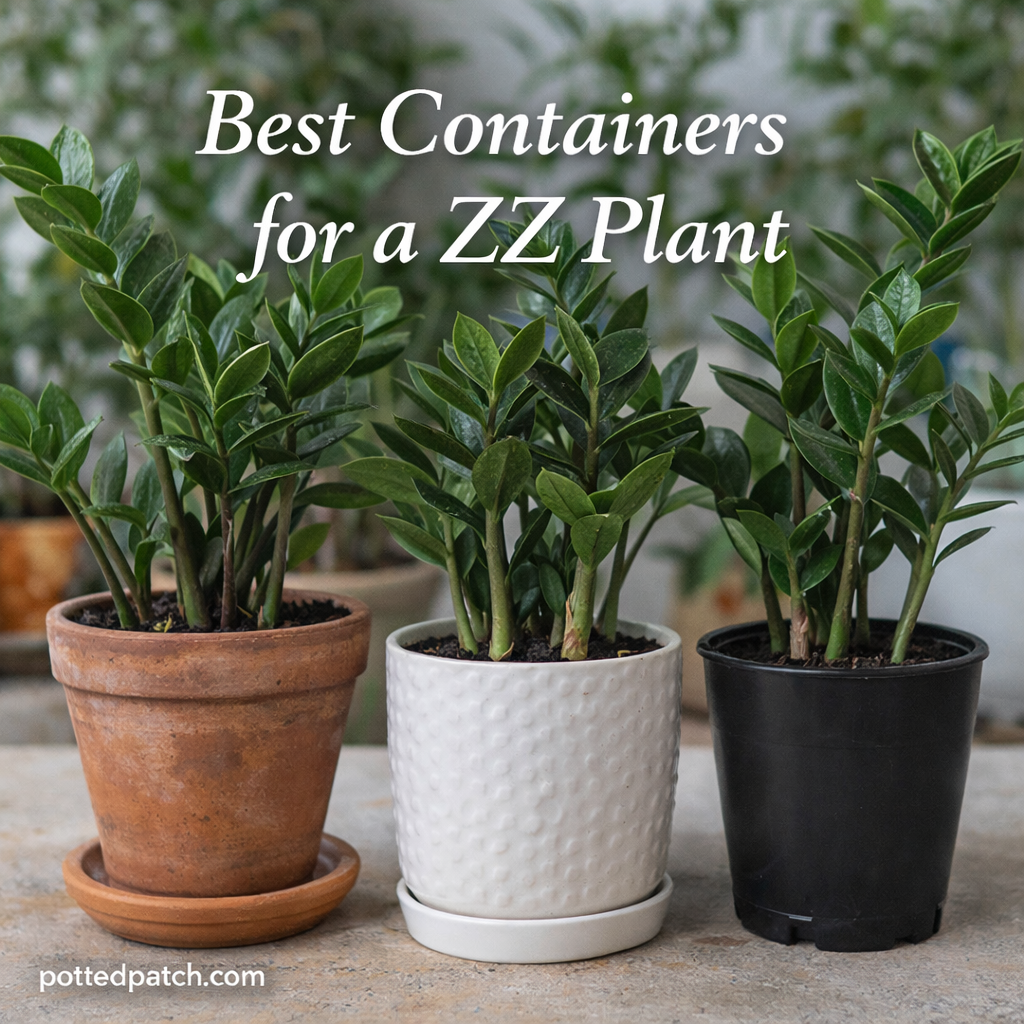
Choosing the right container for your ZZ plant isn’t just about aesthetics — it directly impacts drainage, root health, and long-term growth.
ZZ plants (Zamioculcas zamiifolia) are drought-tolerant and sensitive to excess moisture. The wrong pot can easily lead to overwatering issues, including root rot.
Here’s how to choose the best container to keep your ZZ plant thriving.
Why Container Choice Matters for ZZ Plants
ZZ plants grow from thick underground rhizomes that store water. Because of this:
- They prefer drying out between waterings.
- They dislike sitting in wet soil.
- They tolerate being slightly rootbound.
- They need excellent drainage.
The right container supports airflow and controlled moisture levels.
1. Terracotta Pots (Best Overall Choice)
Terracotta is one of the best materials for ZZ plants.
Why it works:
- Porous clay absorbs excess moisture.
- Soil dries faster.
- Reduces risk of root rot.
- Provides stability for taller stems.
Terracotta is especially helpful if you tend to overwater.
Downside:
- Dries out faster, so you’ll need to monitor soil during hot seasons.
If you want the safest option for beginners, terracotta is the top choice.
2. Ceramic Pots with Drainage Holes
Glazed ceramic pots are attractive and widely available.
Benefits:
- Stylish and decorative.
- Heavier than plastic (good for stability).
- Retain moisture slightly longer than terracotta.
Important:
- Always choose ceramic pots with drainage holes.
- Avoid sealed decorative containers with no drainage.
Ceramic is a good middle-ground option if you water carefully.
3. Plastic Pots (Lightweight & Practical)
Plastic pots are affordable and functional.
Advantages:
- Lightweight and easy to move.
- Retain moisture longer.
- Often include proper drainage holes.
- Ideal for nursery-style setups.
Downside:
- Soil stays wet longer.
- Higher risk of overwatering if care isn’t adjusted.
Plastic works well if you allow soil to fully dry before watering again.
4. Self-Watering Pots (Not Recommended)
Self-watering containers are generally not ideal for ZZ plants.
Why:
- Constant moisture exposure.
- Roots remain damp.
- High risk of rot.
- ZZ plants don’t require consistent watering.
These pots are better suited for moisture-loving plants — not drought-tolerant ones.
5. Decorative Cachepots (Use with Caution)
Many people use decorative outer pots (cachepots) without drainage.
This is fine — if done correctly.
Best practice:
- Keep the ZZ plant in a nursery pot with drainage holes.
- Place it inside the decorative outer container.
- Remove the inner pot when watering.
- Let excess water drain completely before replacing.
Never let water collect at the bottom of the outer container.
What Size Container Is Best?
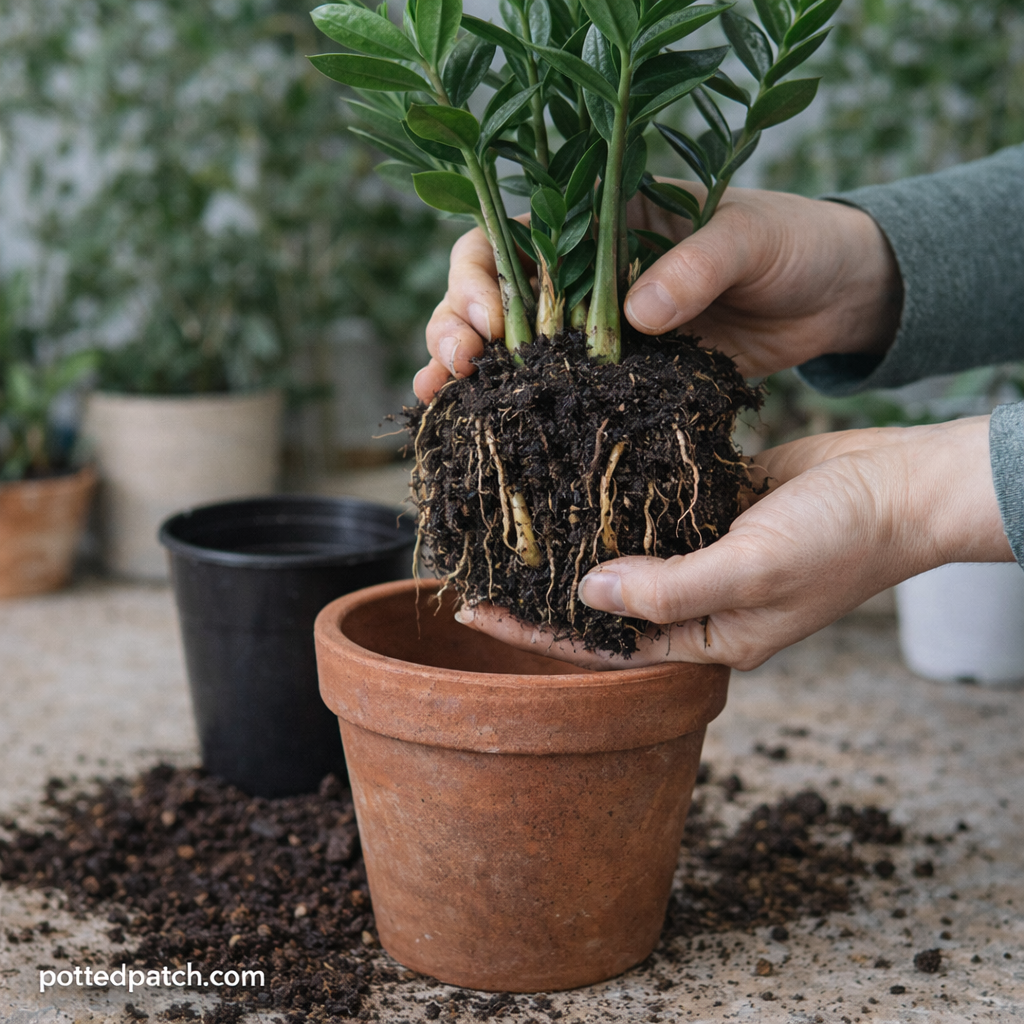
ZZ plants prefer snug conditions.
Choose a pot that is:
- Only 1–2 inches wider than the root ball.
- Not oversized.
- Deep enough to accommodate rhizomes.
- Stable enough to support upright stems.
Oversized pots hold excess soil, which stays wet longer and increases rot risk.
If your ZZ plant is thriving, repot only every 2–3 years.
Signs Your Container Isn’t Ideal
Watch for:
- Soil staying wet longer than 10–14 days.
- Mushy stems near the base.
- Foul smell from soil.
- Cracked plastic pot from expanding rhizomes.
- Roots circling tightly around the bottom.
If you notice these, it may be time to upgrade your container.
Drainage Is Non-Negotiable
Regardless of material, drainage holes are essential.
Without proper drainage:
- Water accumulates at the bottom.
- Roots suffocate.
- Fungal pathogens develop.
- Root rot becomes likely.
If you must use a pot without holes, drilling one is worth the effort.
Best Container Setup for Long-Term Success
For most indoor growers, the ideal ZZ plant setup is:
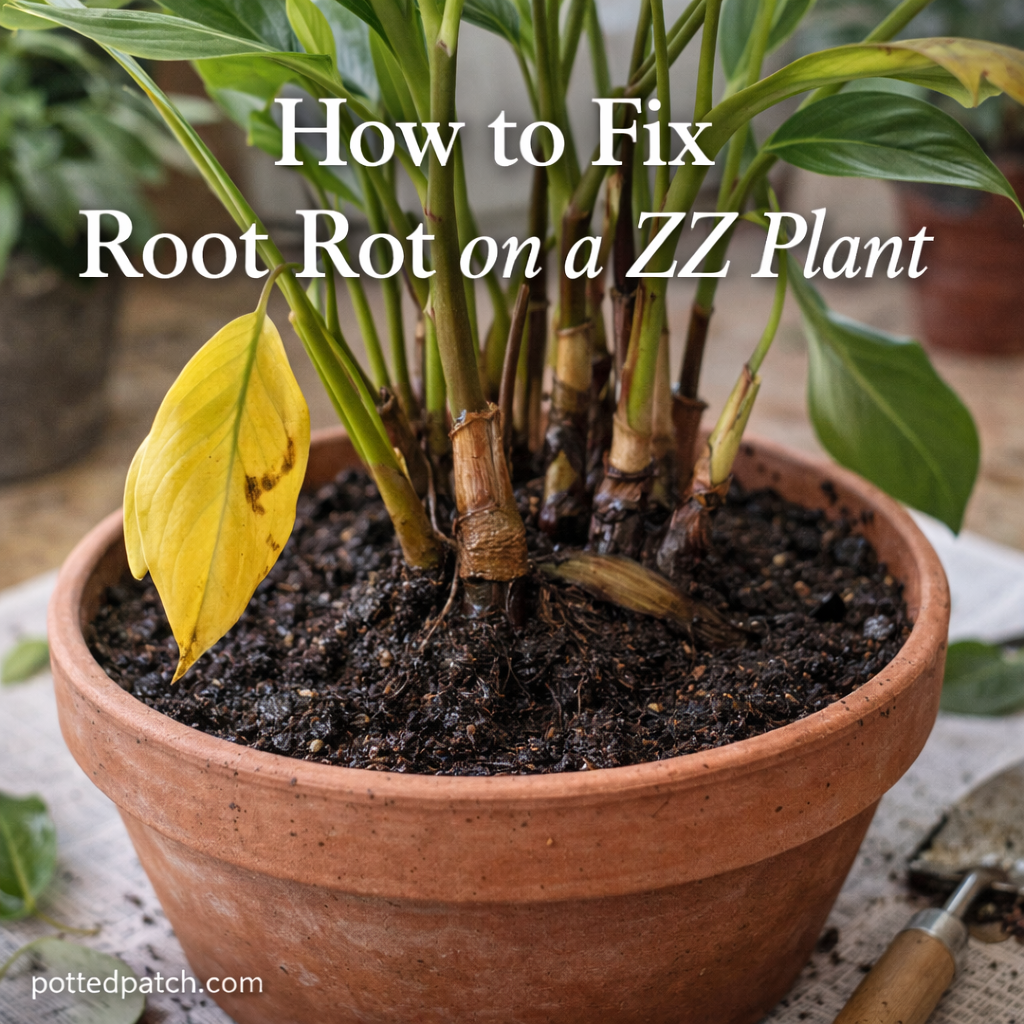
- Terracotta pot with drainage holes.
- Well-draining soil (cactus mix + perlite).
- Saucer underneath.
- Bright, indirect light location.
This combination keeps moisture levels balanced and roots healthy.
Final Thoughts
The best container for a ZZ plant prioritizes drainage over design.
Terracotta is the safest choice. Ceramic works well with drainage holes. Plastic is fine if you adjust watering habits.
Avoid self-watering systems and oversized pots.
When in doubt, choose breathable materials and let the soil dry completely between waterings.
Healthy roots start with the right container.