Spider plants are adaptable, fast-growing, and forgiving — but the container you choose plays a major role in how well they thrive.
The right pot improves drainage, encourages strong roots, and even enhances spiderette production. The wrong one can lead to soggy soil, root rot, or stunted growth.
Here’s how to choose the best container for a spider plant and what to avoid.
Why Container Choice Matters
Spider plants grow from a central crown and develop thick, tuberous roots that store water. Because of this:
- They dislike constantly soggy soil
- They tolerate mild drought
- They grow quickly and can become root bound
The container needs to support airflow, drainage, and moderate root confinement.
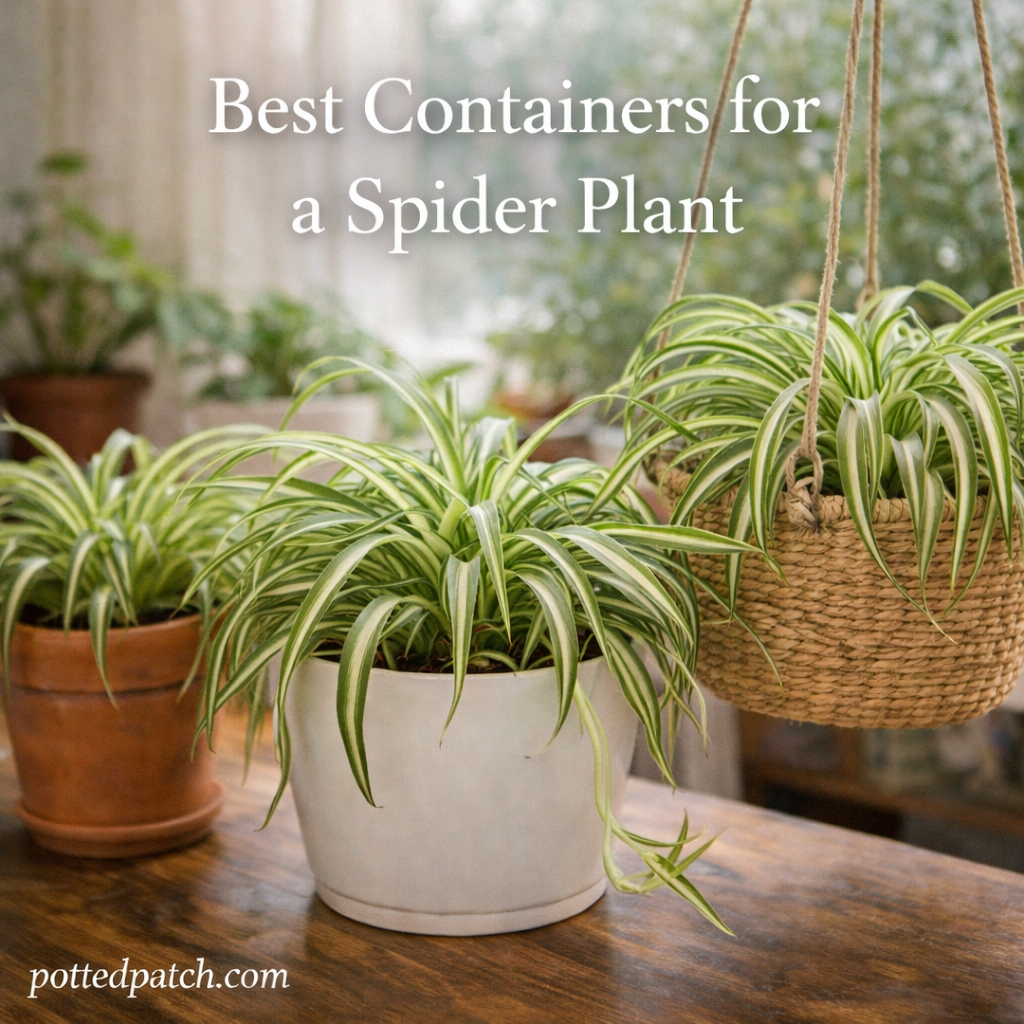
1. Terracotta Pots (Best for Drainage)
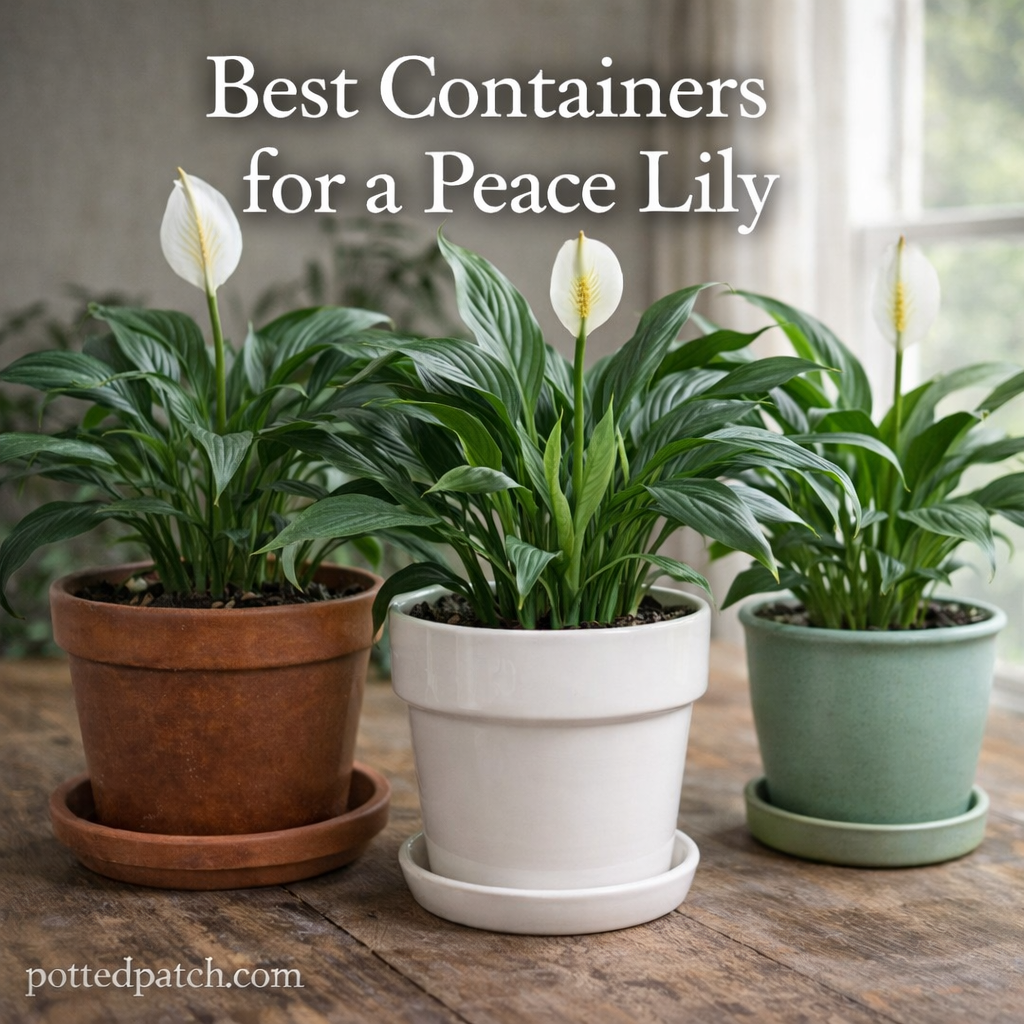
Terracotta is one of the best materials for spider plants.
Why it works
- Porous clay absorbs excess moisture
- Encourages airflow to roots
- Reduces risk of overwatering
Terracotta is especially helpful if you tend to water too frequently.
Downsides
- Dries out faster
- Heavier than plastic
If you use terracotta, check soil moisture a bit more often.
Best for: Beginners worried about overwatering.
2. Plastic Pots (Lightweight and Practical)
Plastic pots are common and affordable.
Benefits
- Retain moisture longer
- Lightweight and easy to move
- Affordable
They work well in drier homes or if you occasionally forget to water.
What to watch for
- Must have drainage holes
- Soil may stay wet longer
Pair plastic pots with well-draining potting mix to prevent root issues.
Best for: Consistent watering routines and bright indoor spaces.
3. Ceramic Pots (Stylish and Stable)
Ceramic containers are heavier and decorative.
Pros
- Visually appealing
- Stable for larger plants
- Often glazed for easy cleaning
Cons
- Glazed versions are non-porous
- Drainage varies by design
Always choose ceramic pots with drainage holes. If they don’t have holes, use them as decorative outer pots (cachepots) and keep your spider plant in a nursery pot inside.
Best for: Decorative indoor displays.
4. Hanging Baskets (Ideal for Spiderettes)
Spider plants naturally produce long stems with baby plants. Hanging baskets allow them to cascade freely.
Why they’re great
- Show off trailing growth
- Improve airflow
- Save surface space
Look for baskets with proper drainage and sturdy support.
Best for: Mature spider plants producing offshoots.
5. Self-Watering Pots (Use with Caution)
Self-watering containers can work — but only if used carefully.
Spider plants prefer drying slightly between waterings. Constant moisture may lead to root stress.
If you choose this option:
- Use a well-draining mix
- Allow the reservoir to empty before refilling
- Monitor root health regularly
Best for: Plant owners who travel frequently.
Choosing the Right Size Pot
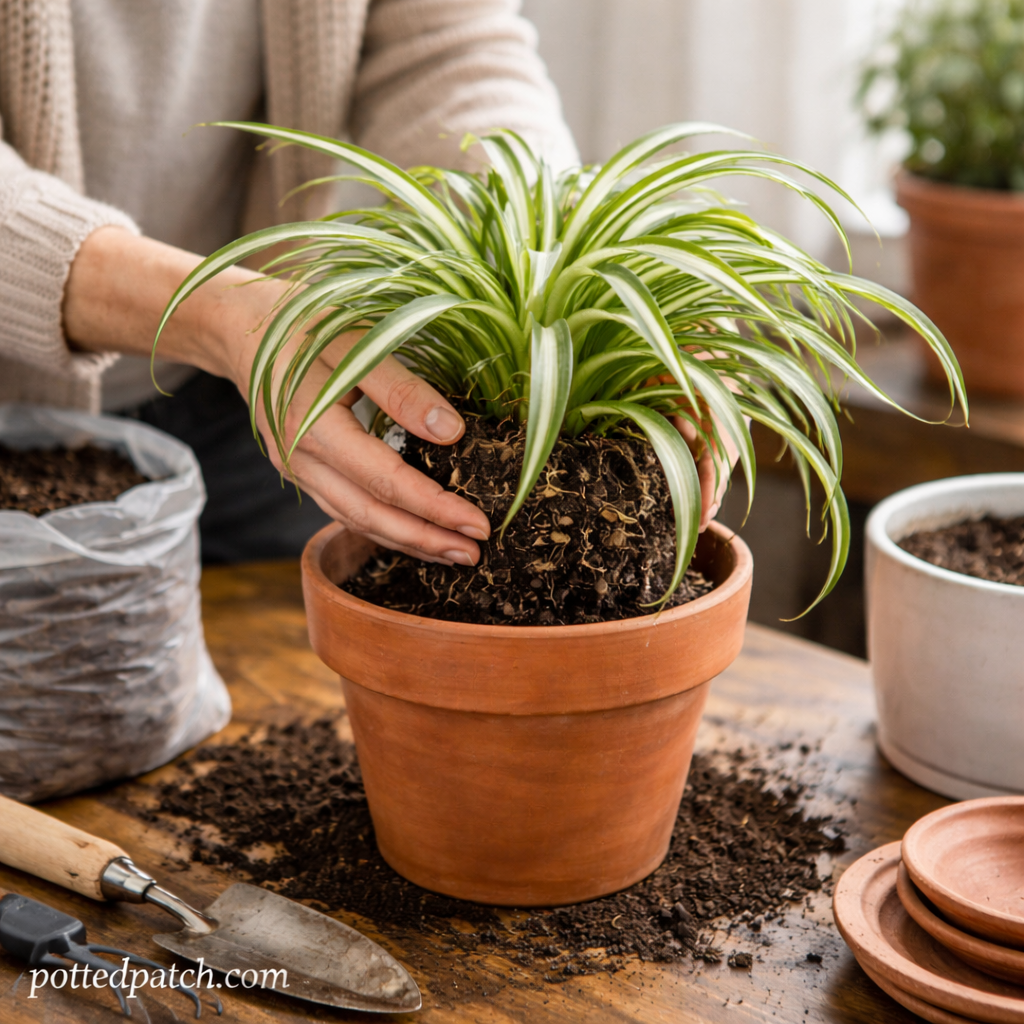
Spider plants like being slightly root bound. Too large a pot can hold excess moisture.
Size guidelines
- Increase pot size by only 1–2 inches in diameter
- Avoid jumping multiple sizes at once
- Repot every 1–2 years if growth slows
A snug fit often encourages spiderette production.
Drainage Is Non-Negotiable
No matter what material you choose, drainage holes are essential.
Without drainage:
- Water accumulates at the bottom
- Roots suffocate
- Rot develops quickly
If your favorite decorative pot has no holes, use it as an outer cover rather than planting directly into it.
Container Style Based on Your Care Habits
Here’s a quick guide:
- Overwater often → Terracotta
- Forget to water → Plastic
- Want decorative stability → Ceramic with drainage
- Love trailing displays → Hanging basket
Matching the container to your habits improves long-term success.
When to Repot a Spider Plant
Look for these signs:
- Roots pushing out of drainage holes
- Soil dries out extremely fast
- Plant looks cramped
- Slowed growth
Repotting refreshes soil and gives roots more room to expand.
Final Thoughts
The best containers for a spider plant provide:
- Excellent drainage
- Moderate root space
- Good airflow
- Stability for growth
Terracotta and hanging baskets are often top choices, but the ideal container depends on your environment and watering habits.
Choose wisely, and your spider plant will reward you with lush foliage and plenty of baby plants.