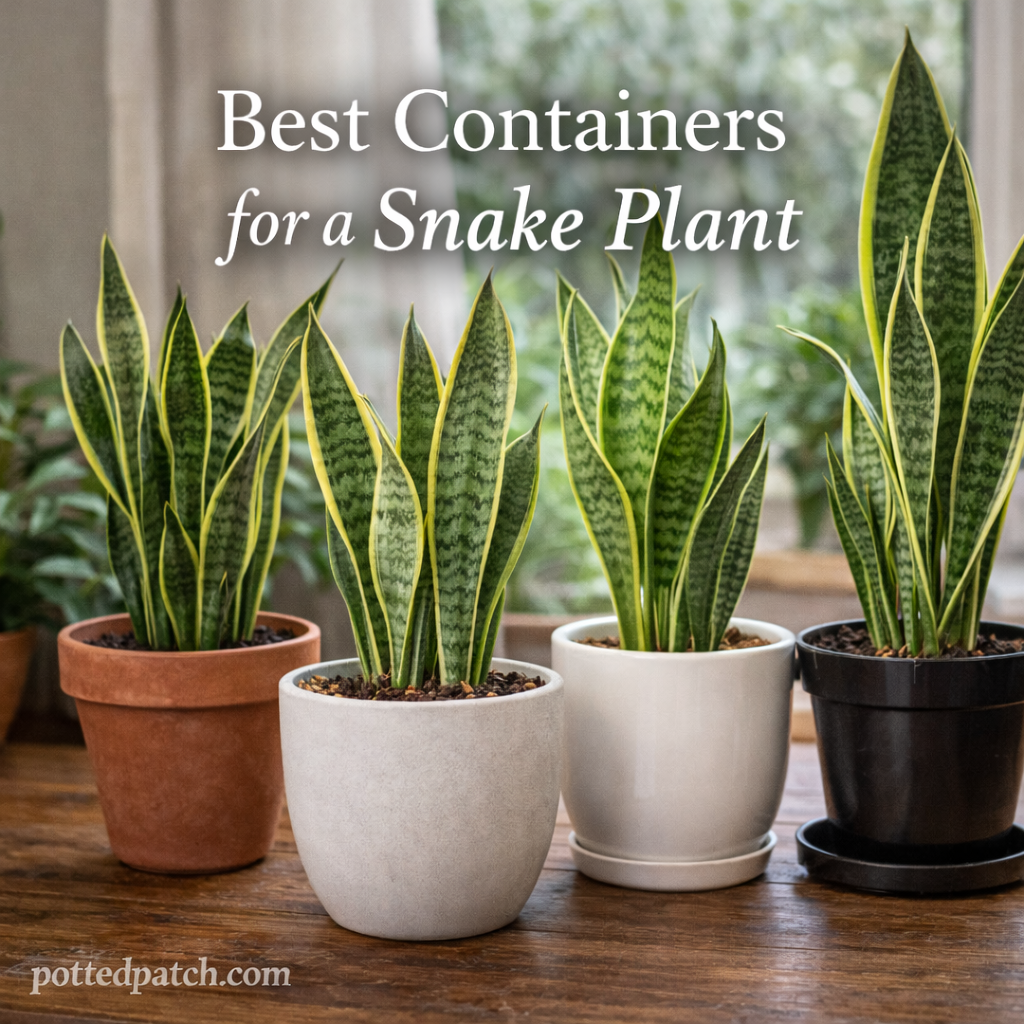
Choosing the right container for a snake plant does more than improve how it looks—it directly affects root health, watering success, and long-term growth. While snake plants are forgiving, the wrong pot can quietly cause problems like root rot, stalled growth, or instability as the plant matures.
This guide explains which containers work best for snake plants, which ones to avoid, and how to choose the right size and material for your space.
Why Container Choice Matters for Snake Plants
Snake plants grow from thick rhizomes and store moisture in their leaves and roots. Because of this, they are especially sensitive to excess water and poor drainage.
The right container helps:
- Prevent soggy soil
- Support upright growth
- Encourage healthy root development
- Reduce the risk of rot
A decorative pot alone isn’t enough—function always comes first.
The Most Important Feature: Drainage Holes
Drainage is non-negotiable for snake plants.
A container must have at least one drainage hole at the bottom to allow excess water to escape. Without drainage, water collects at the base of the pot, leading to root rot even if you water infrequently.
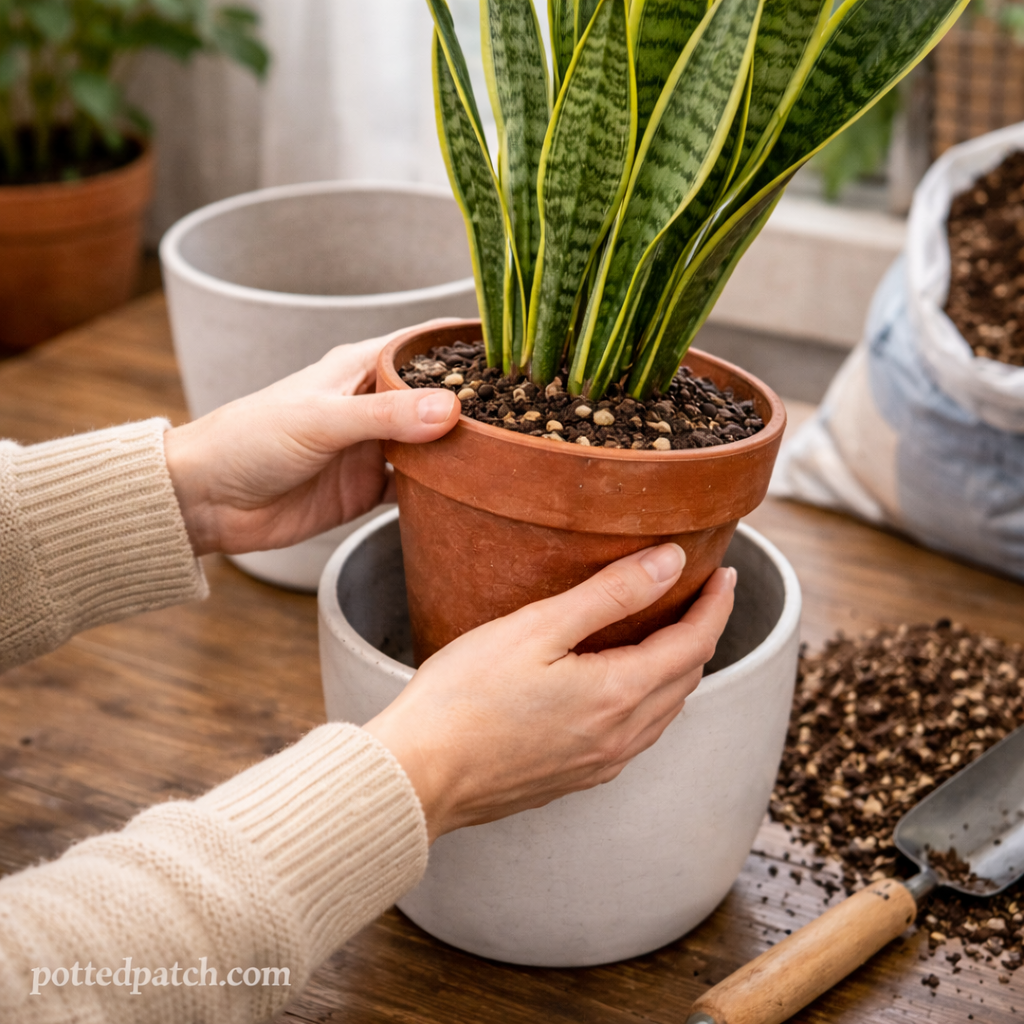
If you love a pot without drainage
- Use it as a decorative cache pot
- Keep the snake plant in a plastic nursery pot inside
- Remove the inner pot for watering, then return it once drained
This setup keeps roots safe while maintaining your preferred style.
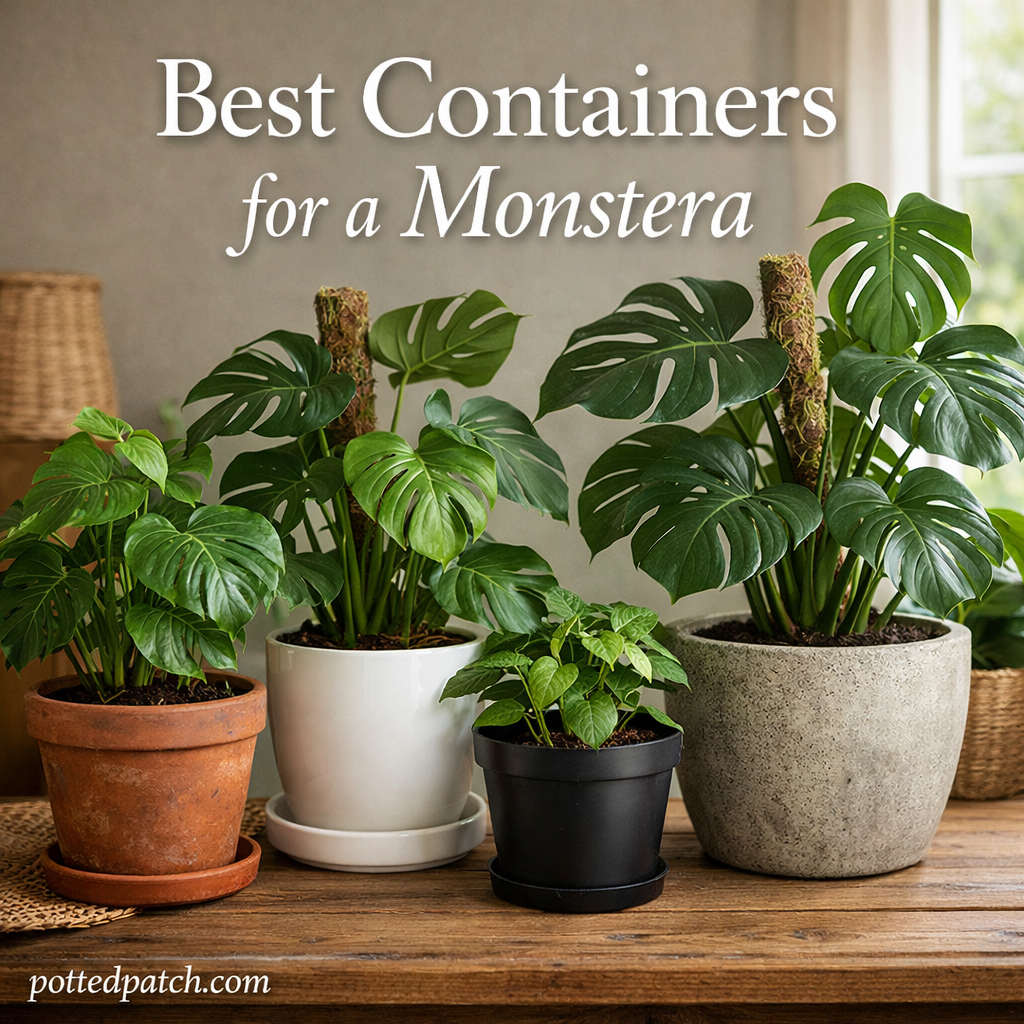
Best Container Materials for Snake Plants
Different materials affect how quickly soil dries and how stable the plant feels.
Terracotta Pots
Terracotta is often the best choice for snake plants.
Benefits:
- Porous material allows soil to dry faster
- Reduces overwatering risk
- Provides good weight for tall plants
Considerations:
- Dries out faster in warm climates
- Can develop mineral stains over time
Terracotta is ideal for beginners or anyone prone to overwatering.
Ceramic Pots (With Drainage)
Glazed ceramic pots work well if they include drainage holes.
Benefits:
- Retain moisture slightly longer than terracotta
- Wide range of styles and finishes
- Heavier, offering stability for tall varieties
Considerations:
- Overwatering risk is higher without careful watering
- Always confirm drainage before buying
These are great for controlled watering routines.
Plastic Pots
Plastic containers are lightweight and practical.
Benefits:
- Affordable and widely available
- Retain moisture longer
- Easy to move larger plants
Considerations:
- Easier to overwater
- Less stable for tall snake plants
Plastic pots work best when paired with very well-draining soil and careful watering.
Concrete or Stone Pots
These are excellent for large, mature snake plants.
Benefits:
- Extremely stable
- Modern, clean aesthetic
- Durable and long-lasting
Considerations:
- Heavy and difficult to move
- Must have drainage holes
These are best used as permanent containers once the plant reaches its mature size.
Container Sizes: How Big Is Too Big?
Snake plants prefer being slightly root-bound. A container that’s too large holds excess soil, which stays wet longer and increases the risk of rot.
Ideal pot sizing
- Choose a pot 1–2 inches wider than the root ball
- Avoid jumping up multiple sizes at once
- Repot only when roots are clearly crowded
Signs the current pot is too small:
- Roots growing out of drainage holes
- Pot bulging or cracking
- Frequent tipping from top-heavy growth
When in doubt, size up gradually.
Tall vs. Wide Pots: Which Is Better?
Wide, stable pots are usually better than tall, narrow ones.
Snake plants have shallow but spreading roots, and taller pots:
- Hold excess moisture at the bottom
- Increase tipping risk
- Dry unevenly
A low-to-medium height pot with a wide base offers better balance and drainage.
Matching Containers to Snake Plant Varieties
Different snake plant varieties benefit from different pot styles.
- Tall varieties: Heavy ceramic, terracotta, or concrete pots for stability
- Compact varieties: Smaller terracotta or plastic pots
- Multiple pups: Wider containers to allow horizontal spread
Matching pot shape to plant structure improves both appearance and health.
Containers to Avoid
Some containers cause more harm than good.
Avoid:
- Pots without drainage holes
- Self-watering containers
- Extremely oversized pots
- Very narrow or top-heavy designs
Snake plants do best when conditions are simple and predictable.
Final Thoughts
The best container for a snake plant balances drainage, stability, and size. A well-chosen pot makes watering easier, supports healthy roots, and helps your plant grow upright and strong over time.
When drainage and sizing are right, snake plants thrive with minimal effort—exactly what they’re known for.