Choosing the right container for your rubber plant can make the difference between steady growth and constant care problems.
While rubber plants (Ficus elastica) are hardy, they are sensitive to poor drainage and unstable pots. The right container supports healthy roots, balanced growth, and easier maintenance.
Here’s what to look for — and which types of pots work best.
Why Container Choice Matters
Rubber plants grow upright and can become top-heavy over time. Their large leaves and thick stems need stability below the soil line.
A poor container can cause:
- Root rot from trapped moisture
- Tipping due to lightweight pots
- Slow growth from root restriction
- Uneven moisture distribution
Choosing the correct pot prevents many common issues.
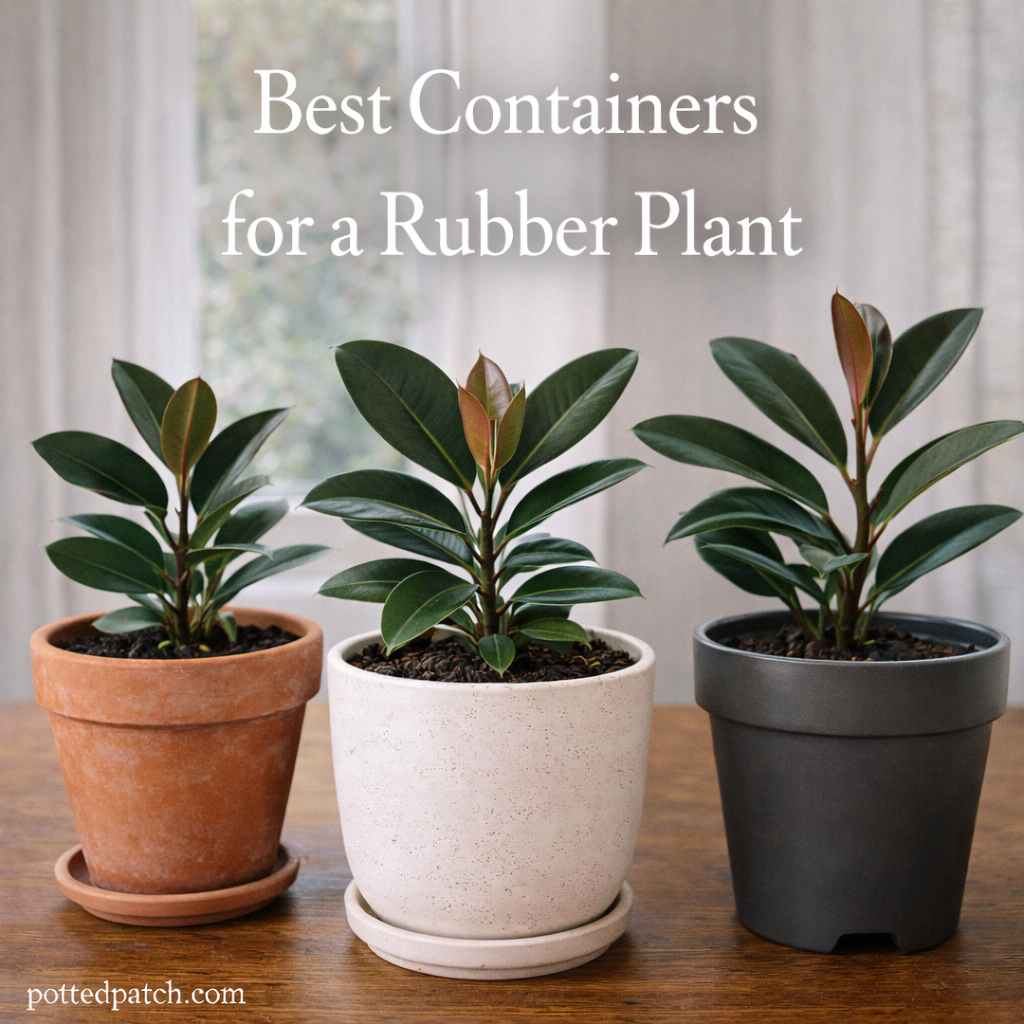
1. Terracotta Pots (Best for Drainage)
Terracotta is one of the best options for rubber plants.
Why It Works
- Porous material allows airflow
- Soil dries more evenly
- Reduces risk of overwatering
- Adds weight for stability
If you tend to overwater, terracotta is especially helpful.
The only downside: soil may dry faster, so monitor moisture.
2. Ceramic Pots (With Drainage Holes)
Glazed ceramic pots are stylish and practical — as long as they have drainage holes.
Benefits
- Heavier base prevents tipping
- Retains moisture slightly longer
- Visually complements large foliage
Avoid ceramic pots without drainage unless using them as decorative cachepots.
3. Plastic Pots (Lightweight Option)
Plastic pots are affordable and retain moisture well.
Pros
- Lightweight
- Budget-friendly
- Retains soil moisture
Cons
- Easier to overwater
- Less stable for tall plants
If using plastic, choose one with multiple drainage holes and consider placing it inside a heavier decorative pot.
4. Self-Watering Pots (Use With Caution)
Self-watering containers can work, but they’re not ideal for beginners with rubber plants.
Because rubber plants prefer soil to dry slightly between waterings, constant moisture may increase rot risk.
If you use one:
- Ensure soil isn’t staying wet
- Monitor moisture closely
They’re better suited for experienced plant owners.
5. Pot Size: How Big Should It Be?
Avoid going too large.
Choose a container that is:
- 1–2 inches wider than the root ball
- Deep enough to support vertical growth
- Stable at the base
Oversized pots hold excess moisture and slow root development.
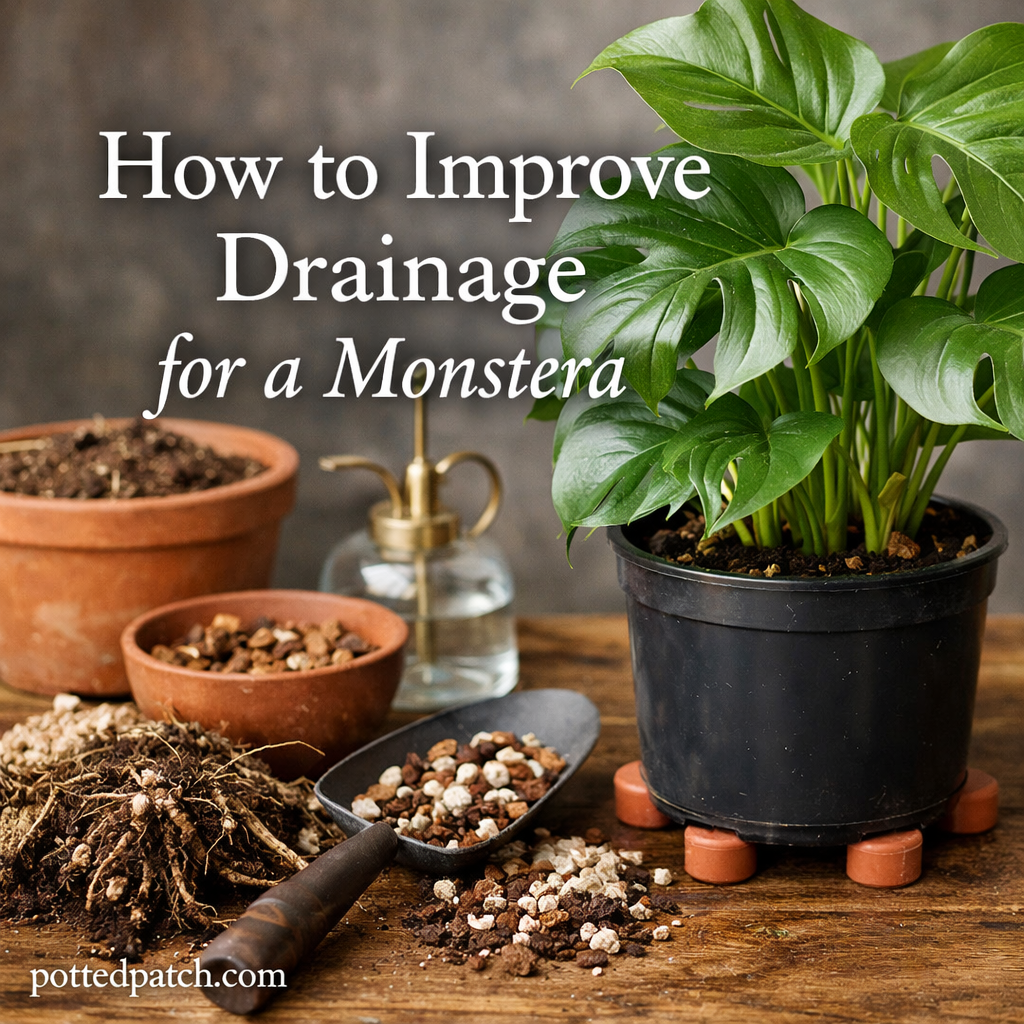
6. Drainage Is Non-Negotiable
No matter the material, your rubber plant container must have drainage holes.
Without proper drainage:
- Roots suffocate
- Soil stays wet too long
- Growth slows
If your decorative pot lacks holes, keep the plant in a nursery pot inside it and remove for watering.
7. Stability Matters for Tall Plants
As rubber plants mature, they become top-heavy.
Choose:
- Wider bases
- Heavier materials
- Pots that won’t tip easily
A stable container protects both the plant and your floors.
When to Repot
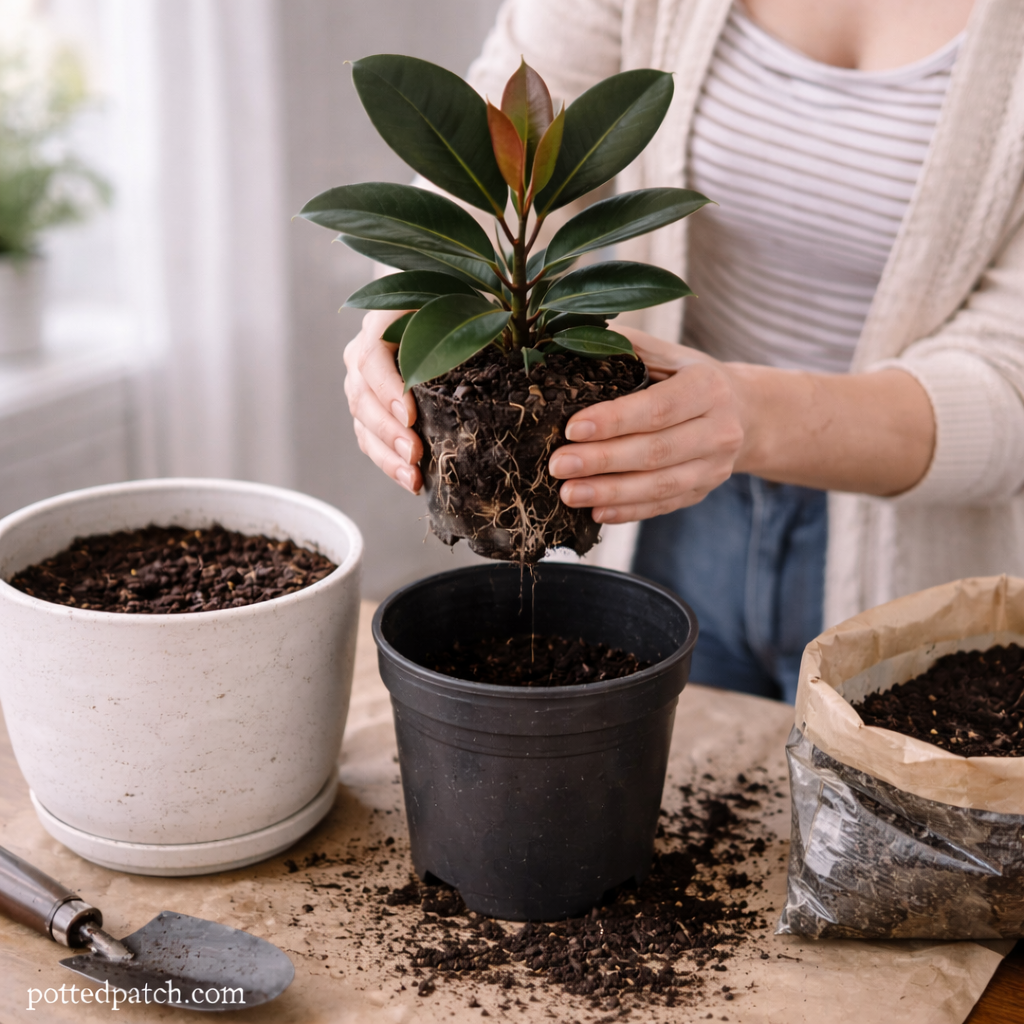
Repot your rubber plant when:
- Roots circle the bottom
- Water runs straight through
- Growth slows significantly
Spring is the best time to upgrade containers.
Quick Container Checklist
Before choosing a pot, ask:
- Does it have drainage holes?
- Is it 1–2 inches larger than the current pot?
- Is it heavy enough for stability?
- Does it suit your watering habits?
If the answer is yes to all, you’re on the right track.
Final Thoughts
The best container for a rubber plant balances drainage, stability, and proper sizing.
Terracotta and ceramic pots with drainage holes are top choices, while oversized or non-draining containers should be avoided.
With the right pot, your rubber plant will grow stronger, straighter, and healthier over time.