Choosing the right container for a pothos is one of the easiest ways to improve its health, growth rate, and overall appearance. While pothos are adaptable and forgiving, the container you use directly affects watering, root health, and long-term maintenance.
This guide breaks down the best container types for pothos, what to avoid, and how to choose the right pot based on your space and care style.
Why the Right Container Matters for Pothos
Pothos grow fast and develop active root systems. A poor container choice can lead to problems like root rot, stalled growth, or constantly soggy soil.
A good container helps with:
- Proper drainage
- Even moisture control
- Stable root development
- Easier long-term care
Even a perfectly healthy pothos can struggle in the wrong pot.
Drainage Is Non-Negotiable
If there’s one rule that matters more than any other, it’s drainage.
Pothos roots need oxygen. Without drainage holes, excess water collects at the bottom of the pot, suffocating roots and leading to rot.
Always choose containers that:
- Have at least one drainage hole
- Allow excess water to escape freely
- Pair easily with a saucer or cache pot
If you love the look of a pot without drainage, use it as a decorative outer container and keep the plant in a nursery pot inside.
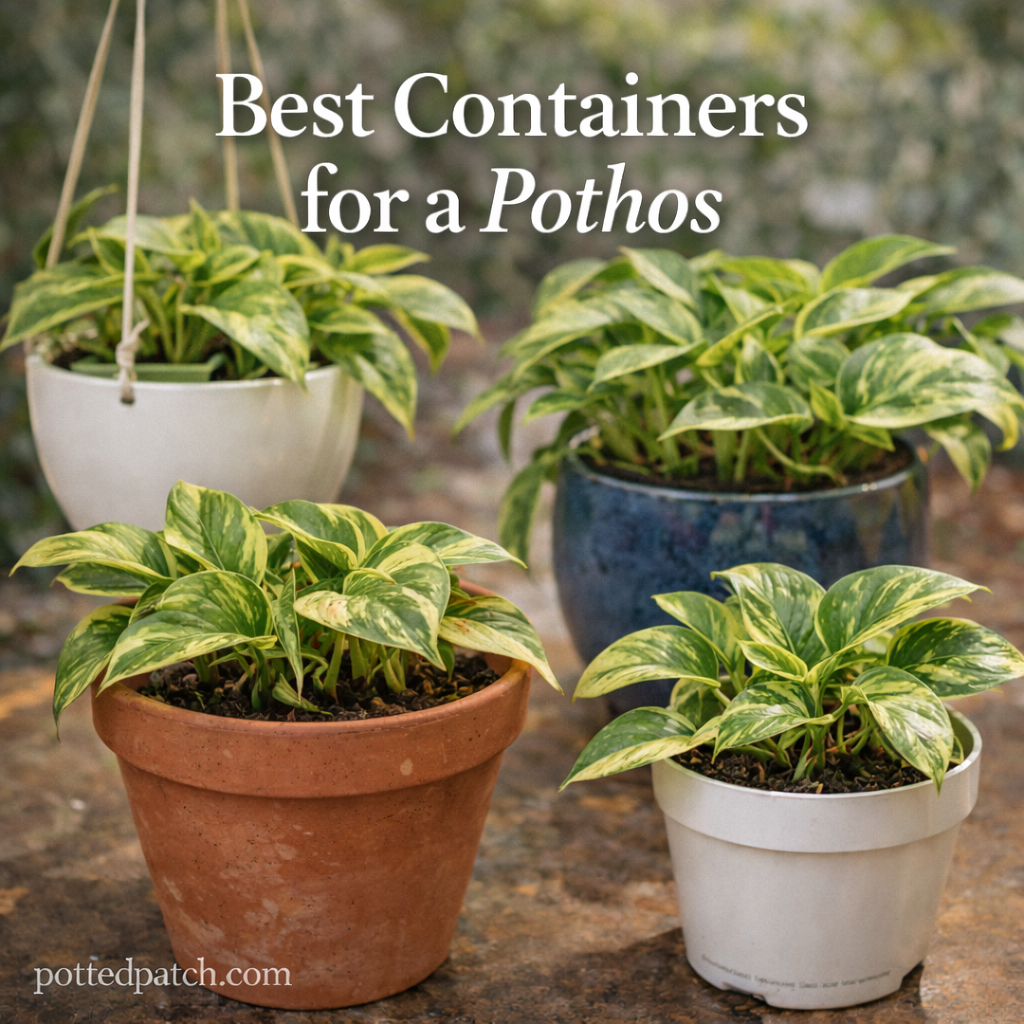
Terracotta Pots: Best for Overwaterers
Terracotta is one of the best materials for pothos, especially if you tend to water too often.
Why terracotta works well:
- Porous material allows moisture to evaporate
- Soil dries out more evenly
- Roots get better airflow
Things to keep in mind:
- Requires more frequent watering
- Can dry out faster in bright light
- Breakable if dropped
Terracotta is ideal for beginners who want a forgiving setup.
Plastic Pots: Lightweight and Practical
Plastic containers are common and perfectly suitable for pothos.
Benefits:
- Retain moisture longer
- Lightweight and easy to move
- Affordable and widely available
Potential downsides:
- Easier to overwater
- Less breathable than terracotta
Plastic pots work best if you already have a good sense of your watering routine.
Ceramic and Glazed Pots: Stylish but Watch Drainage
Glazed ceramic pots are popular for their clean, modern look.
Pros:
- Attractive and decorative
- Hold moisture more consistently
- Stable and less likely to tip
Cons:
- Poor breathability
- Often heavier
- Drainage holes are essential
Never use a glazed pot without drainage unless it’s paired with an inner pot.
Hanging Containers for Trailing Growth
Pothos are natural trailers, making them perfect for hanging containers.
Best features to look for:
- Built-in drainage holes
- Lightweight materials
- Secure hanging hardware
Avoid heavy ceramic hanging pots unless they’re firmly anchored. Plastic or resin containers are safer and easier to manage.
Self-Watering Pots: Proceed with Caution
Self-watering containers can work, but they aren’t always ideal for pothos.
When they help:
- Busy schedules
- Consistent indoor environments
- Plants in bright light
When they cause issues:
- Overwatering if the reservoir stays full
- Poor root oxygenation
- Hidden moisture problems
If using a self-watering pot, let the reservoir dry between refills.
Choosing the Right Size Pot
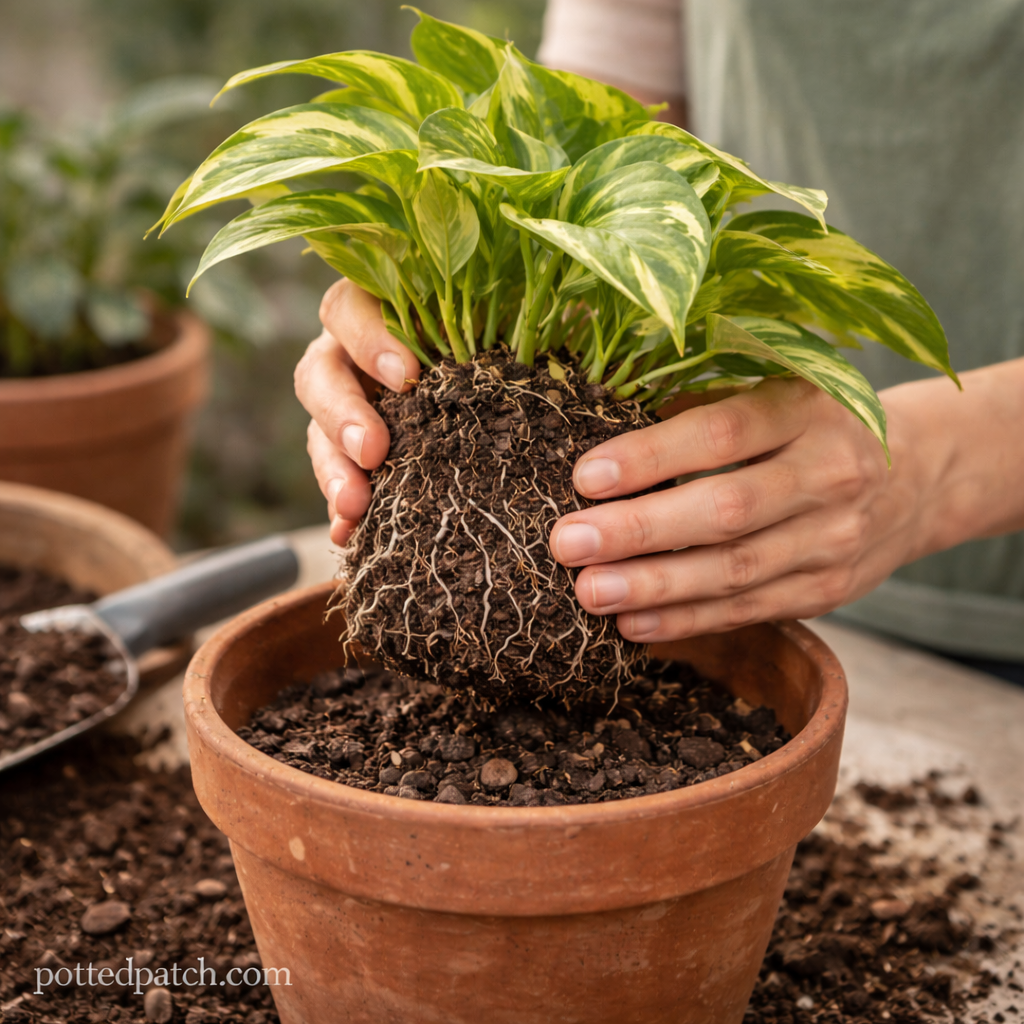
Bigger is not always better.
Best sizing rule:
- Choose a pot 1–2 inches wider than the root ball
- Avoid oversized pots that hold excess water
Signs your pothos needs a larger container:
- Roots growing out of drainage holes
- Water running straight through
- Slowed growth despite good care
Repotting once every 1–2 years is usually sufficient.
Cache Pots and Decorative Containers
Cache pots are outer containers that hold a nursery pot inside.
They’re great for:
- Hiding plastic nursery pots
- Improving indoor aesthetics
- Easy plant swaps
Just remember to:
- Remove the inner pot for watering
- Empty excess water before placing it back
This setup offers flexibility without sacrificing plant health.
Containers to Avoid for Pothos
Some container types consistently cause problems.
Avoid:
- Pots with no drainage holes
- Oversized containers
- Sealed glass containers
- Metal pots without liners
These options trap moisture and increase the risk of root damage.
Quick Container Checklist
Before choosing a pot, ask yourself:
- Does it have drainage holes?
- Is it the right size for the root ball?
- Does the material match my watering habits?
- Is it easy to move or hang safely?
If the answer is yes to all four, you’ve found a good fit.
Final Thoughts
The best container for a pothos balances drainage, size, and material with your personal care habits. Terracotta and well-draining plastic pots are reliable choices, while decorative options work best when paired with proper drainage.
Get the container right, and pothos will reward you with faster growth, healthier roots, and fuller vines. 🌿