Choosing the right container for your peace lily isn’t just about style — it directly affects drainage, root health, and long-term growth.
Peace lilies prefer evenly moist soil, but they’re sensitive to soggy conditions. The right pot helps balance moisture, airflow, and stability.
Here’s how to choose the best container for a healthy, thriving peace lily.
What Peace Lilies Need in a Container
Before picking a pot, it helps to understand what supports proper growth.
Peace lilies prefer:
- Consistent but well-draining moisture
- Moderate airflow to roots
- Stable support for leafy growth
- Slightly snug root space
The container you choose influences all of these factors.
Containers With Drainage Holes (Best Overall Choice)
If you only follow one rule, make it this:
Always choose a pot with drainage holes.
Drainage holes:
- Prevent water from pooling at the bottom
- Reduce risk of root rot
- Allow soil to dry evenly
Peace lilies dislike sitting in standing water. A drainage hole is the simplest way to protect root health.
If you love decorative pots without holes, use them as outer cachepots with a nursery pot inside.
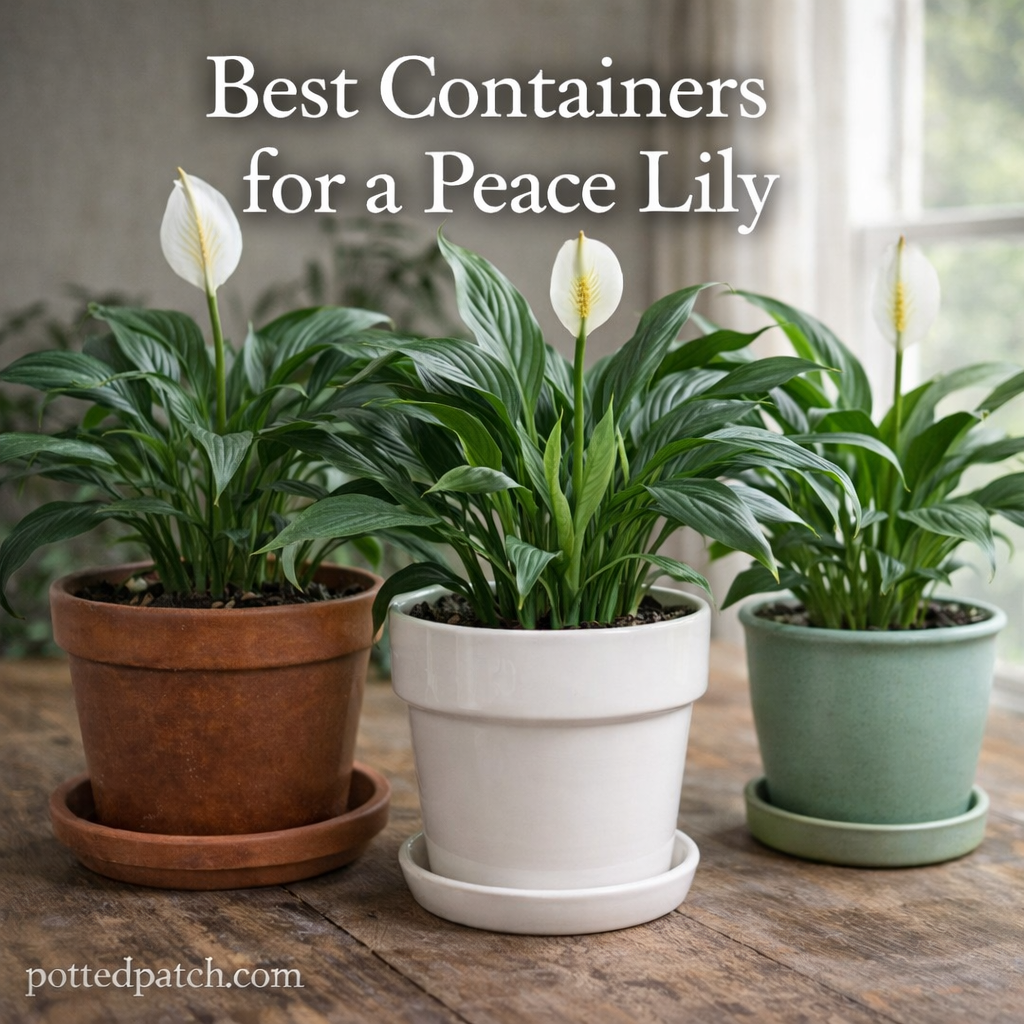
Terracotta Pots
Terracotta is one of the best materials for peace lilies — especially if you tend to overwater.
Benefits:
- Porous material absorbs excess moisture
- Encourages airflow to roots
- Helps soil dry faster
However, terracotta dries out more quickly. If your home is very dry, monitor soil moisture carefully.
Best for: Overwaterers or humid environments.
Plastic Pots
Plastic pots retain moisture longer than terracotta.
Benefits:
- Lightweight and affordable
- Hold moisture evenly
- Good for drier homes
They work well if you struggle with underwatering. Just ensure proper drainage.
Best for: Dry climates or inconsistent watering habits.
Ceramic or Glazed Pots
Glazed ceramic pots are attractive and retain moisture well.
Pros:
- Stylish appearance
- Moderate moisture retention
- Heavier and stable
Cons:
- Must have drainage holes
- Can trap moisture if overwatered
Always confirm drainage before purchasing.
Best for: Balanced watering habits and decorative spaces.
Self-Watering Pots (Use With Caution)
Self-watering containers can work, but peace lilies prefer slightly drying out between waterings.
If using one:
- Monitor soil moisture regularly
- Avoid constantly full reservoirs
- Let the top layer dry before refilling
These pots are better suited for experienced plant owners.
Ideal Pot Size for a Peace Lily
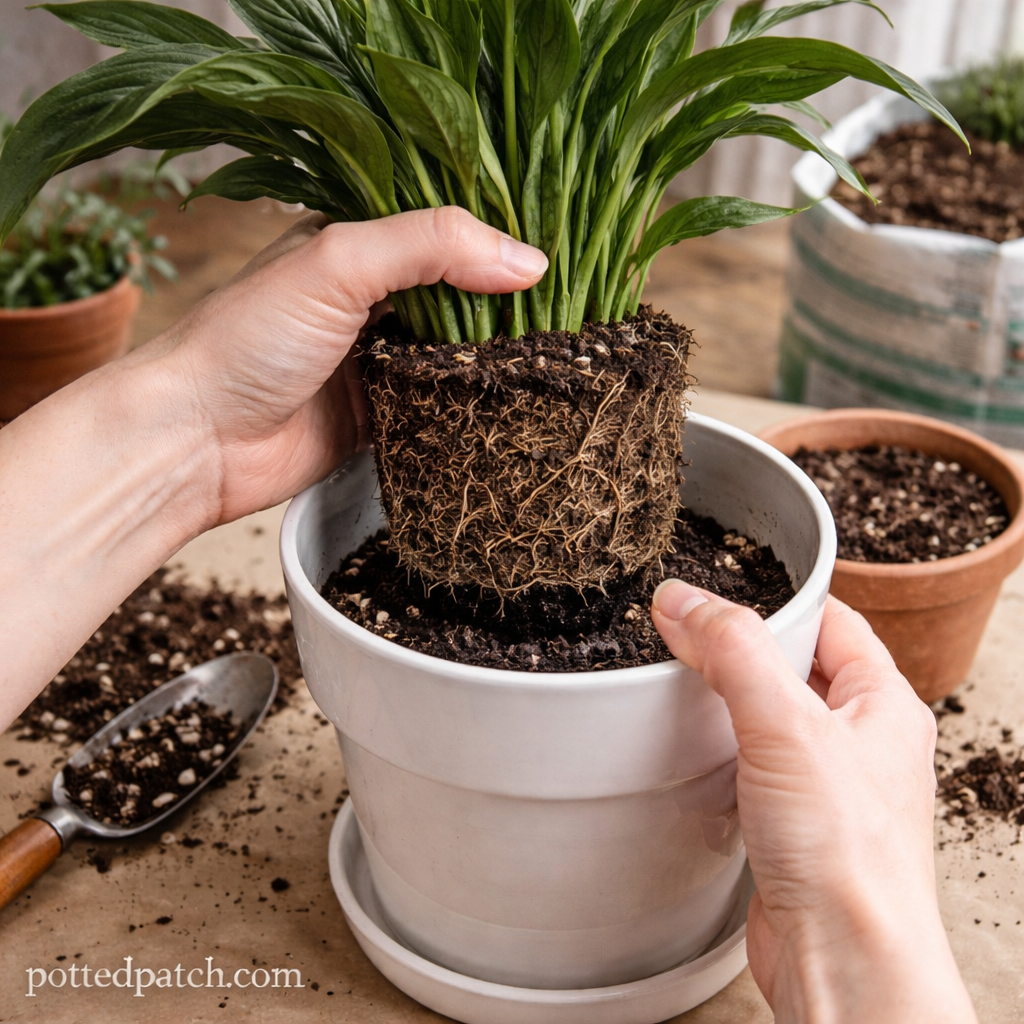
Peace lilies prefer being slightly rootbound.
Choose a pot:
- 1–2 inches wider than the current root ball
- Not excessively large
- Deep enough for stable support
Oversized pots hold excess moisture and increase root rot risk.
Best Pot Shape for Stability
Peace lilies grow tall leaves and flowers, which can make them top-heavy.
Look for:
- Slightly wider bases
- Heavier materials
- Deep containers for support
Avoid narrow, lightweight pots that tip easily.
When to Upgrade the Container
Consider repotting if:
- Roots grow out of drainage holes
- Water runs straight through without absorbing
- Growth has slowed significantly
- The plant becomes unstable
Repot in spring or early summer for best results.
Quick Comparison: Container Types
Terracotta
Best for airflow and preventing overwatering.
Plastic
Best for moisture retention and lightweight handling.
Glazed Ceramic
Best for decorative appeal and balanced care.
Self-Watering
Best for consistent monitoring and experienced care.
Final Thoughts
The best container for a peace lily is one that balances moisture control, drainage, and stability.
When in doubt:
Choose a pot with drainage holes, avoid oversized containers, and match the material to your watering habits.
The right container makes care easier — and your peace lily will reward you with lush leaves and beautiful blooms.