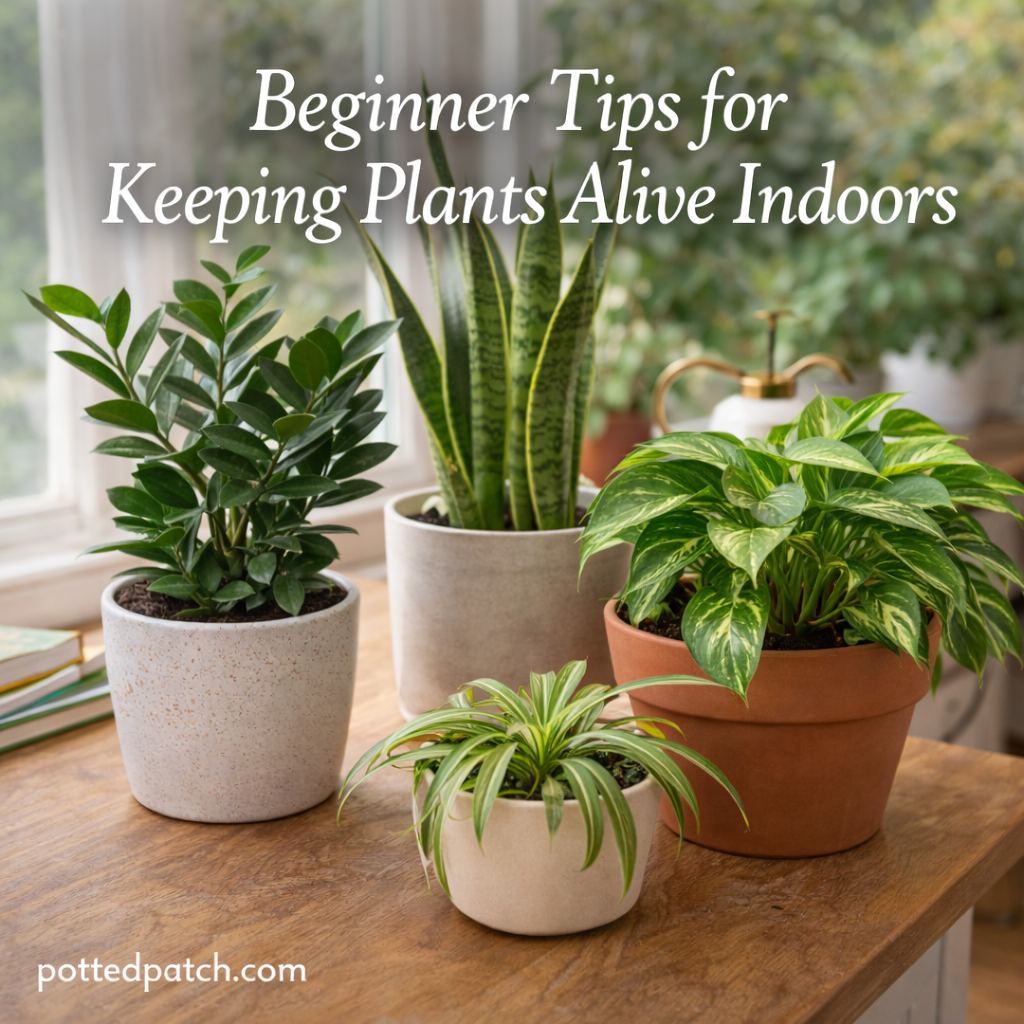
Keeping plants alive indoors doesn’t require a green thumb—it requires a few simple habits and a basic understanding of what plants actually need. Most beginner plant problems come from doing too much, not too little.
This guide covers practical, beginner-friendly tips to help your indoor plants survive, grow, and stay healthy without stress or guesswork.
Start With Easy Indoor Plants
Not all plants are beginner-friendly. Some require very specific light, humidity, or watering routines.
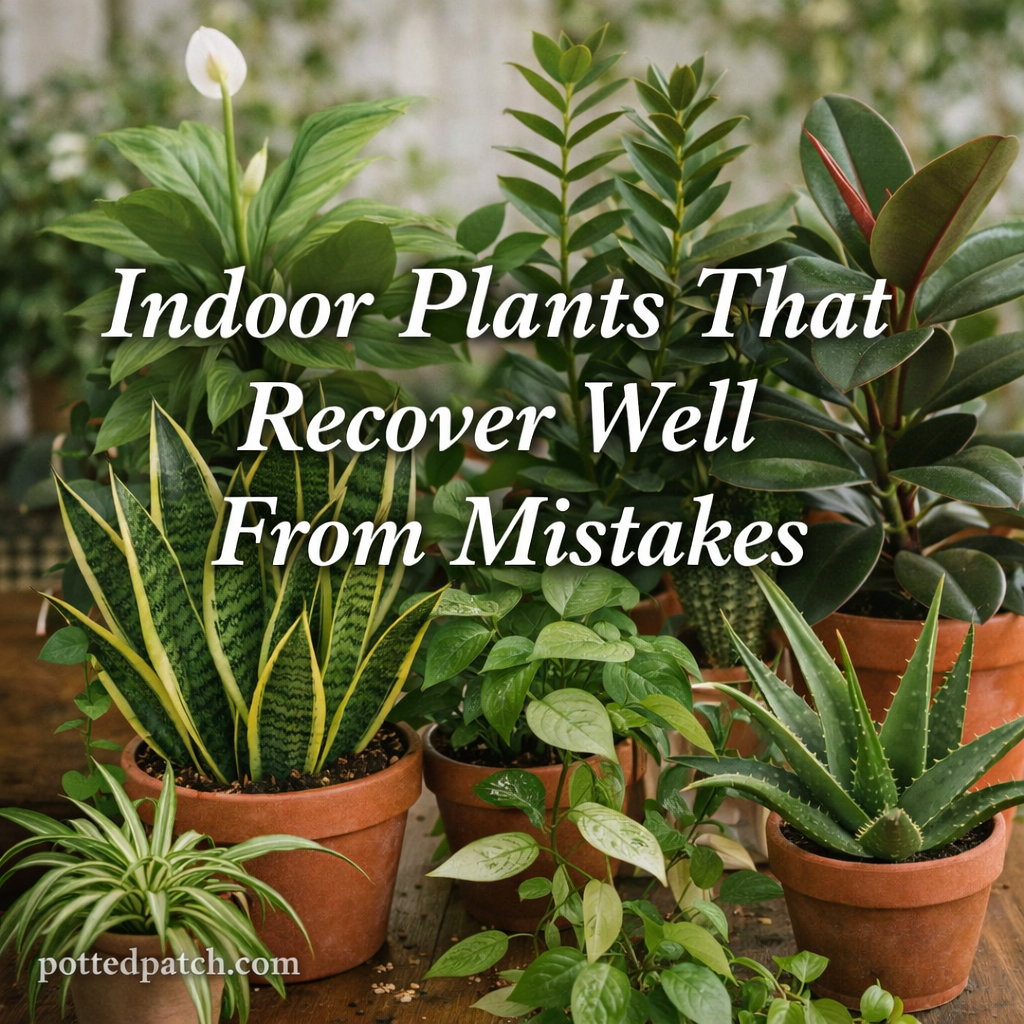
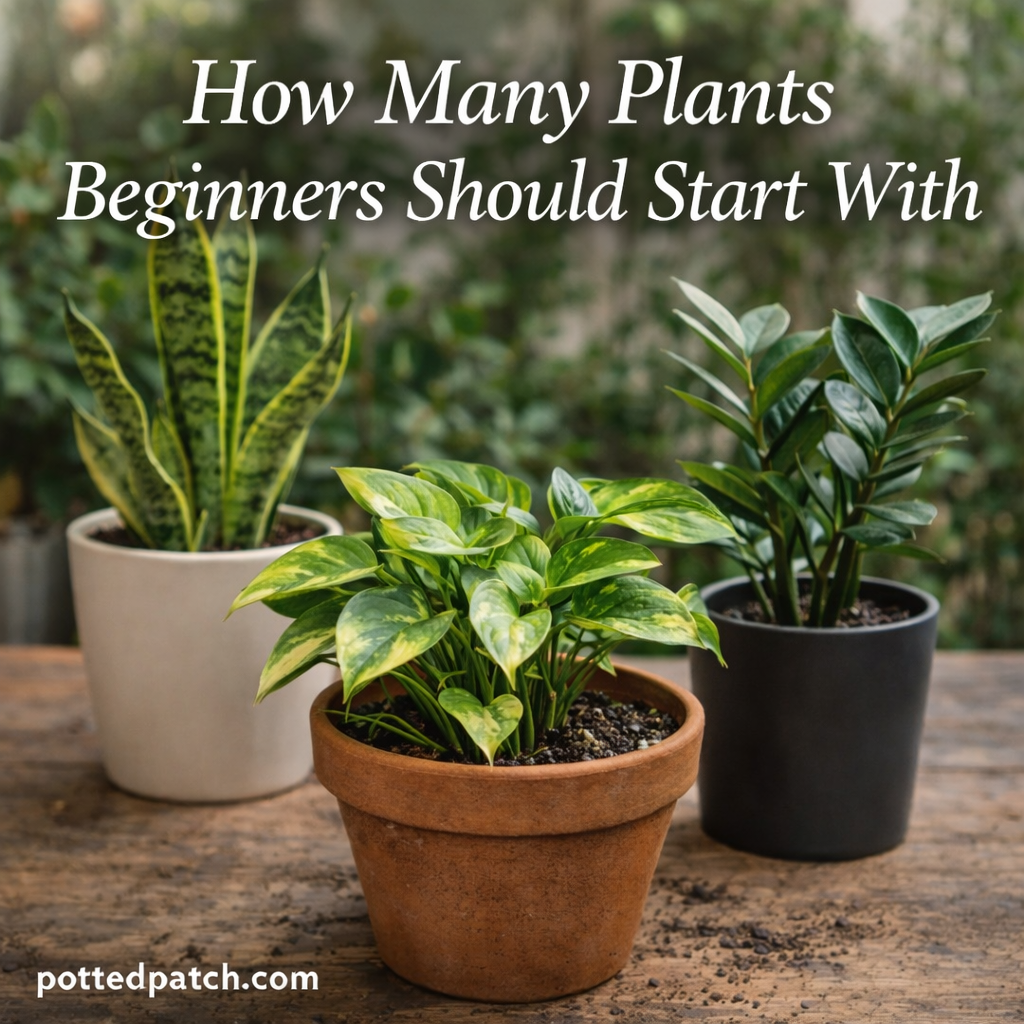
Good beginner plants include:
- Pothos
- Snake plant
- ZZ plant
- Spider plant
- Philodendron
These plants tolerate missed waterings, adapt to different light levels, and recover more easily from mistakes.
Understand Light Before You Water
Light is the most important factor in indoor plant survival.
Before placing a plant, observe:
- How bright the room feels during the day
- How close the plant is to a window
- Whether sunlight is direct or filtered
General guidelines:
- Bright indirect light = near a window, no direct sun
- Medium light = well-lit room, farther from windows
- Low light = interior rooms with minimal natural light
Plants in lower light need less water, not more.
Water Less Than You Think You Should
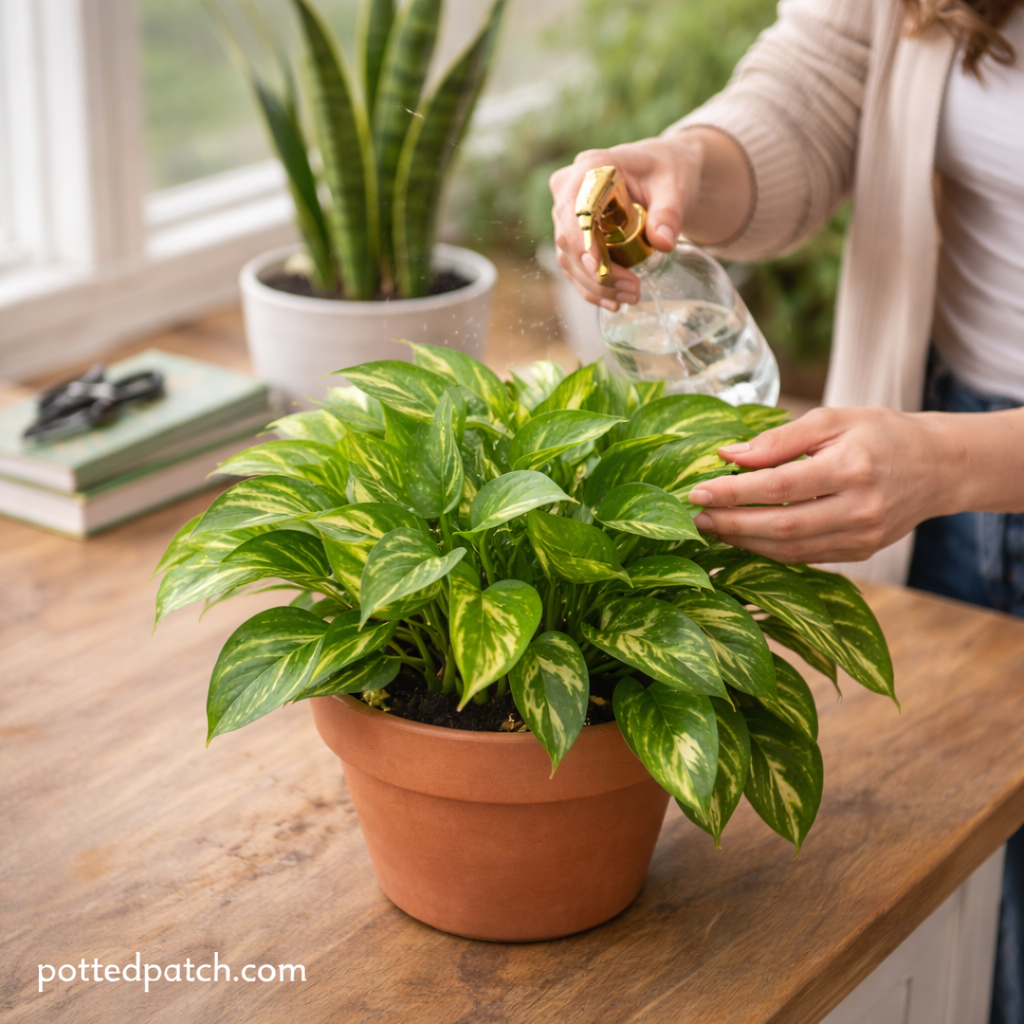
Overwatering is the number one reason indoor plants die.
Beginner-friendly watering rules:
- Never water on a fixed schedule
- Always check the soil first
- Let the top 1–3 inches dry before watering (varies by plant)
When you do water:
- Water thoroughly until it drains out
- Empty saucers so roots aren’t sitting in water
If you’re unsure, it’s usually safer to wait a day.
Use Pots With Drainage Holes
Drainage is non-negotiable for beginners.
Why drainage matters:
- Prevents root rot
- Allows excess water to escape
- Makes watering mistakes easier to recover from
If you love decorative pots:
- Use them as cache pots
- Keep the plant in a plastic or nursery pot inside
This gives you flexibility without risking root health.
Choose the Right Soil
Soil affects water retention, airflow, and root health.
For most indoor plants:
- Use indoor potting mix
- Avoid heavy garden soil
- Add perlite if soil stays wet too long
Good soil drains well but still holds some moisture.
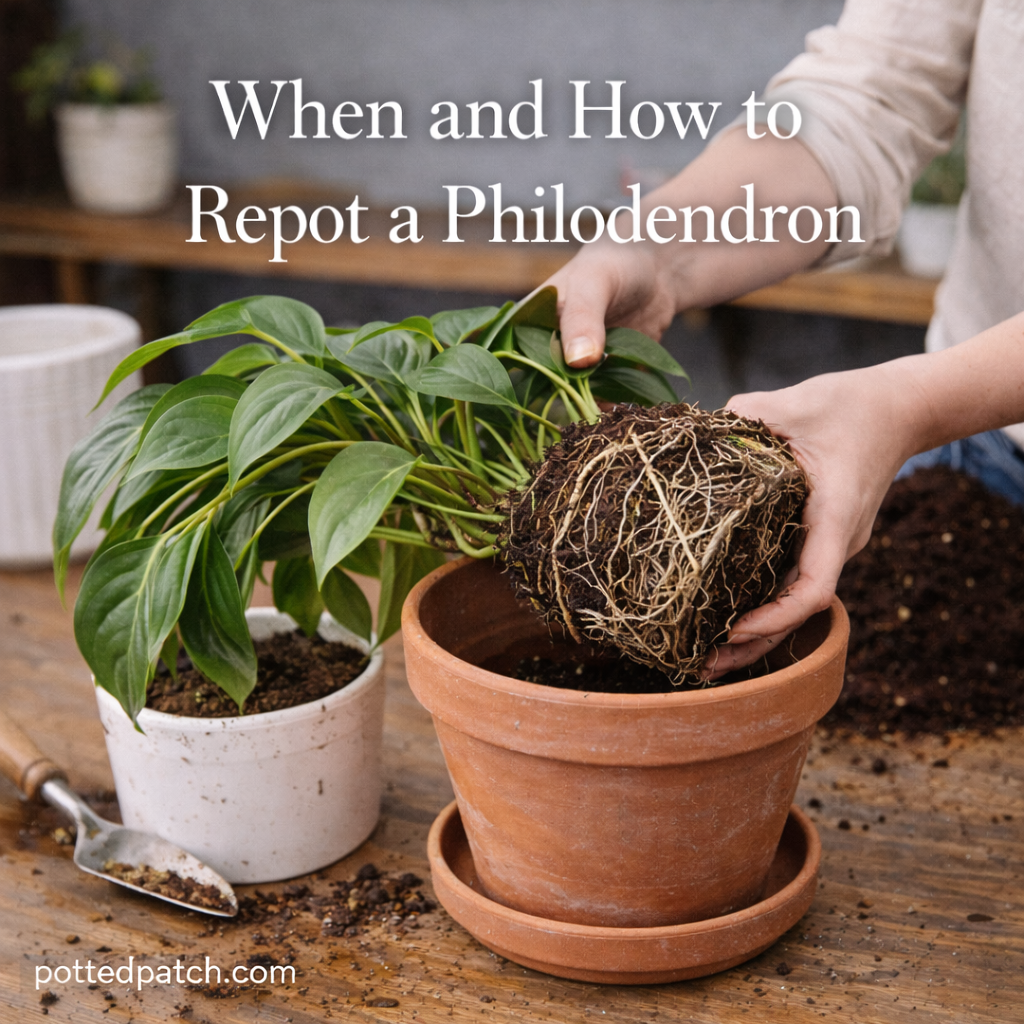
Don’t Repot Too Often
Repotting too frequently can stress plants just as much as neglect.
Beginner repotting tips:
- Repot only when roots outgrow the pot
- Size up 1–2 inches, not more
- Repot during spring or early summer if possible
A slightly snug pot is healthier than an oversized one.
Pay Attention to Leaves
Leaves are your plant’s communication system.
Common signals:
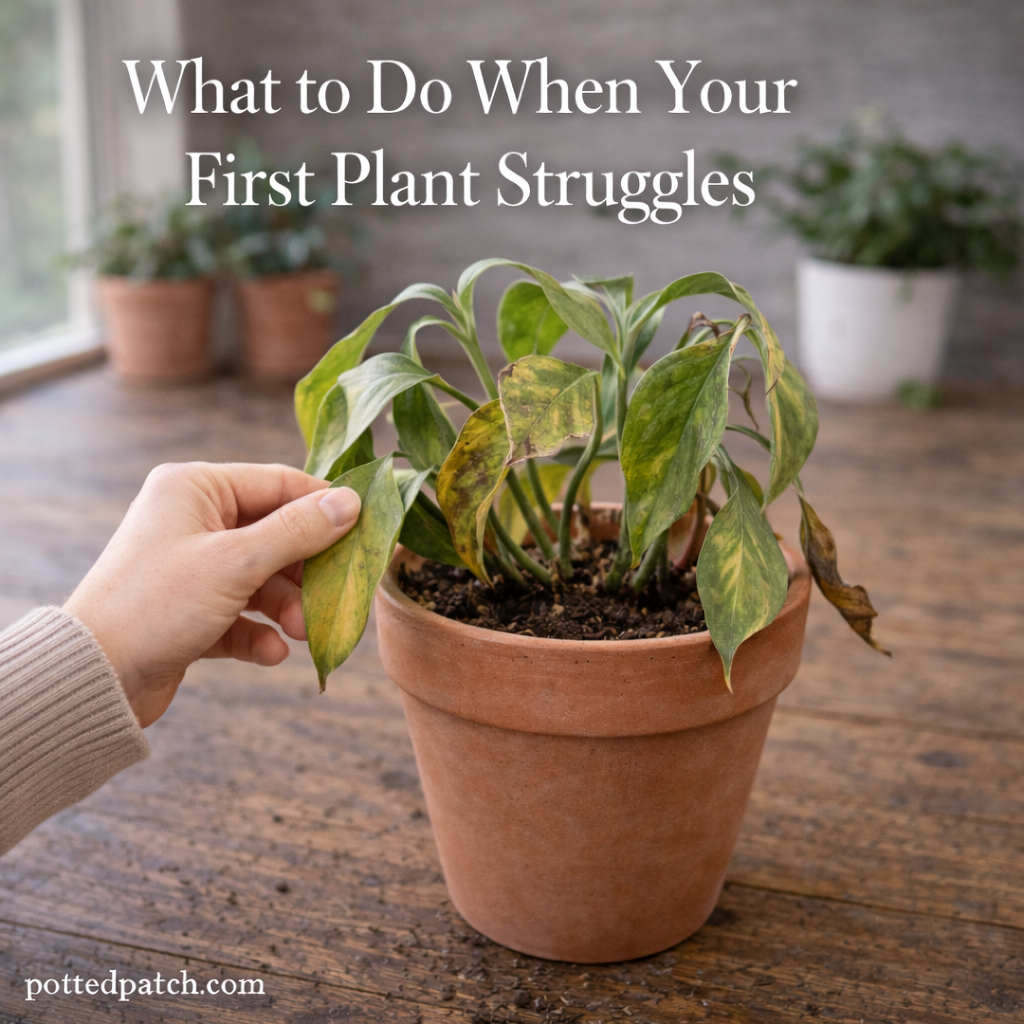
- Yellow leaves = overwatering or low light
- Drooping leaves = underwatering or root issues
- Brown edges = dry air, inconsistent watering, or salt buildup
Don’t panic over one bad leaf. Look for patterns over time.
Avoid Over-Fertilizing
More fertilizer does not mean faster growth.
Beginner-friendly fertilizer tips:
- Fertilize only during active growth (spring and summer)
- Use diluted liquid fertilizer
- Skip fertilizer entirely if the plant looks stressed
Over-fertilizing can burn roots and damage leaves.
Give Plants Time to Adjust
Plants often react to changes before they improve.
After moving or repotting a plant:
- Expect minor leaf drop
- Avoid extra watering “to help”
- Give it a few weeks to settle
Stability helps plants recover faster than constant adjustments.
Build a Simple Care Routine
Consistency matters more than perfection.
A simple routine:
- Check soil moisture once a week
- Rotate plants monthly for even growth
- Wipe dust off leaves occasionally
- Observe changes instead of reacting immediately
Plants thrive when their environment stays predictable.
Final Thoughts
Keeping plants alive indoors is about learning restraint, observation, and patience. Choose forgiving plants, respect light levels, water carefully, and avoid overcorrecting.
Once you master these basics, indoor plant care becomes easier—and far more rewarding.