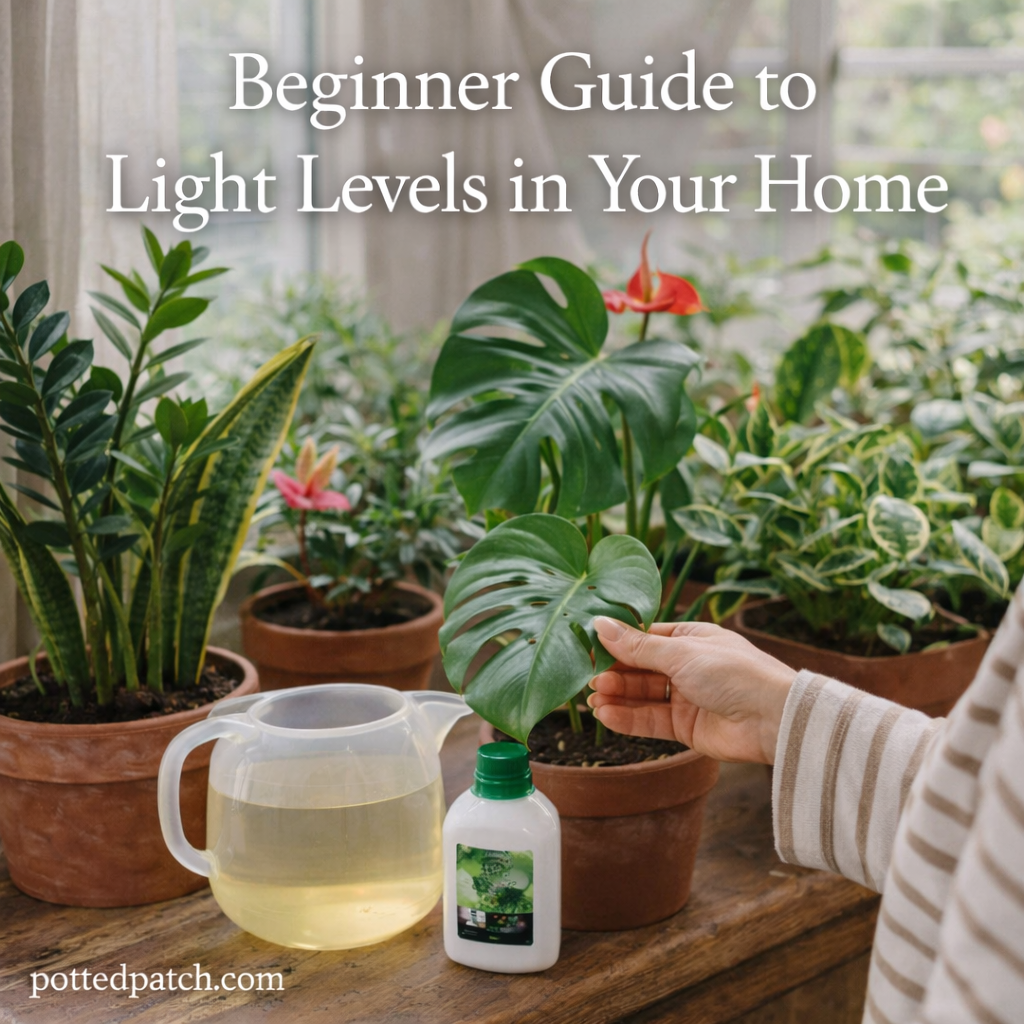
Beginner Guide to Light Levels in Your Home

Indoor houseplants arranged near a bright window, illustrating different light levels in a home.
Houseplants placed near a window to demonstrate common indoor light levels for beginners. pottedpatch.com.

Understanding light levels is one of the most important—and most confusing—parts of indoor plant care. Many beginner plant problems come down to one simple issue: the plant isn’t getting the right kind of light for your home.

This guide breaks down indoor light levels in clear, practical terms so you can confidently place plants where they’ll actually thrive, not just survive.

Continue reading “Beginner Guide to Light Levels in Your Home”
How to Fertilize a ZZ Plant

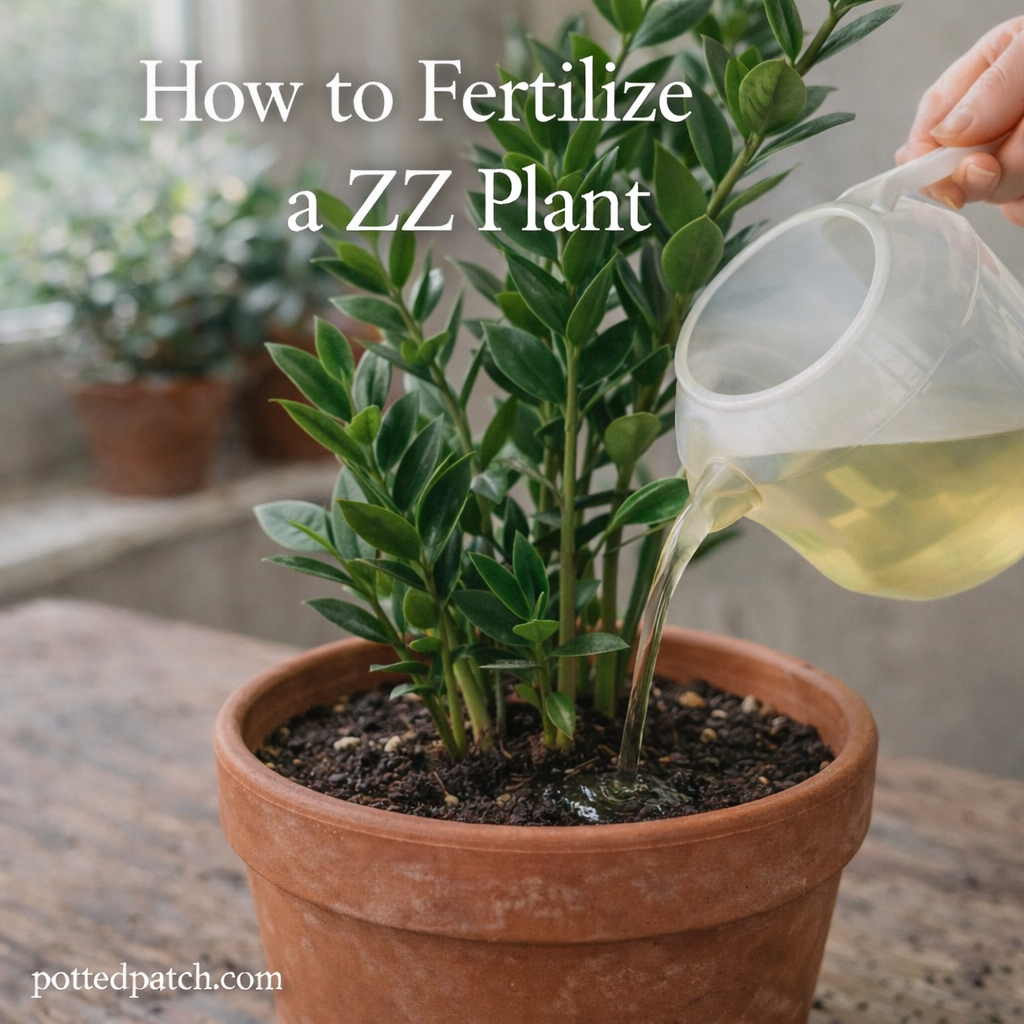
Person fertilizing a ZZ plant in a pot using diluted liquid fertilizer for healthy indoor growth.
A ZZ plant being fertilized with a diluted liquid solution to support steady, healthy growth. pottedpatch.com.

ZZ plants (Zamioculcas zamiifolia) are famously low-maintenance, and fertilizing them is no exception. In fact, one of the most common mistakes with ZZ plants is fertilizing too often. These plants grow slowly and store nutrients in their thick rhizomes, so they need far less feeding than many other houseplants.

This guide explains when to fertilize, what type of fertilizer to use, how much to apply, and how to avoid common mistakes—so you can support healthy growth without stressing your plant.

Continue reading “How to Fertilize a ZZ Plant”

How to Fix Drooping on a Snake Plant

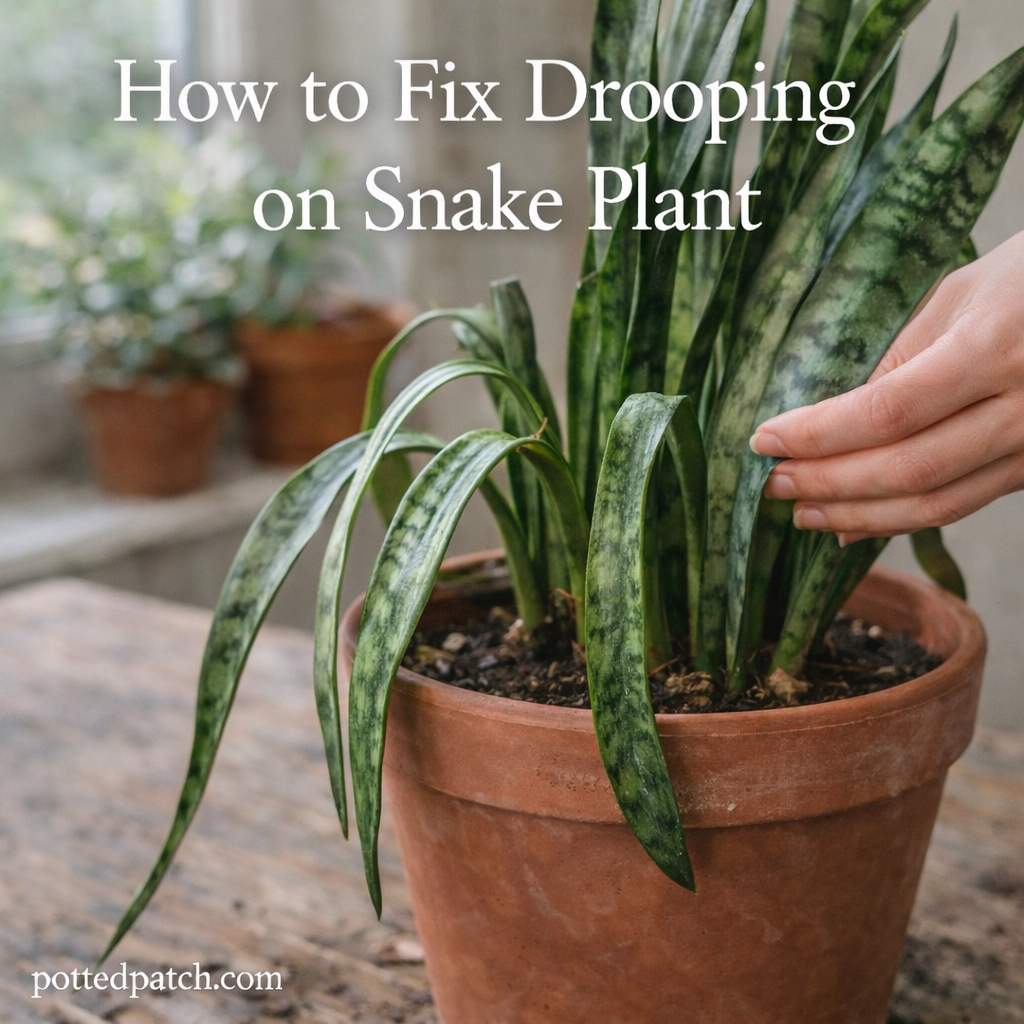
Drooping snake plant leaves in a pot, showing common issues and how to fix drooping on a snake plant.
A snake plant with drooping leaves, highlighting a common indoor plant care problem. pottedpatch.com.

Snake plants are known for their stiff, upright leaves—so when those leaves start drooping, it’s a clear sign something isn’t right. While snake plants are tough, drooping usually means a care issue that needs attention sooner rather than later.

The good news is that drooping snake plants are almost always fixable. This guide walks through the most common causes, how to diagnose the problem, and the exact steps to help your plant recover.

Continue reading “How to Fix Drooping on a Snake Plant”

Best Soil for a ZZ Plant

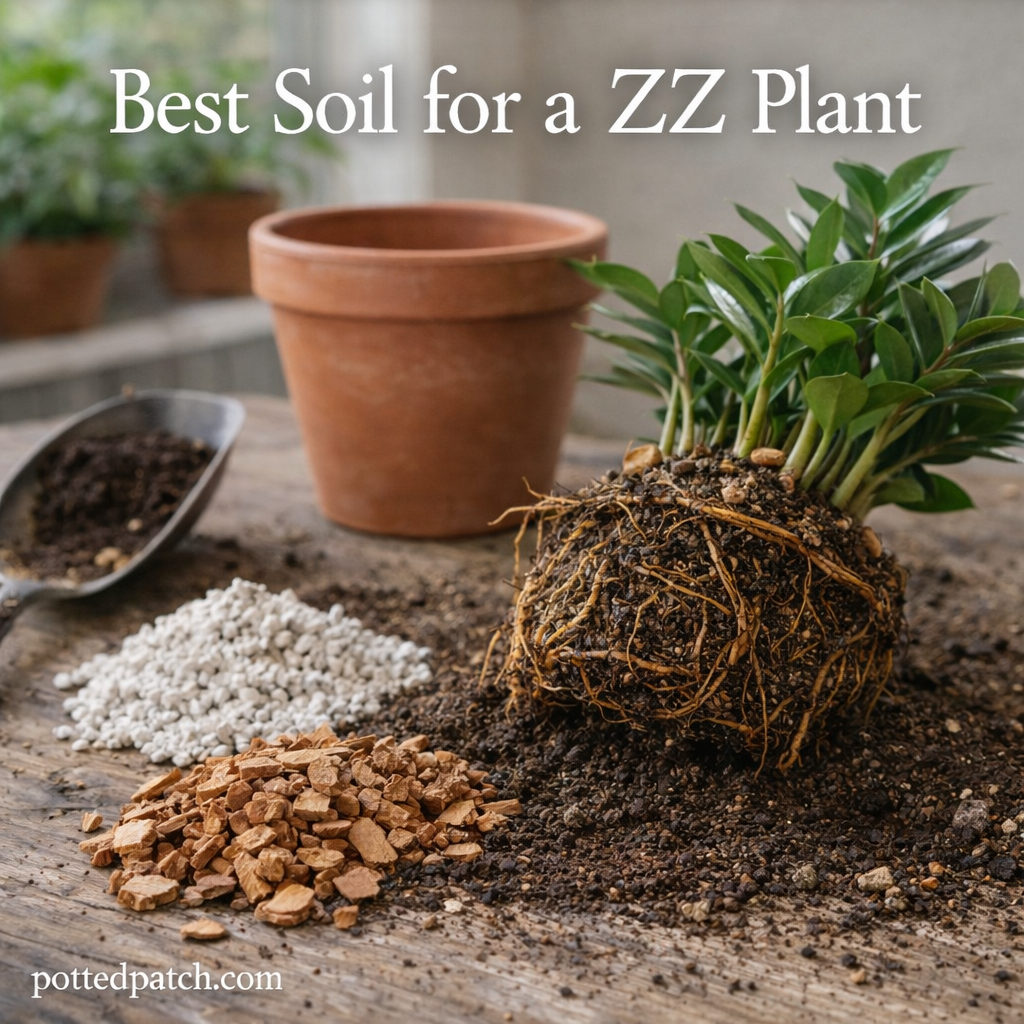
ZZ plant with exposed roots beside potting soil, perlite, and orchid bark showing the best soil mix for a ZZ plant.
A ZZ plant displayed with soil components that promote fast drainage and healthy root growth. pottedpatch.com.

ZZ plants (Zamioculcas zamiifolia) are known for being nearly indestructible—but soil choice still plays a major role in how well they grow. The wrong soil can hold too much moisture, leading to root rot, while the right mix supports healthy roots, steady growth, and long-term plant health.

This guide breaks down exactly what type of soil a ZZ plant needs, what to avoid, and how to create the perfect mix for thriving indoor plants.

Continue reading “Best Soil for a ZZ Plant”

How to Start a Small Indoor Plant Collection

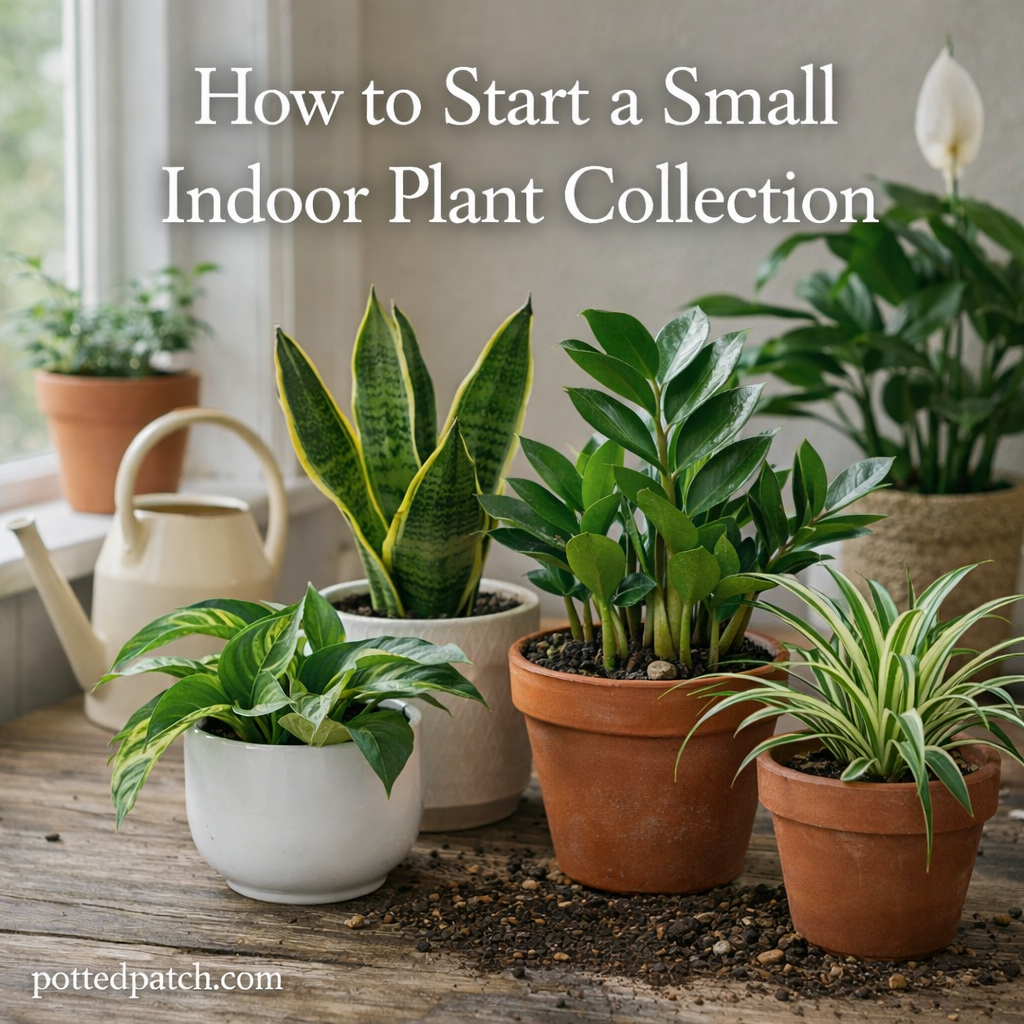
Small indoor plant collection featuring snake plant, ZZ plant, pothos, and spider plant in simple pots near a window.
A small indoor plant collection with beginner-friendly houseplants arranged near natural light. pottedpatch.com.

Starting a small indoor plant collection is one of the easiest ways to bring life, color, and calm into your home. You don’t need a green thumb, a big budget, or a jungle-sized living room to get started. With a few thoughtful choices and simple habits, you can build a collection that’s easy to care for and genuinely enjoyable.

This beginner-friendly guide walks you through choosing your first plants, setting up the right environment, and avoiding common mistakes—so your plant journey starts strong.

Continue reading “How to Start a Small Indoor Plant Collection”

How to Prevent Root Bound Issues in a ZZ Plant

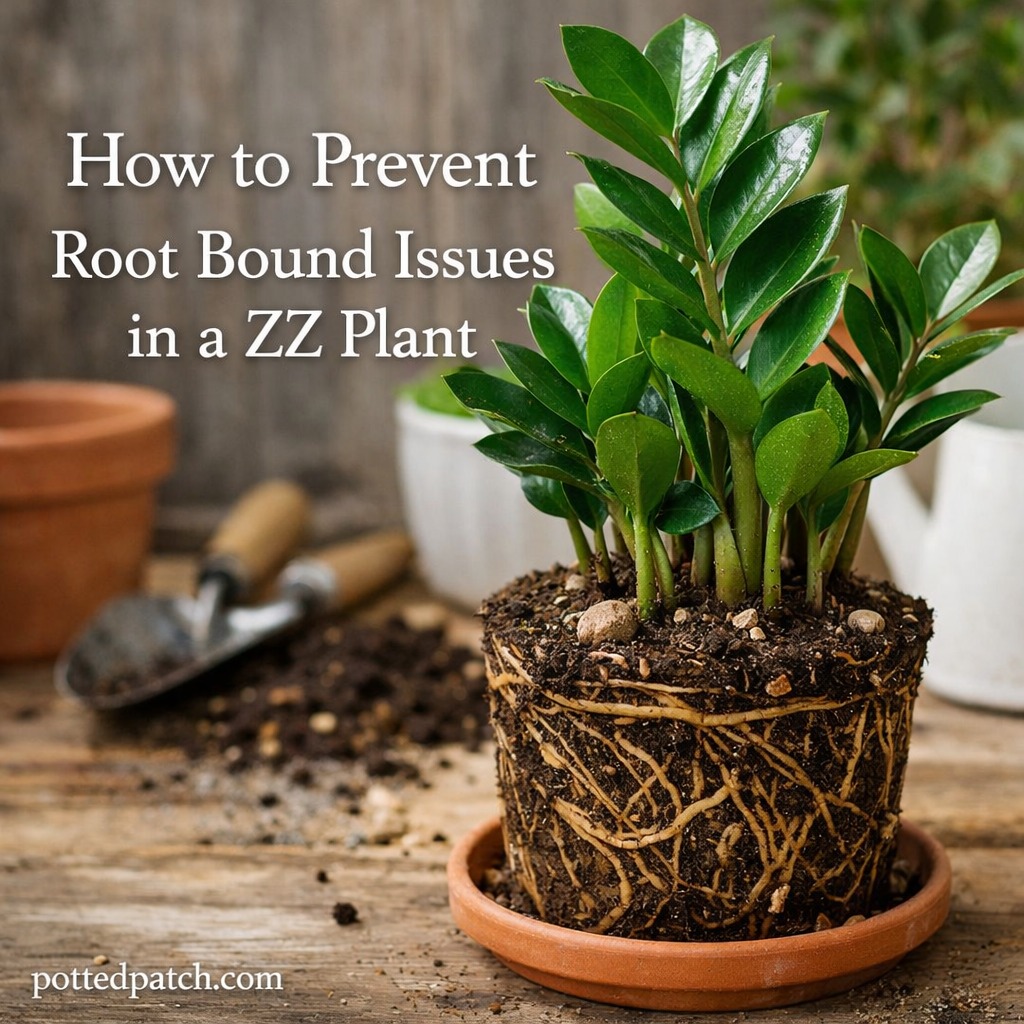
ZZ plant showing root-bound roots in a pot, illustrating how to prevent root bound issues in a ZZ plant.
A ZZ plant removed from its pot to show early root binding and proper container care. pottedpatch.com.

ZZ plants (Zamioculcas zamiifolia) are famously low-maintenance, but even this tough indoor plant can struggle if it becomes root bound. When roots outgrow their container and begin circling tightly, water, nutrients, and overall growth can suffer.

The good news? Root bound issues are easy to prevent once you know what to watch for and how to manage container care correctly. This guide walks you through early warning signs, smart pot choices, repotting timing, and long-term prevention strategies to keep your ZZ plant healthy and thriving.

Continue reading “How to Prevent Root Bound Issues in a ZZ Plant”

Why Drooping Happens on Snake Plant

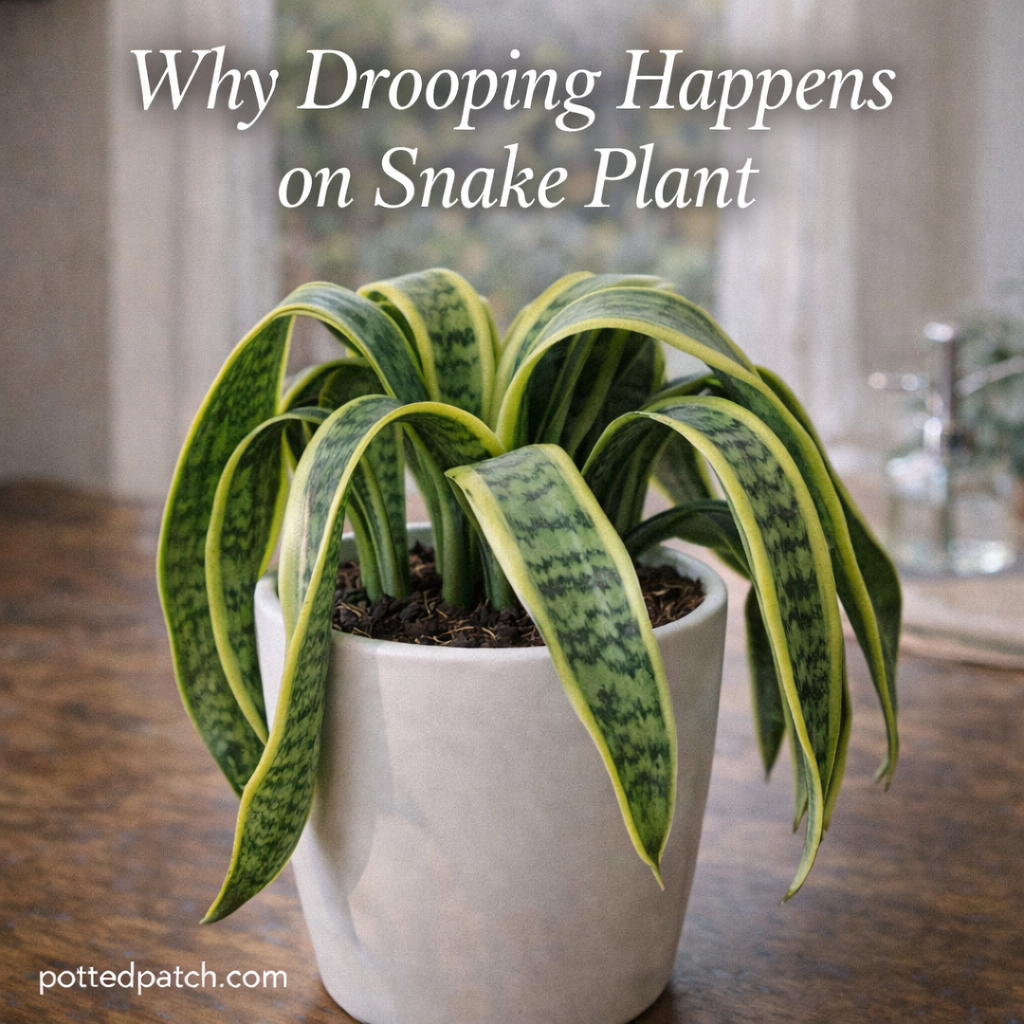
Snake plant with drooping leaves showing common signs of watering or root stress.
A snake plant with drooping leaves, a common sign of watering, drainage, or root problems. pottedpatch.com.

Snake plants are known for their stiff, upright leaves, so when those leaves start bending, flopping, or collapsing, it’s a clear sign something isn’t right. Drooping doesn’t happen randomly—it’s almost always linked to watering, roots, light, or environmental stress.

This guide explains why drooping happens on snake plants, how to identify the exact cause, and what to do to fix it.

Continue reading “Why Drooping Happens on Snake Plant”

Best Light Conditions for a ZZ Plant

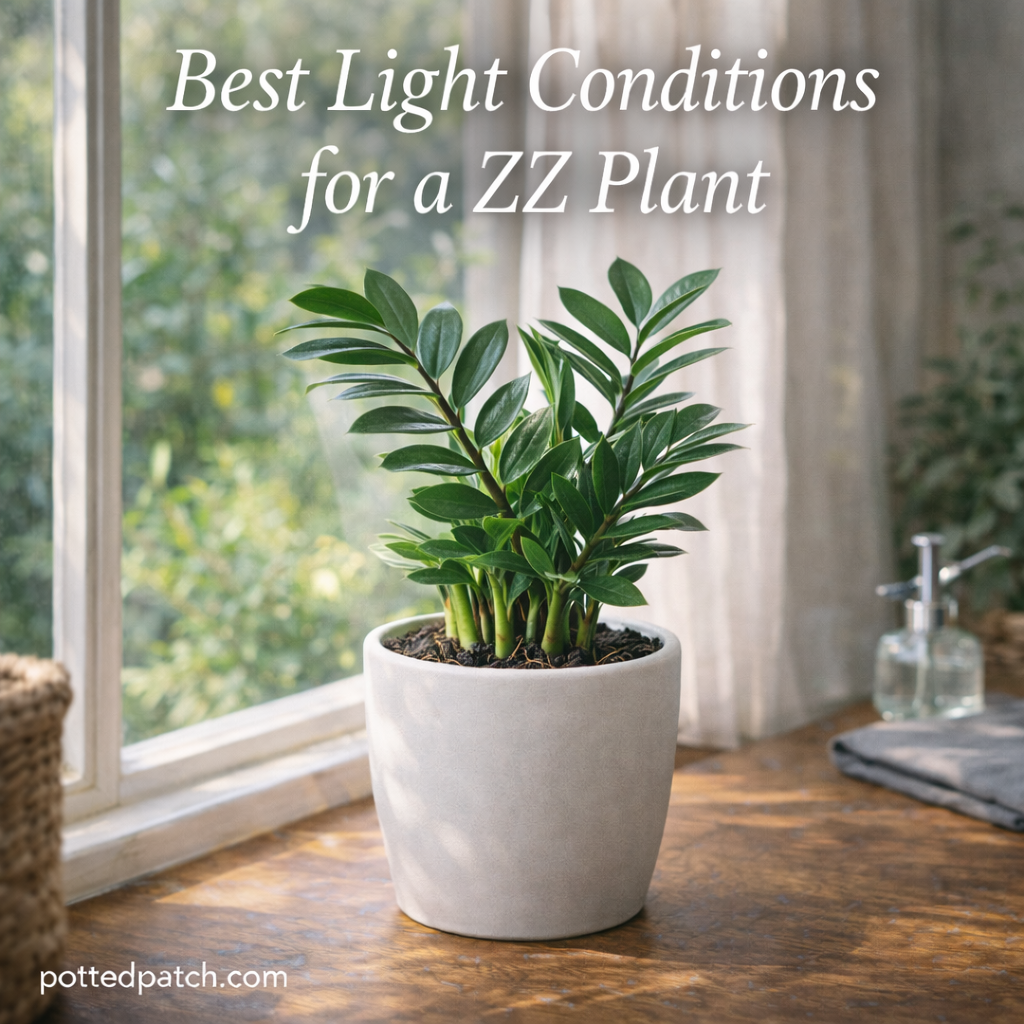
ZZ plant placed near a window with bright indirect light, showing ideal lighting conditions indoors.
A ZZ plant positioned in bright, indirect light near a window for healthy indoor growth. pottedpatch.com.

ZZ plants (Zamioculcas zamiifolia) are famous for surviving in places where most houseplants struggle. Their reputation as a “low-light plant” is well earned—but light still plays a major role in how healthy, full, and fast-growing your ZZ plant will be.

This guide explains the best light conditions for a ZZ plant, what different light levels actually mean indoors, and how to spot light-related problems early.

Continue reading “Best Light Conditions for a ZZ Plant”

Indoor Gardening for Absolute Beginners

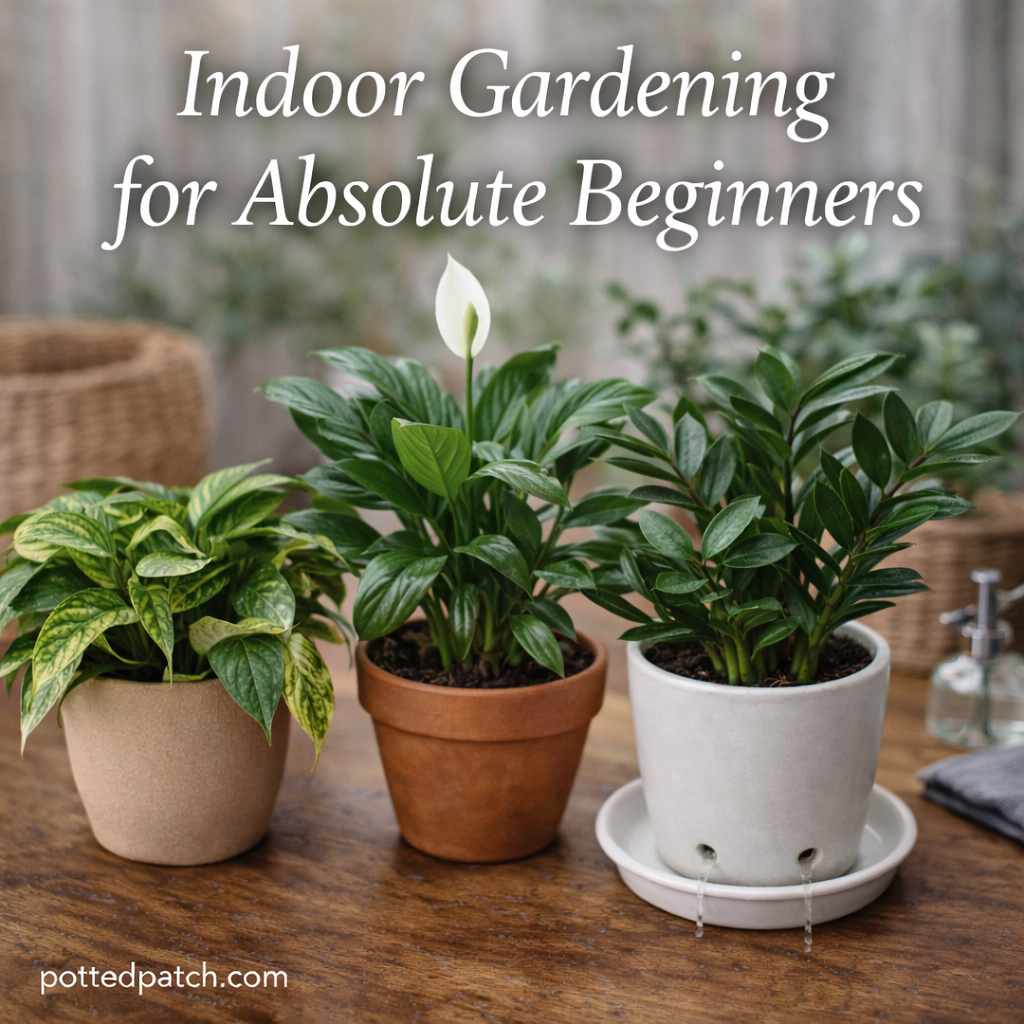
Beginner-friendly indoor plants arranged on a table, ideal for learning the basics of indoor gardening.
A selection of easy indoor plants suitable for absolute beginners starting an indoor garden. pottedpatch.com.

Starting an indoor garden can feel overwhelming at first, especially if you’ve never kept a plant alive before. The good news is that indoor gardening is far simpler than it looks. With the right plant choices and a few basic care habits, anyone can grow healthy plants indoors—no green thumb required.

This beginner-friendly guide walks you through everything you need to know to get started, step by step.

Continue reading “Indoor Gardening for Absolute Beginners”

How to Improve Drainage for a ZZ Plant

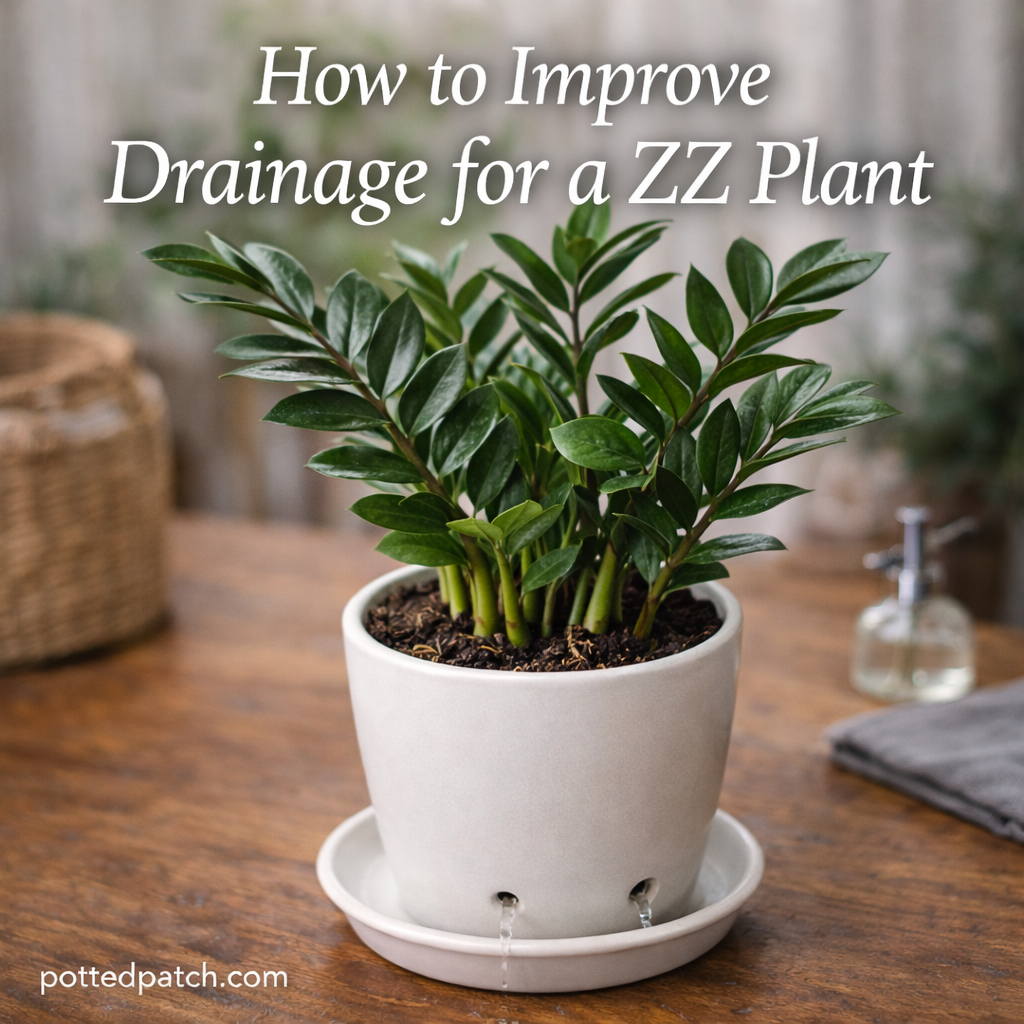
ZZ plant in a pot with drainage holes showing excess water draining properly after watering.
A ZZ plant in a well-draining pot, demonstrating proper drainage to prevent root rot. pottedpatch.com.

ZZ plants (Zamioculcas zamiifolia) are incredibly forgiving, but poor drainage is one mistake they won’t tolerate for long. Even if you water infrequently, compacted soil or a poorly draining pot can trap moisture around the roots and lead to rot.

If your ZZ plant has yellowing leaves, soft stems, or soil that stays wet for days, improving drainage is the fastest way to restore its health.

Continue reading “How to Improve Drainage for a ZZ Plant”