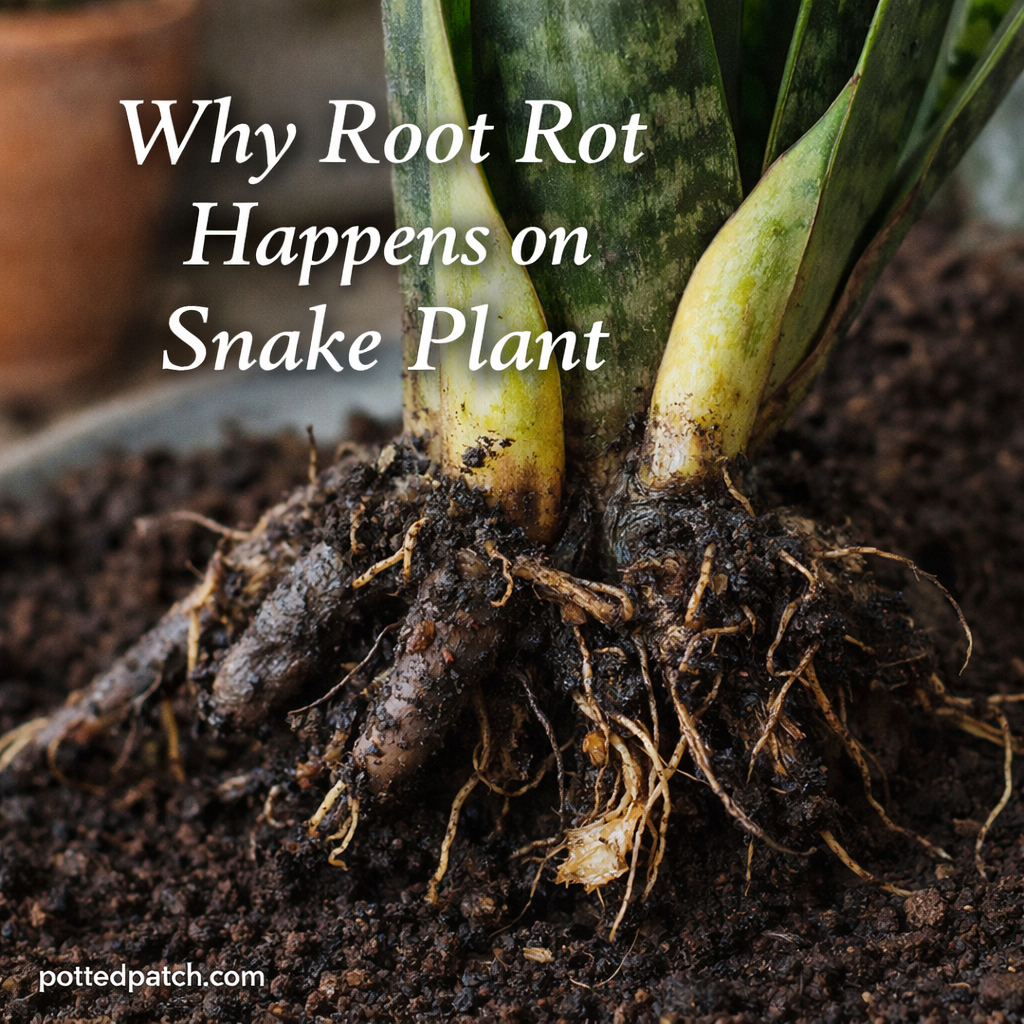
Why Root Rot Happens on Snake Plant

Close-up of snake plant roots showing signs of root rot in wet soil.
Snake plant roots affected by excess moisture and rot. pottedpatch.com

Snake plants are known for being low-maintenance and drought-tolerant. So when one suddenly turns mushy, droopy, or yellow, it can feel confusing.

In most cases, the culprit is root rot.

Root rot is one of the most common snake plant problems — and fortunately, it’s preventable once you understand why it happens.

Continue reading “Why Root Rot Happens on Snake Plant”
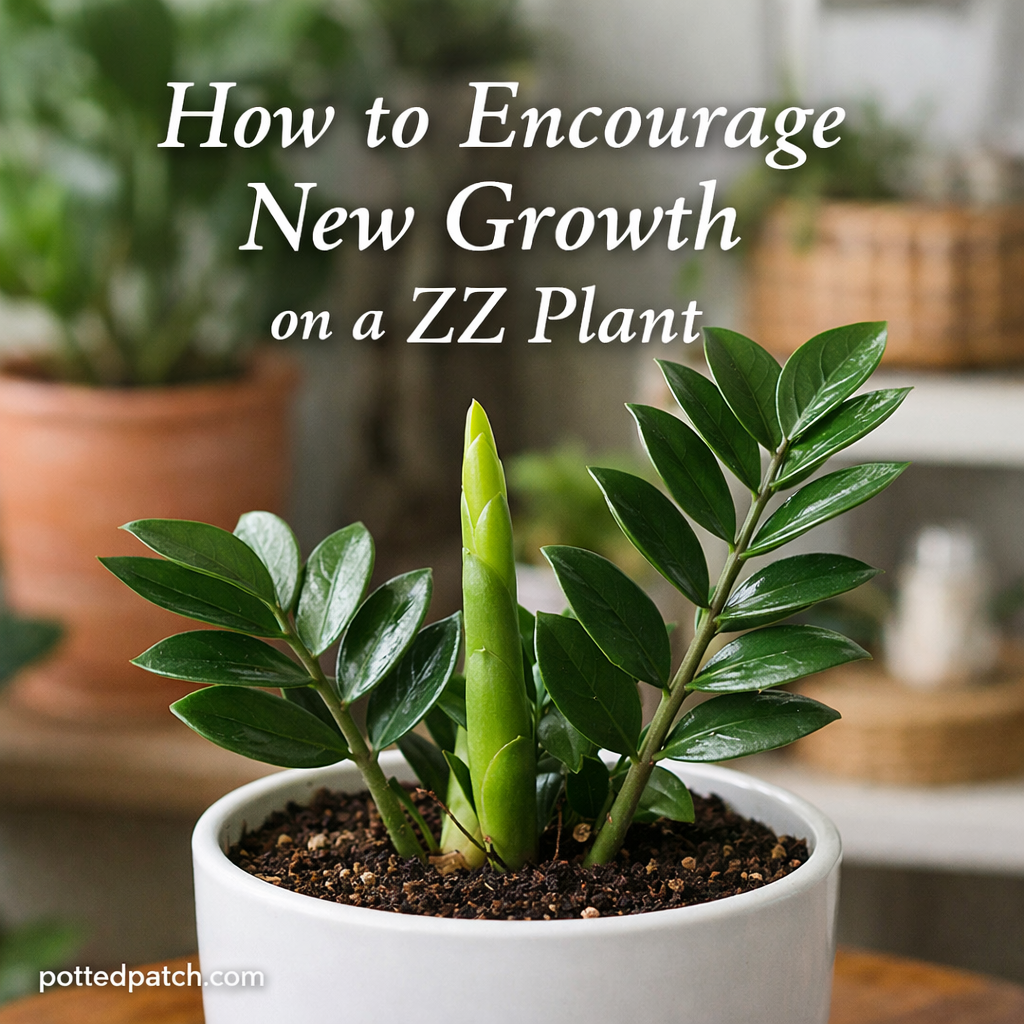
How to Encourage New Growth on a ZZ Plant

ZZ plant with fresh lime green new shoot emerging from soil in white pot indoors.
Fresh new growth emerging from a healthy ZZ plant indoors. pottedpatch.com

ZZ plants (Zamioculcas zamiifolia) are famous for their glossy leaves, sculptural stems, and near-indestructible reputation. But if yours hasn’t pushed out a new shoot in months, you might be wondering: is it stuck?

The good news? ZZ plants grow slowly by nature—but with the right adjustments, you can absolutely encourage healthy new growth.

This guide walks you through exactly how to stimulate fresh stems and fuller foliage without stressing your plant.

Continue reading “How to Encourage New Growth on a ZZ Plant”

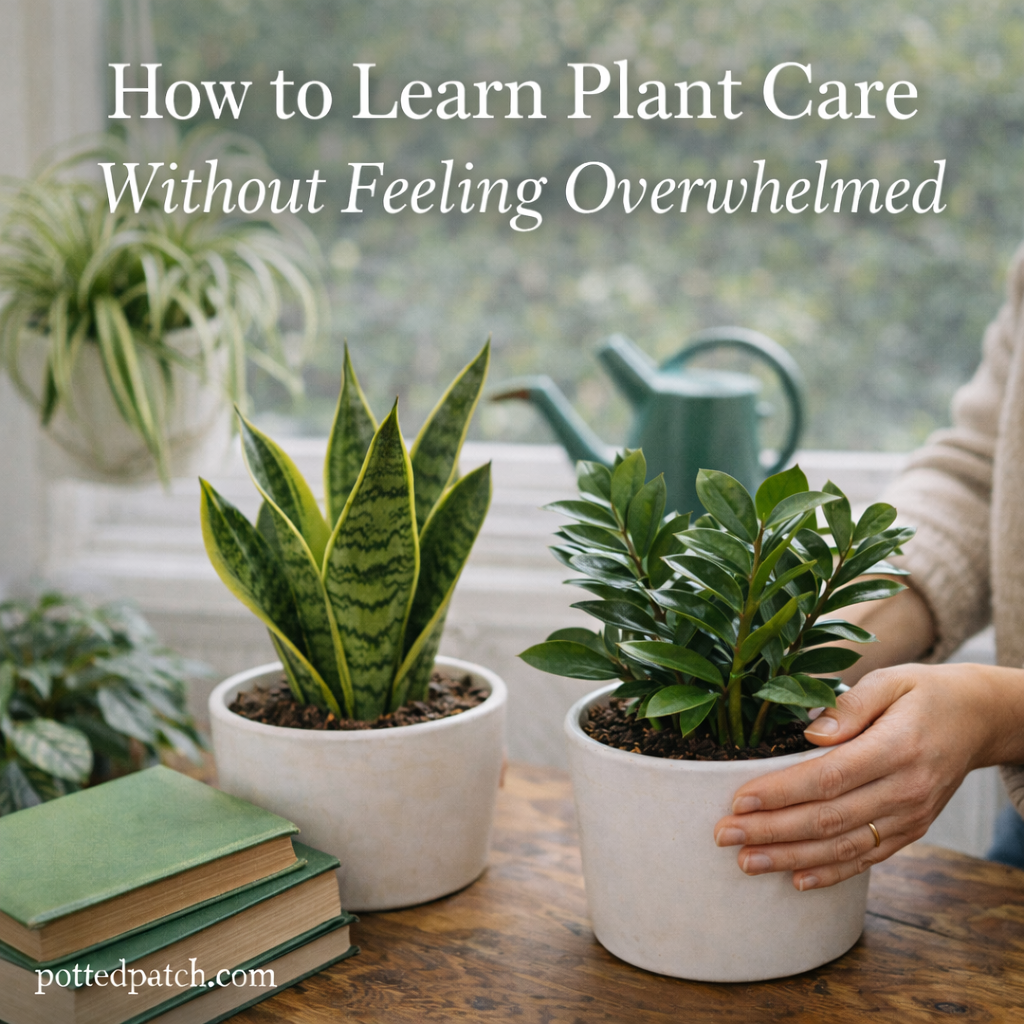
How to Learn Plant Care Without Feeling Overwhelmed

Snake plant and ZZ plant in white pots on a wooden table with books and watering can, overlay title How to Learn Plant Care Without Feeling Overwhelmed and pottedpatch.com watermark.
Beginner-friendly plant care setup with snake plant and ZZ plant indoors. pottedpatch.com

If you’ve ever brought home a plant only to panic-Google every leaf change, you’re not alone.

Plant care can feel overwhelming at first — watering schedules, lighting requirements, humidity levels, soil types. It’s easy to think you need to become a botany expert overnight.

You don’t.

Learning plant care is about building confidence step by step — not mastering everything at once.

Here’s how to simplify the process and actually enjoy it.

Continue reading “How to Learn Plant Care Without Feeling Overwhelmed”

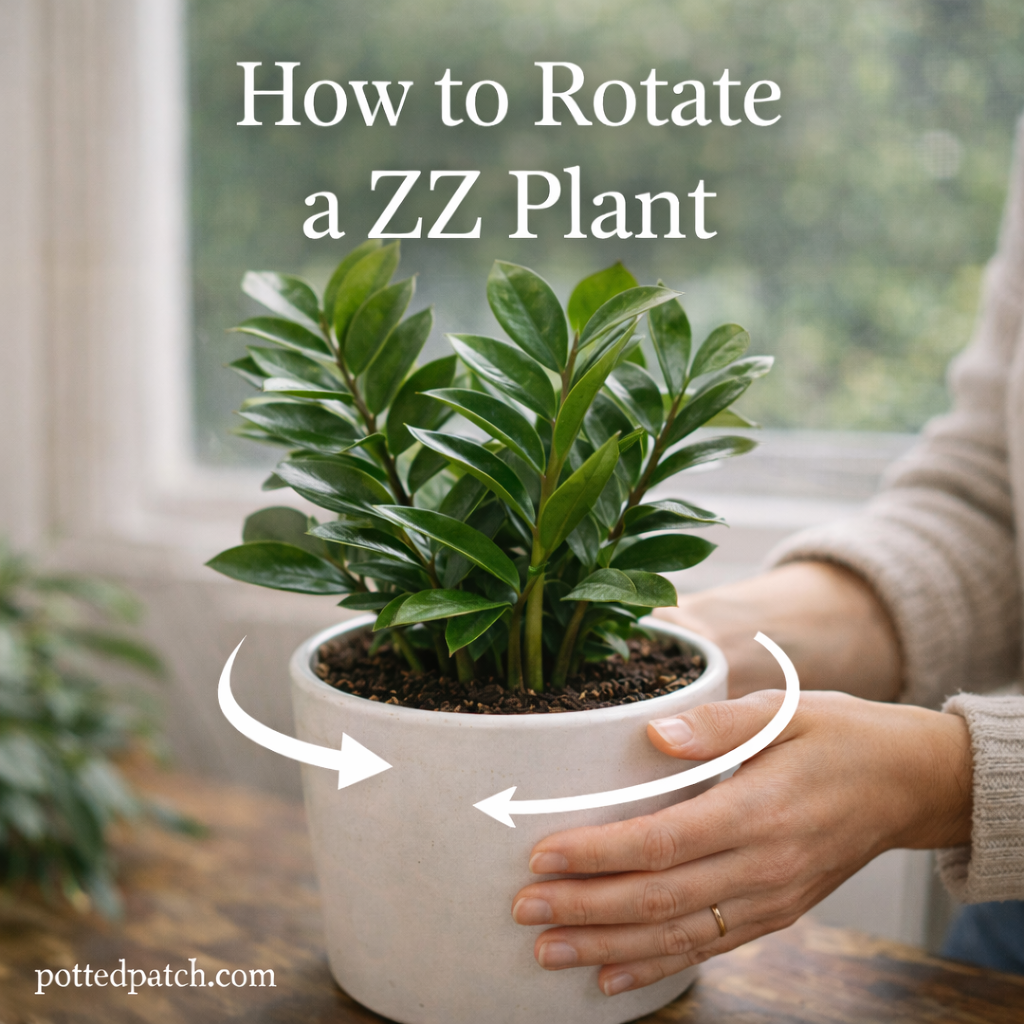
How to Rotate a ZZ Plant

Person rotating a ZZ plant in a white ceramic pot near a window with overlay title How to Rotate a ZZ Plant and pottedpatch.com watermark.
Rotating a ZZ plant to encourage even growth and prevent leaning. pottedpatch.com

Rotating your ZZ plant (Zamioculcas zamiifolia) might seem like a small detail, but it can make a big difference in how your plant grows.

If your ZZ plant is leaning toward a window or developing uneven growth, simple rotation can help maintain its symmetrical, upright shape.

In this guide, you’ll learn why rotating matters, how often to do it, and the right way to rotate your ZZ plant without stressing it.

Continue reading “How to Rotate a ZZ Plant”

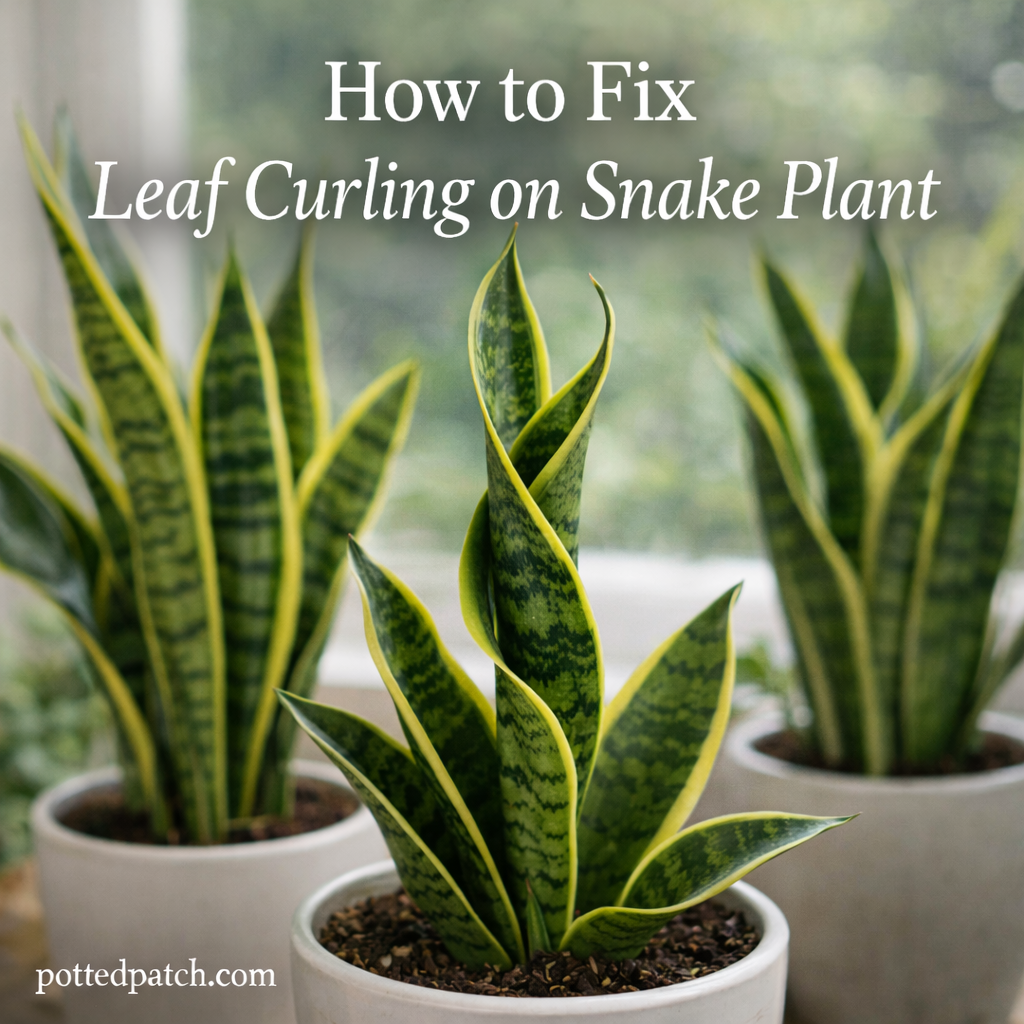
How to Fix Leaf Curling on Snake Plant

Snake plant with curled leaves in white ceramic pots near a window with overlay title How to Fix Leaf Curling on Snake Plant and pottedpatch.com watermark.
Snake plant showing leaf curling issues indoors near a bright window. pottedpatch.com

Snake plants (Sansevieria or Dracaena trifasciata) are known for their upright, sword-like leaves and nearly indestructible nature. So when those sturdy leaves start curling inward or bending, it can feel alarming.

The good news? Leaf curling on a snake plant is usually fixable — and often caused by simple care issues.

In this guide, we’ll break down why snake plant leaves curl and exactly how to correct the problem.

Continue reading “How to Fix Leaf Curling on Snake Plant”

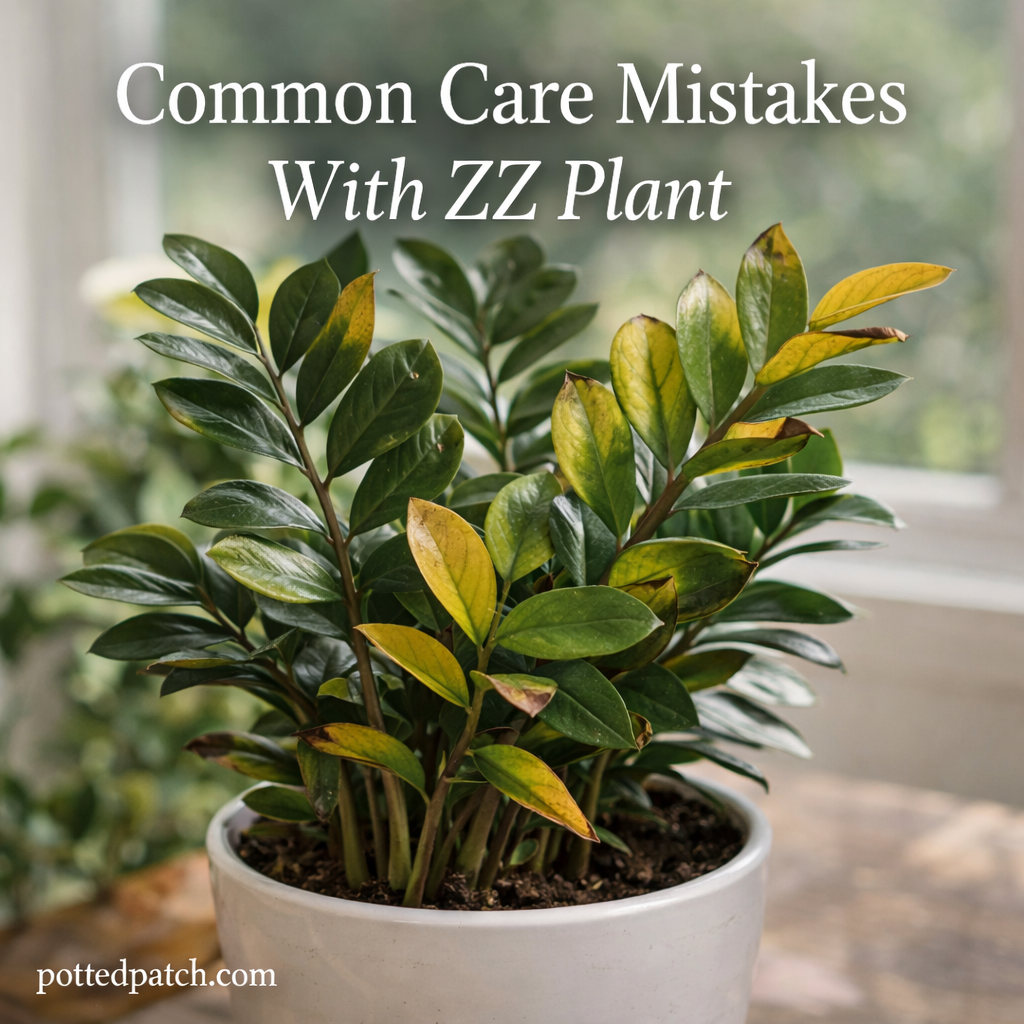
Common Care Mistakes With ZZ Plant

ZZ plant with yellowing leaves in a white pot near a window with overlay title Common Care Mistakes With ZZ Plant and pottedpatch.com watermark.
ZZ plant showing yellowing leaves from common care mistakes. pottedpatch.com

The ZZ plant (Zamioculcas zamiifolia) has earned its reputation as one of the toughest houseplants around. It tolerates low light, survives missed waterings, and adapts to indoor environments with ease.

But “low-maintenance” doesn’t mean “no-maintenance.”

Even hardy plants like the ZZ can struggle if a few common mistakes creep into your care routine. If your plant looks yellow, droopy, or stagnant, one of these issues may be the reason.

Continue reading “Common Care Mistakes With ZZ Plant”

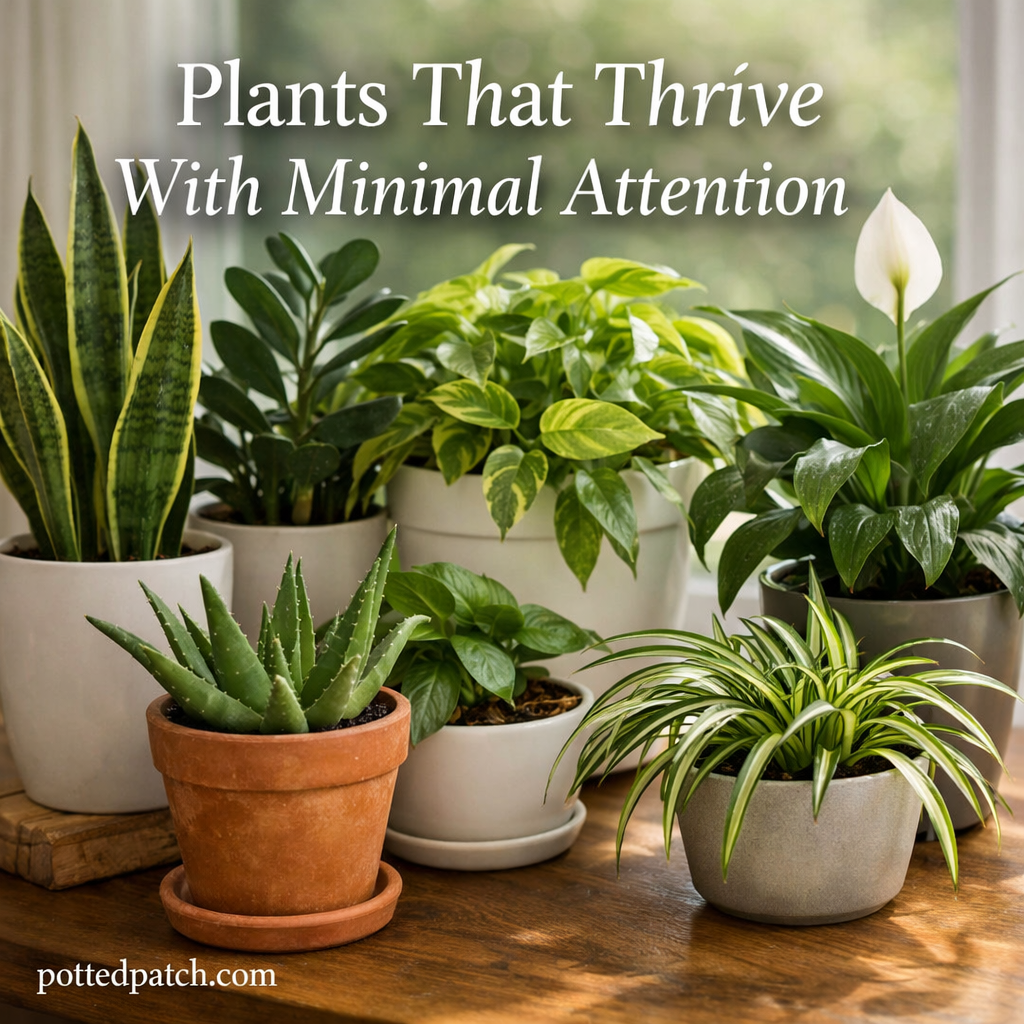
Plants That Thrive With Minimal Attention

Collection of low-maintenance houseplants including snake plant, pothos, ZZ plant, aloe, peace lily, and spider plant in ceramic pots with overlay title Plants That Thrive With Minimal Attention and pottedpatch.com watermark.
Low-maintenance houseplants including snake plant, pothos, ZZ plant, aloe, peace lily, and spider plant arranged indoors. pottedpatch.com

If you love greenery but don’t love constant watering schedules, fertilizer routines, and daily plant check-ins, you’re not alone. The good news? Many houseplants actually prefer to be left alone.

In this beginner-friendly guide, we’ll cover low-maintenance plants that thrive with minimal attention — perfect for busy schedules, frequent travelers, or anyone new to plant care.

Continue reading “Plants That Thrive With Minimal Attention”

How to Prune a ZZ Plant

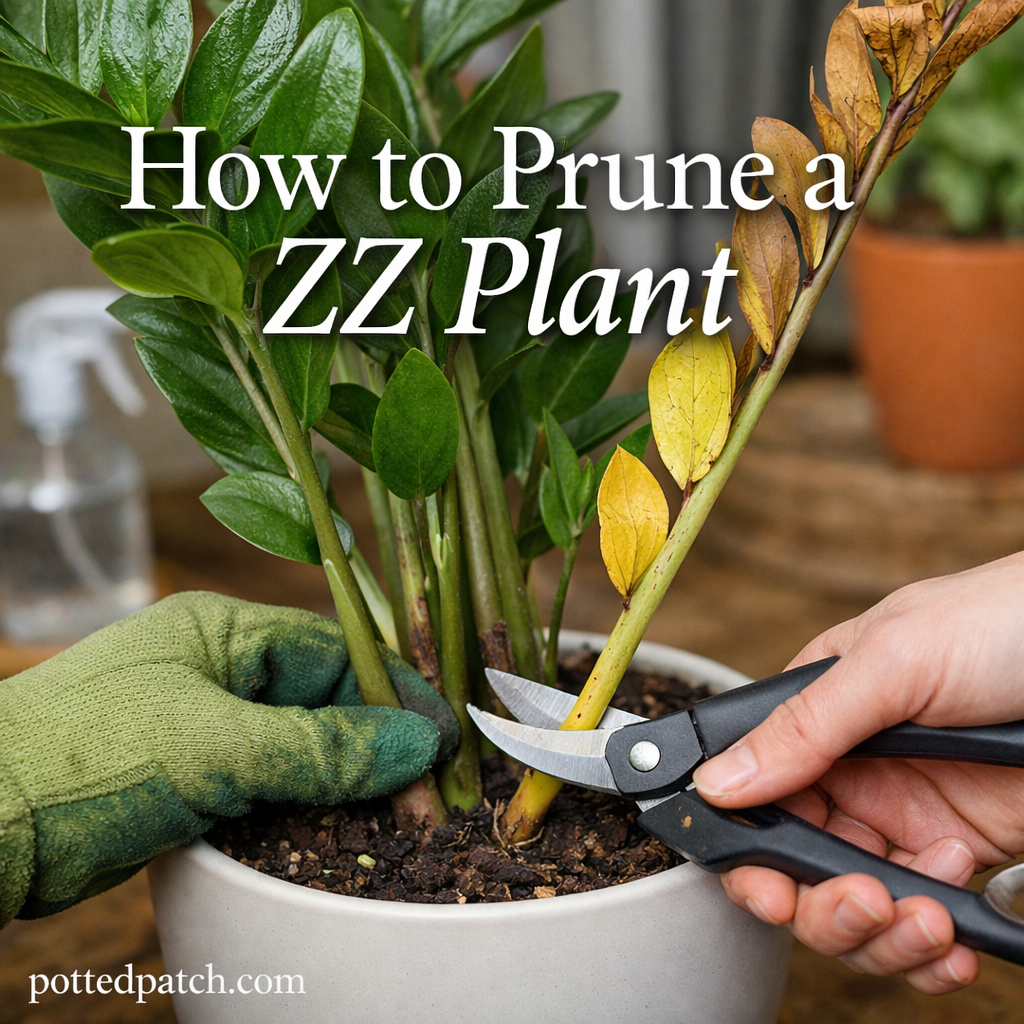
Person pruning a ZZ plant stem at the soil line with clean shears to demonstrate proper pruning technique.
Pruning a ZZ plant at the base to remove yellowing stems and maintain healthy growth. pottedpatch.com

ZZ plants (Zamioculcas zamiifolia) are famous for being low-maintenance, slow-growing, and nearly indestructible. Because of that, many plant owners assume pruning isn’t necessary at all. The truth is, occasional pruning keeps a ZZ plant healthier, more attractive, and easier to manage—especially in containers.

The good news? Pruning a ZZ plant is simple, forgiving, and hard to mess up once you understand how the plant grows.

Continue reading “How to Prune a ZZ Plant”

Why Leaf Curling Happens on a Snake Plant

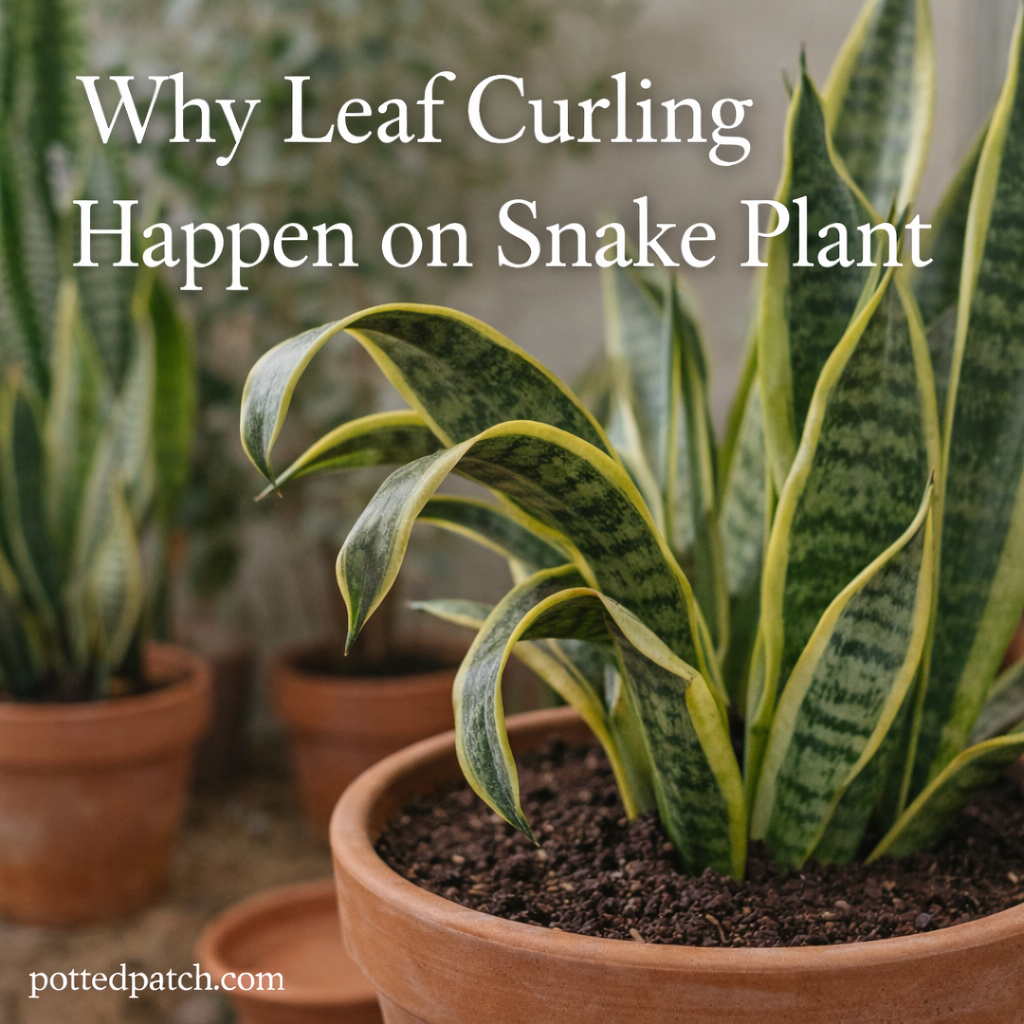
Snake plant with curling leaves in a pot, showing a common indoor plant problem.
A snake plant displaying curled leaves, a common sign of stress caused by watering or light issues. pottedpatch.com.

Snake plants are known for their strong, upright leaves, so when those leaves start curling inward, bending, or twisting, it’s a clear sign that something is off. Leaf curling is a stress response, and while it can look alarming, it’s usually easy to fix once you identify the cause.

This guide explains why leaf curling happens on snake plants, how to tell which issue you’re dealing with, and what to do to correct it before lasting damage occurs.

Continue reading “Why Leaf Curling Happens on a Snake Plant”

When and How to Repot a ZZ Plant

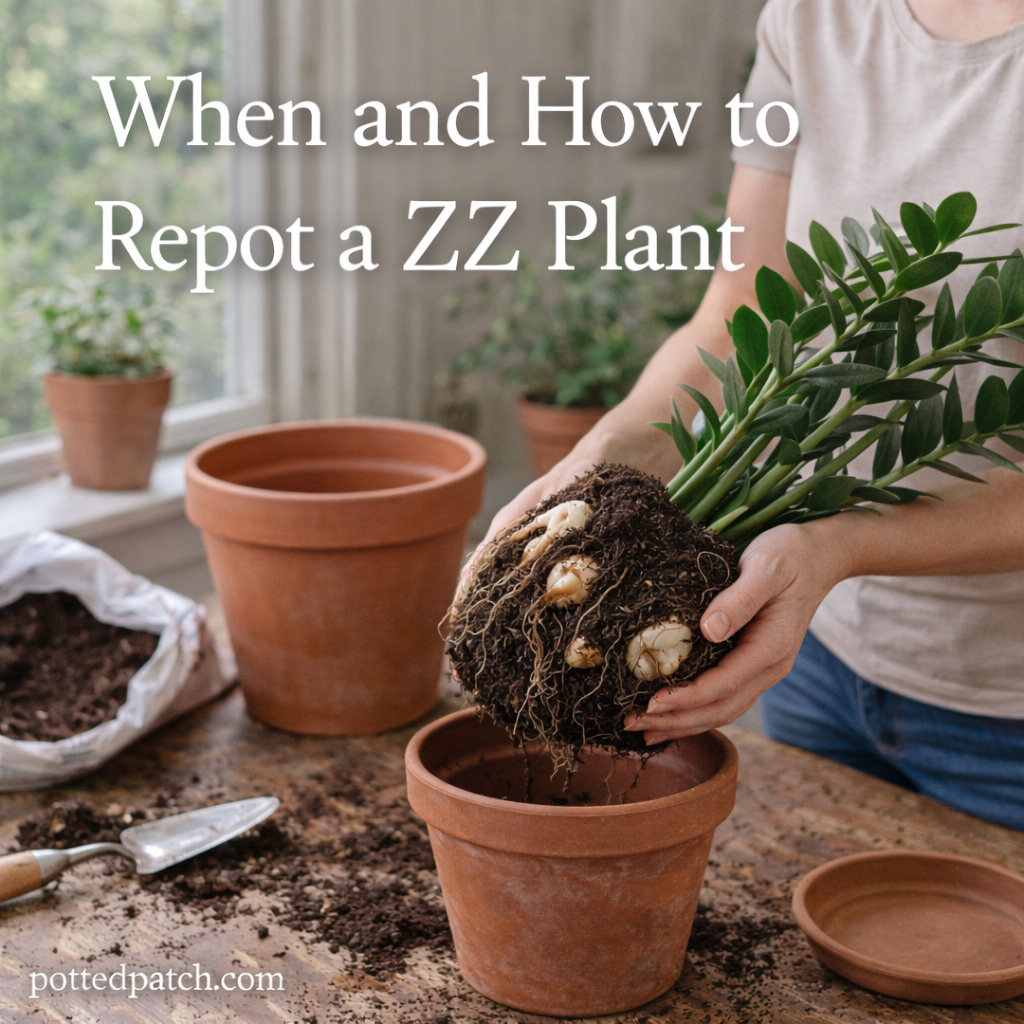
Person repotting a ZZ plant and holding the root ball with visible rhizomes and soil.
A ZZ plant being repotted into a new container to support healthy root and rhizome growth. pottedpatch.com.

ZZ plants (Zamioculcas zamiifolia) are slow-growing, low-maintenance houseplants, which means they don’t need frequent repotting. In fact, repotting too often can do more harm than good. Knowing when to repot—and how to do it gently—is key to keeping your ZZ plant healthy and stress-free.

This guide covers the clear signs it’s time to repot, the best timing, and a step-by-step method that protects roots and encourages steady growth.

Continue reading “When and How to Repot a ZZ Plant”