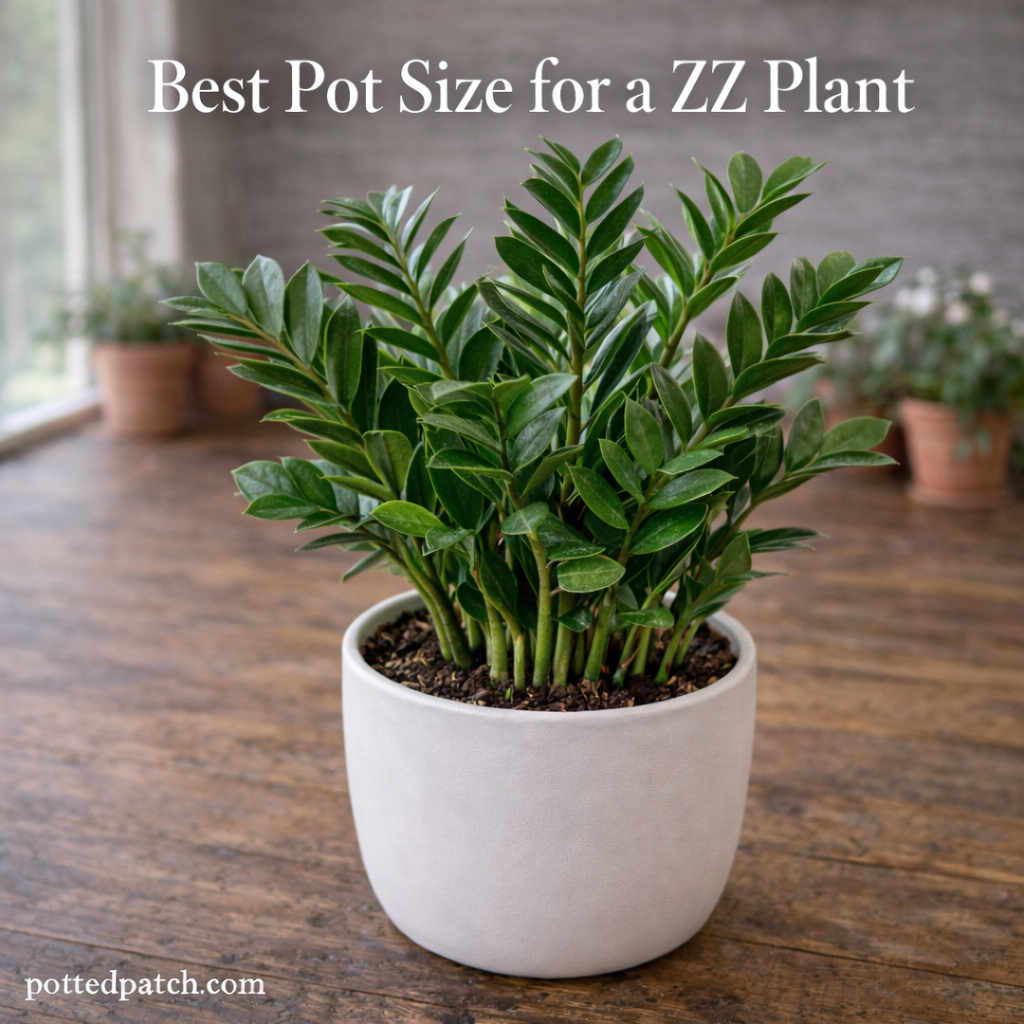
Choosing the right pot size for a ZZ plant is more important than it might seem. While ZZ plants are famously low maintenance, the wrong container can lead to slow growth, wilting, or root rot—even if everything else is done correctly.
This guide explains exactly what pot size a ZZ plant needs, when to size up, and how to avoid common container mistakes.
Why Pot Size Matters for ZZ Plants
ZZ plants grow from thick underground rhizomes that store water and nutrients. These rhizomes prefer snug conditions and do not respond well to excess space.
When the pot is too large:
- Soil stays wet too long
- Roots and rhizomes can rot
- Growth slows or stops
When the pot is too small:
- Growth becomes cramped
- Rhizomes push against the pot
- Water drains too quickly
The goal is balance—not maximum space.
The Ideal Pot Size for a ZZ Plant
For most ZZ plants, the best pot size is only slightly larger than the root system.
General pot size rule
- Choose a pot 1–2 inches wider than the current root ball
- Avoid jumping multiple pot sizes at once
ZZ plants prefer to be slightly root-bound. A tight fit encourages healthy, controlled growth.
Pot Size by ZZ Plant Growth Stage
Small or young ZZ plants
- Pot size: 4–6 inches
- Best for newly purchased or propagated plants
- Promotes steady root development
Medium ZZ plants
- Pot size: 6–8 inches
- Suitable for established indoor plants
- Most common size for home environments
Large or mature ZZ plants
- Pot size: 8–10 inches (sometimes slightly larger)
- Only size up if rhizomes are clearly overcrowded
Very large pots are rarely necessary indoors.
Signs Your ZZ Plant Needs a Bigger Pot
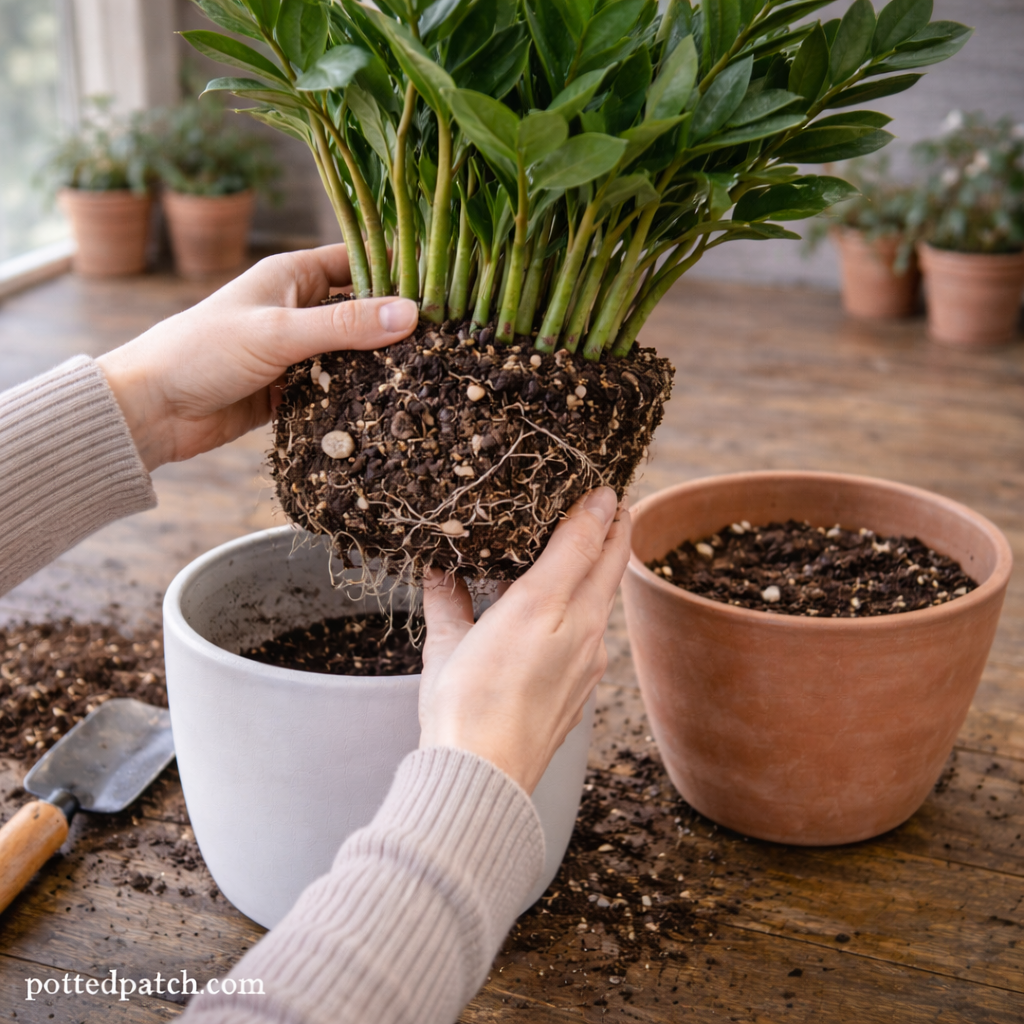
ZZ plants don’t need frequent repotting, but they do show clear signals when it’s time.
Look for these signs:
- Rhizomes pressing against or deforming the pot
- Roots growing out of drainage holes
- Water running straight through without soaking in
- Plant becoming top-heavy and unstable
If none of these are present, the current pot is likely fine.
Signs the Pot Is Too Large
Sometimes problems come from too much space rather than too little.
Warning signs include:
- Soil staying wet for many days
- Yellowing leaves without new growth
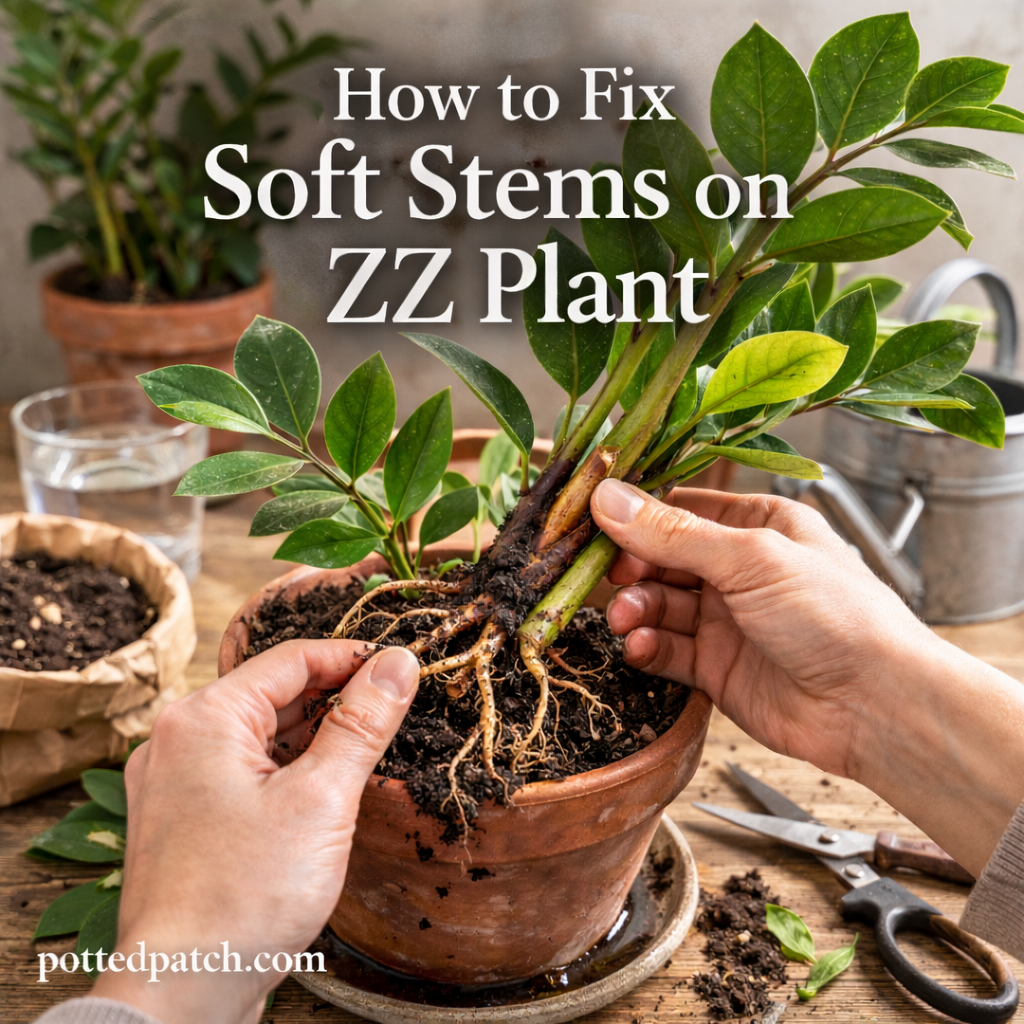
- Mushy stems near the base
- Wilting despite infrequent watering
If this happens, downsizing to a smaller pot often solves the issue.
Best Pot Shape and Depth for ZZ Plants
Pot shape matters just as much as size.
Recommended pot features
- Medium depth (not overly tall)
- Wide enough to support rhizome spread
- Heavy enough to prevent tipping
Shallow pots can work well as long as they provide stability and drainage.
Drainage Is Non-Negotiable
No matter the size, a pot must have drainage holes.
Without drainage:
- Excess water collects at the bottom
- Rhizomes sit in wet soil
- Root rot develops quickly
If using a decorative pot without holes, keep the ZZ plant in a nursery pot inside it and remove it when watering.
How Often ZZ Plants Need Repotting
ZZ plants are slow growers and don’t need frequent repotting.
Typical timeline:
- Every 2–3 years for most indoor plants
- Only when clear root or rhizome crowding appears
Repotting too often stresses the plant and can slow growth.
Step-by-Step: Choosing the Right Next Pot
When it’s time to repot, follow this simple approach.
- Remove the plant and inspect the root ball
- Measure the current root width
- Choose a pot only 1–2 inches wider
- Use fresh, well-draining soil
- Water lightly after repotting
Avoid fertilizing for several weeks afterward.
Common Pot Size Mistakes to Avoid
These mistakes cause most ZZ plant container problems.
- Choosing a pot “for future growth”
- Using oversized decorative planters
- Repotting too frequently
- Ignoring drainage holes
- Using deep pots that trap moisture
With ZZ plants, smaller is usually safer.
Final Thoughts
The best pot size for a ZZ plant is one that feels almost snug. These plants thrive when their roots and rhizomes are slightly contained, drainage is excellent, and watering is minimal.
If you’re unsure whether to size up, it’s usually better to wait. ZZ plants reward patience—and they grow best when left just a little bit crowded.