ZZ plants are one of the most forgiving houseplants you can own. With glossy leaves, upright growth, and a reputation for surviving neglect, they’re perfect for low-light rooms and busy plant owners.
That said, proper care helps a ZZ plant look its best—not just survive. This guide covers everything you need to know to care for a ZZ plant indoors, even if you’re a complete beginner.
What Makes ZZ Plants So Easy to Care For
ZZ plants store water in thick stems and underground rhizomes, which allows them to tolerate drought, low light, and inconsistent care.
Because of this, most problems with ZZ plants come from too much attention, not too little.
Light Requirements for ZZ Plants Indoors
ZZ plants are highly adaptable when it comes to light.
Best light conditions
- Bright, indirect light for fastest growth
- Medium indirect light works well
- Low light is tolerated, but growth slows
Light to avoid
- Direct sunlight, which can scorch leaves
- Dark corners with no natural light
Rotate the plant every few weeks so growth stays even.
How Often to Water a ZZ Plant
Overwatering is the most common ZZ plant mistake.
When to water
- Allow soil to dry out completely between waterings
- In most homes, this means every 2–4 weeks
How to water correctly
- Water thoroughly until excess drains out
- Let the pot drain fully
- Empty the saucer
Never water on a fixed schedule—always check the soil first.
Choosing the Right Pot and Soil
Proper drainage is essential for ZZ plants.
Pot tips
- Always use a pot with drainage holes
- Heavy pots help prevent tipping as the plant grows
Soil requirements
ZZ plants prefer fast-draining soil.
A good option includes:
- Standard potting soil
- Added perlite or pumice
- Optional cactus mix blended in
Avoid dense or moisture-retentive soil.
Temperature and Humidity Needs
ZZ plants prefer typical indoor conditions.
Ideal range
- Temperatures between 65–80°F
- Normal household humidity
What to avoid
- Cold drafts
- Temperatures below 45°F
- Placing near heating or AC vents
ZZ plants are not sensitive to dry air.
Fertilizing ZZ Plants
ZZ plants are light feeders.
Fertilizer guidelines
- Use a balanced houseplant fertilizer
- Dilute to half strength
- Fertilize every 6–8 weeks during spring and summer
Do not fertilize in fall or winter.
Cleaning and Maintaining ZZ Plant Leaves
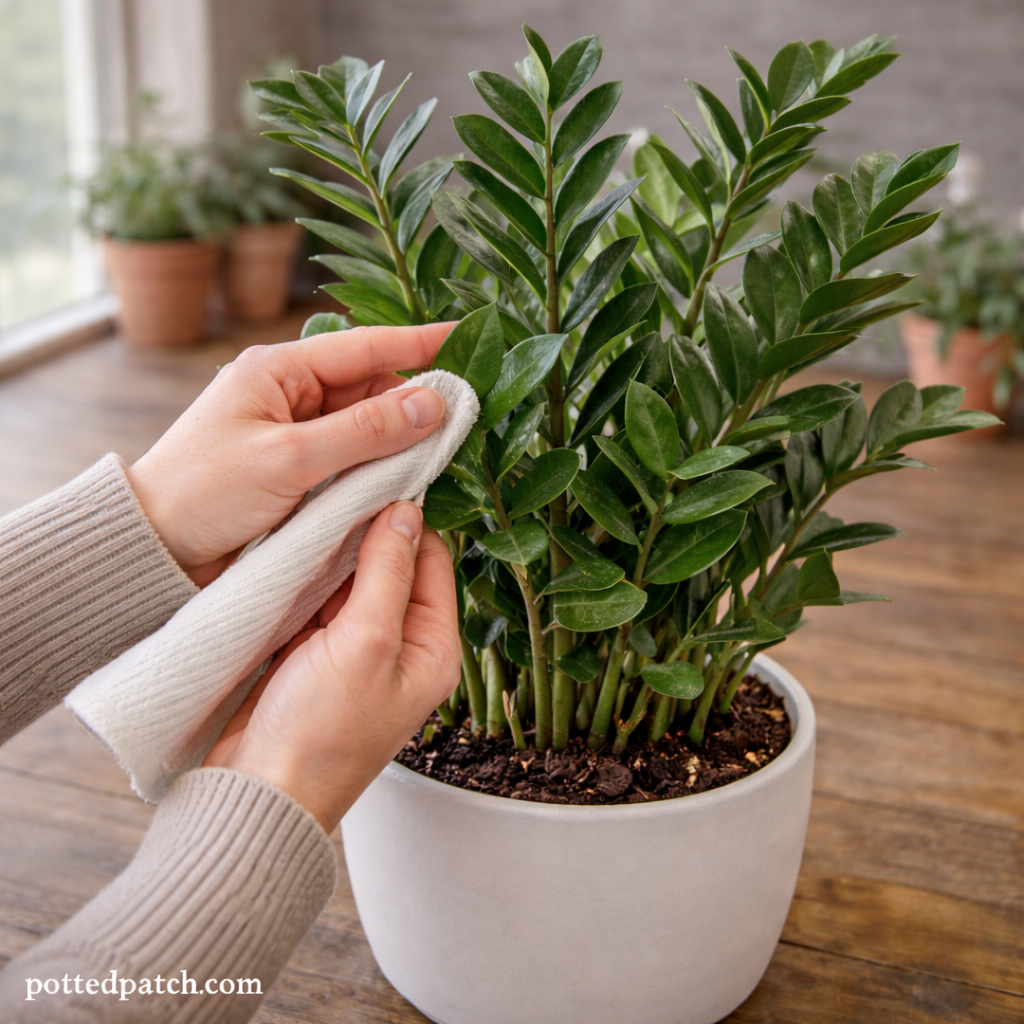
Clean leaves help the plant photosynthesize efficiently.
Maintenance tips
- Wipe leaves with a damp cloth monthly
- Remove yellowing or damaged stems at the base
- Avoid leaf shine products
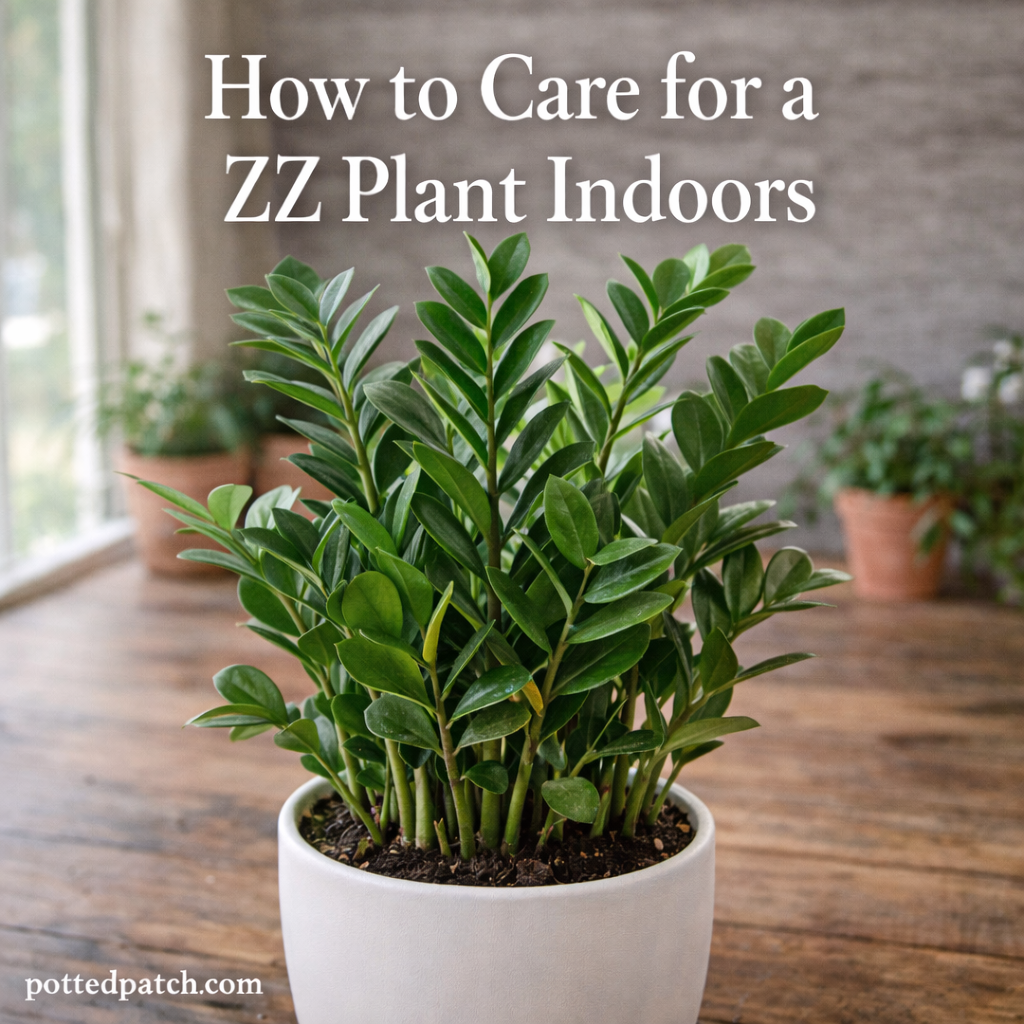
Healthy ZZ leaves should be firm, glossy, and upright.
Repotting a ZZ Plant Indoors
ZZ plants like being slightly root-bound.
When to repot
- Roots crowding the pot
- Rhizomes pushing against the container
- Water running straight through the soil
Repotting tips
- Repot every 2–3 years
- Choose a pot only 1–2 inches larger
- Refresh soil during repotting
Repotting too often can slow growth.
Common ZZ Plant Problems and Simple Fixes
Yellow leaves
- Usually caused by overwatering
- Allow soil to dry fully before watering again
Soft or mushy stems
- Sign of root or rhizome rot
- Remove affected stems and reduce watering
Slow growth
- Often due to low light
- Move to brighter indirect light
Signs Your ZZ Plant Is Healthy
A thriving ZZ plant shows clear signs of good care.
- Upright, sturdy stems
- Shiny, deep green leaves
- New shoots emerging slowly but steadily
- No widespread yellowing or drooping
ZZ plants grow slowly, so patience is normal.
Final Thoughts
Caring for a ZZ plant indoors is all about restraint. Give it well-draining soil, water sparingly, keep it out of direct sun, and resist the urge to fuss over it.
When left to do its thing, a ZZ plant rewards you with years of easy, low-maintenance greenery.