Repotting is one of the most important plant care skills to learn—and one of the easiest to get wrong as a beginner. Done correctly, repotting gives your plant fresh soil, more room to grow, and healthier roots. Done poorly, it can stress the plant and slow growth for weeks.
This beginner-friendly guide walks you through when to repot, how to do it safely, and how to avoid the most common mistakes.
What Repotting Actually Does for a Plant
Repotting isn’t just about moving a plant into a bigger container. It helps by:
- Refreshing depleted soil
- Improving drainage and airflow
- Preventing root overcrowding
- Supporting healthier growth
Most houseplants don’t need frequent repotting, but when they do, it makes a big difference.
How to Know When a Plant Needs Repotting
Repotting too early or too often can be just as harmful as waiting too long.
Common signs it’s time to repot
- Roots growing out of drainage holes
- Soil drying out much faster than usual
- Water running straight through the pot
- Slowed or stalled growth despite proper care
- The plant becoming top-heavy or unstable
If none of these signs are present, your plant may be fine in its current pot.
Best Time of Year to Repot Plants
Timing matters, especially for beginners.
Ideal repotting season
- Spring and early summer are best
- Plants recover faster during active growth
When to avoid repotting
- Late fall and winter, when growth slows
- During flowering or heavy stress
- Immediately after bringing a new plant home
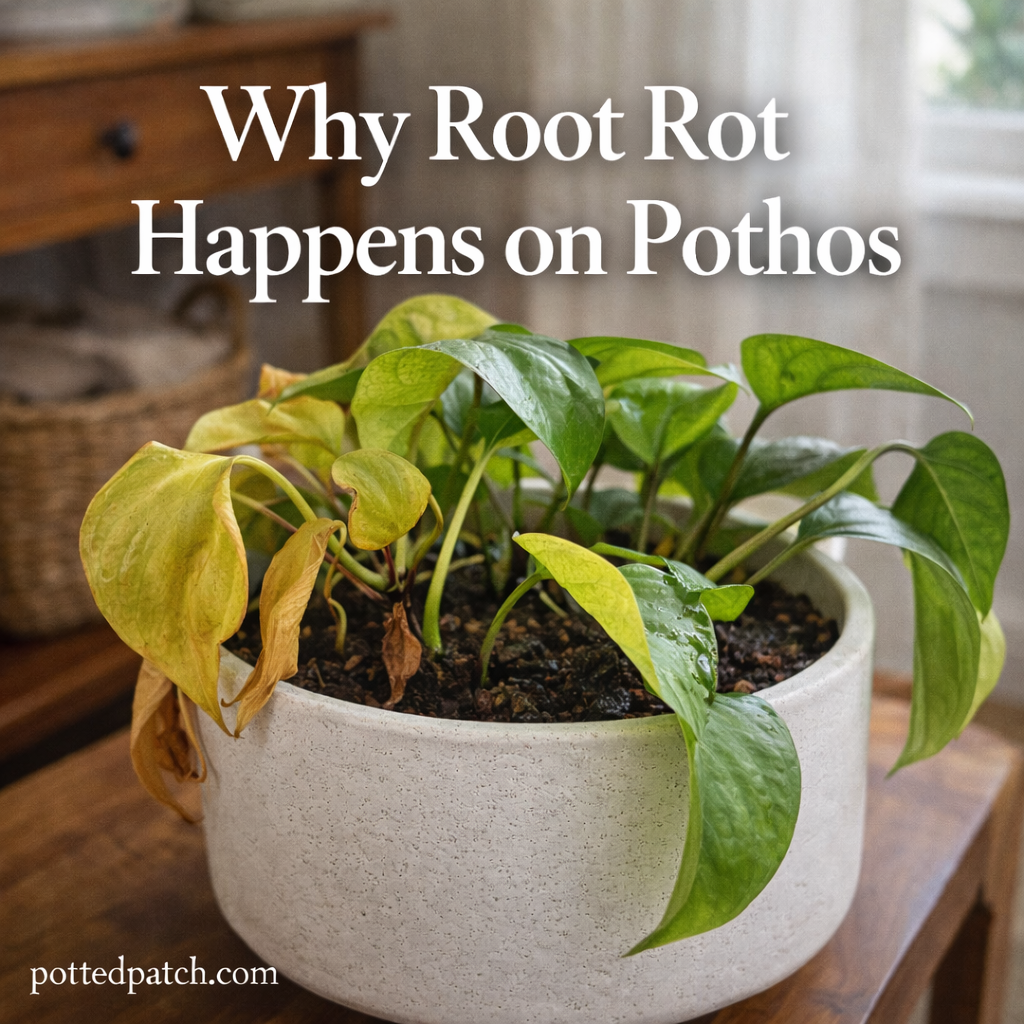
Emergency repotting is fine if roots are rotting or the pot is damaged.
Choosing the Right Pot Size
Bigger is not always better.
Pot size rule for beginners
- Choose a pot 1–2 inches wider than the current one
- Avoid jumping several sizes at once
Oversized pots hold excess moisture, which increases the risk of root rot.
Selecting the Right Soil
The wrong soil causes more problems than the wrong pot.
General soil guidelines
- Use fresh, high-quality potting mix
- Avoid reusing old soil
- Choose plant-specific mixes when possible
For most houseplants, soil should be:
- Light and well-draining
- Able to hold moisture without staying soggy
Step-by-Step: How to Repot Plants Safely
Follow these steps to minimize stress and protect roots.
Step 1: Prepare the plant
- Water lightly a day before repotting
- This helps roots slide out more easily
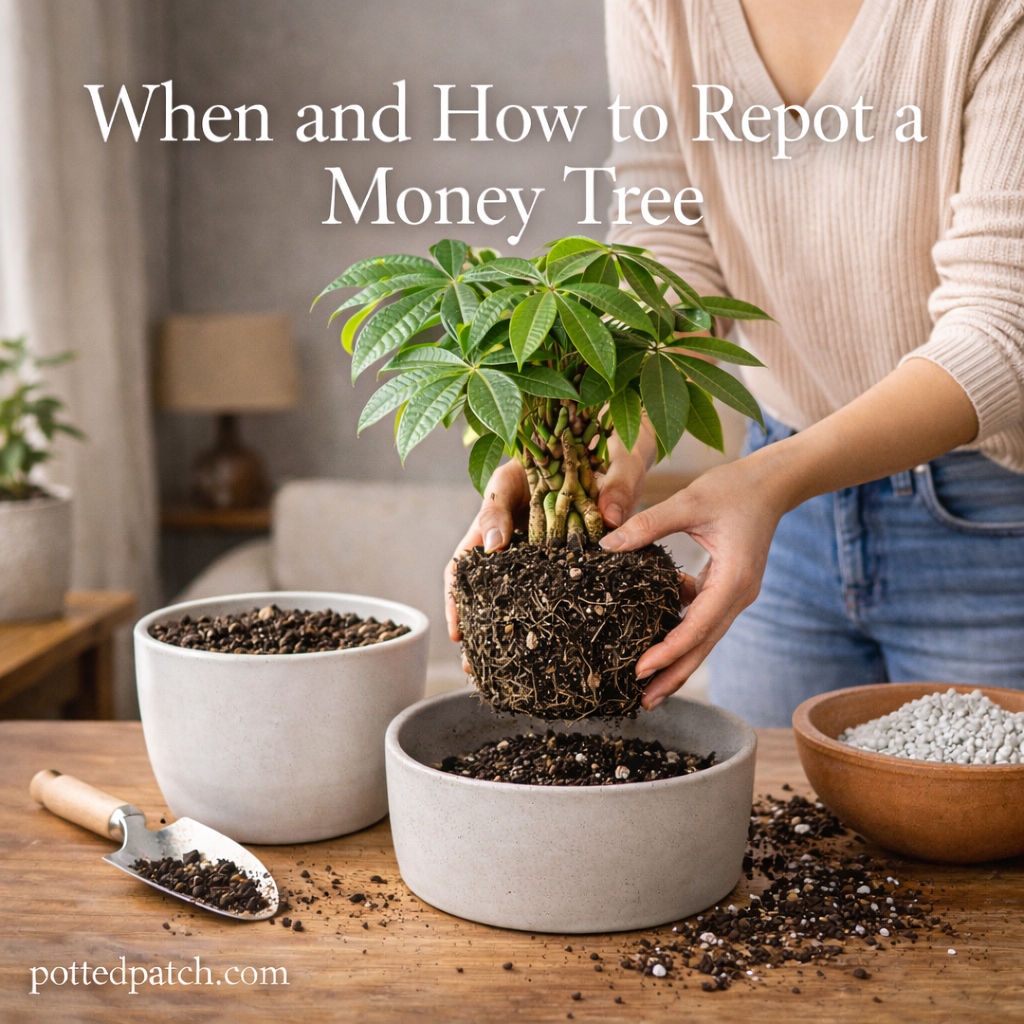
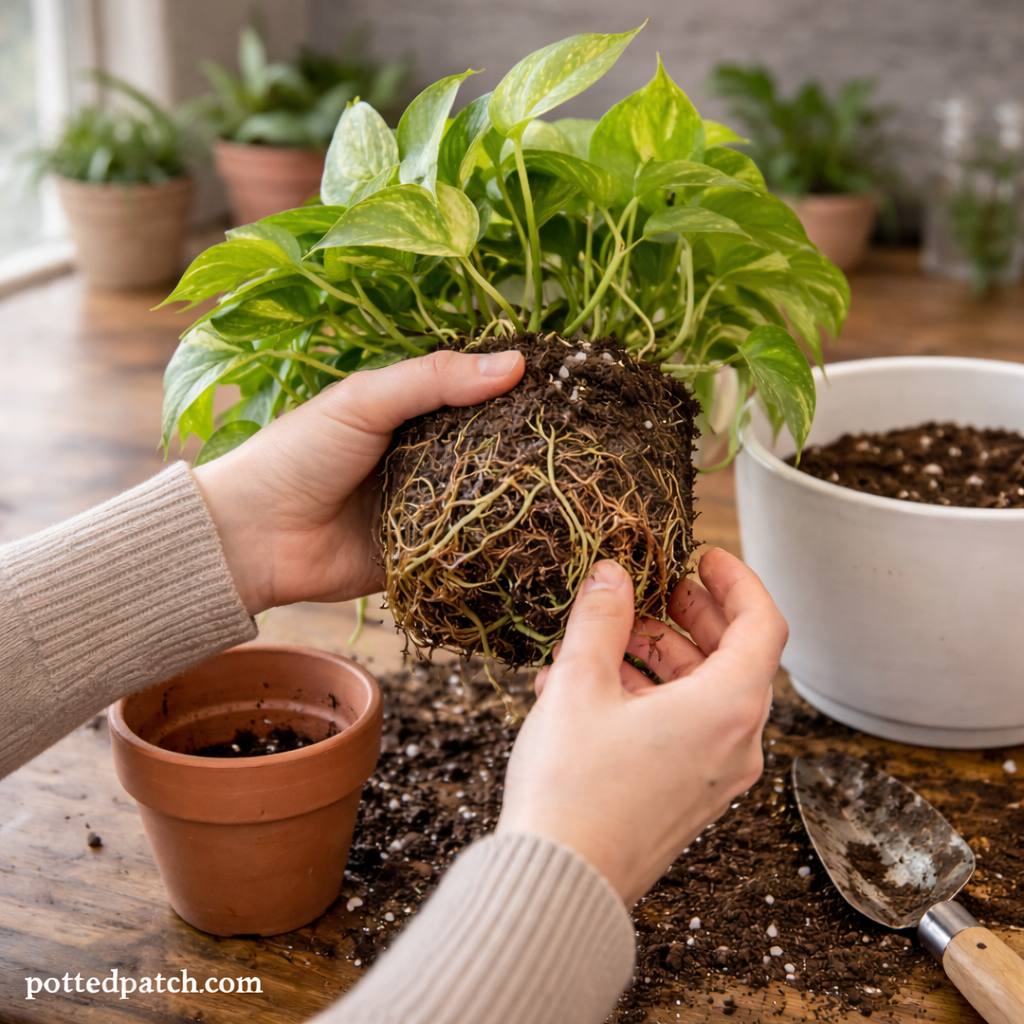
Step 2: Remove the plant gently
- Tip the pot sideways
- Support the base of the plant
- Ease it out without pulling on stems
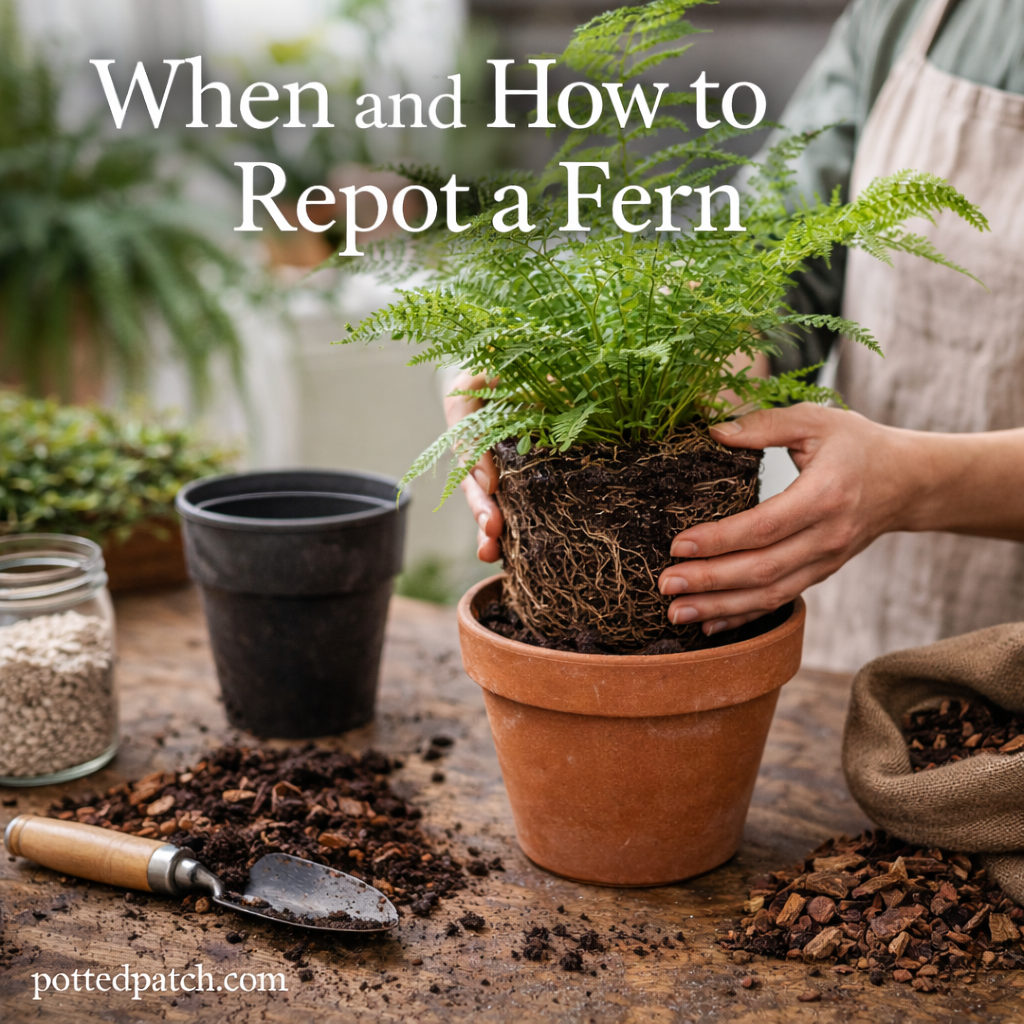
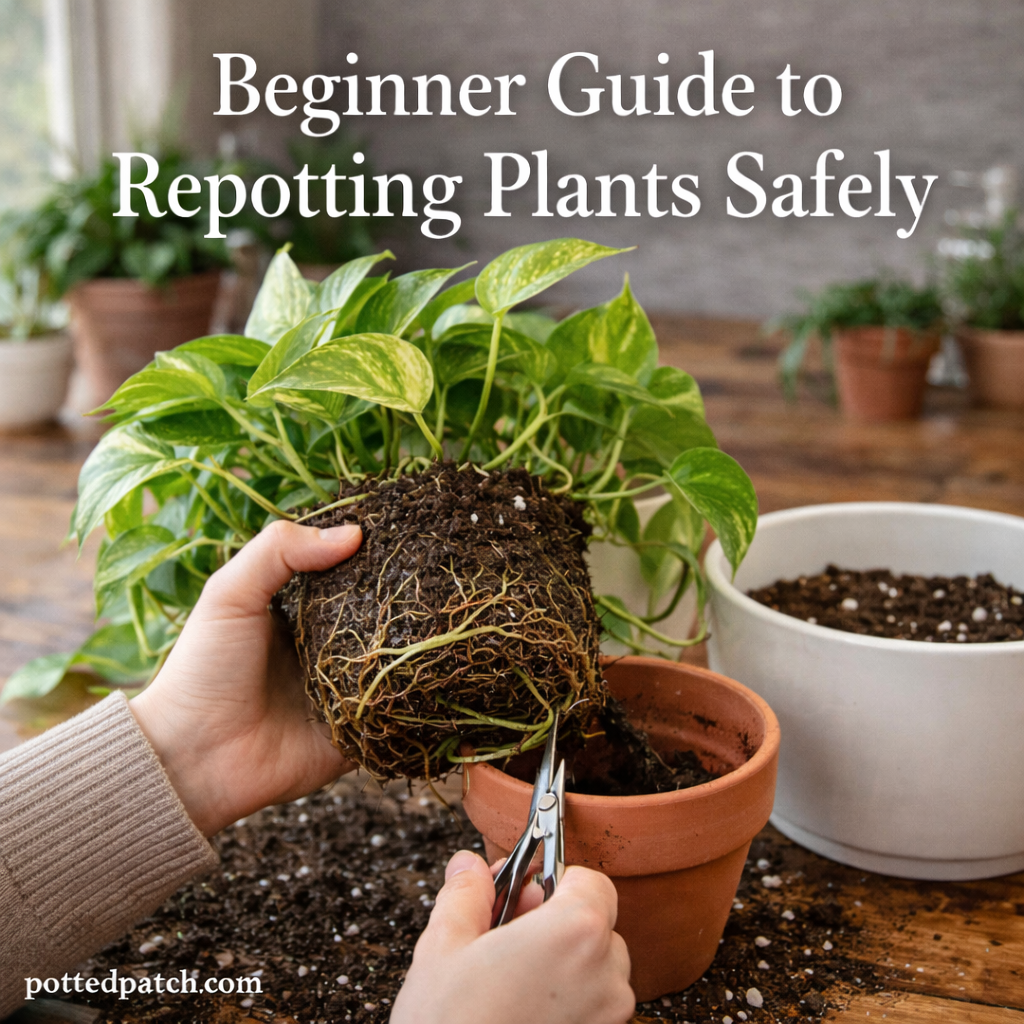
Step 3: Inspect the roots
- Healthy roots are firm and light-colored
- Trim any mushy, black, or dead roots with clean scissors
Step 4: Add fresh soil
- Place a small layer of soil in the new pot
- Position the plant at the same depth as before
Step 5: Fill and settle
- Add soil around the sides
- Gently press to remove air pockets
- Do not compact the soil tightly
Step 6: Water lightly
- Water just enough to settle the soil
- Allow excess water to drain fully
Aftercare: Helping Plants Recover After Repotting
Repotting causes temporary stress—even when done correctly.
What to expect
- Slight drooping for a few days
- Slower growth initially
How to support recovery
- Keep the plant in indirect light
- Avoid fertilizing for 3–4 weeks
- Maintain normal watering habits
Most plants bounce back within one to two weeks.
Common Repotting Mistakes Beginners Make
Avoid these to keep plants healthy.
- Using pots without drainage holes
- Choosing a pot that’s too large
- Packing soil too tightly
- Fertilizing immediately after repotting
- Repotting healthy plants too often
Less intervention usually leads to better results.
How Often Plants Typically Need Repotting
This varies by plant type and growth speed.
General guidelines:
- Fast-growing plants: every 1–2 years
- Slow growers: every 2–3 years
- Large floor plants: only when root-bound
Always look at the plant’s condition rather than following a strict schedule.
Final Thoughts
Repotting doesn’t have to be intimidating. With the right timing, proper pot size, fresh soil, and gentle handling, most plants handle repotting just fine—even as beginners.
When in doubt, remember this rule: repot only when the plant shows clear signs it needs it. Slow, thoughtful care almost always wins.