
Pothos plants are famous for being easygoing, but even the most low-maintenance houseplant can hit a growth plateau. If your pothos looks healthy but isn’t pushing out new leaves or vines, a few targeted adjustments can make a big difference. With the right light, pruning habits, and care routine, you can trigger fresh growth and fuller vines without stressing the plant.
Below is a practical, plant-parent-friendly guide to getting your pothos growing again.
Understand What “Healthy Growth” Looks Like
Before changing anything, it helps to know what normal growth looks like for pothos.
Healthy growth signs include:
- New leaves emerging from vine tips
- Leaves increasing in size over time
- Firm, flexible stems with consistent color
- Gradual vine lengthening during spring and summer
Slow growth in fall and winter is normal. If it’s growing season and nothing is happening, that’s your cue to intervene.
Give Your Pothos Better Light (Without Overdoing It)
Light is the number one driver of new growth.
Pothos can survive low light, but they thrive in brighter conditions.
Best light conditions:
- Bright, indirect light near a window
- Filtered sunlight through sheer curtains
- A few feet back from a south- or west-facing window
Avoid:
- Deep shade far from windows
- Harsh, direct sunlight that scorches leaves
If your pothos has solid green leaves and slow growth, increasing light slightly often leads to new shoots within weeks.
Prune Strategically to Trigger New Growth
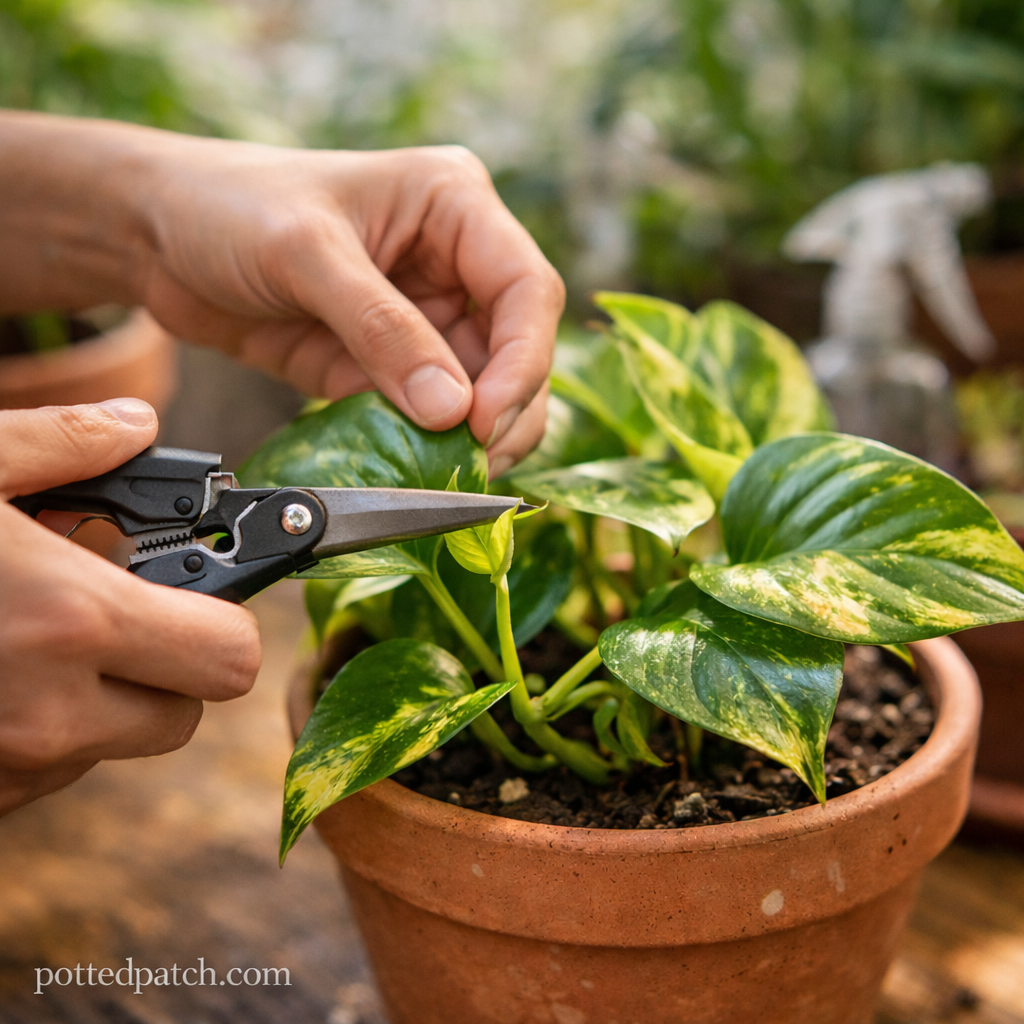
Pruning doesn’t just tidy up your pothos—it actively encourages branching.
When you cut a vine:
- Growth hormones redistribute
- New shoots form just below the cut
- The plant becomes fuller instead of leggy
How to prune correctly:
- Identify long or bare vines
- Cut just above a leaf node (where leaves grow from the stem)
- Use clean, sharp scissors or shears
- Remove no more than 25–30% of the plant at once
Bonus tip: Save cuttings and propagate them in water or soil, then plant them back into the same pot for a fuller look.
Check Your Watering Routine
Inconsistent watering can stall growth even if the plant looks fine.
Ideal watering habits:
- Water when the top 1–2 inches of soil are dry
- Water thoroughly until excess drains out
- Empty the saucer so roots don’t sit in water
Common growth-stopping mistakes:
- Constantly damp soil
- Letting the plant fully dry out repeatedly
- Using pots without drainage holes
Roots need oxygen as much as moisture. Overwatering suffocates them and slows new leaf production.
Feed Your Pothos (But Don’t Overfeed)
Pothos aren’t heavy feeders, but they still need nutrients to grow.
Best fertilizing approach:
- Use a balanced liquid houseplant fertilizer
- Dilute to half strength
- Feed every 4–6 weeks during spring and summer
Skip fertilizer:
- In winter
- If the plant is stressed or recently repotted
- If you see fertilizer salt buildup on soil
If your pothos hasn’t been fertilized in months, one light feeding can jump-start new growth.
Make Sure the Roots Have Room
A rootbound pothos may survive, but it won’t grow enthusiastically.
Signs it’s time to repot:
- Roots circling the bottom of the pot
- Water running straight through without soaking
- Slowed growth despite good care
Repotting tips:
- Choose a pot only 1–2 inches larger
- Use fresh, well-draining indoor plant soil
- Gently loosen roots before planting
Repotting during spring or early summer gives the best results.
Maintain Warm Temperatures and Humidity
Pothos are tropical plants and respond quickly to better conditions.
Ideal environment:
- Temperatures between 65–85°F (18–29°C)
- Moderate humidity (40–60%)
Ways to boost humidity:
- Group plants together
- Place a tray of water nearby
- Run a humidifier in dry rooms
Avoid cold drafts, AC vents, and sudden temperature swings, which can stall growth.
Keep the Leaves Clean and Pest-Free
Dusty leaves photosynthesize less efficiently.
Simple maintenance:
- Wipe leaves with a damp cloth once a month
- Inspect stems and leaf undersides for pests
Common pests that slow growth:
- Spider mites
- Mealybugs
- Scale insects
Early detection and treatment keep energy focused on growth instead of recovery.
Be Patient and Watch the Nodes
New growth doesn’t appear randomly. It comes from nodes.
After improving conditions:
- Look for tiny bumps near leaf joints
- Watch vine tips closely
- Expect visible growth in 2–4 weeks during active seasons
Consistency matters more than quick fixes. Pothos reward steady care with steady growth.
Quick Growth-Boosting Checklist
If you want a fast recap, focus on these essentials:
- Increase bright, indirect light
- Prune long vines above nodes
- Water only when soil partially dries
- Fertilize lightly during growing season
- Repot if roots are crowded
- Keep the environment warm and stable
Final Thoughts
Encouraging new growth on a pothos doesn’t require complicated techniques—just thoughtful adjustments. When light, water, nutrients, and pruning work together, pothos respond quickly with fresh leaves and longer vines. Once you dial in the basics, this plant practically grows itself. 🌿