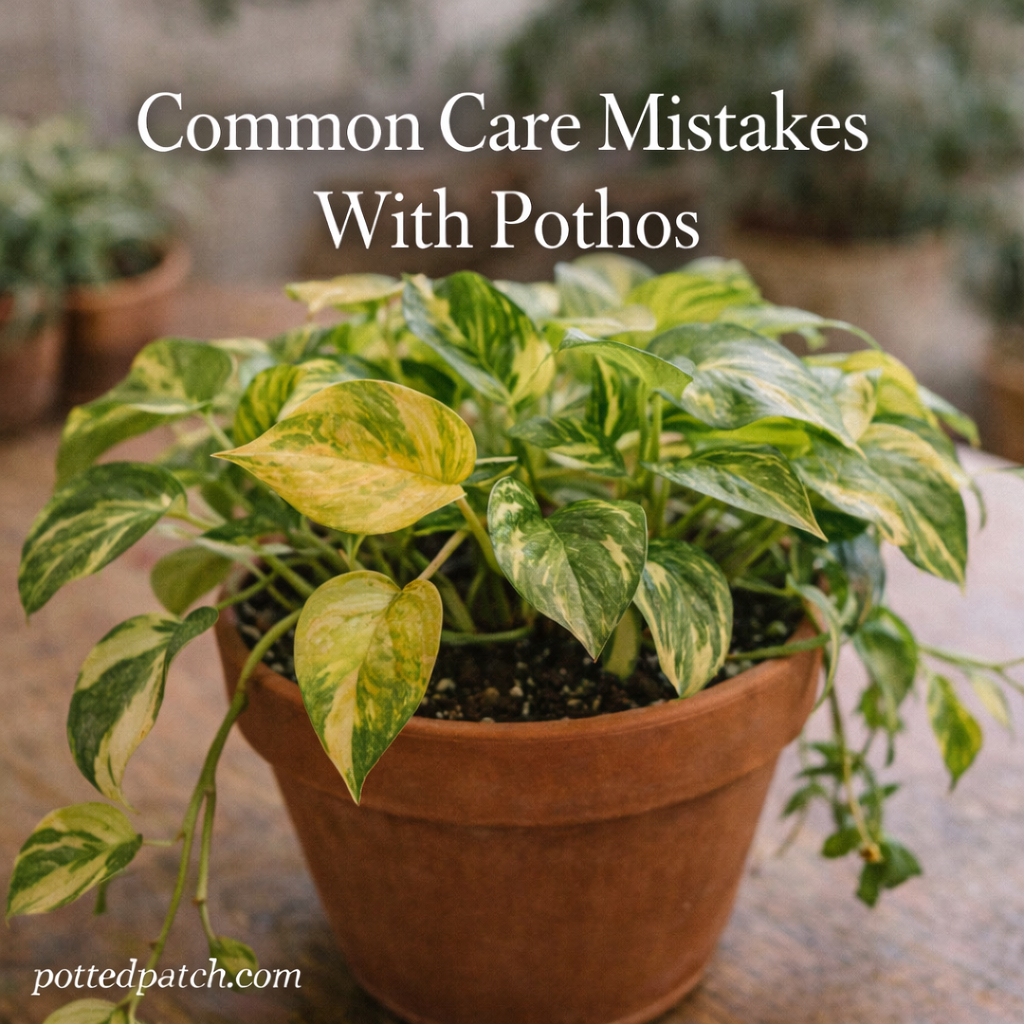
Pothos plants are often recommended as beginner-friendly houseplants—but that reputation can sometimes lead to overlooked mistakes. While pothos is resilient, repeated care issues can still cause yellow leaves, leggy growth, or stalled progress over time.
This guide breaks down the most common pothos care mistakes, why they happen, and how to fix them so your plant stays healthy and attractive long-term.
Overwatering Too Frequently
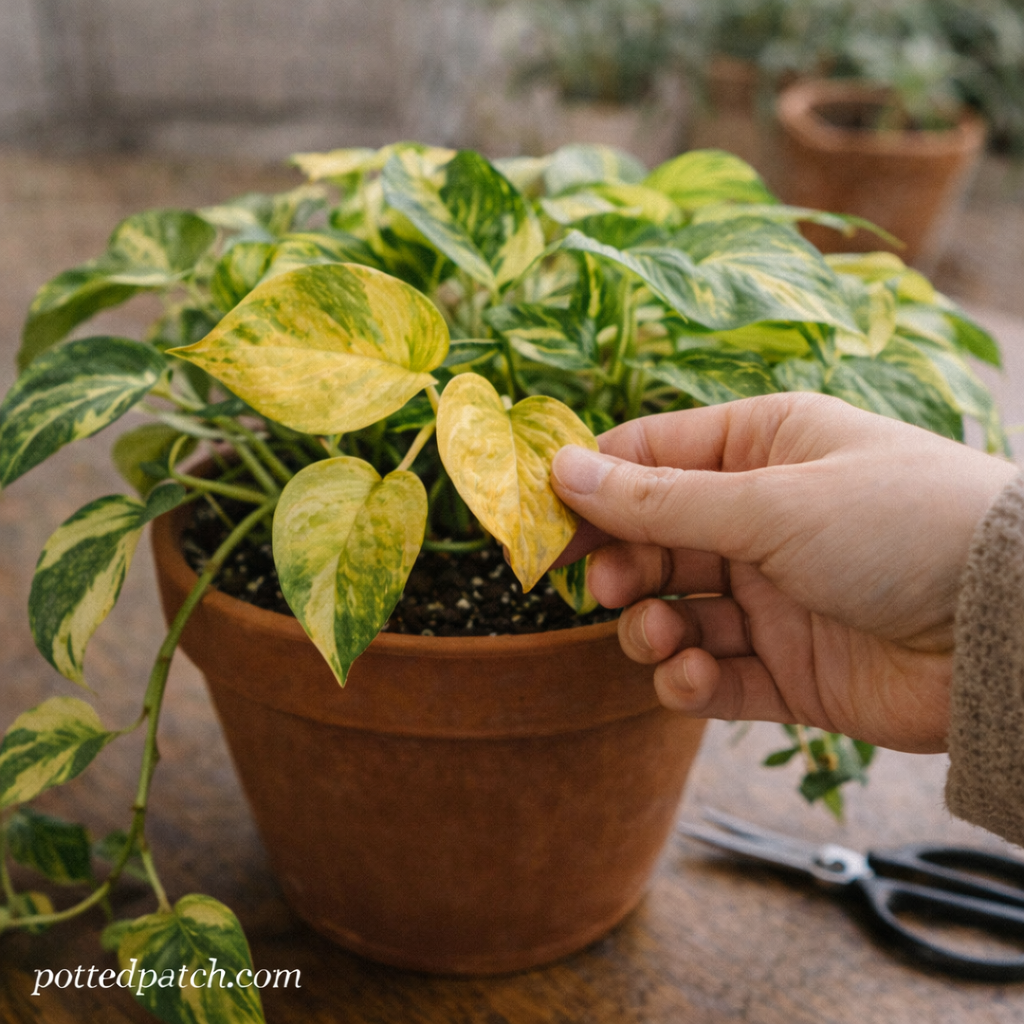
Overwatering is the most common pothos mistake, even among experienced plant owners.
Pothos roots need oxygen as much as they need water. When soil stays wet too long, roots suffocate and begin to rot.
Common signs:
- Yellowing leaves
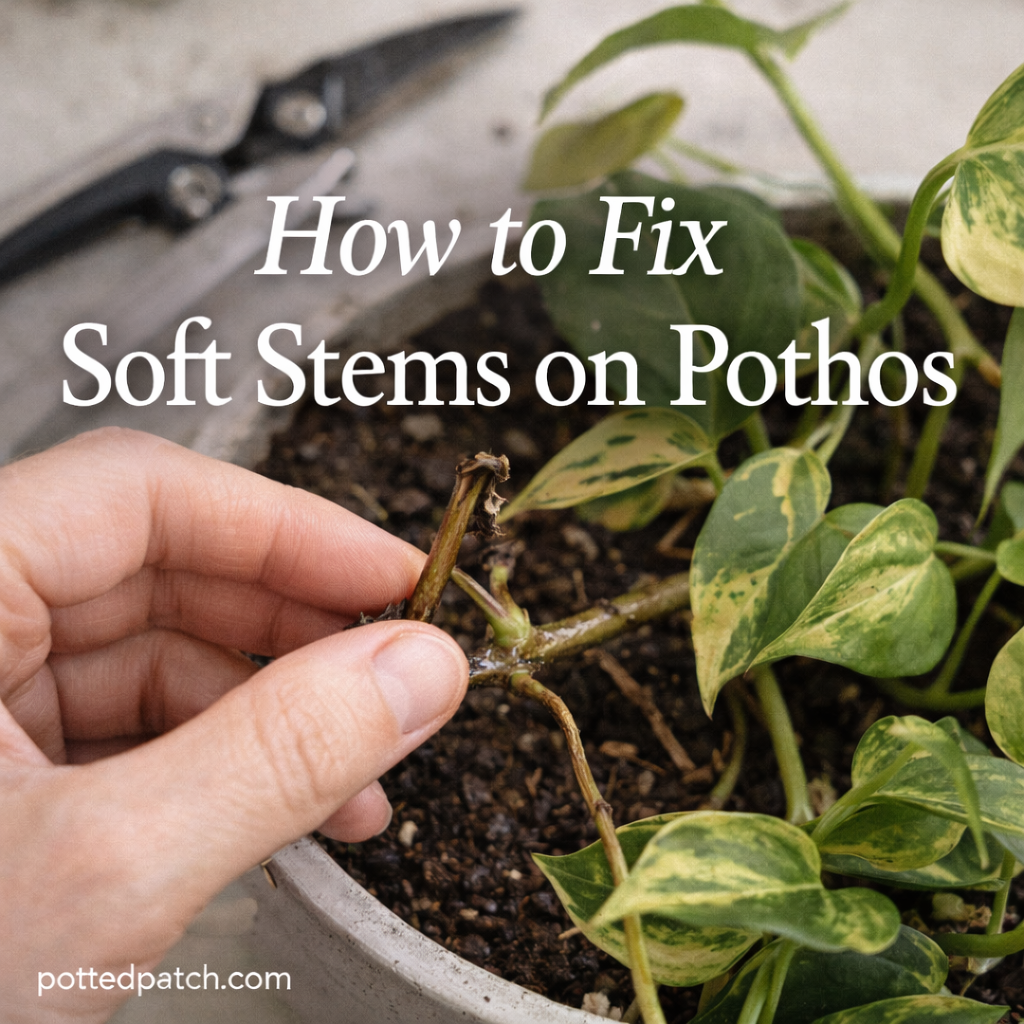
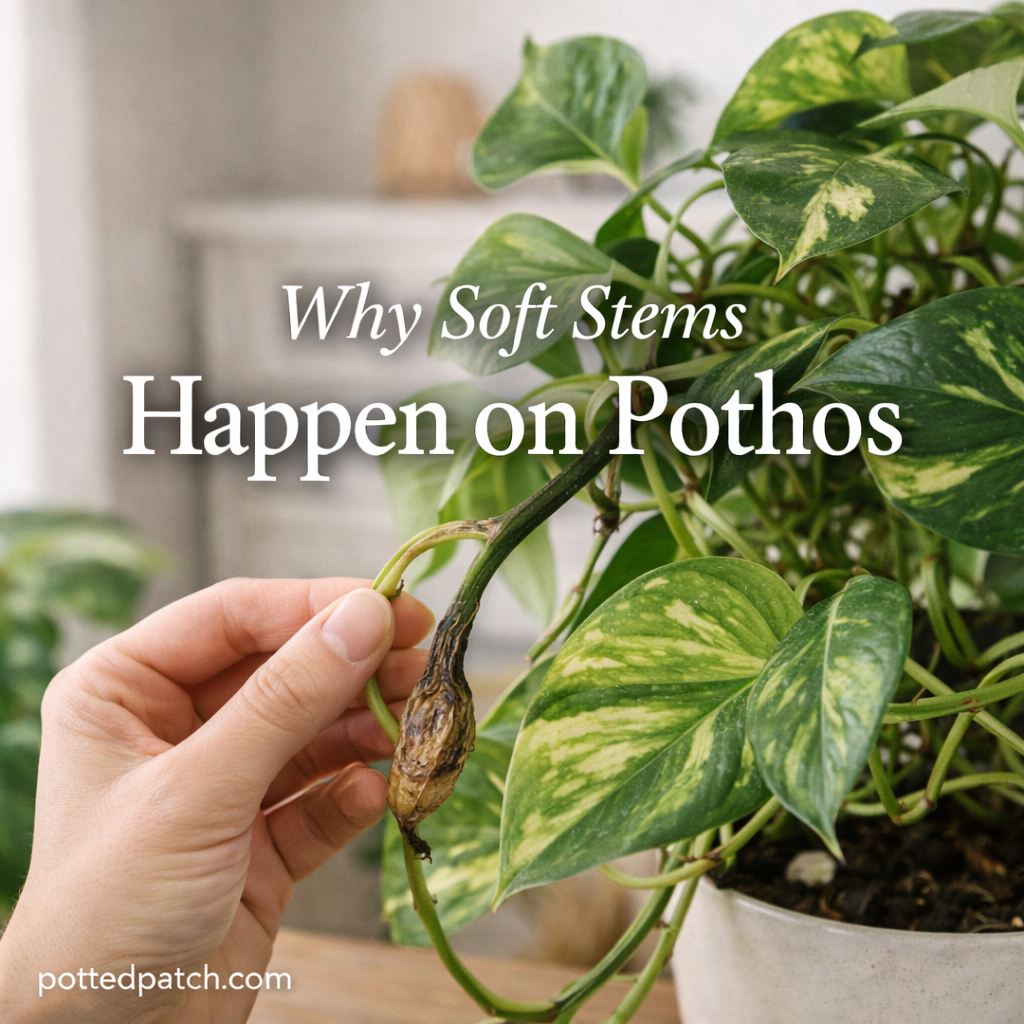
- Soft or mushy stems
- Soil that stays damp for days
How to fix it:
- Water only when the top 1–2 inches of soil are dry
- Always empty excess water from saucers
- Avoid watering on a strict schedule
Using Pots Without Drainage
A pothos can’t thrive in a pot that traps water.
Decorative containers without drainage holes cause moisture to pool at the bottom, even if watering seems minimal.
Why this is a problem:
- Roots sit in stagnant water
- Oxygen can’t reach the root system
- Root rot develops quietly
Better option:
- Use pots with drainage holes
- Or place a draining nursery pot inside a decorative container
Keeping the Plant in Very Low Light
Pothos tolerates low light, but that doesn’t mean it thrives there.
Extended low-light conditions can lead to:
- Slow growth
- Smaller leaves
- Leggy vines
- Increased sensitivity to watering mistakes
What works best:
- Bright, indirect light
- Near a window with filtered sunlight
- Occasional rotation for even growth
Too Much Direct Sunlight
On the opposite end, placing pothos in harsh direct sun can damage leaves.
Direct sunlight can cause:
- Scorched or faded leaves
- Dry, crispy edges
- Stressed growth
Ideal placement:
- Bright rooms without direct midday sun
- Filtered light through curtains
- Indirect light reflected off walls
Watering Small Amounts Too Often
“Just a little water” is a surprisingly common mistake.
Frequent small waterings:
- Wet only the top layer of soil
- Prevent deep root hydration
- Encourage shallow root systems
Better approach:
- Water thoroughly until excess drains out
- Allow soil to dry slightly before watering again
Ignoring Leggy Growth
Long vines with few leaves are often ignored because the plant still looks “alive.”
Leggy growth usually means:
- Insufficient light
- Lack of pruning
- Energy stretched too thin
How to correct it:
- Increase light exposure
- Prune vines above nodes
- Propagate cuttings to fill out the pot
Fertilizing Too Often
More fertilizer does not equal faster growth.
Over-fertilizing pothos can cause:
- Leaf burn
- Yellowing edges
- Salt buildup in soil
Safe fertilizing guidelines:
- Fertilize only during spring and summer
- Use diluted, balanced fertilizer
- Skip fertilizing if the plant looks healthy
Skipping Repotting for Too Long
Pothos doesn’t mind being slightly root-bound, but extreme crowding causes issues.
Signs it’s overdue for repotting:
- Roots growing out of drainage holes
- Soil drying out unusually fast
- Slowed growth despite proper care
Solution:
- Repot every 1–2 years
- Choose a pot only 1–2 inches larger
- Refresh soil during repotting
Not Cleaning Leaves
Dust buildup blocks light and reduces photosynthesis.
This often leads to:
- Dull-looking leaves
- Slower growth
- Increased pest risk
Simple fix:
- Wipe leaves gently with a damp cloth
- Avoid leaf shine products
- Clean every few weeks
Reacting Too Quickly to Changes
Pothos responds slowly to care adjustments.
Common overreactions include:
- Moving the plant repeatedly
- Changing watering frequency too fast
- Repotting unnecessarily
Best practice:
- Make one change at a time
- Observe for a few weeks
- Adjust gradually
Quick Mistake Checklist
If your pothos isn’t thriving, check:
- Is the soil staying wet too long?
- Does the pot have drainage holes?
- Is the light too low or too harsh?
- Has the plant been fertilized recently?
- Is it overdue for pruning or repotting?
Most pothos issues come down to water, light, and patience.
Final Thoughts
Pothos plants are forgiving, but they still need balanced care. By avoiding these common mistakes—especially overwatering, poor drainage, and extreme lighting—you’ll keep your pothos healthy and growing steadily.
Focus on consistency, observe changes calmly, and let the plant guide your decisions. With a few adjustments, pothos becomes one of the most reliable and rewarding houseplants to grow. 🌿