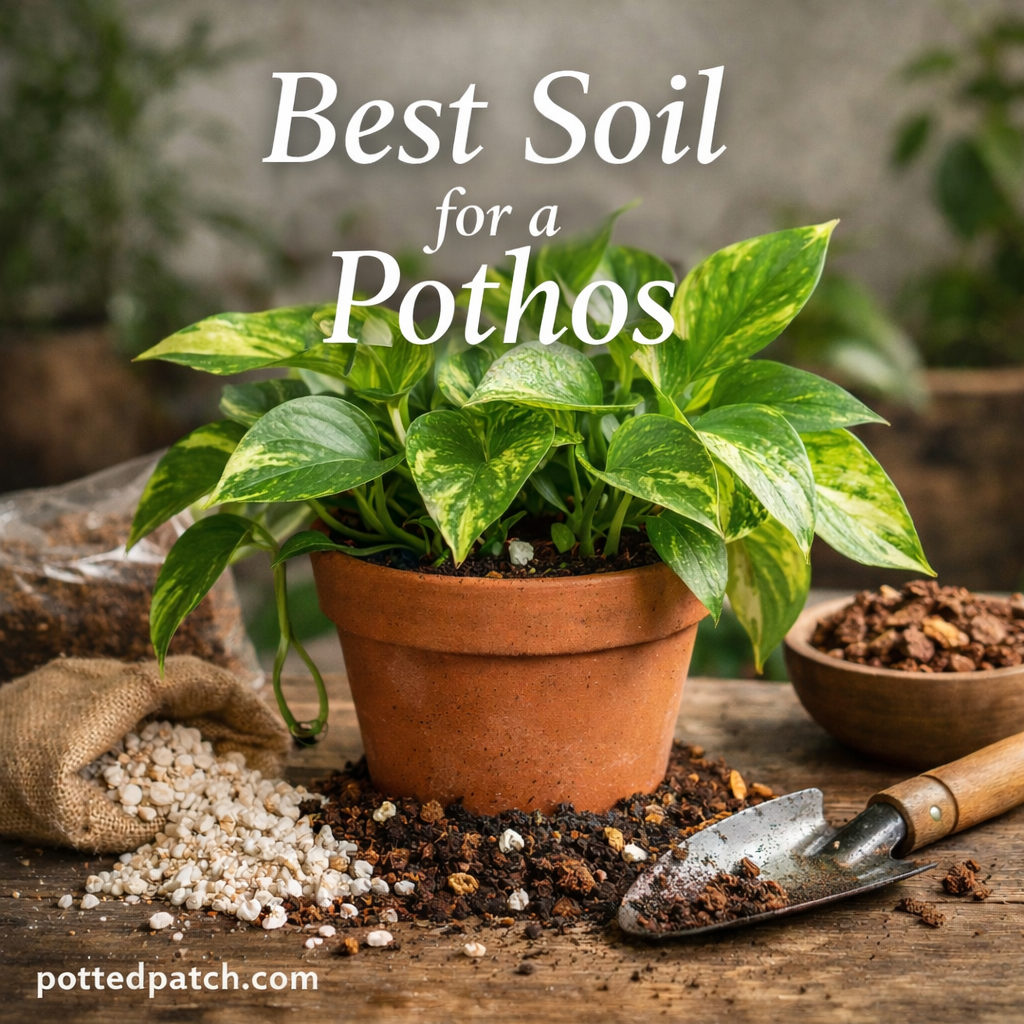
Pothos is one of the most forgiving and beginner-friendly houseplants—but the soil you use still plays a huge role in how healthy and fast it grows. The right soil helps prevent root rot, encourages strong roots, and supports steady leaf growth. The wrong soil can lead to soggy roots, yellowing leaves, and slow growth.
This guide breaks down exactly what kind of soil pothos plants prefer, what to avoid, and how to mix your own ideal pothos soil at home.
What Kind of Soil Does a Pothos Need?
Pothos naturally grows in tropical environments where its roots get plenty of air and moisture—but never sit in water. Indoors, that means soil should balance three things:
• Good drainage
• Light moisture retention
• Plenty of airflow around the roots
The best soil for a pothos is well-draining, loose, and slightly moisture-retentive.
Ideal Soil Characteristics for Pothos
Fast-Draining Structure
Pothos roots are sensitive to excess moisture. Soil that drains quickly helps prevent:
• Root rot
• Fungus gnats
• Compacted, airless roots
If water pools on top or takes more than a few seconds to drain out the bottom, the soil is too dense.
Light and Airy Texture
Roots need oxygen as much as water. Soil that stays fluffy allows roots to breathe and grow freely.
Look for soil that feels loose when dry—not heavy or muddy.
Mild Moisture Retention
While pothos hates soggy soil, it also doesn’t want to dry out instantly. The soil should hold some moisture between waterings without staying wet.
Best Store-Bought Soil for Pothos
Most pothos plants do well in a high-quality indoor potting mix with a few small improvements.
What to Look For on the Bag
Choose potting soil that includes:
• Peat moss or coco coir
• Perlite or pumice
• Bark or compost
Avoid mixes labeled for outdoor gardens, lawns, or moisture-loving plants.
How to Make the Perfect DIY Pothos Soil Mix
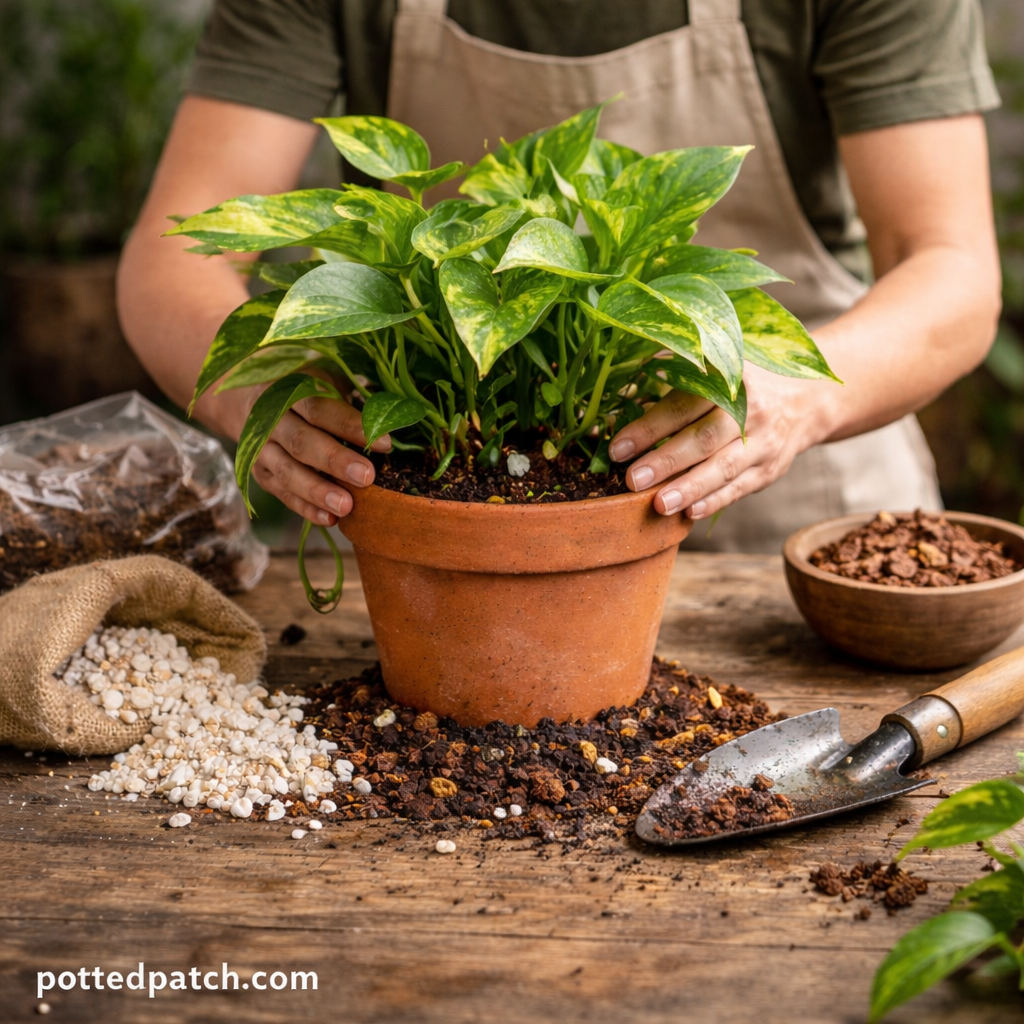
If you want optimal results, a custom mix is ideal and easy to make.
Simple DIY Pothos Soil Recipe
Mix the following:
- 2 parts indoor potting soil
- 1 part perlite
- 1 part orchid bark or pine bark
This blend creates excellent drainage while holding just enough moisture for healthy growth.
Optional Add-Ins (Not Required)
• A small handful of worm castings for nutrients
• A pinch of horticultural charcoal for freshness
Avoid overloading the mix—pothos prefers simplicity.
Soils You Should Avoid for Pothos
Some soils cause more harm than good.
Garden Soil
Never use soil from outside. It compacts easily, drains poorly, and can introduce pests.
Heavy Moisture-Control Mixes
Soils designed for plants like peace lilies or ferns often retain too much water for pothos.
Pure Peat or Coco Coir
On their own, these hold too much moisture and lack structure.
Does Pothos Need Special pH Soil?
Pothos prefers slightly acidic to neutral soil.
Ideal pH range:
• 6.0 to 7.0
Most indoor potting mixes naturally fall within this range, so pH adjustment is rarely necessary.
How Often Should You Change Pothos Soil?
Even good soil breaks down over time.
Repotting Guidelines
• Every 1–2 years
• When roots circle the pot
• When soil stays wet too long
• When growth slows despite good light
Fresh soil restores airflow, nutrients, and drainage.
Pot Choice Matters as Much as Soil
The best soil won’t help if the pot traps water.
Always use a pot with:
• Drainage holes
• A breathable material when possible
Plastic pots work, but terra cotta offers better airflow and helps prevent overwatering.
Signs Your Pothos Soil Isn’t Right
Watch for these warning signs:
• Yellow leaves
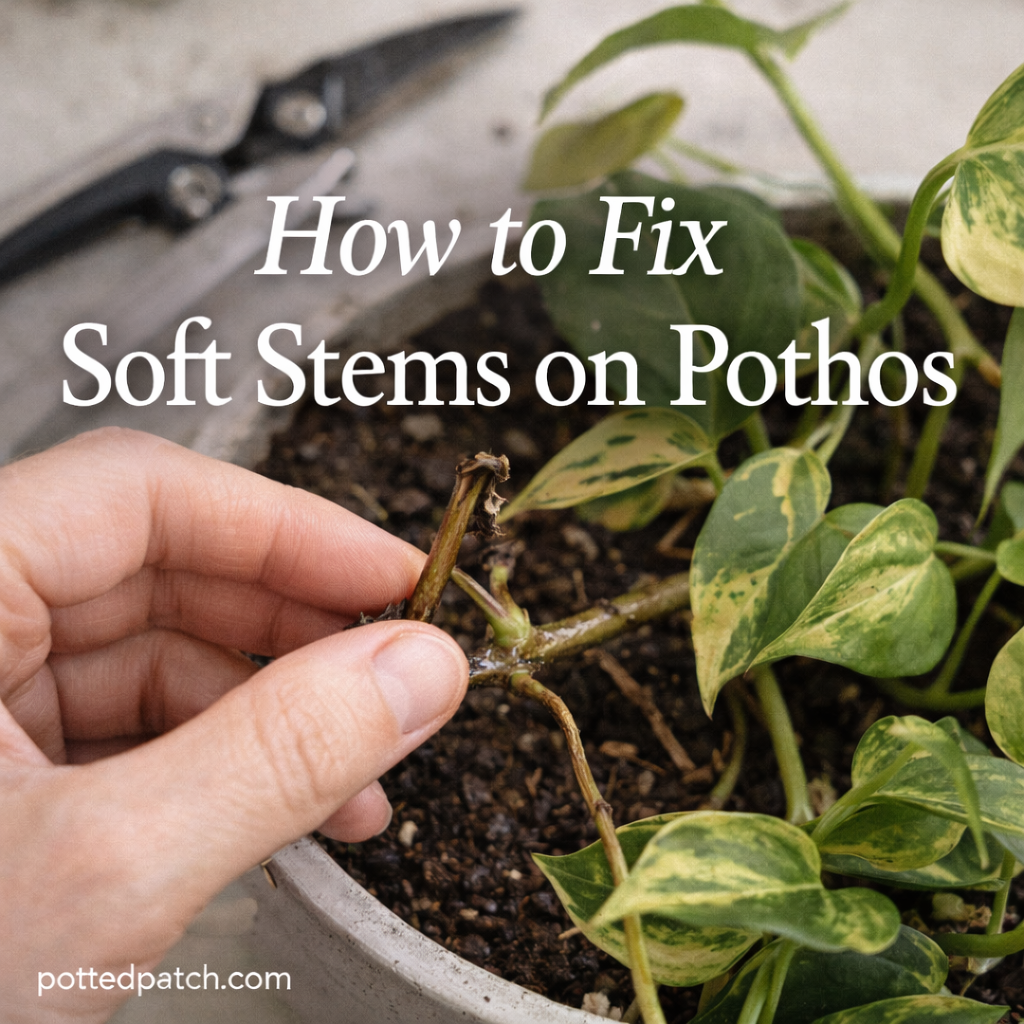
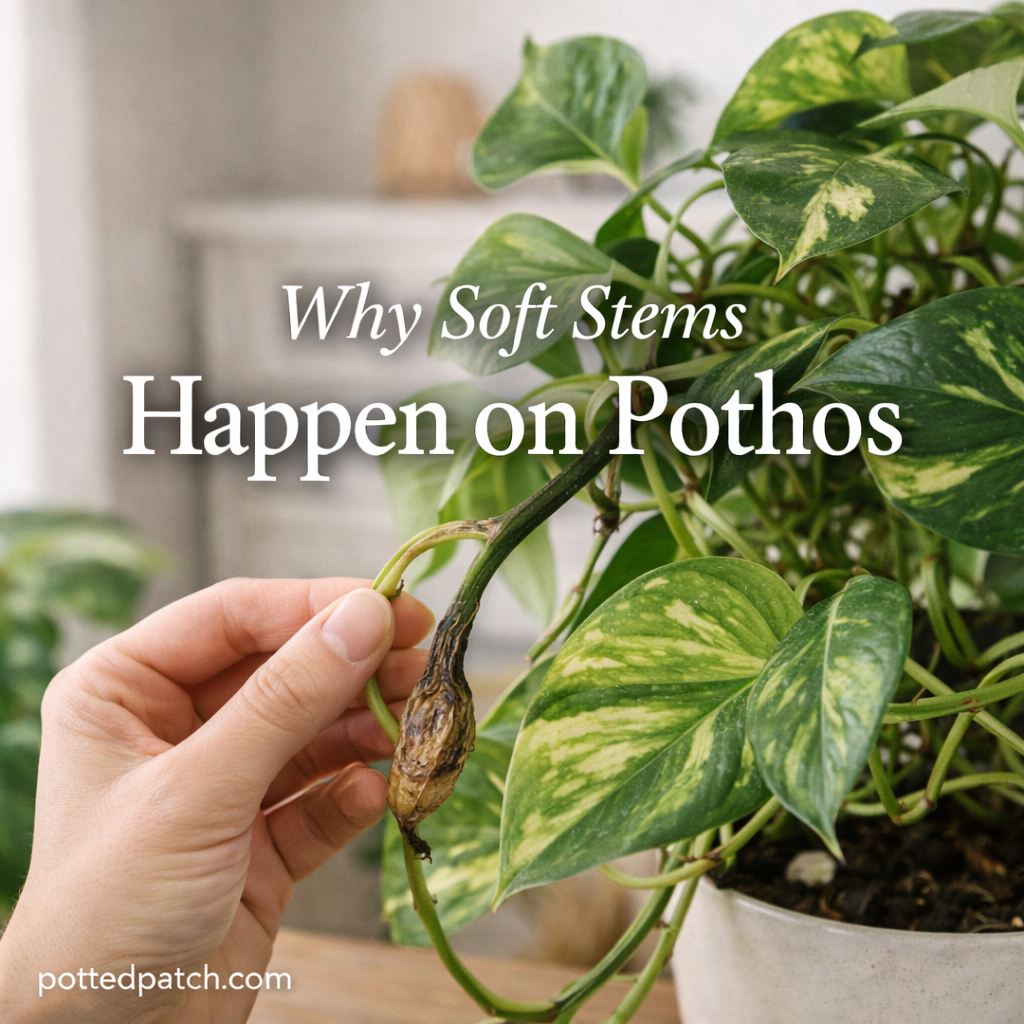
• Mushy stems
• Musty soil smell
• Fungus gnats
• Wilting despite watering
If you notice these, the soil is likely too dense or staying wet too long.
Final Thoughts
The best soil for a pothos is light, airy, and fast-draining—never heavy or compacted. A quality indoor potting mix with added perlite and bark is more than enough to keep pothos thriving for years.
When soil, drainage, and watering habits work together, pothos becomes one of the easiest plants to grow indoors.